



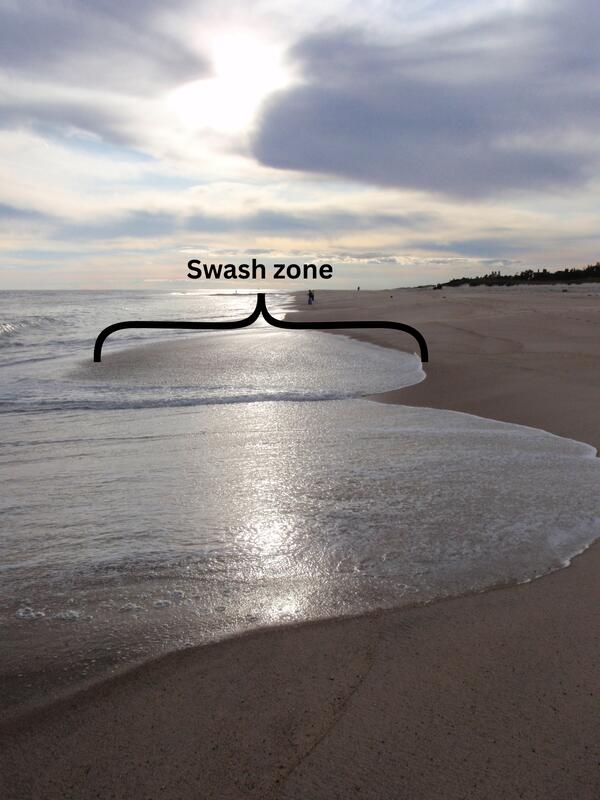
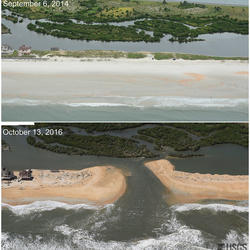
This informational webpage describes the swash regime, including depictions of the beach complex under its influence (Image 1), the conditions that define it, and any risks to the beach complex. Swash is the first of four storm-impact regimes, with minimal to no impacts expected from it.
This page is part of an eight-page series on coastal storm-impact regimes. It builds on the overview page How Storm-Impact Regimes Affect Beach Complexes: Coastal Hazards, three "Let's Get Technical" deep dives (Beach Complex, Dunes & Beach Metrics, and Water Levels), and four pages describing the storm-impact regimes (Swash, Collision, Overwash, and Inundation). You can explore the full set through the linked text or the clickable tiles at the bottom of this page. We suggest reading How Storm-Impact Regimes Affect Beach Complexes: Coastal Hazards overview and the Let’s Get Technical: Beach Complex pages first.
Swash Regime
The swash regime occurs if total water levels due to tide, surge, and waves are confined to the lower portion of the beach complex, and no impacts to dunes or berms are expected (Image 1 and 2). The beach may erode slightly or experience discrete erosion at limited spots (hot spots or spot erosion), and the sand will likely be redeposited immediately seaward of the beach in a nearshore sandbar.
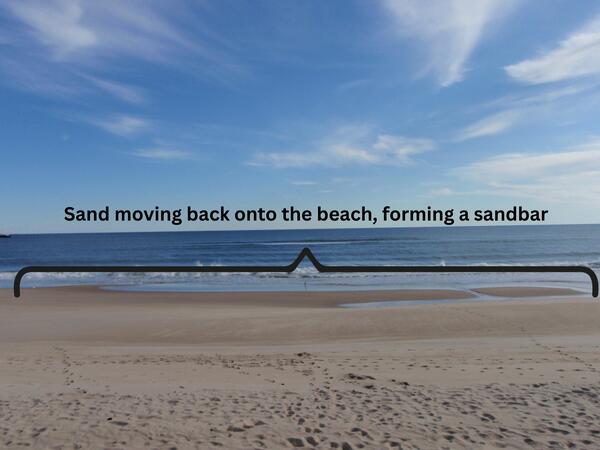
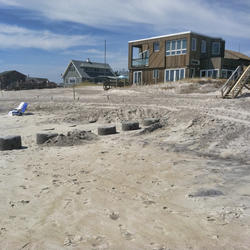
However, following the storm (a few days to a few weeks is possible), the sand can naturally return to the beach, restoring the beach to its original configuration. This can often be identified by piles of sand forming near the shoreline or in the surf zone indicating that the eroded material is returning (Image 3).
No long-term, net change to the system following a swash event is expected, and this is typically a minimal to no risk scenario for beach health, infrastructure, and people. It is unlikely to require any immediate response prior to or following the storm event. However, that does not mean that there are no potential risks to people following the swash regime.

Minimal Impacts of the Swash Regime
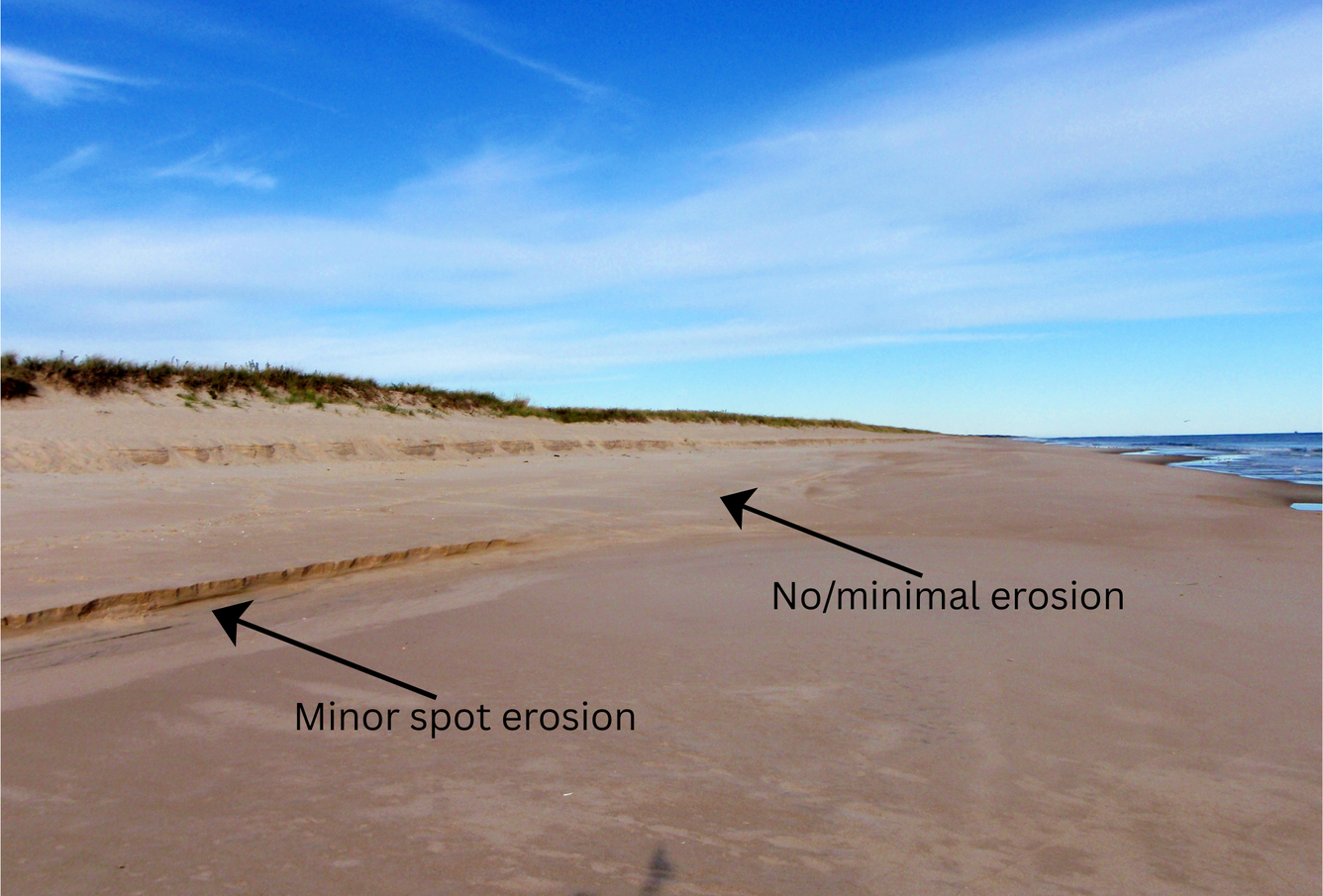
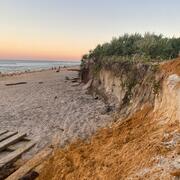
If slight erosion does occur to the beach face, a small scarp (Image 4) may form on the beach that could be a slight tripping hazard to beachgoers. Typically, this will smooth back out over a few weeks. Dry beach accessibility during high tide may be reduced to sunbathers/beachgoers. The sand returning to the beach in a sandbar may cause an increased risk of rip current formation until the sandbar welds back onto the beach complex. Lastly, any erosion of material from the beach inherently diminishes its ability to dampen impacts from coastal storms. If another storm approaches that same beach prior to the sand returning to the beach face, there could be an increased risk of beach erosion and an enhanced impact from the second storm beyond what would typically be expected.
The big picture and the science behind it: The overview introduces the topic; the "Let's Get Technical" pages cover the beach complex, dunes, and water levels in detail.
How Storm-Impact Regimes Affect Beach Complexes: Coastal Hazards - Overview
Let's Get Technical: Beach Complex
Let's Get Technical: Dunes & Beach Metrics
Let's Get Technical: Water Levels
How severe is a coastal storm? Explore the four storm-impact regimes of increasing severity, from swash to inundation.
Swash Regime
Collision Regime
Overwash Regime
Inundation Regime

Overwash Regime
Collision Regime
Inundation Regime

Let’s Get Technical: Beach Complex
Let’s Get Technical: Dunes & Beach Metrics

Let's Get Technical: Water Levels
How Storm-Impact Regimes Affect Beach Complexes: Coastal Hazards

Storm-Induced Coastal Processes

Integration of Processes over Different Spatial and Temporal Scales

Forecasting Coastal Change
This informational webpage describes the swash regime, including depictions of the beach complex under its influence (Image 1), the conditions that define it, and any risks to the beach complex. Swash is the first of four storm-impact regimes, with minimal to no impacts expected from it.
This page is part of an eight-page series on coastal storm-impact regimes. It builds on the overview page How Storm-Impact Regimes Affect Beach Complexes: Coastal Hazards, three "Let's Get Technical" deep dives (Beach Complex, Dunes & Beach Metrics, and Water Levels), and four pages describing the storm-impact regimes (Swash, Collision, Overwash, and Inundation). You can explore the full set through the linked text or the clickable tiles at the bottom of this page. We suggest reading How Storm-Impact Regimes Affect Beach Complexes: Coastal Hazards overview and the Let’s Get Technical: Beach Complex pages first.
Swash Regime
The swash regime occurs if total water levels due to tide, surge, and waves are confined to the lower portion of the beach complex, and no impacts to dunes or berms are expected (Image 1 and 2). The beach may erode slightly or experience discrete erosion at limited spots (hot spots or spot erosion), and the sand will likely be redeposited immediately seaward of the beach in a nearshore sandbar.
However, following the storm (a few days to a few weeks is possible), the sand can naturally return to the beach, restoring the beach to its original configuration. This can often be identified by piles of sand forming near the shoreline or in the surf zone indicating that the eroded material is returning (Image 3).
No long-term, net change to the system following a swash event is expected, and this is typically a minimal to no risk scenario for beach health, infrastructure, and people. It is unlikely to require any immediate response prior to or following the storm event. However, that does not mean that there are no potential risks to people following the swash regime.
Minimal Impacts of the Swash Regime
If slight erosion does occur to the beach face, a small scarp (Image 4) may form on the beach that could be a slight tripping hazard to beachgoers. Typically, this will smooth back out over a few weeks. Dry beach accessibility during high tide may be reduced to sunbathers/beachgoers. The sand returning to the beach in a sandbar may cause an increased risk of rip current formation until the sandbar welds back onto the beach complex. Lastly, any erosion of material from the beach inherently diminishes its ability to dampen impacts from coastal storms. If another storm approaches that same beach prior to the sand returning to the beach face, there could be an increased risk of beach erosion and an enhanced impact from the second storm beyond what would typically be expected.
The big picture and the science behind it: The overview introduces the topic; the "Let's Get Technical" pages cover the beach complex, dunes, and water levels in detail.
How Storm-Impact Regimes Affect Beach Complexes: Coastal Hazards - Overview
Let's Get Technical: Beach Complex
Let's Get Technical: Dunes & Beach Metrics
Let's Get Technical: Water Levels
How severe is a coastal storm? Explore the four storm-impact regimes of increasing severity, from swash to inundation.
Swash Regime
Collision Regime
Overwash Regime
Inundation Regime
Overwash Regime
Collision Regime
Inundation Regime
Let’s Get Technical: Beach Complex
Let’s Get Technical: Dunes & Beach Metrics
Let's Get Technical: Water Levels
How Storm-Impact Regimes Affect Beach Complexes: Coastal Hazards
Storm-Induced Coastal Processes
Integration of Processes over Different Spatial and Temporal Scales