Lick Run concrete lined channel with Mill Mountain in the background
Lick Run concrete lined channel with Mill Mountain in the backgroundLick Run concrete lined channel with Mill Mountain in the background


Official websites use .gov
A .gov website belongs to an official government organization in the United States.

Secure .gov websites use HTTPS
A lock () or https:// means you’ve safely connected to the .gov website. Share sensitive information only on official, secure websites.

Explore our planet and learn more about our work through photographs and imagery from scientists and support staff.

Lick Run concrete lined channel with Mill Mountain in the background
Lick Run concrete lined channel with Mill Mountain in the background

View of the Lick Run concrete lined channel
View of the Lick Run concrete lined channel
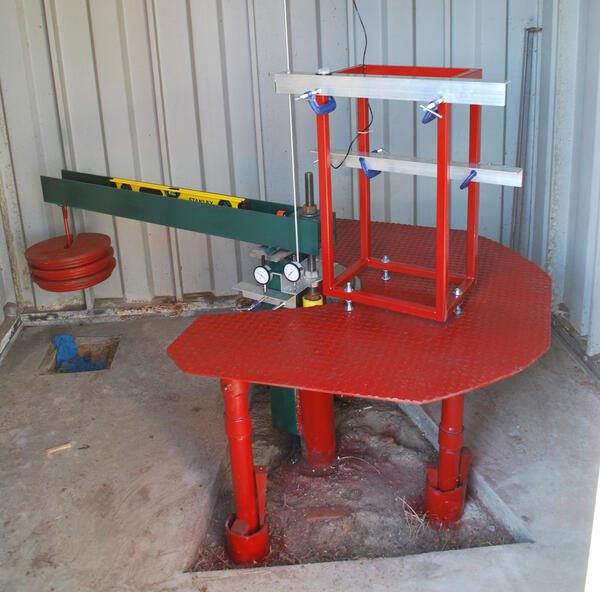
The USGS Franklin pipe extensometer with a total depth of 860 feet.
Period of record: 1979-1995; 2016-present
The USGS Franklin pipe extensometer with a total depth of 860 feet.
Period of record: 1979-1995; 2016-present

This photograph shows the building housing the USGS Suffolk extensometer. Inside, the extensometer extends to a depth of 1,599 feet below groundlevel.
Period of record: 1982-1995; 2016-present
This photograph shows the building housing the USGS Suffolk extensometer. Inside, the extensometer extends to a depth of 1,599 feet below groundlevel.
Period of record: 1982-1995; 2016-present

The USGS Suffolk pipe extensometer with a total depth of 1,620 feet.
Period of record: 1982-1995; 2016-present
The USGS Suffolk pipe extensometer with a total depth of 1,620 feet.
Period of record: 1982-1995; 2016-present

Building housing the USGS Franklin extensometer. Inside, the extensometer extends 866 feet below land surface.
Period of record: 1979-1995; 2016-present
Building housing the USGS Franklin extensometer. Inside, the extensometer extends 866 feet below land surface.
Period of record: 1979-1995; 2016-present

Learning water quality methods: Sequoya Bua-Iam (2015) calibrates a sonde in the USGS laboratory.
Learning water quality methods: Sequoya Bua-Iam (2015) calibrates a sonde in the USGS laboratory.

Learning water quality methods: Sequoya Bua-Iam (2015) records a sonde in the USGS laboratory.
Learning water quality methods: Sequoya Bua-Iam (2015) records a sonde in the USGS laboratory.

Trail Near Blue Ridge Parkway Near Afton, Virginia
Trail Near Blue Ridge Parkway Near Afton, Virginia

A water quality monitoring sonde installed at the Conveyance Channel at Ramsgate Lane near Great Bridge, VA. Part of the Hampton Roads Regional Water Quality Monitoring Program.
A water quality monitoring sonde installed at the Conveyance Channel at Ramsgate Lane near Great Bridge, VA. Part of the Hampton Roads Regional Water Quality Monitoring Program.

This stormwater monitoring site is a part of the Hampton Roads Regional Water Quality Monitoring Program.
This stormwater monitoring site is a part of the Hampton Roads Regional Water Quality Monitoring Program.

View from the Storm Drain at Ludlow Drive near Kempsville, VA.

These four photos show the damage to the decommissioned Franklin extensometer discovered in 2015 before the extensometer was recommissioned. Damage was caused by a reduction in groundwater pumping leading to land surface uplift.
These four photos show the damage to the decommissioned Franklin extensometer discovered in 2015 before the extensometer was recommissioned. Damage was caused by a reduction in groundwater pumping leading to land surface uplift.

Photo of the original Franklin extensometer taken during an inspection in 2015. Recording had ended in 1995, and between 1995 and 2015, groundwater pumping rates lessened causing the aquifer to briefly recover and the land to rebound. This rebound was so significant that it caused the damage to the extensometer seen above.
Photo of the original Franklin extensometer taken during an inspection in 2015. Recording had ended in 1995, and between 1995 and 2015, groundwater pumping rates lessened causing the aquifer to briefly recover and the land to rebound. This rebound was so significant that it caused the damage to the extensometer seen above.

USGS Scientists inspect the Franklin Extensometer research site in 2015. The extensometer at Franklin had been measuring land subsidence since 1979 but had been offline since 1995 and would be brought back online the following year.
USGS Scientists inspect the Franklin Extensometer research site in 2015. The extensometer at Franklin had been measuring land subsidence since 1979 but had been offline since 1995 and would be brought back online the following year.

Scientists deployed mobile fish exposure laboratories at sites in the Shenandoah River watershed, Virginia, to understand exposure and effects on fish. This photo shows the aquariums in a laboratory where fish were exposed to stream water or wastewater.
Scientists deployed mobile fish exposure laboratories at sites in the Shenandoah River watershed, Virginia, to understand exposure and effects on fish. This photo shows the aquariums in a laboratory where fish were exposed to stream water or wastewater.

james River Tidal Survey

Learning water quality methods: Aaron Bartlett (2014) collecting a water quality sample at Fine Creek.
Learning water quality methods: Aaron Bartlett (2014) collecting a water quality sample at Fine Creek.

A photo of a water quality monitoring site located in Fairfax county, Virginia.
Learn more about water quality monitoring in Fairfax county.
A photo of a water quality monitoring site located in Fairfax county, Virginia.
Learn more about water quality monitoring in Fairfax county.

Water quality monitoring in Fairfax county
Water quality monitoring in Fairfax county

Cartersville railroad bridge over the James River. This site is the location of a River Input Monitoring (RIM) Station.
Station data: James River at Cartersville
Cartersville railroad bridge over the James River. This site is the location of a River Input Monitoring (RIM) Station.
Station data: James River at Cartersville