



Drivers of Ecosystem Change
Restoration Ecology and Species Recovery
Western Fisheries Research Center
Research at the WFRC focuses on the environmental factors responsible for the creation, maintenance, and regulation of fish populations including their interactions in aquatic communities and ecosystems. Within these pages you will find research information on Pacific salmon; western trout, charr, and resident riverine fishes; desert and inland fishes; aquatic ecosystems and their resources.

Peer Reviewed Publications
Peer Reviewed Publications

Dive into our research through our rich and diverse publications.
News
Exclusive: Artificial Light and Salmon
Exclusive: Artificial Light and Salmon
USGS Scientists Share Their Research at the 2026 Bay-Delta Science Conference
USGS Scientists Share Their Research at the 2026 Bay-Delta Science Conference
Western Fisheries Research Center Institutional Animal Care and Use Committee (IACUC) Meeting - August 19, 2026
Western Fisheries Research Center Institutional Animal Care and Use Committee (IACUC) Meeting - August 19, 2026
Publications
DRIFteRS: A dataset of drift invertebrate densities in streams and rivers across western North America, 1997–2024 DRIFteRS: A dataset of drift invertebrate densities in streams and rivers across western North America, 1997–2024
Prey availability is among the most influential and highly variable determinants of fish growth and freshwater habitat carrying capacity, yet it remains understudied compared to physical habitat variables (Ouellet et al., 2025; Rosenfeld et al., 2014; Weber et al., 2017). We often lack a clear understanding of how much food is available to fishes, how it varies spatially and temporally...
Estimating habitat availability for Chinook salmon (Oncorhynchus tshawytscha) and steelhead (O. mykiss) to inform reintroduction planning in the middle Snake River basin, USA Estimating habitat availability for Chinook salmon (Oncorhynchus tshawytscha) and steelhead (O. mykiss) to inform reintroduction planning in the middle Snake River basin, USA
Anadromous fishes have been blocked from the middle Snake River basin since the construction of flood control, irrigation, and hydroelectric projects during the 19th and 20th centuries, culminating with the construction of Hells Canyon Dam (river kilometer [rkm] 398) in 1967. Seven large watersheds in the blocked area of the basin are under consideration for Pacific salmon reintroduction...
Biomarkers of mortality risks in Yukon Chinook salmon Biomarkers of mortality risks in Yukon Chinook salmon
Premature mortality of spawning adult Pacific salmon (Oncorhynchus species) can strongly influence population dynamics and complicate escapement-based management. Heat stress and Ichthyophonus infections have been identified as probable drivers of premature mortality in Yukon River Chinook salmon (Oncorhynchus tshawytscha) and likely contributors to low spawning abundance. We leveraged a
Science
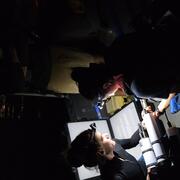
Artificial Light and Salmon
Artificial light is changing the nighttime environment of Lake Washington and reshaping the survival of salmon.
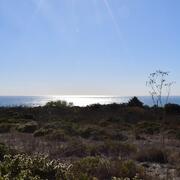
Where Land Meets Sea: USGS Science for Resilient Coastal Habitats
USGS coastal science plays a critical role in supporting the effective, science-based management of coastal ecosystems, where the biodiversity of land and sea meet. It provides managers with the information they need to make sound decisions. Through cutting-edge research, predictive modeling, and decision-support tools, USGS empowers resource managers to make informed, science-based choices. From...
By
Ecosystems Mission Area, Land Management Research Program, California Water Science Center, Eastern Ecological Science Center, Forest and Rangeland Ecosystem Science Center, Lower Mississippi-Gulf Water Science Center, Pacific Coastal and Marine Science Center, Western Ecological Research Center (WERC), Western Fisheries Research Center, Western Geographic Science Center, Wetland and Aquatic Research Center
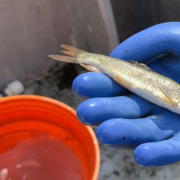
The Science of Suckers: What’s driving population declines in the Klamath River basin?
USGS and its partners are working tirelessly to monitor suckers and understand why they are disappearing from lakes and streams in the Klamath River Basin