



What are the long-term effects of climate change?
Scientists have predicted that long-term effects of climate change will include a decrease in sea ice and an increase in permafrost thawing, an increase in heat waves and heavy precipitation, and decreased water resources in semi-arid regions.
Below are some of the regional impacts of global change forecast by the Intergovernmental Panel on Climate Change:
- North America: Decreasing snowpack in the western mountains; 5-20 percent increase in yields of rain-fed agriculture in some regions; increased frequency, intensity and duration of heat waves in cities that currently experience them.
- Latin America: Gradual replacement of tropical forest by savannah in eastern Amazonia; risk of significant biodiversity loss through species extinction in many tropical areas; significant changes in water availability for human consumption, agriculture and energy generation.
- Europe: Increased risk of inland flash floods; more frequent coastal flooding and increased erosion from storms and sea level rise; glacial retreat in mountainous areas; reduced snow cover and winter tourism; extensive species losses; reductions of crop productivity in southern Europe.
- Africa: Between 75 and 250 million people are projected to be exposed to increased water stress; yields from rain-fed agriculture could be reduced by up to 50 percent in some regions; agricultural production, including access to food, may be severely compromised.
- Asia: Freshwater availability projected to decrease in Central, South, East and Southeast Asia by the 2050s; coastal areas will be at risk due to increased flooding; death rate from disease associated with floods and droughts expected to rise in some regions.
Related

What is the difference between global warming and climate change? What is the difference between global warming and climate change?
Although people tend to use these terms interchangeably, global warming is just one aspect of climate change. “Global warming” refers to the rise in global temperatures due mainly to the increasing concentrations of greenhouse gases in the atmosphere. “Climate change” refers to the increasing changes in the measures of climate over a long period of time – including precipitation, temperature, and...

Why is climate change happening and what are the causes? Why is climate change happening and what are the causes?
There are many “natural” and “anthropogenic” (human-induced) factors that contribute to climate change. Climate change has always happened on Earth, which is clearly seen in the geological record; it is the rapid rate and the magnitude of climate change occurring now that is of great concern worldwide. Greenhouse gases in the atmosphere absorb heat radiation. Human activity has increased...
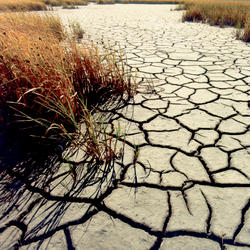
What causes drought? What causes drought?
A drought is a period of drier-than-normal conditions that results in water-related problems. The amount of precipitation at a particular location varies from year to year, but over a period of years the average amount is fairly constant. In the deserts of the Southwest, the average precipitation is less than 3 inches per year. In contrast, the average precipitation in the Northwest is more than...

What are the impacts of glacier loss, other than losing an aesthetic landscape feature? What are the impacts of glacier loss, other than losing an aesthetic landscape feature?
Glaciers act as reservoirs of water that persist through summer. Continual melt from glaciers contributes water to the ecosystem throughout dry months, creating perennial stream habitat and a water source for plants and animals. The cold runoff from glaciers also affects downstream water temperatures. Many aquatic species in mountainous environments require cold water temperatures to survive. Some...
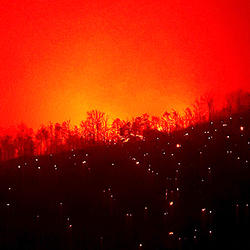
Will global warming produce more frequent and more intense wildfires? Will global warming produce more frequent and more intense wildfires?
There isn’t a direct relationship between climate change and fire, but researchers have found strong correlations between warm summer temperatures and large fire years, so there is general consensus that fire occurrence will increase with climate change. Hot, dry conditions, however, do not automatically mean fire—something needs to create the spark and actually start the fire. In some parts of...

Does the USGS monitor global warming? Does the USGS monitor global warming?
Not specifically. Our charge is to understand characteristics of the Earth, especially the Earth's surface, that affect our Nation's land, water, and biological resources. That includes quite a bit of environmental monitoring. Other agencies, especially NOAA and NASA, are specifically funded to monitor global temperature and atmospheric phenomena such as ozone concentrations. The work through...
Related
What is the difference between global warming and climate change? What is the difference between global warming and climate change?
Although people tend to use these terms interchangeably, global warming is just one aspect of climate change. “Global warming” refers to the rise in global temperatures due mainly to the increasing concentrations of greenhouse gases in the atmosphere. “Climate change” refers to the increasing changes in the measures of climate over a long period of time – including precipitation, temperature, and...
Why is climate change happening and what are the causes? Why is climate change happening and what are the causes?
There are many “natural” and “anthropogenic” (human-induced) factors that contribute to climate change. Climate change has always happened on Earth, which is clearly seen in the geological record; it is the rapid rate and the magnitude of climate change occurring now that is of great concern worldwide. Greenhouse gases in the atmosphere absorb heat radiation. Human activity has increased...
What causes drought? What causes drought?
A drought is a period of drier-than-normal conditions that results in water-related problems. The amount of precipitation at a particular location varies from year to year, but over a period of years the average amount is fairly constant. In the deserts of the Southwest, the average precipitation is less than 3 inches per year. In contrast, the average precipitation in the Northwest is more than...
What are the impacts of glacier loss, other than losing an aesthetic landscape feature? What are the impacts of glacier loss, other than losing an aesthetic landscape feature?
Glaciers act as reservoirs of water that persist through summer. Continual melt from glaciers contributes water to the ecosystem throughout dry months, creating perennial stream habitat and a water source for plants and animals. The cold runoff from glaciers also affects downstream water temperatures. Many aquatic species in mountainous environments require cold water temperatures to survive. Some...
Will global warming produce more frequent and more intense wildfires? Will global warming produce more frequent and more intense wildfires?
There isn’t a direct relationship between climate change and fire, but researchers have found strong correlations between warm summer temperatures and large fire years, so there is general consensus that fire occurrence will increase with climate change. Hot, dry conditions, however, do not automatically mean fire—something needs to create the spark and actually start the fire. In some parts of...
Does the USGS monitor global warming? Does the USGS monitor global warming?
Not specifically. Our charge is to understand characteristics of the Earth, especially the Earth's surface, that affect our Nation's land, water, and biological resources. That includes quite a bit of environmental monitoring. Other agencies, especially NOAA and NASA, are specifically funded to monitor global temperature and atmospheric phenomena such as ozone concentrations. The work through...