U.S. flag

An official website of the United States government

Wyoming Landscape Conservation Initiative

Filter Total Items: 24
AI-driven science synthesis tools for resource managers

The scientific literature is abundant on drought-related topics in the western United States, including areas of the Colorado River Basin and the sagebrush biome. Scientists, resource managers, and decision makers use this science to assess, predict, and respond to the effects of drought on people and the environment. However, it can be difficult to quickly synthesize large amounts of research. To...

AI-driven science synthesis tools for resource managers

AI-driven science synthesis tools for resource managers

The scientific literature is abundant on drought-related topics in the western United States, including areas of the Colorado River Basin and the sagebrush biome. Scientists, resource managers, and decision makers use this science to assess, predict, and respond to the effects of drought on people and the environment. However, it can be difficult to quickly synthesize large amounts of research. To...
Learn More

USGS Sagebrush Science: Supporting Public Safety and Economic Decision Making Across the West

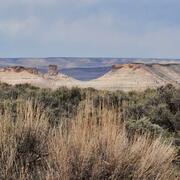
The sagebrush biome is one of the largest ecosystems in North America. Encompassing nearly one-third of the continental U.S., it provides critical resources for millions of Americans and a home for hundreds of plants and animal species in the West. Natural resource management in sagebrush ecosystems can be complex, and science can support management decisions by providing knowledge and tools to...
USGS Sagebrush Science: Supporting Public Safety and Economic Decision Making Across the West

USGS Sagebrush Science: Supporting Public Safety and Economic Decision Making Across the West

The sagebrush biome is one of the largest ecosystems in North America. Encompassing nearly one-third of the continental U.S., it provides critical resources for millions of Americans and a home for hundreds of plants and animal species in the West. Natural resource management in sagebrush ecosystems can be complex, and science can support management decisions by providing knowledge and tools to...
Learn More

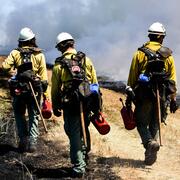
Land management research in support of streamlined energy development, economic growth, and wildfire management

FORT researchers provide sound science to support the Department of the Interior in its efforts to streamline reliable energy development, enhance cost efficiency in public lands management, and manage fire-prone habitats for public safety. This research is developed in partnership with resource managers from local, State, Federal and Tribal governments, industry, and nongovernmental organizations...
Land management research in support of streamlined energy development, economic growth, and wildfire management

Land management research in support of streamlined energy development, economic growth, and wildfire management

FORT researchers provide sound science to support the Department of the Interior in its efforts to streamline reliable energy development, enhance cost efficiency in public lands management, and manage fire-prone habitats for public safety. This research is developed in partnership with resource managers from local, State, Federal and Tribal governments, industry, and nongovernmental organizations...
Learn More

Economic Implications of Sagebrush Treatment and Restoration Practices Across the Great Basin and Wyoming

USGS and Colorado State University researchers are conducting analyses and predictions of sagebrush recovery in the Great Basin and Wyoming and assess the role of weather, soils, and reseeding treatments.
Economic Implications of Sagebrush Treatment and Restoration Practices Across the Great Basin and Wyoming

Economic Implications of Sagebrush Treatment and Restoration Practices Across the Great Basin and Wyoming

USGS and Colorado State University researchers are conducting analyses and predictions of sagebrush recovery in the Great Basin and Wyoming and assess the role of weather, soils, and reseeding treatments.
Learn More

Prioritizing Restoration of Sagebrush Ecosystems Tool (PReSET): A USGS-facilitated Decision-support Tool for Sagebrush Ecosystem Conservation and Restoration Actions

Sagebrush ecosystems represent one of the most imperiled systems in North America and face continued and widespread degradation due to multiple factors including invasive species and increased human development. Effective sagebrush management must consider how to best conserve and restore habitats to stem the decline of species that rely on them, especially given limited conservation resources. To...
Prioritizing Restoration of Sagebrush Ecosystems Tool (PReSET): A USGS-facilitated Decision-support Tool for Sagebrush Ecosystem Conservation and Restoration Actions

Prioritizing Restoration of Sagebrush Ecosystems Tool (PReSET): A USGS-facilitated Decision-support Tool for Sagebrush Ecosystem Conservation and Restoration Actions

Sagebrush ecosystems represent one of the most imperiled systems in North America and face continued and widespread degradation due to multiple factors including invasive species and increased human development. Effective sagebrush management must consider how to best conserve and restore habitats to stem the decline of species that rely on them, especially given limited conservation resources. To...
Learn More

Modeling Songbird Density-Habitat Relationships to Predict Population Responses to Environmental Change Within Pinyon-juniper and Sagebrush Ecosystems

Within areas of overlapping sagebrush and pinyon-juniper ecosystems, wildlife populations are declining due to habitat fragmentation and degradation, changing environments, and human development. However, management to bolster species associated with one ecosystem may result in negative consequences for species associated with the other. Thus, land managers are challenged with balancing which...
Modeling Songbird Density-Habitat Relationships to Predict Population Responses to Environmental Change Within Pinyon-juniper and Sagebrush Ecosystems

Modeling Songbird Density-Habitat Relationships to Predict Population Responses to Environmental Change Within Pinyon-juniper and Sagebrush Ecosystems

Within areas of overlapping sagebrush and pinyon-juniper ecosystems, wildlife populations are declining due to habitat fragmentation and degradation, changing environments, and human development. However, management to bolster species associated with one ecosystem may result in negative consequences for species associated with the other. Thus, land managers are challenged with balancing which...
Learn More

Prioritizing restoration and conservation of Wyoming’s sagebrush ecosystems for wildlife and sagebrush connectivity

To support strategic ecosystem management across the imperiled sagebrush steppe in Wyoming, USA, we developed an extension of the Prioritizing Restoration of Sagebrush Ecosystems Tool (PReSET). Our expanded tool leverages emerging spatial data resources to provide a structured but customizable set of scenarios that can guide landscape-scale planning efforts by prioritizing conservation and...
Prioritizing restoration and conservation of Wyoming’s sagebrush ecosystems for wildlife and sagebrush connectivity

Prioritizing restoration and conservation of Wyoming’s sagebrush ecosystems for wildlife and sagebrush connectivity

To support strategic ecosystem management across the imperiled sagebrush steppe in Wyoming, USA, we developed an extension of the Prioritizing Restoration of Sagebrush Ecosystems Tool (PReSET). Our expanded tool leverages emerging spatial data resources to provide a structured but customizable set of scenarios that can guide landscape-scale planning efforts by prioritizing conservation and...
Learn More

Prioritizing restoration and conservation of sagebrush ecosystems in northwestern Colorado

We are working with Colorado Parks and Wildlife (CPW) to pilot an expansion of the Prioritizing Restoration of Sagebrush Ecosystems Tool (PReSET; Duchardt et al. 2021) across northwestern Colorado. We are in the initial phase of a two-phase project where we are leveraging existing data resources to provide customized scenarios that directly guide landscape-scale conservation delivery by CPW. This...
Prioritizing restoration and conservation of sagebrush ecosystems in northwestern Colorado

Prioritizing restoration and conservation of sagebrush ecosystems in northwestern Colorado

We are working with Colorado Parks and Wildlife (CPW) to pilot an expansion of the Prioritizing Restoration of Sagebrush Ecosystems Tool (PReSET; Duchardt et al. 2021) across northwestern Colorado. We are in the initial phase of a two-phase project where we are leveraging existing data resources to provide customized scenarios that directly guide landscape-scale conservation delivery by CPW. This...
Learn More

Prioritizing sagebrush protection and restoration within the upper Colorado River Basin

Arid shrublands of western North America face growing threats from disturbances such as wildfire, drought, and invasive species. These threats are increasingly altering the sagebrush ( Artemisia species) biome and degrading habitat for species of conservation concern such as greater sage-grouse ( Centrocercus urophasianus). Effective management and restoration are needed to slow or reverse these...
Prioritizing sagebrush protection and restoration within the upper Colorado River Basin

Prioritizing sagebrush protection and restoration within the upper Colorado River Basin

Arid shrublands of western North America face growing threats from disturbances such as wildfire, drought, and invasive species. These threats are increasingly altering the sagebrush ( Artemisia species) biome and degrading habitat for species of conservation concern such as greater sage-grouse ( Centrocercus urophasianus). Effective management and restoration are needed to slow or reverse these...
Learn More

Prioritizing conifer removal for multi-species outcomes

Wildlife management is frequently conducted to benefit a single species, despite evidence that suggests such an approach often fails to adequately address the needs of other species within a region. Managing for multiple species’ habitat requirements is even more critical when large scale habitat management efforts change vegetation conditions at the landscape scale, or when management occurs at...
Prioritizing conifer removal for multi-species outcomes

Prioritizing conifer removal for multi-species outcomes

Wildlife management is frequently conducted to benefit a single species, despite evidence that suggests such an approach often fails to adequately address the needs of other species within a region. Managing for multiple species’ habitat requirements is even more critical when large scale habitat management efforts change vegetation conditions at the landscape scale, or when management occurs at...
Learn More

Soil-climate for Managing Sagebrush Ecosystems

Soil-climate describes the temperature and moisture conditions important for plant growth and function. Soil condition patterns determine which vegetation is most abundant, thus controlling which habitats, invasive species, fuels, and economic activities are present in a region. Here, we use a model to simulate the vertical movement of water in a soil profile to provide insights into landscape...
Soil-climate for Managing Sagebrush Ecosystems

Soil-climate for Managing Sagebrush Ecosystems

Soil-climate describes the temperature and moisture conditions important for plant growth and function. Soil condition patterns determine which vegetation is most abundant, thus controlling which habitats, invasive species, fuels, and economic activities are present in a region. Here, we use a model to simulate the vertical movement of water in a soil profile to provide insights into landscape...
Learn More

Climate Averages of Soil-climate for Sagebrush Ecosystems

Soil conditions are a key part of functioning ecosystem and affect the distribution and abundance of plants, forage production, and habitat patterns. The distribution of soil conditions, as well as other environmental factors such as precipitation, temperature, geology, topography, and vegetation determine the patterns and dynamics of wildlife habitats and biodiversity across the landscape. We...
Climate Averages of Soil-climate for Sagebrush Ecosystems

Climate Averages of Soil-climate for Sagebrush Ecosystems

Soil conditions are a key part of functioning ecosystem and affect the distribution and abundance of plants, forage production, and habitat patterns. The distribution of soil conditions, as well as other environmental factors such as precipitation, temperature, geology, topography, and vegetation determine the patterns and dynamics of wildlife habitats and biodiversity across the landscape. We...
Learn More
Was this page helpful?