



USGS Wildlife Health Awareness Day 2026: Healthy Wildlife, Enduring Traditions
Healthy wildlife on land and in water sustain rich biodiversity that allows ecosystems across the nation to thrive. The USGS works to advance wildlife health science.
Healthy wildlife support ecosystem services that benefit Americans, including local economic profits from wildlife tourism and enduring cultural traditions like hunting and fishing. Healthy wildlife can also benefit human health. Studies show that wildlife‑focused activities, such as birdwatching, may ease anxiety and psychological distress even more than general nature walks. Simple activities—like being outdoors and observing wildlife—can reduce stress, lift your mood, sharpen focus, and lower blood pressure and heart rate. Healthy wildlife also help keep ecosystems balanced by controlling pests, pollinating plants, spreading seeds, and breaking down waste. Disruptions to wildlife population health can alert us to emerging threats like environmental pollution or diseases that can also threaten the health of people, pets, or livestock.
USGS Wildlife Health Awareness Day launched in 2025 to highlight the actionable wildlife health science that the USGS provides to the nation. Through the Ecosystems Mission Area, the USGS is the leading federal agency for free-ranging wildlife disease research and surveillance. The USGS monitors the presence of pathogens and diseases in animals and the environment, develops tools for their detection, identifies whether environmental factors influence their spread, and studies the health risks that they pose. Our scientists are at the table with public and animal health agencies as they tackle diseases that affect mammals, fish, reptiles, and more, developing advanced tools for diagnosis, surveillance, risk assessment, and control.
Healthy Wildlife, Enduring Traditions
As the nation approaches its 250th anniversary, this year’s Wildlife Health Awareness Day also reflects on the conservation traditions that have shaped our relationship with the natural world. The theme of the 2026 USGS Wildlife Health Awareness Day is “Healthy Wildlife, Enduring Traditions.” USGS science directly supports the health and resilience of species that Americans rely on for outdoor recreation and cultural traditions. By detecting, tracking, and understanding the diseases that influence the long-term viability of big game, waterfowl, fish, and more, USGS science is strengthening the ability of wildlife managers to keep these populations healthy and thriving for generations.

The words of Aldo Leopold, whose writings capture the evolving values of American conservation in the mid-20th century, offer a historical lens for viewing our connections to the land and the wildlife that sustain cherished traditions.
"Conservation is a state of health in the land. The land consists of soil, water, plants, and animals, but health is more than a sufficiency of these components. It is a state of vigorous self-renewal in each of them, and in all collectively. Such collective functioning of interdependent parts for the maintenance of the whole is characteristic of an organism." (Leopold, 1944).
Learn more about USGS science on waterfowl, big game, and fish health below.
Waterfowl and Avian Influenza
“Geese are a cosmic admonition to stop, look, and listen…. [and] an annual reminder of the community of the earth.” (Leopold, 1946)
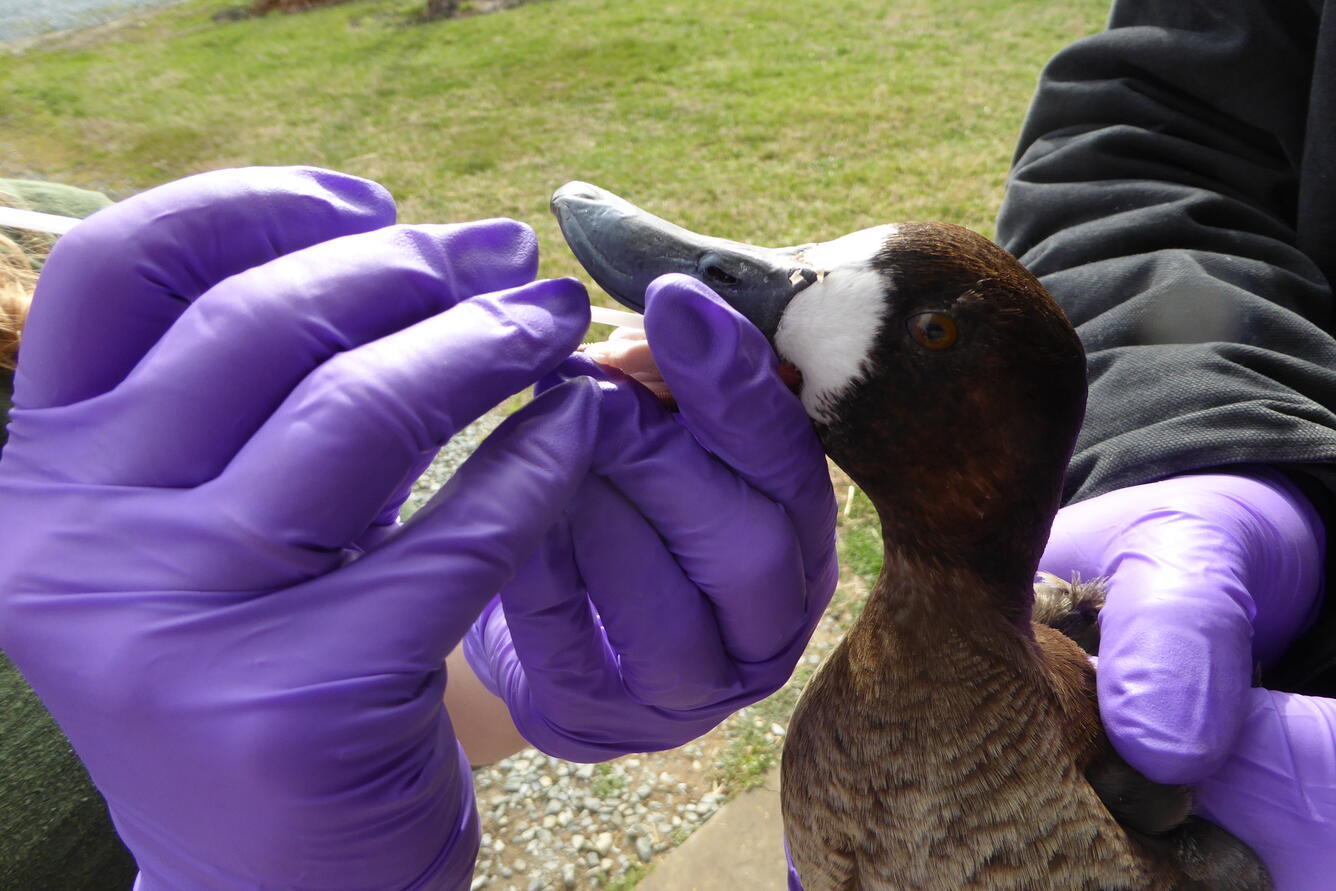
Avian influenza, previously thought of as just a poultry disease, is reshaping wildlife health across North America, affecting not only wild birds but a growing number of wild mammals on land and in water. USGS surveillance of wild birds to detect avian influenza is critical to prevent widespread outbreaks across our ecosystems and protect our agricultural economy as well as public health.
The Disease:
Avian influenza viruses occur naturally in waterfowl and shorebirds. These low pathogenic viruses do not generally cause illness; however, the virus can become highly pathogenic and cause illness and death in wild birds, wild mammals, poultry, dairy cattle, cats, and people.
Our Science:
USGS scientists are studying avian influenza to understand how the virus spreads through and affects wild waterfowl populations. By tracking waterfowl movements and monitoring infection patterns across species, USGS research reveals which species are most likely to carry or spread the virus and how illness can change migration timing, stopover behavior, and long-term population viability. This science helps wildlife managers anticipate when and where outbreaks may occur, assess risks to wild birds and domestic poultry, and better protect wetlands, flyways, and communities that depend on healthy waterfowl populations.
Learn More:
Big Game and Chronic Wasting Disease
“If the deer like to go there, I thought, I had better take a look. I have often noticed that a deer's taste in scenery and solitudes is very much like my own.” (Leopold, 1953).
In recent decades, Chronic Wasting Disease (CWD) has grown from a little-known illness found in only a few populations of wild deer to a widespread disease that poses a serious threat to our ecosystems, including national parks, and local economies across large swaths of North America. The disease has now been detected in 36 states and five Canadian provinces and there is currently no cure or vaccine. The USGS is providing science to help managers better understand, track, and control CWD.
The Disease:
CWD is a fatal neurological disease that affects free-ranging cervids (members of the deer family), such as elk, moose, white-tailed deer, and mule deer. It can also impact farmed or captive cervids, making it a priority for the U.S. Department of Agriculture (USDA). CWD is caused by infectious, misfolded proteins called prions that trigger normal proteins in the brain to fold abnormally, resulting in fatal disease of the brain. This contagious disease can be transmitted through direct contact between cervids or exposure to a contaminated environment, such as the bodily fluids or carcasses of infected animals. In areas of Wyoming, Colorado, and Wisconsin, more than 40% of free-ranging cervids are infected with CWD.
Our Science:
USGS science on CWD tackles multiple facets of this complex management challenge. USGS science is developing new tools to map and track CWD, investigating how cervid movements and feeding behaviors influence transmission and spread, identifying areas susceptible to infection, evaluating economic impacts, and improving tools to control CWD in populations and the environment. This work is in close collaboration with USDA and other federal, state, and tribal natural resource management agencies to ensure that our CWD science is addressing the most pressing management needs.
Learn More:

Pacific Salmon and Ichthyophonus disease
“Once I knew a doctor who worked so hard that he had to start playing or cash his checks. He chose fishing as his hobby. One evening he became so absorbed in a trout pool that he fished until it was pitch dark, and he was amazed to find that even on a pitch black night a trout could consistently pick a black gnat from a brown hackle. He began to study, as a hobby, the optical structures and powers of fish. He is finding himself in a new field fairly bristling with miracles. He is learning things that only God knew before. But timid folks who stir up the dust on the beaten path merely think of him as a crank on fishing.” (Leopold, 1920).
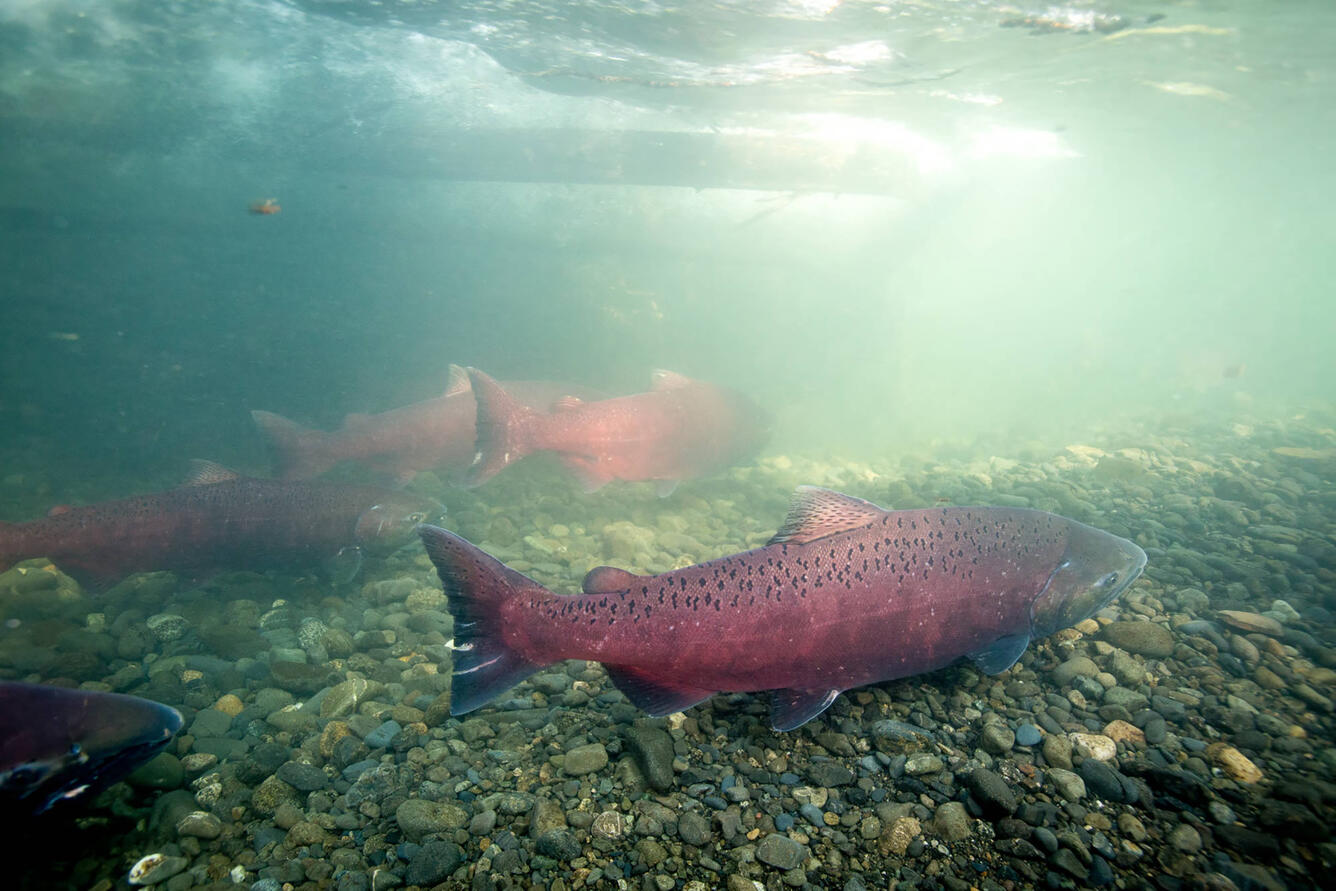
Chinook (or King) salmon support numerous cultural and economic needs and make up more than 75% of the diet of many Indigenous communities. However, in recent years many adult salmon have died on their way to spawning grounds in the Yukon River, leading to commercial fishery resource disaster determinations by the Secretary of Commerce and an agreement between Alaska and Canada – for the first time ever – to ban Chinook fishing for seven years (one full life cycle of a salmon). USGS scientists are helping to understand how the parasite Ichthyophonus is contributing to this “en-route” mortality.
The Disease:
Ichthyophonus is a parasite that is common among marine fishes throughout the northern hemisphere. Over the past several decades, this microscopic parasite led to significant disease cycling through the Yukon River Chinook salmon population. Salmon usually pick up the parasite in the ocean by eating infected prey. Once infected, the parasite spreads into major organs—especially the heart and muscles, which can leave the fish weak and less able to handle the long, upstream migration. In the Yukon River, infection rates in adult Chinook have been surprisingly high in recent years. Many heavily infected fish don’t make it very far upriver, which means fewer fish reach their spawning grounds. That adds extra stress to a population that’s already struggling due to other environmental stressors.
Our Science:
The USGS is working with the Alaska Department of Fish and Game, the U.S. Fish and Wildlife Service, and other partners to develop tools that forecast whether Chinook salmon in the lower Yukon River will be healthy enough to complete the 1,700‑mile migration and successfully spawn. Researchers are also running lab experiments to see how water temperature influences Ichthyophonus infection and to identify biomarkers that signal early infection and disease severity. In addition, scientists are examining how certain genes switch on and off in infected fish, which may help detect infections sooner and reveal which fish are more likely to survive the migration to their spawning grounds. Together, this research is giving fisheries managers earlier warning of emerging problems and improving forecasts of how many salmon will reach the spawning areas.
Learn More:
Additional Resources
2025 USGS Wildlife Health Awareness Day
Diseases We Study
Podcasts
Coloring Page
USGS Wildlife Health Databases
The USGS is dedicated to wildlife disease detection, control, and prevention across America and the globe and contributes to public safety and natural resource management by studying diseases that threaten our public health, agriculture, and economy.
The Wildlife Health Information Sharing Partnership - event reporting system (WHISPers) houses basic information on current and historic wildlife mortality and/or illness events reported by partners across the U.S. Search WHISPers to find out what the most recent wildlife disease outbreak was in your county or state.
The Aquatic Disease and Pathogen Repository (AquaDePTH) is a publicly accessible database currently being developed that can support the biosurveillance of aquatic animal diseases and pathogens, allowing natural resource managers to monitor fish kills and aquatic pathogen trends over space and time in both freshwater and marine environments.
The National Wildlife Disease Database (NWDD) system applies advanced analytics to integrated data from government agencies, wildlife rehabilitators, and open sources, to identify unusual disease events, assess impacts, and map disease occurrences nationwide. Natural resource managers, agricultural communities, veterinary professionals, and human health practitioners rely on these data to investigate wildlife diseases while managing risks to health and resources.
USGS Wildlife Diagnostic Capabilities
Learn more about wildlife diagnostic capabilities at the USGS:
USGS National Wildlife Health Center
USGS Western Fisheries Research Center
USGS Eastern Ecological Science Center
Citations
Leopold, A. (1920). A man’s leisure time [Unpublished manuscript].
Leopold, A. (1946). The geese return [Unpublished manuscript draft].
Leopold, A. (1953). Round River: From the journals of Aldo Leopold (L. B. Leopold, Ed.). Oxford University Press.
Leopold, A. (1991). Conservation: In whole or in part? [1941]. S. L. Flader & J. B. Callicott (Eds.), The river of the mother of God and other essays (pp. 310-319). University of Wisconsin Press.