



Terrestrial Wildlife Diseases
Terrestrial Wildlife Diseases
Filter Total Items: 109

USGS Sagebrush Science: Supporting Public Safety and Economic Decision Making Across the West
The sagebrush biome is one of the largest ecosystems in North America. Encompassing nearly one-third of the continental U.S., it provides critical resources for millions of Americans and a home for hundreds of plants and animal species in the West. Natural resource management in sagebrush ecosystems can be complex, and science can support management decisions by providing knowledge and tools to...
By
Core Science Systems Mission Area, Ecosystems Mission Area, Land Management Research Program, Earth Resources Observation and Science (EROS) Center, Forest and Rangeland Ecosystem Science Center, Fort Collins Science Center, Northern Rocky Mountain Science Center, Southwest Biological Science Center, Western Ecological Research Center (WERC), Wildland Fire Science

Batrachochytrium salamandrivorans (Bsal) Surveillance
Scientists of the USGS National Wildlife Health Center (NWHC) in collaboration with partners have developed risk assessments for Batrachochytrium salamandrivorans ( Bsal ) in the United States and are sampling high-risk locations for the fungus.

White-Nose Syndrome and Bat Health: 2025 Year in Review
USGS scientists have developed novel tools and techniques for national white-nose syndrome (WNS) detection and research efforts. Our scientists are monitoring bat populations (NABat) and bat behavior in addition to assessing the impact of WNS on bat populations. USGS is now focusing on disease management strategies to reverse bat declines from WNS.

Mapping Chronic Wasting Disease Management: Identify Opportunities for Intervention
This research effort is an interagency partnership between U.S. Geological Survey and U.S. Fish and Wildlife Service to model the social-ecological system that encompasses chronic wasting disease management in the United States. Chronic wasting disease (CWD) is a fatal, neurologically degenerative disease that impacts many cervid species in North America (e.g., elk, moose, mule deer, and white...

The Strain and Genetic Online Tissue Repository for Chronic Wasting Disease
The Strain and Genetic Online Tissue Repository (SAGOTR) is being developed by the USGS Fort Collins Science Center to document, track, discover, and request physical samples of Chronic Wasting Disease (CWD). SAGOTR connects natural resource managers, tissue repositories, and researchers in one online platform, making it easier to locate and share samples and support research and management of CWD...

North American Bat Monitoring Program (NABat)
Bats are essential contributing members of healthy, functioning ecosystems. They perform numerous ecosystem services like insect pest control and plant pollination, and provide enormous economic benefits through ecotourism, medical research, and novel biotechnologies. North American bats face unprecedented threats including habitat loss and fragmentation, white-nose syndrome, and wind energy...

Avian Influenza Research
Since 2006, the USGS Alaska Science Center has been part of the State and Federal interagency team for the detection and response to highly pathogenic (HPAI) viruses in North America. Avian influenza or "bird flu" is a viral disease that primarily infects domestic poultry and wild birds. Avian influenza viruses are naturally occurring in wild birds such as ducks, geese, swans, and gulls. These...
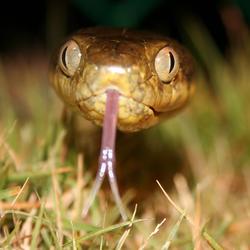
A Matter of Scales: USGS Science to Reduce Invasive Snake Impacts
The U.S. Geological Survey Ecosystem Mission Area plays a major role in invasive snake science across the country and the globe, ranging from research on improving snake detection to projects that enhance eradication. Our extensive science ultimately scales up to benefiting public health, energy transmission, tourism, and other key aspects of American prosperity.

EESC Makes an Impact: Empowering State-led Wildlife Management
Management of state natural resources is a collaborative effort between state governments, federal agencies, tribal governments, and local stakeholders. USGS Eastern Ecological Science Center (EESC) supports state-led wildlife management with research that clarifies complex issues, enhances scientific quality and communication, broadens solution options, and enables cost-sharing and mutual...
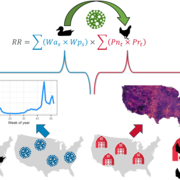
Advancing Risk Modeling for Highly Pathogenic Avian Influenza
Ongoing global outbreaks demonstrate the capacity of highly pathogenic avian influenza virus (HPAIV) to impact poultry, wild birds, and even human health. USGS research is advancing the understanding of the spatial and temporal interface between wild and domestic bird populations from which these viruses emerge to aid biosecurity planning and outbreak response.

Key Values of a Century of EESC Science
The USGS Eastern Ecological Science Center (EESC) is rooted in a proud tradition of service to the nation—advancing science that informs the conservation and management of fish, wildlife, and habitats across the eastern United States and beyond. Our mission is clear: deliver reliable, partner-driven science that supports natural resource decisions today, while ensuring these resources remain...
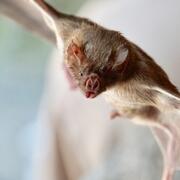
Wildlife Disease Management Tools
The USGS National Wildlife Health Center works with federal, state, Tribal, and other partners to develop practical scientific tools and information to help wildlife managers and other decision-makers prevent, prepare for, and respond to wildlife disease threats. These tools range from direct disease-management interventions—such as vaccines and treatment approaches for invasive species—to...