



Bioassays
Bioassays
Filter Total Items: 29
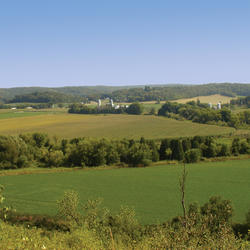
Land application of waste to US farmland: Understanding the scope and environmental implications to aid best practices
USGS is studying how different waste materials are reused on farmland and what they might mean for people and the environment. These wastes can offer benefits, but they can also carry substances we don’t fully understand. Because little is known about what’s in these waste materials or how they move through soil and water, more information is needed. USGS research helps fill these gaps so...

Helping Secure Our Nation’s Food Supply: The Intersection of Agriculture, Health, and Environment
Agriculture is vital to the U.S. economy, supplying food, fibers, fuels, and jobs. Ensuring the quality of our natural resources is essential for keeping our food safe and plentiful. The USGS studies environmental factors affecting food security and offers valuable insights to reduce health risks, ensuring a safer food supply and a healthier environment.

Healthy Fish and Wildlife: Community Livelihoods, Fishing and Hunting Heritage, Recreation, and Economic Security
Healthy fish and wildlife underpin the economic vitality, food security, recreational enjoyment, and cultural heritage of fishing and hunting in communities across the United States. Fishing and hunting resources scale from the personal recreation of families to multi-billion-dollar industries. Recognizing these critical connections, the U.S. Geological Survey (USGS) works to understand, protect...
By
Ecosystems Mission Area, Contaminant Biology, Environmental Health Program, Toxic Substances Hydrology, California Water Science Center, Central Midwest Water Science Center, Columbia Environmental Research Center, Eastern Ecological Science Center, Forest and Rangeland Ecosystem Science Center, Upper Midwest Environmental Sciences Center, Upper Midwest Water Science Center

Navigating PFAS Contamination: Insights from the USGS Potomac River Watershed Study
The Potomac River is a major watershed in the eastern United States that serves as a crucial water supply for millions of people. USGS researchers conducted a comprehensive investigation to identify the contributions of municipal and industrial wastewater treatment plant effluent to the levels of per-and polyfluoroalkyl substances (PFAS) in the Potomac River. This study included measuring PFAS...

USGS Environmental Health Program: Integrating Science for Public Health and Resource Management
The USGS Environmental Health Program seeks to understand how environmental factors, especially contaminants and pathogens, influence human health and ecosystems. It focuses on studying the distribution and effects of toxic substances, environmental stressors, and their pathways. The program prioritizes collaboration with State, Federal and local governments; Tribes; non-government organizations...
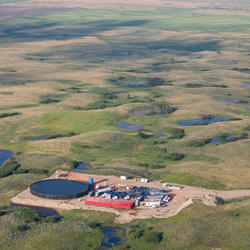
Energy Resources Life Cycle Integrated Science Team
The Energy Resources Life Cycle Integrated Science Team focuses on the potential for environmental contaminant exposures that might originate from energy resource activities including extraction, production, transportation, storage, waste management, and restoration. Perceived health risks to humans and other organisms will be distinguished from actual risks, if any. If actual risks are identified...

Food Resources Lifecycle Integrated Science Team
The team studies the movement of toxicants and pathogens that could originate from the growing, raising, and processing/manufacturing of plant and animal products through the environment where exposure can occur. This information is used to understand if there are adverse effects upon exposure and to develop decision tools to protect health.

Immunomodulation Science Team
The Immunomodulation Integrated Science Team focuses on contaminant and pathogen exposures in the environment that might influence the immune systems of wildlife and the connection to their shared environment with humans. In collaboration with public-health officials, the Team also addresses potential human-health risks stemming from similar exposures. If actual risks are identified, this Team...

Organic Geochemistry Research Core Technology Team
About the Research The Organic Geochemistry Research Laboratory Core Technology Team (CTT) as part of the Environmental Health Program works to develop targeted and non-targeted analytical methods for the identification and quantitation of chemicals that can impact the health of humans and other organisms, and uses bioassays to screen for receptor inhibition.

Functional and Molecular Bioassay Core Technology Team
About the Research The Functional and Molecular Bioassay Core Technology Team (CTT) as part of the Environmental Health Program utilizes reporter assays, quantitative gene expression analyses, and high-throughput sequencing methods to produce functional endpoints across a broad scope of environmental topics and sample matrices.

Drinking Water and Wastewater Infrastructure Science Team
The team studies toxicants and pathogens in water resources from their sources, through watersheds, aquifers, and infrastructure to human and wildlife exposures. That information is used to develop decision tools that protect human and wildlife health.
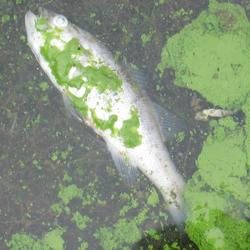
Toxins and Harmful Algal Blooms Science Team
The team develops advanced methods to study factors driving algal toxin production, how and where wildlife or humans are exposed to toxins, and ecotoxicology. That information is used to develop decision tools to understand if toxin exposure leads to adverse health effects in order to protect human and wildlife health.