
U.S. flag

An official website of the United States government

Sagebrush and Sage-Grouse

USGS has been a leader in sagebrush ecosystem research and continues to meet the priority science needs of management agencies. Scientists bring a diversity of expertise and capabilities to address a wide variety of science needs at multiple spatial scales and are committed to providing high quality science to our management partners.

Filter Total Items: 113

Prioritizing Restoration of Sagebrush Ecosystems Tool (PReSET): A USGS-facilitated Decision-support Tool for Sagebrush Ecosystem Conservation and Restoration Actions

Sagebrush ecosystems represent one of the most imperiled systems in North America and face continued and widespread degradation due to multiple factors including invasive species and increased human development. Effective sagebrush management must consider how to best conserve and restore habitats to stem the decline of species that rely on them, especially given limited conservation resources. To...
Prioritizing Restoration of Sagebrush Ecosystems Tool (PReSET): A USGS-facilitated Decision-support Tool for Sagebrush Ecosystem Conservation and Restoration Actions

Prioritizing Restoration of Sagebrush Ecosystems Tool (PReSET): A USGS-facilitated Decision-support Tool for Sagebrush Ecosystem Conservation and Restoration Actions

Sagebrush ecosystems represent one of the most imperiled systems in North America and face continued and widespread degradation due to multiple factors including invasive species and increased human development. Effective sagebrush management must consider how to best conserve and restore habitats to stem the decline of species that rely on them, especially given limited conservation resources. To...
Learn More

USGS Science Syntheses for Public Lands Management
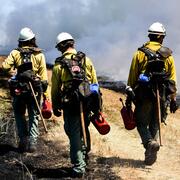
Scientific information is fundamental to understanding how proposed actions on public lands may impact the environment. Development of new science is occurring at rates that can make it challenging for biologists, resource managers, decision makers, private landowners, and other stakeholders to ensure they are using up-to-date, high-quality science information to inform their decisions. Further...
USGS Science Syntheses for Public Lands Management

USGS Science Syntheses for Public Lands Management

Scientific information is fundamental to understanding how proposed actions on public lands may impact the environment. Development of new science is occurring at rates that can make it challenging for biologists, resource managers, decision makers, private landowners, and other stakeholders to ensure they are using up-to-date, high-quality science information to inform their decisions. Further...
Learn More

Land management research in support of streamlined energy development, economic growth, and wildfire management

FORT researchers provide sound science to support the Department of the Interior in its efforts to streamline reliable energy development, enhance cost efficiency in public lands management, and manage fire-prone habitats for public safety. This research is developed in partnership with resource managers from local, State, Federal and Tribal governments, industry, and nongovernmental organizations...
Land management research in support of streamlined energy development, economic growth, and wildfire management

Land management research in support of streamlined energy development, economic growth, and wildfire management

FORT researchers provide sound science to support the Department of the Interior in its efforts to streamline reliable energy development, enhance cost efficiency in public lands management, and manage fire-prone habitats for public safety. This research is developed in partnership with resource managers from local, State, Federal and Tribal governments, industry, and nongovernmental organizations...
Learn More

WebDART: A Cutting-edge Web Tool that Evaluates Land Condition

WebDART is an online ecological assessment tool available to a wide audience that incorporates Landsat satellite remote sensing imagery, topography, geology, soil conditions, and rangeland geospatial and vegetation mapping to compare altered terrain with an unspoiled area that has similar characteristics in the same region. The tool gives resource managers, landowners, companies, and other...
WebDART: A Cutting-edge Web Tool that Evaluates Land Condition

WebDART: A Cutting-edge Web Tool that Evaluates Land Condition

WebDART is an online ecological assessment tool available to a wide audience that incorporates Landsat satellite remote sensing imagery, topography, geology, soil conditions, and rangeland geospatial and vegetation mapping to compare altered terrain with an unspoiled area that has similar characteristics in the same region. The tool gives resource managers, landowners, companies, and other...
Learn More

Prioritizing restoration and conservation of sagebrush ecosystems in northwestern Colorado

We are working with Colorado Parks and Wildlife (CPW) to pilot an expansion of the Prioritizing Restoration of Sagebrush Ecosystems Tool (PReSET; Duchardt et al. 2021) across northwestern Colorado. We recently completed Phase I of this project where we leveraged existing data resources to provide customized scenarios that are now directly guiding landscape-scale conservation delivery by CPW...
Prioritizing restoration and conservation of sagebrush ecosystems in northwestern Colorado

Prioritizing restoration and conservation of sagebrush ecosystems in northwestern Colorado

We are working with Colorado Parks and Wildlife (CPW) to pilot an expansion of the Prioritizing Restoration of Sagebrush Ecosystems Tool (PReSET; Duchardt et al. 2021) across northwestern Colorado. We recently completed Phase I of this project where we leveraged existing data resources to provide customized scenarios that are now directly guiding landscape-scale conservation delivery by CPW...
Learn More

USGS Technical Transfer for Department of War Installations in the Sagebrush Biome

The USGS has initiated a new collaboration effort with Department of War (DoW) in the sagebrush biome. The goal of this effort is to establish a network with DoW resource managers to define pervasive natural resource issues facing DoW installations and to identify existing innovative USGS science and tools that support DoW resource managers. Through this effort, the USGS will provide subject...
USGS Technical Transfer for Department of War Installations in the Sagebrush Biome

USGS Technical Transfer for Department of War Installations in the Sagebrush Biome

The USGS has initiated a new collaboration effort with Department of War (DoW) in the sagebrush biome. The goal of this effort is to establish a network with DoW resource managers to define pervasive natural resource issues facing DoW installations and to identify existing innovative USGS science and tools that support DoW resource managers. Through this effort, the USGS will provide subject...
Learn More

Economic Implications of Sagebrush Treatment and Restoration Practices Across the Great Basin and Wyoming

USGS and Colorado State University researchers are conducting analyses and predictions of sagebrush recovery in the Great Basin and Wyoming and assess the role of weather, soils, and reseeding treatments.
Economic Implications of Sagebrush Treatment and Restoration Practices Across the Great Basin and Wyoming

Economic Implications of Sagebrush Treatment and Restoration Practices Across the Great Basin and Wyoming

USGS and Colorado State University researchers are conducting analyses and predictions of sagebrush recovery in the Great Basin and Wyoming and assess the role of weather, soils, and reseeding treatments.
Learn More

Sagebrush Landscape Collaborative

Encompassing over 175 million acres, America’s “Sagebrush Sea” is the largest terrestrial ecosystem in the lower 48 states. A predominately shrubland system, this landscape ranges over deserts, valleys, mountains, and mesas from the Canadian border to our southwestern deserts. The sagebrush ecosystem – the ancestral homeland of many Tribal Nations – supports critical agricultural and recreation...
Sagebrush Landscape Collaborative

Sagebrush Landscape Collaborative

Encompassing over 175 million acres, America’s “Sagebrush Sea” is the largest terrestrial ecosystem in the lower 48 states. A predominately shrubland system, this landscape ranges over deserts, valleys, mountains, and mesas from the Canadian border to our southwestern deserts. The sagebrush ecosystem – the ancestral homeland of many Tribal Nations – supports critical agricultural and recreation...
Learn More

Assessing vegetation and avian community response to juniper reduction treatments in Southwest Montana

The Southwest Montana Sagebrush Partnership (SMSP) team, including land managers, landowners, and scientists, is implementing conifer removal projects encompassing over 55,000 acres of private, state, and federal lands throughout the region. To date, little place-based information exists regarding likely vegetation and bird responses to such treatments in Southwestern Montana. To address this...
Assessing vegetation and avian community response to juniper reduction treatments in Southwest Montana

Assessing vegetation and avian community response to juniper reduction treatments in Southwest Montana

The Southwest Montana Sagebrush Partnership (SMSP) team, including land managers, landowners, and scientists, is implementing conifer removal projects encompassing over 55,000 acres of private, state, and federal lands throughout the region. To date, little place-based information exists regarding likely vegetation and bird responses to such treatments in Southwestern Montana. To address this...
Learn More

Effects of the herbicide, Indaziflam, on invasive annual grasses

Invasive annual grasses are spreading across the sagebrush ecosystem, threatening the survival of native plant species and the wildlife habitats they support. Researchers from the U.S. Geological Survey, Colorado State University, University of Wyoming, the Bureau of Land Management, National Park Service, and the U.S. Fish and Wildlife Service are collaboratively investigating the factors that...
Effects of the herbicide, Indaziflam, on invasive annual grasses

Effects of the herbicide, Indaziflam, on invasive annual grasses

Invasive annual grasses are spreading across the sagebrush ecosystem, threatening the survival of native plant species and the wildlife habitats they support. Researchers from the U.S. Geological Survey, Colorado State University, University of Wyoming, the Bureau of Land Management, National Park Service, and the U.S. Fish and Wildlife Service are collaboratively investigating the factors that...
Learn More

Mapping wild horse densities across broad landscapes of the Western United States

Researchers at USGS are using historical wild horse survey and monitoring records to conduct a study of horse density across sagebrush ecosystems of the western United States. Researchers will develop generalized density maps for the species that will enhance concurrent evaluations into the ecological effects of wild horse populations.
Mapping wild horse densities across broad landscapes of the Western United States

Mapping wild horse densities across broad landscapes of the Western United States

Researchers at USGS are using historical wild horse survey and monitoring records to conduct a study of horse density across sagebrush ecosystems of the western United States. Researchers will develop generalized density maps for the species that will enhance concurrent evaluations into the ecological effects of wild horse populations.
Learn More

Evaluating potential vectors of annual grass invasion

Invasive annual grasses, facilitated by a range of disturbances, are invading many areas within the sagebrush biome. Researchers from the U.S. Geological Survey, Colorado State University, U.S. Fish and Wildlife Service and the Bureau of Land Management are investigating which non-fire disturbances are most associated with the spread of invasive grasses. The findings from this study could guide...
Evaluating potential vectors of annual grass invasion

Evaluating potential vectors of annual grass invasion

Invasive annual grasses, facilitated by a range of disturbances, are invading many areas within the sagebrush biome. Researchers from the U.S. Geological Survey, Colorado State University, U.S. Fish and Wildlife Service and the Bureau of Land Management are investigating which non-fire disturbances are most associated with the spread of invasive grasses. The findings from this study could guide...
Learn More
Was this page helpful?