



Explore our active and completed projects to learn more about the scientific investigations we conduct. Use keywords and the available filters to narrow your search scope.
Explore Our Projects
Explore Our Projects
Filter Total Items: 127

Geologic Map of Alaska
In January 2016, the U.S. Geological Survey released the first ever digital geologic map of Alaska. This map reflects more than a century of work and provides a visual context for the abundant mineral and energy resources found throughout the state. The map also is available to use in three different formats: a professional GIS database, a public interactive version via a web browser, and an...

Alaska Mine Waste
Critical minerals are essential to the U.S. economy and national security, have a supply chain that is vulnerable to disruption, and serve an essential function in the manufacturing of many products. Often, critical minerals are found as co- or by-products in deposits mined for precious or base metals.

Geophysical and Geological Characterization of Mineral Deposit Localization in the Colorado Mineral Belt and Surrounding Lithosphere
The Colorado Mineral Belt (CMB) contains many important metallic and critical mineral deposits, concentrated (or localized) in a region that is geologically complex. The origins of these deposits are still not well understood making the CMB an ideal place to study how geologic processes concentrate minerals. This project aims to determine where, when, and how these mineral deposits form.
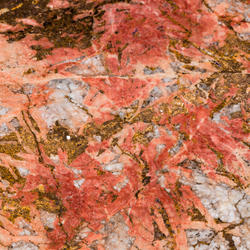
Controls on Critical Element Enrichment in Carbonatite-Alkaline Igneous Complexes
The project seeks to determine the processes responsible for critical element enrichment in carbonatites and to enhance our ability to identify and assess economic deposits. This project will work at various scales to meet this objective and will primarily focus on deposits within the US or our USGS collaborative Nations.

USMIN Mineral Deposit Database
The USMIN Mineral Deposit Database Project develops national-scale geospatial databases that provide authoritative information on the most significant mines, mineral deposits, and mining districts in the United States. These resources advance the understanding of domestic mineral resources and are available through the output of digital data products, journal articles, presentations, and other...

Alaska Databases and Information Analysis
We provide GIS and database support for Alaska-based research projects, including database design, data capture, and maintenance, GIS analysis and display, and production of datasets and metadata for publication and data releases.
Geologic Mapping and Foundational Science
We deliver detailed mapping and foundational science about our Nation and world’s geology and geologic resources.
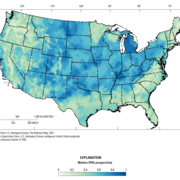
Minerals and American Energy
Our science supports decisions at the mineral-energy nexus, helping decisionmakers plan for energy independence, security and resilience.

Mineral Commodity Statistics and Information
The National Minerals Information Center publishes statistics and information on the worldwide supply of, demand for, and flow of minerals and materials essential to the U.S. economy, the national security, and protection of the environment. The annual Mineral Commodity Summaries Report contains contains estimates covering nonfuel mineral industry data for over 90 individual minerals and materials...
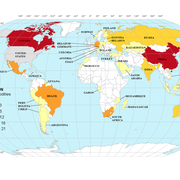
Materials Flow - Minerals
The National Minerals Information Center produces reports on materials flow, recycling, supply chain, and sustainability. These publications describe the flow of materials from source to ultimate disposition to help better understand the economy, manage the use of natural resources, and protect the environment. Commodity Statistics and Information page lists statistical periodicals and special...

Large Magmatic Systems for Minerals
This project continues work on large magmatic systems in the U.S., where critical mineral commodities important to clean energy technologies can be concentrated. Modeling of large mafic intrusion extents will continue, and new geophysical methods will be applied to improve understanding of magmatic systems.

Source, transport and deposition of critical minerals using trace metal and isotope systematics: Denver High Resolution Laboratory
The project objective is to develop and apply solution and in situ isotopic and trace element methods to emerging research opportunities to gain a better understanding of the processes controlling critical mineral deposits, metal mobility, and other geological inquiries.

Northern Rocky Mountains Transect
The goal of the Northern Rocky Mountains Transect (NRMT) project is to produce updated geologic maps of an important and understudied region of Idaho and western Montana that covers a wide array of distinct geologic terrains.

Analytical Chemistry
The USGS Mineral Resources Program and other USGS scientists need specialized routine analysis in order to conduct their research. The Analytical Chemistry project facilitates the ability of USGS scientists to obtain needed analyses.

Alaska Earth Mapping Resources Initiative (Earth MRI)
Our objective is to provide a strategic framework for planning, coordination, and execution of the USGS Earth Mapping Resources Initiative (Earth MRI) in Alaska. Earth MRI aims to improve knowledge of the U.S. geologic framework through new geological and geophysical mapping and to identify areas that have the potential to contain undiscovered critical mineral resources.

Critical Minerals in Alaska Placer Deposits and Southeast Alaska Mineral Systems
Critical minerals have been identified in most Alaskan placers, yet little is known about the concentration of these phases. Historic and active placer mines have typically produced gold and are widespread across Alaska. Activity in the placer districts has resulted in gravel piles and sluice tailings that are products of gold mining. Gold has been the traditional target of placer mining; however...

Critical Minerals Mapping Initiative (CMMI)
The USGS, in combination with Geoscience Australia and the Geological Survey of Canada, formed the Critical Minerals Mapping Initiative (CMMI) in 2019 to combine expertise and collaboratively conduct research on critical mineral resources.

Interdisciplinary Methods and Applications in Geophysics (IMAGe)
The project focuses on the development of novel geophysical techniques that improve our ability to understand Earth's subsurface, with broad relevance to the Mineral Resources Program and the USGS Science Strategy. Our goal is to develop and maintain state-of-the art geophysical capabilities that support the diverse science needs of USGS projects that aim to meet the challenges of the 21st century...

Alaska Resource Data File
The Alaska Resource Data File (ARDF) site provides descriptions of mines, prospects, and mineral occurrences for individual U.S. Geological Survey 1:250,000-scale quadrangles in Alaska.

Research Chemistry
This project provides Mineral Resources Program scientists with access to state-of-the-art analytical laboratories and expertise to advance the Program mission. The project also develops new analytical techniques and methodologies to improve data quality and geological interpretations for USGS scientists.

Argon Geochronology
This project supports the USGS argon geochronology laboratory in Denver. The USGS 40Ar/39Ar geochronology laboratory is a state-of-the-art research facility for determining absolute ages of minerals and rocks. The 40Ar/39Ar laboratory contributes critical geochronology to individual USGS research projects and to partners in academia and other Federal agencies. This laboratory develops methodology...

Minerals and Uses Activity Minerals and Uses Activity
This is a hands-on activity to introduce students to minerals, critical minerals, and how we use them in our everyday lives. Students will work in teams to match mineral commodities to the ore/mineral they come from, and the everyday items that need them.

Activity and Coloring Sheets Activity and Coloring Sheets
Coloring sheets and activity books that cover mineral resource topics and beyond!
High School High School
Coming soon! Lesson plans and activities tailored for high school-aged students are in the works!
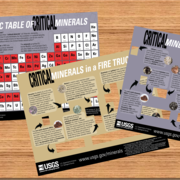
Periodic Table of Critical Minerals & Their Uses Activity Periodic Table of Critical Minerals & Their Uses Activity
Critical minerals are essential for our national security, economy, development of renewable energy, and infrastructure. In the activity below you will learn the definition of a critical mineral and discover what and how critical minerals are used in everyday items.

Elementary School Elementary School
Lesson plans and activities tailored for elementary school-aged students are in the works!

Our Story Our Story
The Mineral Resources Program builds on a long and rich legacy of geological science to meet today's needs.

International Minerals Statistics and Information International Minerals Statistics and Information
Reports on countries' mineral industries, including statistics on mineral production and trade, facility locations, government policies, industry structure, and commodity sector developments.
Explore our active and completed projects to learn more about the scientific investigations we conduct. Use keywords and the available filters to narrow your search scope.
Explore Our Projects
Explore Our Projects
Filter Total Items: 127
Geologic Map of Alaska
In January 2016, the U.S. Geological Survey released the first ever digital geologic map of Alaska. This map reflects more than a century of work and provides a visual context for the abundant mineral and energy resources found throughout the state. The map also is available to use in three different formats: a professional GIS database, a public interactive version via a web browser, and an...
Alaska Mine Waste
Critical minerals are essential to the U.S. economy and national security, have a supply chain that is vulnerable to disruption, and serve an essential function in the manufacturing of many products. Often, critical minerals are found as co- or by-products in deposits mined for precious or base metals.
Geophysical and Geological Characterization of Mineral Deposit Localization in the Colorado Mineral Belt and Surrounding Lithosphere
The Colorado Mineral Belt (CMB) contains many important metallic and critical mineral deposits, concentrated (or localized) in a region that is geologically complex. The origins of these deposits are still not well understood making the CMB an ideal place to study how geologic processes concentrate minerals. This project aims to determine where, when, and how these mineral deposits form.
Controls on Critical Element Enrichment in Carbonatite-Alkaline Igneous Complexes
The project seeks to determine the processes responsible for critical element enrichment in carbonatites and to enhance our ability to identify and assess economic deposits. This project will work at various scales to meet this objective and will primarily focus on deposits within the US or our USGS collaborative Nations.
USMIN Mineral Deposit Database
The USMIN Mineral Deposit Database Project develops national-scale geospatial databases that provide authoritative information on the most significant mines, mineral deposits, and mining districts in the United States. These resources advance the understanding of domestic mineral resources and are available through the output of digital data products, journal articles, presentations, and other...
Alaska Databases and Information Analysis
We provide GIS and database support for Alaska-based research projects, including database design, data capture, and maintenance, GIS analysis and display, and production of datasets and metadata for publication and data releases.
Geologic Mapping and Foundational Science
We deliver detailed mapping and foundational science about our Nation and world’s geology and geologic resources.
Minerals and American Energy
Our science supports decisions at the mineral-energy nexus, helping decisionmakers plan for energy independence, security and resilience.
Mineral Commodity Statistics and Information
The National Minerals Information Center publishes statistics and information on the worldwide supply of, demand for, and flow of minerals and materials essential to the U.S. economy, the national security, and protection of the environment. The annual Mineral Commodity Summaries Report contains contains estimates covering nonfuel mineral industry data for over 90 individual minerals and materials...
Materials Flow - Minerals
The National Minerals Information Center produces reports on materials flow, recycling, supply chain, and sustainability. These publications describe the flow of materials from source to ultimate disposition to help better understand the economy, manage the use of natural resources, and protect the environment. Commodity Statistics and Information page lists statistical periodicals and special...
Large Magmatic Systems for Minerals
This project continues work on large magmatic systems in the U.S., where critical mineral commodities important to clean energy technologies can be concentrated. Modeling of large mafic intrusion extents will continue, and new geophysical methods will be applied to improve understanding of magmatic systems.
Source, transport and deposition of critical minerals using trace metal and isotope systematics: Denver High Resolution Laboratory
The project objective is to develop and apply solution and in situ isotopic and trace element methods to emerging research opportunities to gain a better understanding of the processes controlling critical mineral deposits, metal mobility, and other geological inquiries.
Northern Rocky Mountains Transect
The goal of the Northern Rocky Mountains Transect (NRMT) project is to produce updated geologic maps of an important and understudied region of Idaho and western Montana that covers a wide array of distinct geologic terrains.
Analytical Chemistry
The USGS Mineral Resources Program and other USGS scientists need specialized routine analysis in order to conduct their research. The Analytical Chemistry project facilitates the ability of USGS scientists to obtain needed analyses.
Alaska Earth Mapping Resources Initiative (Earth MRI)
Our objective is to provide a strategic framework for planning, coordination, and execution of the USGS Earth Mapping Resources Initiative (Earth MRI) in Alaska. Earth MRI aims to improve knowledge of the U.S. geologic framework through new geological and geophysical mapping and to identify areas that have the potential to contain undiscovered critical mineral resources.
Critical Minerals in Alaska Placer Deposits and Southeast Alaska Mineral Systems
Critical minerals have been identified in most Alaskan placers, yet little is known about the concentration of these phases. Historic and active placer mines have typically produced gold and are widespread across Alaska. Activity in the placer districts has resulted in gravel piles and sluice tailings that are products of gold mining. Gold has been the traditional target of placer mining; however...
Critical Minerals Mapping Initiative (CMMI)
The USGS, in combination with Geoscience Australia and the Geological Survey of Canada, formed the Critical Minerals Mapping Initiative (CMMI) in 2019 to combine expertise and collaboratively conduct research on critical mineral resources.
Interdisciplinary Methods and Applications in Geophysics (IMAGe)
The project focuses on the development of novel geophysical techniques that improve our ability to understand Earth's subsurface, with broad relevance to the Mineral Resources Program and the USGS Science Strategy. Our goal is to develop and maintain state-of-the art geophysical capabilities that support the diverse science needs of USGS projects that aim to meet the challenges of the 21st century...
Alaska Resource Data File
The Alaska Resource Data File (ARDF) site provides descriptions of mines, prospects, and mineral occurrences for individual U.S. Geological Survey 1:250,000-scale quadrangles in Alaska.
Research Chemistry
This project provides Mineral Resources Program scientists with access to state-of-the-art analytical laboratories and expertise to advance the Program mission. The project also develops new analytical techniques and methodologies to improve data quality and geological interpretations for USGS scientists.
Argon Geochronology
This project supports the USGS argon geochronology laboratory in Denver. The USGS 40Ar/39Ar geochronology laboratory is a state-of-the-art research facility for determining absolute ages of minerals and rocks. The 40Ar/39Ar laboratory contributes critical geochronology to individual USGS research projects and to partners in academia and other Federal agencies. This laboratory develops methodology...
Minerals and Uses Activity Minerals and Uses Activity
This is a hands-on activity to introduce students to minerals, critical minerals, and how we use them in our everyday lives. Students will work in teams to match mineral commodities to the ore/mineral they come from, and the everyday items that need them.
Activity and Coloring Sheets Activity and Coloring Sheets
Coloring sheets and activity books that cover mineral resource topics and beyond!
High School High School
Coming soon! Lesson plans and activities tailored for high school-aged students are in the works!
Periodic Table of Critical Minerals & Their Uses Activity Periodic Table of Critical Minerals & Their Uses Activity
Critical minerals are essential for our national security, economy, development of renewable energy, and infrastructure. In the activity below you will learn the definition of a critical mineral and discover what and how critical minerals are used in everyday items.
Elementary School Elementary School
Lesson plans and activities tailored for elementary school-aged students are in the works!
Our Story Our Story
The Mineral Resources Program builds on a long and rich legacy of geological science to meet today's needs.
International Minerals Statistics and Information International Minerals Statistics and Information
Reports on countries' mineral industries, including statistics on mineral production and trade, facility locations, government policies, industry structure, and commodity sector developments.