



Migratory Birds
Migratory Birds
Filter Total Items: 128
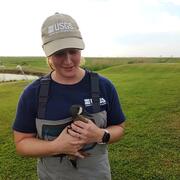
Science in Flight: Seven Ways Bird Science Serves Society
Explore seven case studies highlighting how USGS bird research informs real-world decisions.

Key Values of a Century of EESC Science
The USGS Eastern Ecological Science Center (EESC) is rooted in a proud tradition of service to the nation—advancing science that informs the conservation and management of fish, wildlife, and habitats across the eastern United States and beyond. Our mission is clear: deliver reliable, partner-driven science that supports natural resource decisions today, while ensuring these resources remain...
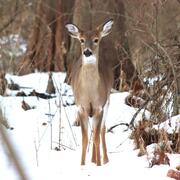
EESC Makes an Impact: Preserving our Hunting Resources
Hunting is an economic engine for the U.S. and responsible management of these resources directly supports 45.2 billion dollars spent by hunters annually. Conservation and management of hunting resources also contributes substantially to the 394.8 billion dollars spent on all wildlife-related recreation. Hunting traditions are an integral component of our American heritage, with 14.4 million...

USGS Alaska Science Center Wildlife Tracking Data Collection
Understanding the short- and long-distance movements of wildlife is critical for a wide variety of ecological research questions and management decisions. Since the mid-1980s, the USGS Alaska Science Center has used information from telemetry devices on wildlife species to determine locations of animals throughout their annual cycles, understand patterns of habitat use, quantify time spent on...

Pacific Island Bird Survey Design and Data Analysis
Abundance data are collected for bird populations throughout the Pacific Islands by numerous federal, state, university, and non-profit organizations. In order to ensure data are standardized and available to researchers throughout the region, interagency bird databases have been created and continue to be used. These databases contain more than a million compiled, proofed, and standardized...

Loon Research
Scientists at the USGS Alaska Science Center have conducted research on Alaska’s three loon species since the late 1970s. Loons rely on freshwater lakes for nesting habitat and fish and invertebrates inhabiting lakes and marine ecosystems for food. All three loon species in Alaska occur within the National Petroleum Reserve-Alaska (NPR-A) on Alaska’s northern coast. Research by the USGS is...

Marine Bird Populations and the Gulf of Mexico Marine Assessment Program for Protected Species (GoMMAPPS)
The objective of the Gulf of Mexico Marine Assessment for Protected Species (GoMMAPPS) project was to document the occurrence and diversity of bird species in nearshore and open sea environments of the Gulf of America for the purposes of better informing regulatory and other decisions that influence the conservation of migratory birds.

Prey Availability
Migratory wildlife need to balance the benefits of migration and reproduction with the physiological costs. This is particularly challenging in dynamic environments like wetlands, where food levels can vary greatly from year to year. For shorebirds in the Great Basin region, saline or terminal lakes provide essential habitats during their annual life cycle. To understand how changes in hydrology...
By
Ecosystems Mission Area, Water Resources Mission Area, Species Management Research Program, Forest and Rangeland Ecosystem Science Center, Fort Collins Science Center, Nevada Water Science Center, Oregon Water Science Center, Utah Water Science Center, Western Ecological Research Center (WERC), Saline Lake Ecosystems Integrated Water Availability Assessment

North American Waterfowl Management Plan
The North American Waterfowl Management Plan (NAWMP) represents the foundational and successful effort to manage waterfowl and migratory bird in North America. Continued success of NAWMP depends on maintaining relevance to partners and society over time. Social science research supports NAWMP by providing a better understanding of what people value regarding waterfowl and their habitats.

Monitoring Effects of Barrier Island Restoration on Piping Plovers in Louisiana
The federally threatened piping plover relies on sand-beach habitat year-round for nesting, foraging, and roosting, habitat that is particularly vulnerable to loss and degradation from coastal development, recreation activities, erosion, and sea-level rise.

A Multiscale Approach to Understanding Migratory Landbird Habitat Use of Functional Stopover Habitat Types and Management Efforts
USGS scientists are using a spatially-explicit Bayesian network model to predict the difference between energetic value and energetic demand for stopover habitats for migrating landbirds.

Adapting to Climate Change: Trends and Severe Storm Responses by Migratory Landbirds and Their Habitats
USGS scientists will be analyzing weather surveillance radar observations of birds departing stopover habitats to measure responses to climate change.