U.S. flag

An official website of the United States government

Terrestrial Mammals

Filter Total Items: 72

Ecology and Distribution of the Endangered Hawaiian Hoary Bat

The ‘ōpe‘ape‘a (Hawaiian hoary bat, Lasiurus semotus) is listed as endangered due to population declines and a lack of knowledge on its distribution, abundance, and habitat needs. In order to help inform management for and recovery of this species, USGS-PIERC in collaboration with other agencies has conducted studies on the bat’s distribution, abundance, population genetics, food habitats, and...
Ecology and Distribution of the Endangered Hawaiian Hoary Bat

Ecology and Distribution of the Endangered Hawaiian Hoary Bat

The ‘ōpe‘ape‘a (Hawaiian hoary bat, Lasiurus semotus) is listed as endangered due to population declines and a lack of knowledge on its distribution, abundance, and habitat needs. In order to help inform management for and recovery of this species, USGS-PIERC in collaboration with other agencies has conducted studies on the bat’s distribution, abundance, population genetics, food habitats, and...
Learn More

Bighorn Sheep and Mountain Goat Research in Western National Park Units

Mountain goat and bighorn sheep are iconic symbols of many national lands in the West and are economically important as big game species on some public lands and as tourist attractions in and around national parks. Both species have limited distributions that can be difficult to observe and face multiple stressors including disease, increasing recreation in remote areas, and shifting weather...
Bighorn Sheep and Mountain Goat Research in Western National Park Units

Bighorn Sheep and Mountain Goat Research in Western National Park Units

Mountain goat and bighorn sheep are iconic symbols of many national lands in the West and are economically important as big game species on some public lands and as tourist attractions in and around national parks. Both species have limited distributions that can be difficult to observe and face multiple stressors including disease, increasing recreation in remote areas, and shifting weather...
Learn More

Terrestrial Mammal Research

Understanding the population dynamics, predator/prey relationships and habitat ecology of terrestrial mammals, such as caribou and muskoxen, is critical for the management of these species and their habitats in Alaska.
Terrestrial Mammal Research

Terrestrial Mammal Research

Understanding the population dynamics, predator/prey relationships and habitat ecology of terrestrial mammals, such as caribou and muskoxen, is critical for the management of these species and their habitats in Alaska.
Learn More

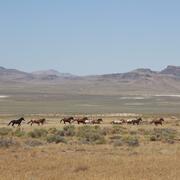
Science for management of America’s iconic wild horses and burros

Wild horses and burros are iconic wildlife of the western USA as well as a complicated management issue on tribal, state, and federal lands. Due to their history as domesticated animals, these wild equids – also called “free-roaming” or “feral” equids – can reproduce quickly, and have few natural predators, allowing their populations to grow rapidly if not managed. When populations are too large...
Science for management of America’s iconic wild horses and burros

Science for management of America’s iconic wild horses and burros

Wild horses and burros are iconic wildlife of the western USA as well as a complicated management issue on tribal, state, and federal lands. Due to their history as domesticated animals, these wild equids – also called “free-roaming” or “feral” equids – can reproduce quickly, and have few natural predators, allowing their populations to grow rapidly if not managed. When populations are too large...
Learn More

USGS Sagebrush Science: Supporting Public Safety and Economic Decision Making Across the West

The sagebrush biome is one of the largest ecosystems in North America. Encompassing nearly one-third of the continental U.S., it provides critical resources for millions of Americans and a home for hundreds of plants and animal species in the West. Natural resource management in sagebrush ecosystems can be complex, and science can support management decisions by providing knowledge and tools to...
USGS Sagebrush Science: Supporting Public Safety and Economic Decision Making Across the West

USGS Sagebrush Science: Supporting Public Safety and Economic Decision Making Across the West

The sagebrush biome is one of the largest ecosystems in North America. Encompassing nearly one-third of the continental U.S., it provides critical resources for millions of Americans and a home for hundreds of plants and animal species in the West. Natural resource management in sagebrush ecosystems can be complex, and science can support management decisions by providing knowledge and tools to...
Learn More

Wyoming Landscape Conservation Initiative (WLCI) research at NOROCK

The Wyoming Landscape Conservation Initiative (WLCI) addresses the impacts of land-use and habitat changes on Southwest Wyoming’s natural resources. This long-term project involves partners from 12 Federal, State, and local natural resource agencies, as well as non-governmental organizations. NOROCK scientists, partners, and scientists from other USGS centers conduct integrated research to support...
Wyoming Landscape Conservation Initiative (WLCI) research at NOROCK

Wyoming Landscape Conservation Initiative (WLCI) research at NOROCK

The Wyoming Landscape Conservation Initiative (WLCI) addresses the impacts of land-use and habitat changes on Southwest Wyoming’s natural resources. This long-term project involves partners from 12 Federal, State, and local natural resource agencies, as well as non-governmental organizations. NOROCK scientists, partners, and scientists from other USGS centers conduct integrated research to support...
Learn More

North American Bat Monitoring Program (NABat)

Bats are essential contributing members of healthy, functioning ecosystems. They perform numerous ecosystem services like insect pest control and plant pollination, and provide enormous economic benefits through ecotourism, medical research, and novel biotechnologies. North American bats face unprecedented threats including habitat loss and fragmentation, white-nose syndrome, and wind energy...

North American Bat Monitoring Program (NABat)

North American Bat Monitoring Program (NABat)

Bats are essential contributing members of healthy, functioning ecosystems. They perform numerous ecosystem services like insect pest control and plant pollination, and provide enormous economic benefits through ecotourism, medical research, and novel biotechnologies. North American bats face unprecedented threats including habitat loss and fragmentation, white-nose syndrome, and wind energy...
Learn More

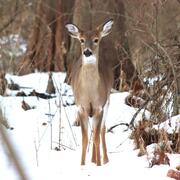
Key Values of a Century of EESC Science

The USGS Eastern Ecological Science Center (EESC) is rooted in a proud tradition of service to the nation—advancing science that informs the conservation and management of fish, wildlife, and habitats across the eastern United States and beyond. Our mission is clear: deliver reliable, partner-driven science that supports natural resource decisions today, while ensuring these resources remain...
Key Values of a Century of EESC Science

Key Values of a Century of EESC Science

The USGS Eastern Ecological Science Center (EESC) is rooted in a proud tradition of service to the nation—advancing science that informs the conservation and management of fish, wildlife, and habitats across the eastern United States and beyond. Our mission is clear: deliver reliable, partner-driven science that supports natural resource decisions today, while ensuring these resources remain...
Learn More

EESC Makes an Impact: Preserving our Hunting Resources

Hunting is an economic engine for the U.S. and responsible management of these resources directly supports 45.2 billion dollars spent by hunters annually. Conservation and management of hunting resources also contributes substantially to the 394.8 billion dollars spent on all wildlife-related recreation. Hunting traditions are an integral component of our American heritage, with 14.4 million...
EESC Makes an Impact: Preserving our Hunting Resources

EESC Makes an Impact: Preserving our Hunting Resources

Hunting is an economic engine for the U.S. and responsible management of these resources directly supports 45.2 billion dollars spent by hunters annually. Conservation and management of hunting resources also contributes substantially to the 394.8 billion dollars spent on all wildlife-related recreation. Hunting traditions are an integral component of our American heritage, with 14.4 million...
Learn More

Research to support conservation of America’s national mammal, the bison

Once numbering in the tens of millions, plains bison ( Bison bison bison) were nearly driven to extinction with only a few hundred individuals remaining by the late 19th century. Plains bison have since recovered to approximately 20,000 animals managed in conservation herds throughout North America, yet substantial challenges to their recovery remain. The Department of the Interior (DOI) stewards...
Research to support conservation of America’s national mammal, the bison

Research to support conservation of America’s national mammal, the bison

Once numbering in the tens of millions, plains bison ( Bison bison bison) were nearly driven to extinction with only a few hundred individuals remaining by the late 19th century. Plains bison have since recovered to approximately 20,000 animals managed in conservation herds throughout North America, yet substantial challenges to their recovery remain. The Department of the Interior (DOI) stewards...
Learn More

Bison Conservation

USGS science in support of the Department of the Interior's Bison Conservation Initiative.
Bison Conservation

Bison Conservation

USGS science in support of the Department of the Interior's Bison Conservation Initiative.
Learn More

Counting America’s Wild Horses and Burros: Better Estimates for Population Management

The Wild Free-Roaming Horses and Burros Act of 1971, as amended, states that, "It is the policy of Congress that wild free-roaming horses and burros shall be protected from capture, branding, harassment, or death; and to accomplish this they are to be considered in the area where presently found, as an integral part of the natural system of the public lands (PL 92-195, Sec. 1331, Congressional...
Counting America’s Wild Horses and Burros: Better Estimates for Population Management

Counting America’s Wild Horses and Burros: Better Estimates for Population Management

The Wild Free-Roaming Horses and Burros Act of 1971, as amended, states that, "It is the policy of Congress that wild free-roaming horses and burros shall be protected from capture, branding, harassment, or death; and to accomplish this they are to be considered in the area where presently found, as an integral part of the natural system of the public lands (PL 92-195, Sec. 1331, Congressional...
Learn More
Was this page helpful?