



Species Management
Species Management
Text needed
Filter Total Items: 31

USGS Sagebrush Science: Supporting Public Safety and Economic Decision Making Across the West
The sagebrush biome is one of the largest ecosystems in North America. Encompassing nearly one-third of the continental U.S., it provides critical resources for millions of Americans and a home for hundreds of plants and animal species in the West. Natural resource management in sagebrush ecosystems can be complex, and science can support management decisions by providing knowledge and tools to...
By
Core Science Systems Mission Area, Ecosystems Mission Area, Land Management Research Program, Earth Resources Observation and Science (EROS) Center, Forest and Rangeland Ecosystem Science Center, Fort Collins Science Center, Northern Rocky Mountain Science Center, Southwest Biological Science Center, Western Ecological Research Center (WERC), Wildland Fire Science
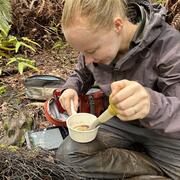
How to catch a vector: Mosquito monitoring for avian malaria control
USGS researchers are combatting avian malaria by improving the trapping and tracking of mosquitoes in endangered Hawaiian bird habitats.

Pacific Island Bird Survey Design and Data Analysis
Abundance data are collected for bird populations throughout the Pacific Islands by numerous federal, state, university, and non-profit organizations. In order to ensure data are standardized and available to researchers throughout the region, interagency bird databases have been created and continue to be used. These databases contain more than a million compiled, proofed, and standardized...

Brown Treesnake Rapid Response Team
The Brown Treesnake Rapid Response Team (RRT) evaluates snake sightings and quickly deploys when sightings are credible and match a brown treesnake. The RRT is an interagency partnership that cooperatively prevents the spread of brown treesnakes in the United States and territories.

Prey Availability
Migratory wildlife need to balance the benefits of migration and reproduction with the physiological costs. This is particularly challenging in dynamic environments like wetlands, where food levels can vary greatly from year to year. For shorebirds in the Great Basin region, saline or terminal lakes provide essential habitats during their annual life cycle. To understand how changes in hydrology...
By
Ecosystems Mission Area, Water Resources Mission Area, Species Management Research Program, Forest and Rangeland Ecosystem Science Center, Fort Collins Science Center, Nevada Water Science Center, Oregon Water Science Center, Utah Water Science Center, Western Ecological Research Center (WERC), Saline Lake Ecosystems Integrated Water Availability Assessment

Chemical Ecology of Rapid ʽŌhiʽa Death
We are working on understanding the chemical ecology of Rapid ʽŌhiʽa Death (ROD), which is critical for protecting both healthy and ROD-infected ʽōhiʽa. A better understanding could lead to early ROD detection tools and the development of attractants and repellents to manipulate ambrosia beetle populations.

Conservation Efforts Database
The Conservation Efforts Database (CED) is a secure online data repository that collects, stores, and retrieves spatially explicit, spatially obscure, and non-spatial information on species and habitat conservation and management actions. The CED is designed to allow data collection from all interested partners including federal, state, local, non-government organizations, universities, private...

Sagebrush Trends Tool
This web-based mapping tool, released in 2024, enables users to identify which threats are driving the current status of Sagebrush Ecological Integrity (SEI), assess if SEI and associated threats, such as invasive annual grass, conifer encroachment, human modification - have changed over time, and visualize spatial trends in SEI and threats. The Sagebrush Ecosystem Trends Module supports managers...

Gunnison Sage-Grouse Recovery Module
The CED Gunnison Sage-grouse Recovery Module was released in 2020 and is designed to capture any effort designed to benefit Gunnison sage-grouse recovery. This includes habitat restoration and any activities that contribute to the recovery of Gunnison sage-grouse, a federally listed threatened species. While similar to the Sagebrush Module, The Gunnison Sage-Grouse Recovery module contains fields...

Cutthroat Trout Recovery Module
The CED Cutthroat Module, released in 2024, is our latest module and is designed to capture any action related to the conservation, enhancement, restoration, or recovery of native, inland cutthroat trout or the habitats and waters that they depend on. The first iteration of this module was designed specifically for the Lahontan cutthroat trout. However, we are currently working on expanding the...

Sagebrush Module
The CED Sagebrush Module, first released in 2014, captures any conservation effort, enhancement, restoration, plan, or action related to the sagebrush landscape or activities that benefit sagebrush-dependent species. The CED was originally focused only on greater sage-grouse and thus, most of the records currently in our database are related to this species, but, starting in 2019, we expanded our...

Population Assessments of the Pacific Sheath-Tailed Bat and Mariana Swiftlet
Using thermal cameras, we are determining the population size and cave occupancy of the Mariana swiftlet and Pacific sheath-tailed bat. Both species face extirpation from the Northern Mariana Islands and are listed as endangered. Understanding the species' population status can assist in planning recovery efforts for both species.