



Scientists at the USGS National Wildlife Health Center have been working on vaccines to protect bats from diseases like such as rabies and white-nose syndrome. The most promising method is called orotopical vaccination. By applying the vaccine to the bat’s muzzle, the gel-based vaccine is spread to others in the colony through grooming.
M. Camille Hopkins, DVM, MS, PhD, DACVPM
Camille is the Wildlife Disease Specialist for the Ecosystems Mission Area. At USGS headquarters, Camille coordinates national science efforts related to aquatic and terrestrial wildlife disease. She serves as the primary USGS headquarters staff member for national coordination of aquatic and terrestrial wildlife disease surveillance and research policies, plans, and programs. In that ro
Science and Products
Filter Total Items: 13

White-Nose Syndrome and Bat Health: 2025 Year in Review
USGS scientists have developed novel tools and techniques for national white-nose syndrome (WNS) detection and research efforts. Our scientists are monitoring bat populations (NABat) and bat behavior in addition to assessing the impact of WNS on bat populations. USGS is now focusing on disease management strategies to reverse bat declines from WNS.

Avian Influenza Research
Since Public Law 109-148, USGS has partnered with state and federal agencies to conduct science to support the national response to highly pathogenic avian influenza (HPAI). In 2014, the first reports of HPAI in US wild birds came from USGS cause-of-death investigations confirmed by the USDA.

Fish & Wildlife Disease: Coral Diseases and Reef Health
Corals reefs support marine biodiversity, protect coastlines from storm surges and strong waves, and provide income from tourism to coastal communities. Coral diseases were first recognized in the 1970s and are now considered a major threat to coral reef survival worldwide. Stony coral tissue loss disease (SCTLD) emerged in Florida in 2014, impacting coral reefs in Florida, Puerto Rico, US Virgin...

Diseases We Study
USGS scientists are at the table with public and animal health agencies as they tackle wildlife diseases including chronic wasting disease, avian influenza, plague, and white-nose syndrome. We are developing advanced tools for disease diagnosis, surveillance, risk assessment and control to support management of wildlife diseases.

Chronic Wasting Disease
Chronic wasting disease (CWD) affects cervids (elk, moose, mule deer, and white-tailed deer) throughout the U.S. CWD affects the nervous system in these animals and creates distinctive brain lesions. At this time, we have no treatment for CWD and it is fatal to the animals who contract it. CWD is caused by an infectious, irregular form of cellular prion protein. CWD can be directly and indirectly...

Fish & Wildlife Disease: Avian Disease
The USGS conducts ongoing surveillance and research nationwide on avian diseases that could be harmful to domestic animals and humans.
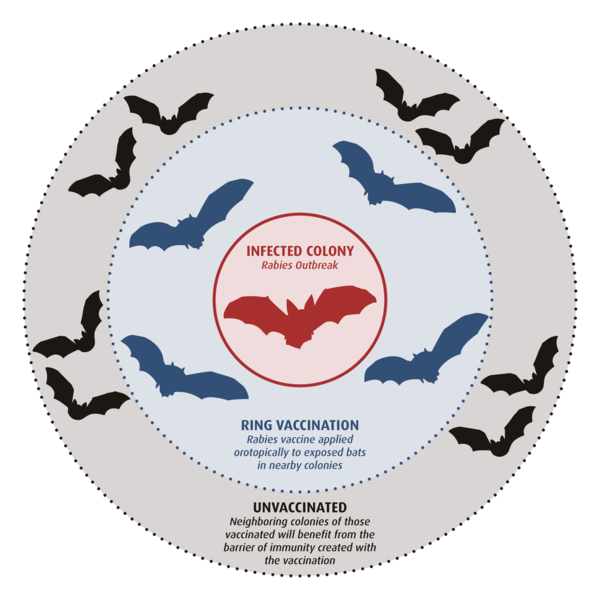
Ring Vaccination - Rabies and Vampire Bats
Scientists at the USGS National Wildlife Health Center have been working on vaccines to protect bats from diseases like such as rabies and white-nose syndrome. The most promising method is called orotopical vaccination. By applying the vaccine to the bat’s muzzle, the gel-based vaccine is spread to others in the colony through grooming.

Outstanding in the Field (Ep 3): Chronic Wasting Disease - Oh, Deer
Outstanding in the Field (Ep 3): Chronic Wasting Disease - Oh, DeerThe USGS Ecosystems Mission Area brings you Outstanding in the Field, a series of stories about our science, our adventures, and our efforts to better understand our fish and wildlife and the ecosystems that support them.
Outstanding in the Field (Ep 3): Chronic Wasting Disease - Oh, Deer
Outstanding in the Field (Ep 3): Chronic Wasting Disease - Oh, DeerThe USGS Ecosystems Mission Area brings you Outstanding in the Field, a series of stories about our science, our adventures, and our efforts to better understand our fish and wildlife and the ecosystems that support them.
Science and Products
Filter Total Items: 13
White-Nose Syndrome and Bat Health: 2025 Year in Review
USGS scientists have developed novel tools and techniques for national white-nose syndrome (WNS) detection and research efforts. Our scientists are monitoring bat populations (NABat) and bat behavior in addition to assessing the impact of WNS on bat populations. USGS is now focusing on disease management strategies to reverse bat declines from WNS.
Avian Influenza Research
Since Public Law 109-148, USGS has partnered with state and federal agencies to conduct science to support the national response to highly pathogenic avian influenza (HPAI). In 2014, the first reports of HPAI in US wild birds came from USGS cause-of-death investigations confirmed by the USDA.
Fish & Wildlife Disease: Coral Diseases and Reef Health
Corals reefs support marine biodiversity, protect coastlines from storm surges and strong waves, and provide income from tourism to coastal communities. Coral diseases were first recognized in the 1970s and are now considered a major threat to coral reef survival worldwide. Stony coral tissue loss disease (SCTLD) emerged in Florida in 2014, impacting coral reefs in Florida, Puerto Rico, US Virgin...
Diseases We Study
USGS scientists are at the table with public and animal health agencies as they tackle wildlife diseases including chronic wasting disease, avian influenza, plague, and white-nose syndrome. We are developing advanced tools for disease diagnosis, surveillance, risk assessment and control to support management of wildlife diseases.
Chronic Wasting Disease
Chronic wasting disease (CWD) affects cervids (elk, moose, mule deer, and white-tailed deer) throughout the U.S. CWD affects the nervous system in these animals and creates distinctive brain lesions. At this time, we have no treatment for CWD and it is fatal to the animals who contract it. CWD is caused by an infectious, irregular form of cellular prion protein. CWD can be directly and indirectly...
Fish & Wildlife Disease: Avian Disease
The USGS conducts ongoing surveillance and research nationwide on avian diseases that could be harmful to domestic animals and humans.
Ring Vaccination - Rabies and Vampire Bats
Scientists at the USGS National Wildlife Health Center have been working on vaccines to protect bats from diseases like such as rabies and white-nose syndrome. The most promising method is called orotopical vaccination. By applying the vaccine to the bat’s muzzle, the gel-based vaccine is spread to others in the colony through grooming.
Scientists at the USGS National Wildlife Health Center have been working on vaccines to protect bats from diseases like such as rabies and white-nose syndrome. The most promising method is called orotopical vaccination. By applying the vaccine to the bat’s muzzle, the gel-based vaccine is spread to others in the colony through grooming.
Outstanding in the Field (Ep 3): Chronic Wasting Disease - Oh, Deer
Outstanding in the Field (Ep 3): Chronic Wasting Disease - Oh, DeerThe USGS Ecosystems Mission Area brings you Outstanding in the Field, a series of stories about our science, our adventures, and our efforts to better understand our fish and wildlife and the ecosystems that support them.
Outstanding in the Field (Ep 3): Chronic Wasting Disease - Oh, Deer
Outstanding in the Field (Ep 3): Chronic Wasting Disease - Oh, DeerThe USGS Ecosystems Mission Area brings you Outstanding in the Field, a series of stories about our science, our adventures, and our efforts to better understand our fish and wildlife and the ecosystems that support them.