U.S. flag

An official website of the United States government

Images

Images intro.
Filter Total Items: 51
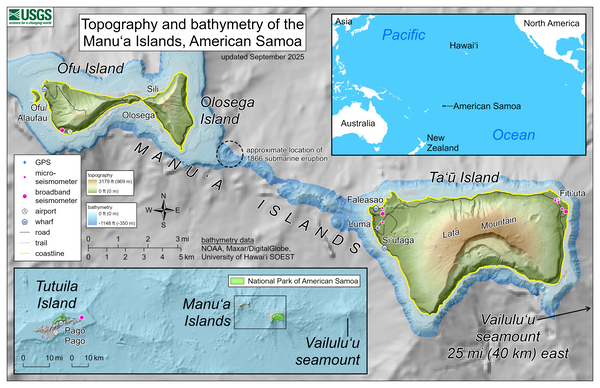
Color map of the Manuʻa Islands, American Samoa
September 2025—Topography and bathymetry of the Manuʻa Islands, American Samoa

This reference map depicts the volcanoes of the Manuʻa Islands, American Samoa, which are monitored by the USGS Hawaiian Volcano Observatory.

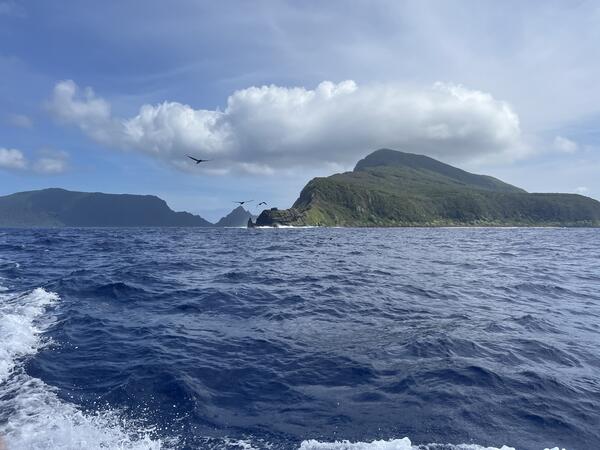
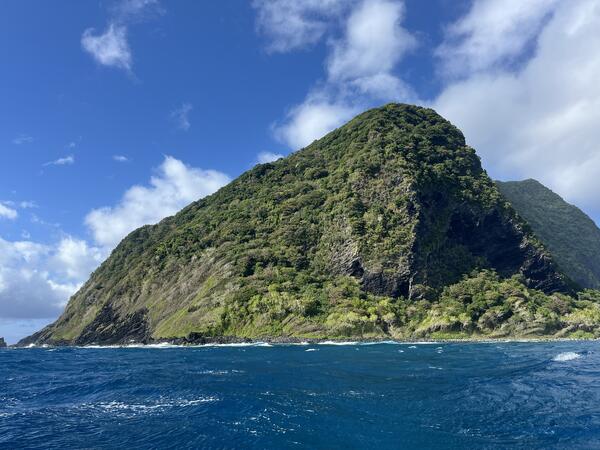
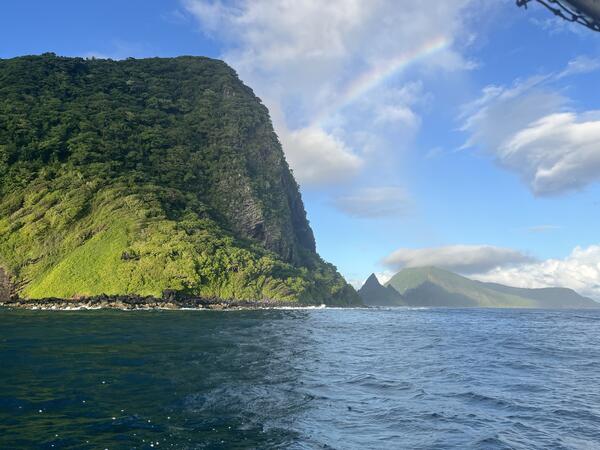
Color photo of a large green cliff on an island towering over the blue ocean.
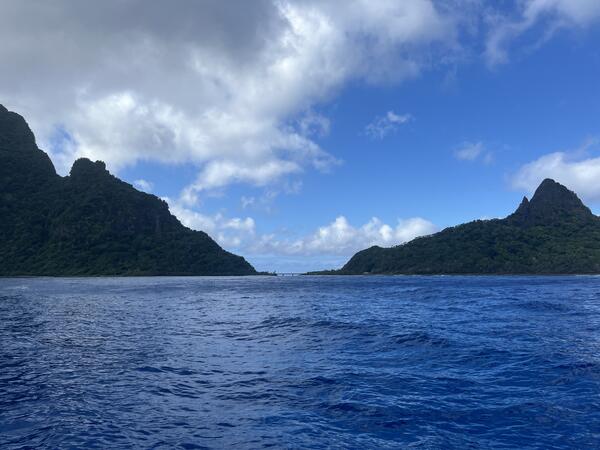
September 3, 2025 – View of Ofu-Olosega Islands, American Samoa

This photo, taken from a boat, shows Olosega Island on the left, and Ofu Island further away on the right, in the Manuʻs Islands of American Samoa. These islands, connected by a one-lane bridge (out of sight), are the top of Ofu-Olosega volcano. USGS photo by N. Deligne.

This photo, taken from a boat, shows Olosega Island on the left, and Ofu Island further away on the right, in the Manuʻs Islands of American Samoa. These islands, connected by a one-lane bridge (out of sight), are the top of Ofu-Olosega volcano. USGS photo by N. Deligne.

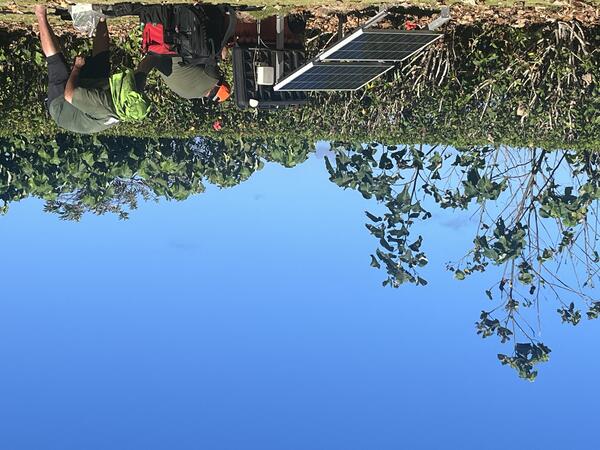
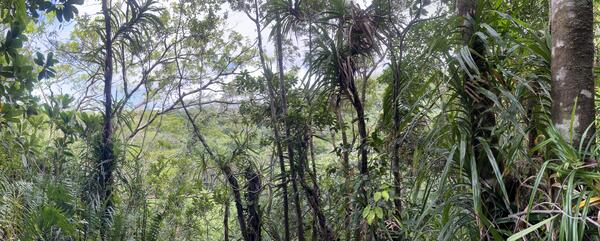
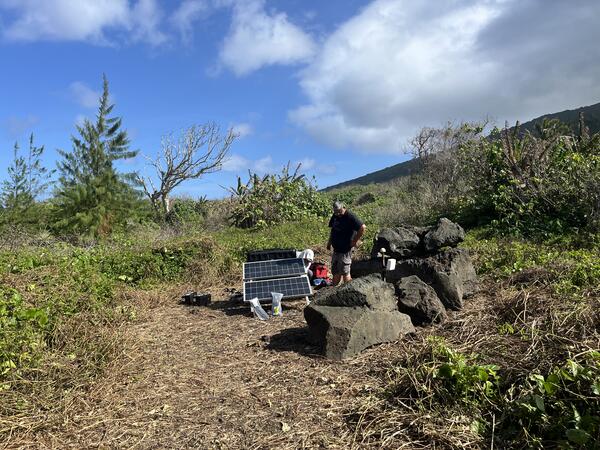
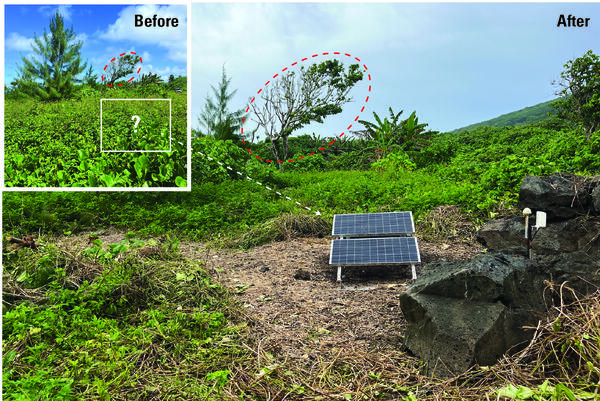
Color photo of before and after images of a solar panel covered and then cleared of plants growing over it.
Broadband seismometer site on eastern Taʻū, American Samoa, before and after it was cleared of vegetation.

Broadband seismometer site on eastern Taʻū, American Samoa, before (inset) and after a work party cleared rapidly growing vegetation which had covered the solar panels along with the boulders to the right of the main photo. Due to lack of power from the solar panels being unable to charge during the day, the station was offline for many months.

Broadband seismometer site on eastern Taʻū, American Samoa, before (inset) and after a work party cleared rapidly growing vegetation which had covered the solar panels along with the boulders to the right of the main photo. Due to lack of power from the solar panels being unable to charge during the day, the station was offline for many months.

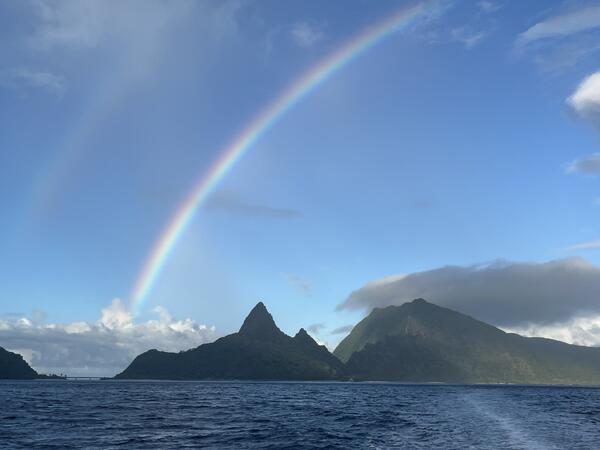
Color photo of a rainbow over the ocean.
September 3, 2025 – View of the north side of Ofu Island, American Samoa

USGS Hawaiian Volcano Observatory scientists and NOAA National Weather Service Weather Service Office Pago Pago meteorologists travelled by boat between the Manuʻa Islands, American Samoa, during an outreach and monitoring network maintenance trip in early September 2025. This view is from the boat looking south towards the north side of Ofu Island.

USGS Hawaiian Volcano Observatory scientists and NOAA National Weather Service Weather Service Office Pago Pago meteorologists travelled by boat between the Manuʻa Islands, American Samoa, during an outreach and monitoring network maintenance trip in early September 2025. This view is from the boat looking south towards the north side of Ofu Island.

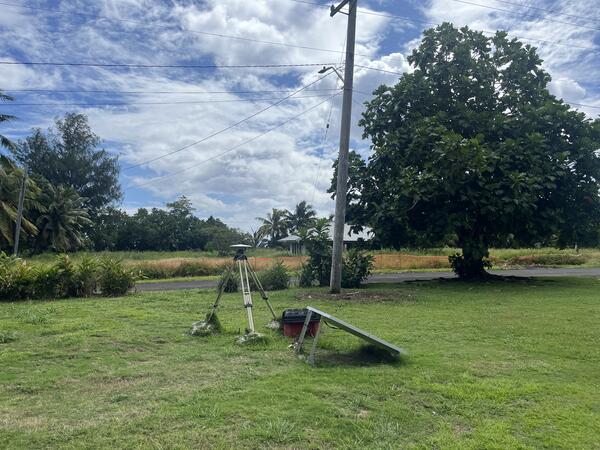
Color photo of a GPS station and solar panel in grass in a tropical setting.
September 3, 2025 – Volcano monitoring GPS station on TAU Island, American Samoa

Photo of the USGS Global Positioning System (GPS) monitoring station on western Ta‘ū Island in the Manuʻa Islands of American Samoa. The station consists of a GPS unit, which can measure very slight movements of the ground, placed on a tripod that is leveled and centered over a benchmark.

Photo of the USGS Global Positioning System (GPS) monitoring station on western Ta‘ū Island in the Manuʻa Islands of American Samoa. The station consists of a GPS unit, which can measure very slight movements of the ground, placed on a tripod that is leveled and centered over a benchmark.

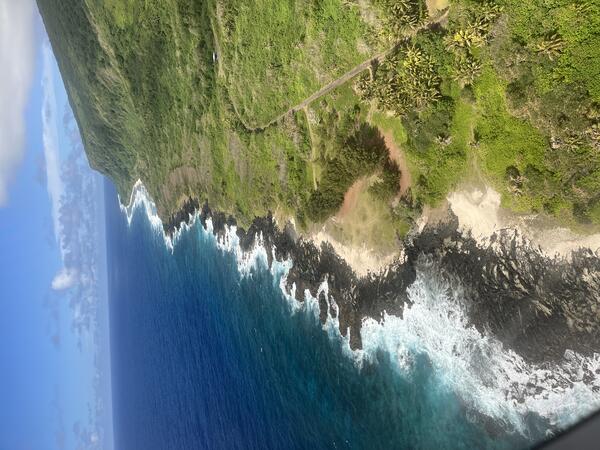
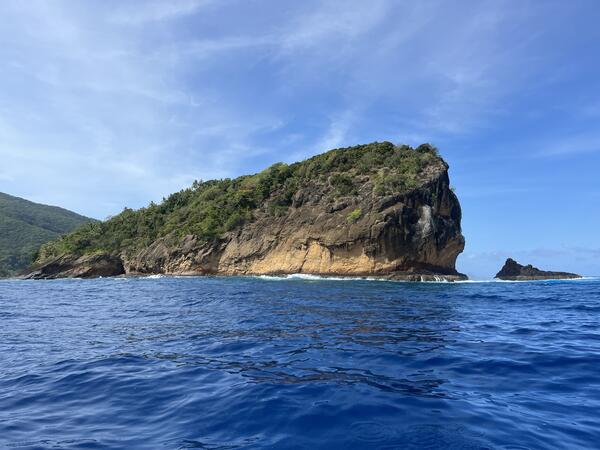
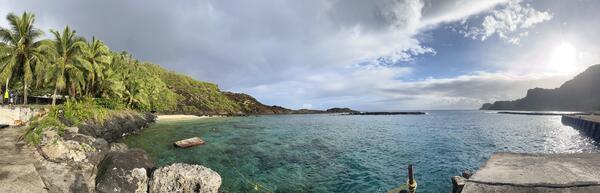
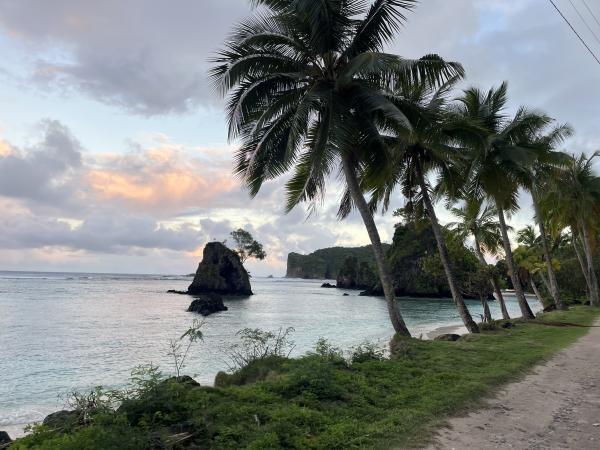
Color photo of a tropical looking island with palm trees and rock coast and calm seas.
September 3, 2025 – Small islands west of Ofu Island, American Samoa

This photo shows part of the western Ofu coastline and several small islands west of Ofu Island, American Samoa. These islands are considered part of Ofu-Olosega volcano in the Manuʻa Islands.

This photo shows part of the western Ofu coastline and several small islands west of Ofu Island, American Samoa. These islands are considered part of Ofu-Olosega volcano in the Manuʻa Islands.

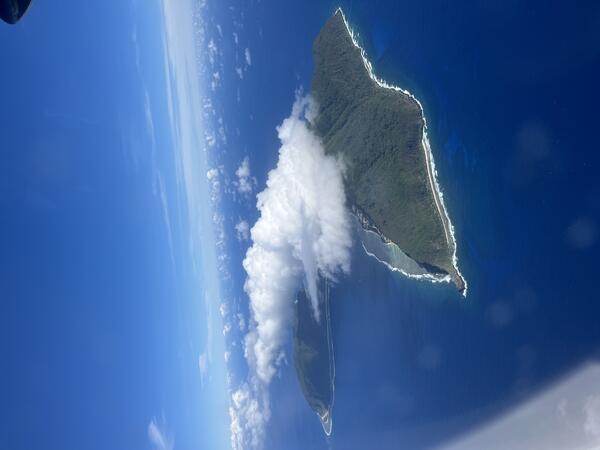
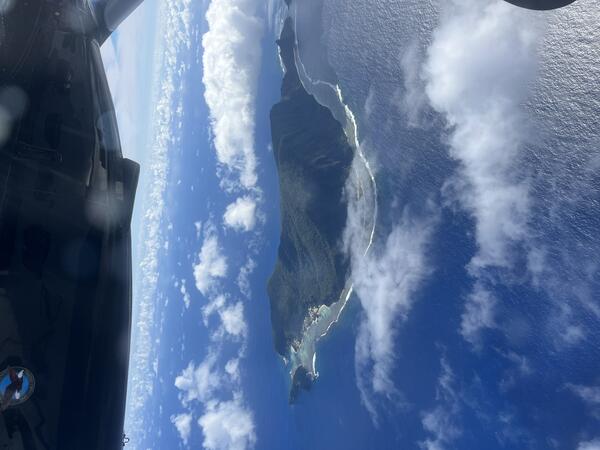
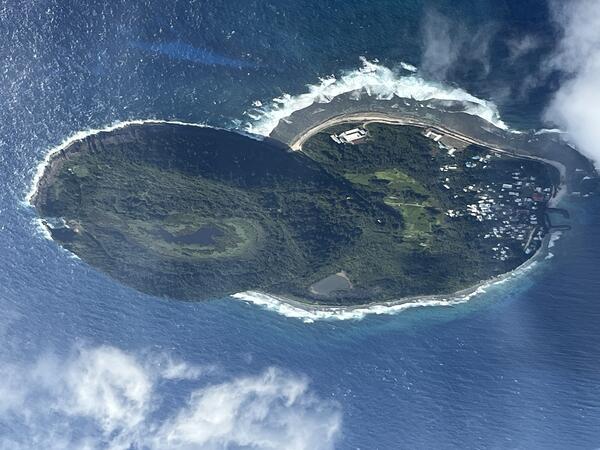
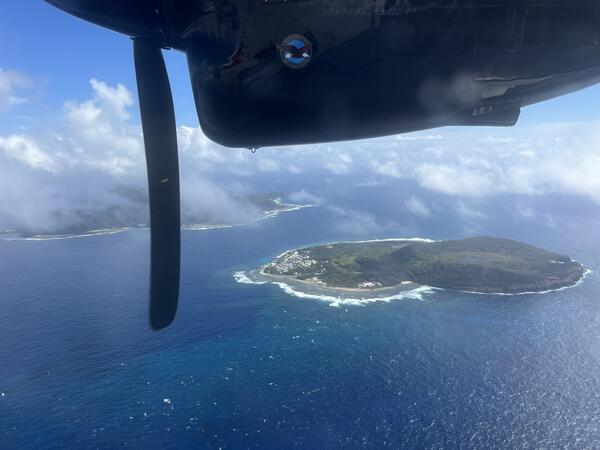
Color photo looking down at Aunu‘u Island from the air during a flight.
September 2, 2025 – Photo of Aunu‘u Island while on a flight from Tutuila to Ofu Island in American Samoa.

USGS Hawaiian Volcano Observatory scientists took this photo of Aunu‘u Island while on a flight from Tutuila to Ofu Island in American Samoa on September 2, 2025. The view is from the south looking north. Aunu‘u Island is a tuff cone less than 1 mile southeast of Tutuila Island and is considered part of Tutuila volcano.

USGS Hawaiian Volcano Observatory scientists took this photo of Aunu‘u Island while on a flight from Tutuila to Ofu Island in American Samoa on September 2, 2025. The view is from the south looking north. Aunu‘u Island is a tuff cone less than 1 mile southeast of Tutuila Island and is considered part of Tutuila volcano.

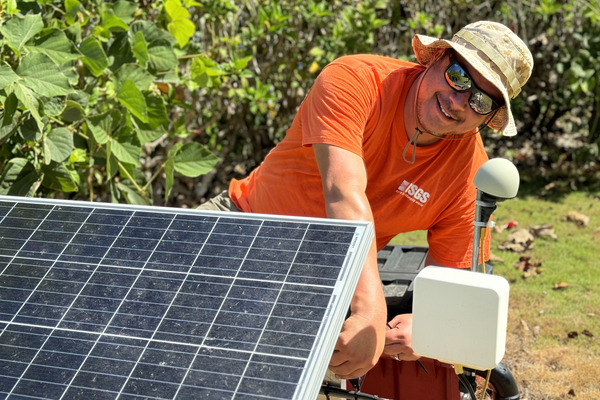
Scientist in field
USGS Hawaiian Volcano Observatory chief field engineer

USGS Hawaiian Volcano Observatory chief field engineer Kevan Kamibayashi conducts maintenance on a volcano-monitoring station located in American Samoa. USGS photo by J. Chang. 

USGS Hawaiian Volcano Observatory chief field engineer Kevan Kamibayashi conducts maintenance on a volcano-monitoring station located in American Samoa. USGS photo by J. Chang. 

Photograph showing red-brown buttes of sedimentary rocks incised by the sediment-rich brown water of the Colorado River.
Grand_Canyon_20230908_Brennan.jpg
Color map of the Manuʻa Islands, American Samoa
July 2023—Topography and bathymetry of the Manuʻa Islands, American Samoa

This reference map depicts the volcanoes in the Manuʻa Islands, American Samoa, the site of seismic unrest between July and September 2022. Marked on the map are the locations of Hawaiian Volcano Observatory GPS and seismometers in the islands.

This reference map depicts the volcanoes in the Manuʻa Islands, American Samoa, the site of seismic unrest between July and September 2022. Marked on the map are the locations of Hawaiian Volcano Observatory GPS and seismometers in the islands.

Color graphics of earthquakes
Map of American Samoa volcano-monitoring network.

Map of the American Samoa volcano-monitoring network (top). Data from Wake Island hydrograph (located about 4,500 km, or 2,900 miles, northwest of Taʻū Island) shows the general trend in the number of events during the 2022 earthquake swarm (bottom left). Locations for larger earthquakes (M2.5 and greater) are available starting August 20, 2022 (bottom right).

Map of the American Samoa volcano-monitoring network (top). Data from Wake Island hydrograph (located about 4,500 km, or 2,900 miles, northwest of Taʻū Island) shows the general trend in the number of events during the 2022 earthquake swarm (bottom left). Locations for larger earthquakes (M2.5 and greater) are available starting August 20, 2022 (bottom right).

Color photograph of scientist deploying instrument in the field
September 14, 2022 — Tutuila seismic station installation

A USGS scientist installs a seismic station on Tutuila island in American Samoa. This station joins several other stations recently installed in the Manu‘a Islands to monitor activity in American Samoa. USGS photo by A. Ellis.

A USGS scientist installs a seismic station on Tutuila island in American Samoa. This station joins several other stations recently installed in the Manu‘a Islands to monitor activity in American Samoa. USGS photo by A. Ellis.

Color photograph of cone near coast
September 8, 2022 — Ta‘ū Island Coastal Tuff Cone

On the northwest coast of Ta‘ū Island (near Faleāsao village), half of a tuff cone, which is likely thousands of years old, is visible. Ocean waves have eroded away the other half of the tuff cone, which formed when hot magma interacted with either shallow groundwater or sea water. USGS image by J. Chang.

On the northwest coast of Ta‘ū Island (near Faleāsao village), half of a tuff cone, which is likely thousands of years old, is visible. Ocean waves have eroded away the other half of the tuff cone, which formed when hot magma interacted with either shallow groundwater or sea water. USGS image by J. Chang.

Color photograph of cone near coast
September 8, 2022 — Ta‘ū Island Coastal Tuff Cone

The tuff cone on the northwest coast of Ta‘ū Island (near Faleāsao village) is mostly composed of fine-grained ash with larger lithic clasts (fragments of older rock material). Some of these lithic clasts are larger than 1 meter or 3 feet in diameter and are scattered throughout the tuff cone. USGS image by J. Chang.

The tuff cone on the northwest coast of Ta‘ū Island (near Faleāsao village) is mostly composed of fine-grained ash with larger lithic clasts (fragments of older rock material). Some of these lithic clasts are larger than 1 meter or 3 feet in diameter and are scattered throughout the tuff cone. USGS image by J. Chang.

Color photograph of scientist deploying instrument in the field
September 7, 2022 — USGS Installs GPS Stations on Ta‘ū Island in American Samoa

USGS staff are on Ta‘ū Island in American Samoa to begin installing Global Positioning System (GPS) receiver monitoring sites. GPS equipment is able to detect very slight movements of the ground and will help the USGS to better understand what is happening beneath the ground and provide more accurate hazard assessments. USGS image by J. Chang.

USGS staff are on Ta‘ū Island in American Samoa to begin installing Global Positioning System (GPS) receiver monitoring sites. GPS equipment is able to detect very slight movements of the ground and will help the USGS to better understand what is happening beneath the ground and provide more accurate hazard assessments. USGS image by J. Chang.

Color photograph of monitoring equipment
September 7, 2022 — USGS Installs GPS Stations on Ta‘ū Island in American Samoa

Photograph of a Global Positioning System (GPS) station on Ta‘ū Island in American Samoa. Solar panels and batteries in a weather-proof enclosure power the station, which consists of a GPS unit placed on a tripod that is leveled and centered over a benchmark.

Photograph of a Global Positioning System (GPS) station on Ta‘ū Island in American Samoa. Solar panels and batteries in a weather-proof enclosure power the station, which consists of a GPS unit placed on a tripod that is leveled and centered over a benchmark.

Color map of globe
Map showing location of Ta'ū volcano in American Samoa and Wake Island

Wake Island is about 2,800 miles (4,500 km) northwest of Ta'ū volcano in American Samoa. Both are located in the Pacific Ocean. 

Color map of islands and nearby bathymetry
Topography and bathymetry of the Manu‘a Islands, American Samoa

This reference map depicts the topography and bathymetry of the volcanoes in the Manu‘a Islands, American Samoa, where seismic unrest has been ongoing for several weeks. The highest elevation in the area is Lata Mountain on Ta‘ū Island, standing 3,179 feet (969 meters) above sea level.

This reference map depicts the topography and bathymetry of the volcanoes in the Manu‘a Islands, American Samoa, where seismic unrest has been ongoing for several weeks. The highest elevation in the area is Lata Mountain on Ta‘ū Island, standing 3,179 feet (969 meters) above sea level.

Color map of islands and nearby bathymetry
Topography, bathymetry, and volcano monitoring network of the Manu‘a Islands, American Samoa

This reference map depicts the topography and bathymetry of the volcanoes in the Manu‘a Islands, American Samoa. The highest elevation in the area is Lata Mountain on Ta‘ū Island, standing 3,179 feet (969 meters) above sea level.

Scientist collecting a rock sample
August 30, 2022 — Collecting Rock Samples on Ta‘ū Island

A USGS Hawaiian Volcano Observatory geologist collects a rock sample using a rock hammer on Ta‘ū Island, American Samoa. HVO staff are in American Samoa responding to earthquake activity. While there to install monitoring instrumentation, they are also collecting rock samples to better understand past volcanic activity in American Samoa. USGS image by J. Chang.

A USGS Hawaiian Volcano Observatory geologist collects a rock sample using a rock hammer on Ta‘ū Island, American Samoa. HVO staff are in American Samoa responding to earthquake activity. While there to install monitoring instrumentation, they are also collecting rock samples to better understand past volcanic activity in American Samoa. USGS image by J. Chang.

Color photograph of scientist collecting rock sample
August 30, 2022 — Collecting Rock Samples on Ta‘ū Island

A USGS Hawaiian Volcano Observatory geologist collects a sample of a pāhoehoe lava flow above a thick ‘a‘ā lava flow on Ta‘ū Island, American Samoa. At that location, samples of a sequence of alternating pāhoehoe and ‘a‘ā lava flows were sampled to help reconstruct the eruptive history of Ta‘ū volcano.

A USGS Hawaiian Volcano Observatory geologist collects a sample of a pāhoehoe lava flow above a thick ‘a‘ā lava flow on Ta‘ū Island, American Samoa. At that location, samples of a sequence of alternating pāhoehoe and ‘a‘ā lava flows were sampled to help reconstruct the eruptive history of Ta‘ū volcano.

Was this page helpful?