August 8, 2025 — Halema‘uma‘u Crater Post Episode 30
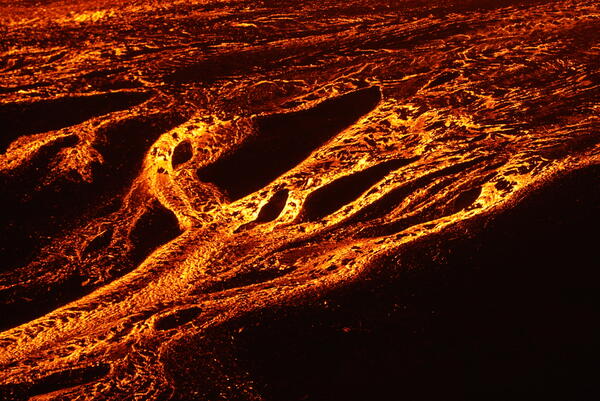
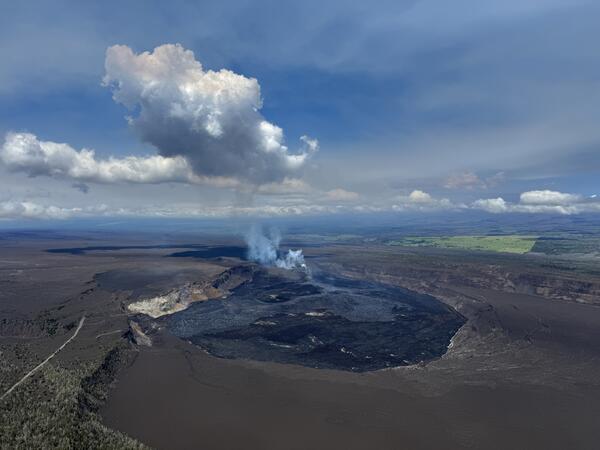
August 8, 2025 — Halema‘uma‘u Crater Post Episode 30An aerial image taken during a USGS Hawaiian Volcano Observatory monitoring overflight, following the end of episode 30 on August 6.
An official website of the United States government
Here's how you know
Official websites use .gov
A .gov website belongs to an official government organization in the United States.
Secure .gov websites use HTTPS
A lock () or https:// means you’ve safely connected to the .gov website. Share sensitive information only on official, secure websites.
Kīlauea images of eruptive activity, field work, and more.
An aerial image taken during a USGS Hawaiian Volcano Observatory monitoring overflight, following the end of episode 30 on August 6.
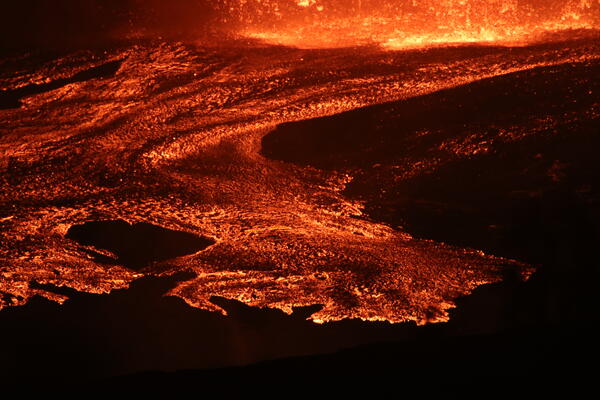
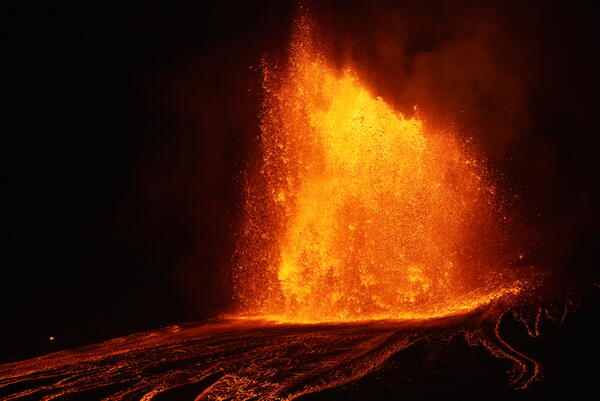
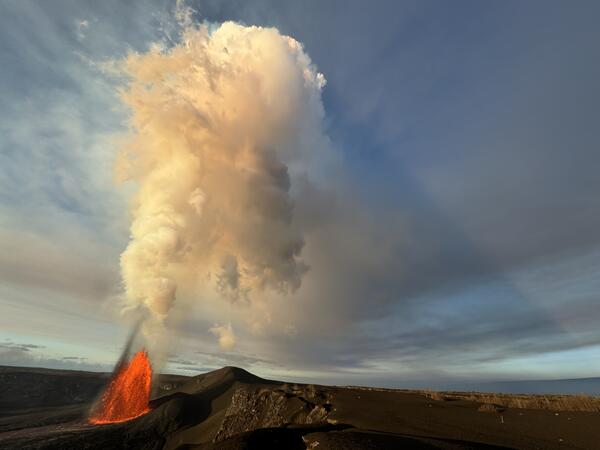
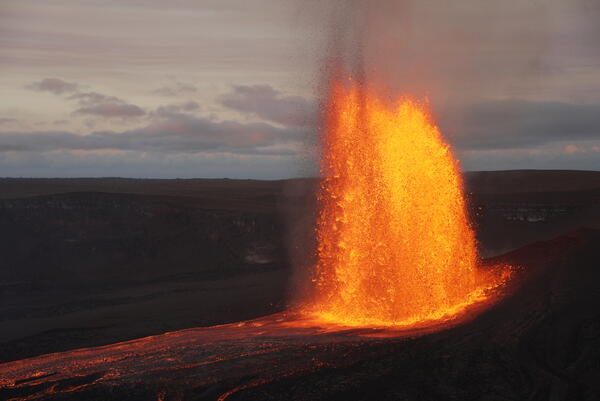
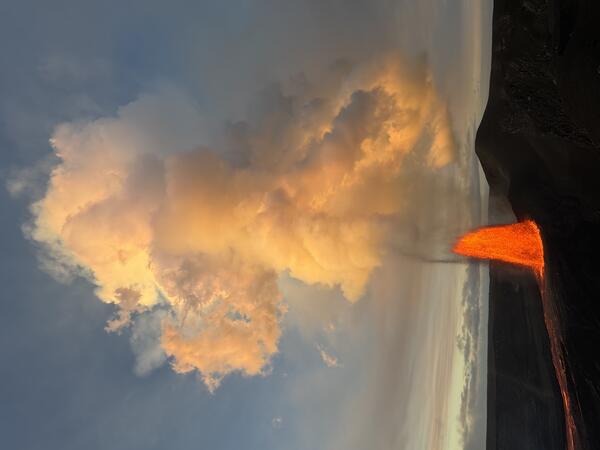
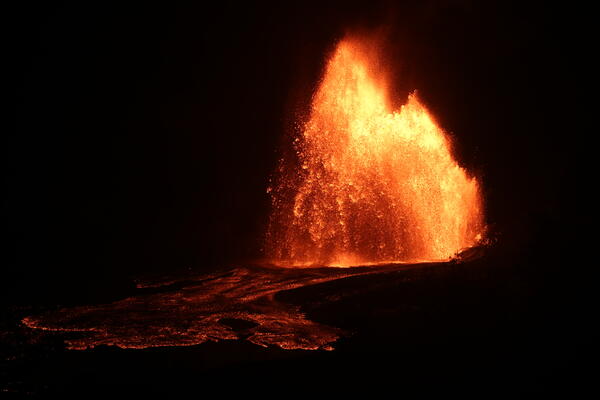
A view of the episode 30 lava fountaining in the north vent, taken from the west rim of Kaluapele, Kīlauea's summit caldera. The fountaining was sending out several lava channels across the crater floor, with lava flows reaching the eastern portion of Halema‘uma‘u crater. USGS photo taken by M. Patrick on August 6, 2025.
The August 6 thermal map shows the widespread channelized lava flows covering the crater floor, originating from the episode 30 lava fountaining in the western end of Halema‘uma‘u crater at the summit of Kīlauea. Most of the lava originated from the vigorous fountaining at the north vent, with the weak fountaining at the south vent contributing a smaller volume.
On the south rim of Halemaʻumaʻu, new sink holes in ash and tephra that blankets the ground in this area were observed following episode 30 of the Kīlauea summit eruption on August 6. The sinkholes formed due to underlying cracks that opened as a result of the new fissure in the south wall of the caldera. USGS photo by M. Patrick.
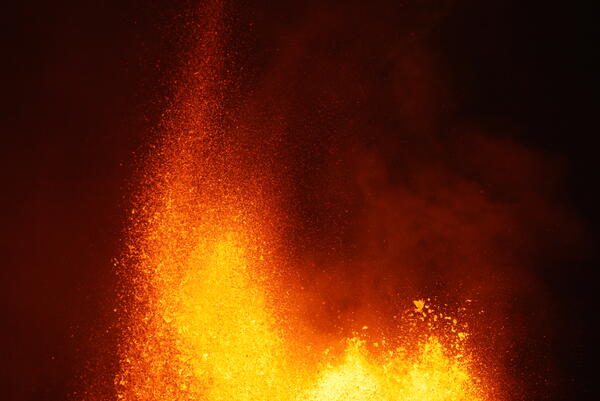
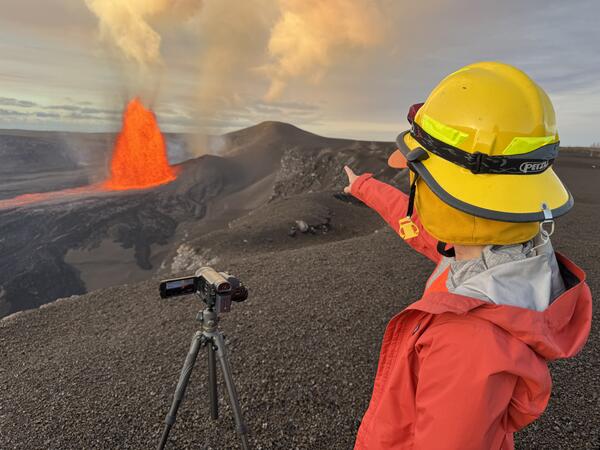
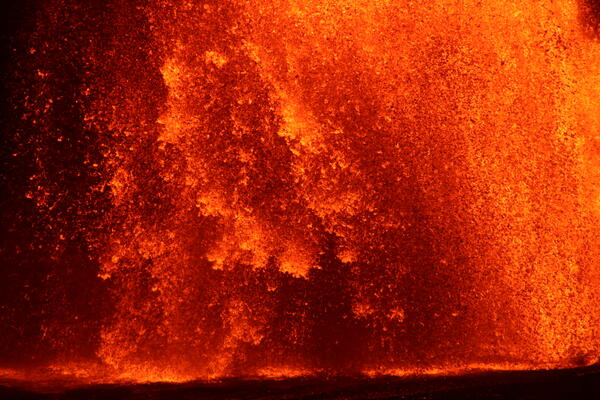
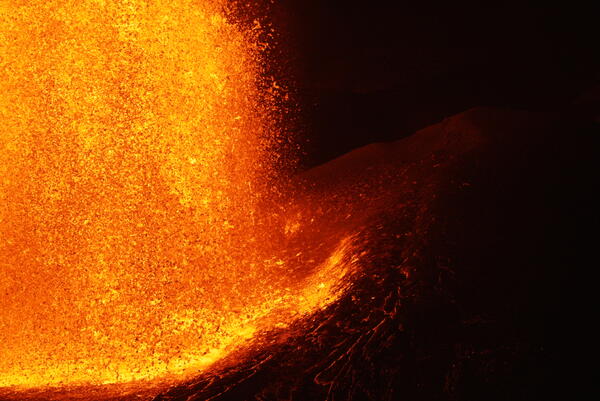
Early in the morning on August 6, Hawaiian Volcano Observatory geologists visited the western rim of Halemaʻumaʻu crater to observe Kīlauea summit eruption episode 30. Lava fountains were reaching about 70 meters (230 feet) above the north vent at the time. USGS photo by N. Deligne.
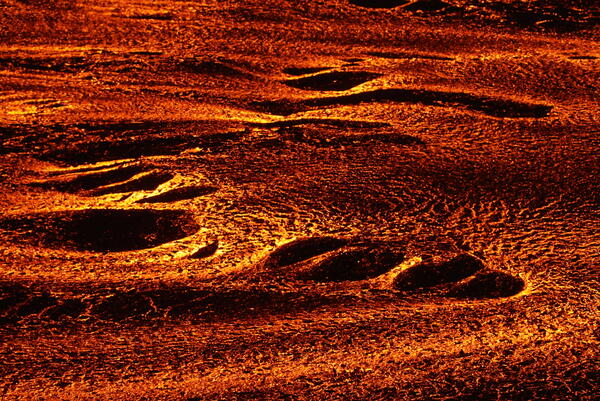
A USGS geologist collects a molten sample of the episode 30 lava flows, quenching the sample in a bucket of water. The chemistry of these lava samples is analyzed to better understand the source and storage of magma driving Hawaiian eruptions. USGS photo by M. Patrick taken on August 6, 2025.
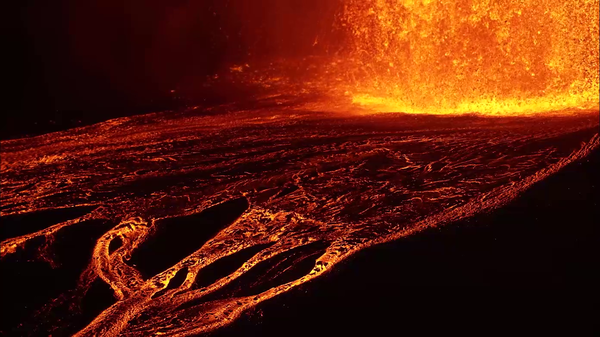
A helicopter overflight on the morning of August 6, during episode 30 of the ongoing Halema‘uma‘u eruption, provided aerial views of the lava fountaining and numerous channelized lava flows covering the crater floor. USGS photo by M. Patrick.
Photo compilation of episodes 1–30 of the ongoing eruption at the summit of Kīlauea, including webcam imagery and photos taken by USGS Hawaiian Volcano Observatory scientists on the ground and during helicopter overflights. In all photos except for episode 7, the south vent is on the left and the north vent is on the right.
Kīlauea has had 30 episodes of lava fountaining in Halemaʻumaʻu crater, within the summit caldera, since December 23, 2024. This infographic summarizes the past 30 episodes of activity, providing context for this episodic eruption and summarizing the relevant hazards. USGS graphic.
Hawaiian Volcano Observatory geologists watched a spectacular sunrise over Kīlauea summit eruption episode 30 on the morning of August 6. Lava flows had covered about 60% of the Halemaʻumaʻu crater floor by that time. USGS photo by N. Deligne.
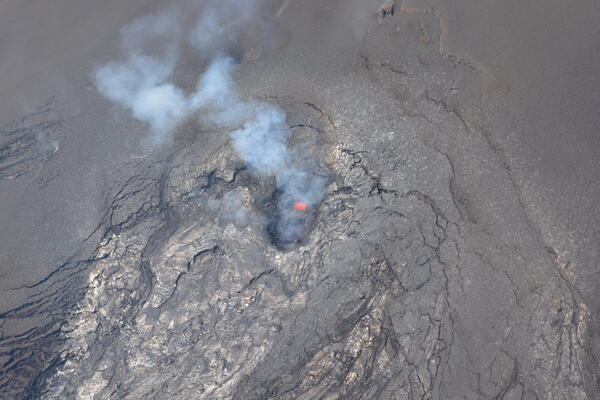
During a monitoring overflight on August 5 at approximately 9:45 a.m. HST, Hawaiian Volcano Observatory geologists documented a lava pond within the north vent of the ongoing Kīlauea summit eruption. The pond was flowing into a subterranean lava tube contained within the east side of the vent cone, toward the floor of Halema‘uma‘u crater. USGS photo K.
This closer view of Halema‘uma‘u crater at the summit of Kīlauea was captured during the Hawaiian Volcano Observatory's helicopter overflight on August 5. The circular black zone consists of recent lava flows that have been filling the crater in recent months, and the outgassing plume from the eruptive vents is carried southwest by the trade winds. USGS photo by M.
The Hawaiian Volcano Observatory's helicopter overflight on August 5 provided aerial views of Kaluapele (Kīlauea caldera) and the outgassing plume from the eruptive vents in Halema‘uma‘u crater. Mauna Loa can be seen in the background. USGS photo by M. Patrick.
This wide-angle view of Kaluapele (Kīlauea caldera) was captured during the Hawaiian Volcano Observatory's helicopter overflight on August 5, showing the eastern caldera floor (near) along with more recent lava flows (far, darker circular zone) covering the floor of Halema‘uma‘u crater.
On August 5, USGS geologists used a laser rangefinder to measure the elevation of the small lava pond spotted today within the Halema‘uma‘u north vent at the summit of Kīlauea. USGS photo by M. Patrick.
This aerial view of the complex tephra cone built in recent months around the Halemaʻumaʻu eruptive vents was captured on August 5. The cone has been built against the western wall of Kaluapele (Kīlauea caldera), with tephra also forming a hill atop the caldera rim.
This reference map depicts the Kīlauea summit eruption within Halema‘uma‘u crater that began on December 23, 2024. As of this posting on August 1, 2025, the eruption has had twenty-nine episodes, with the most recent occurring on July 20.
This animated GIF was created using an image collected approximately every other day by the S2cam located on the south rim of Halemaʻumaʻu crater. It shows how the vent geometry and near-vent eruption area within Halemaʻumaʻu crater has changed over the past 30 episodes of lava fountaining.
On July 25, 2025, USGS scientists measured the depth to the water table at the Keller Well, located south of Halema‘uma‘u crater. The Keller Well is a borehole drilled in 1973 to a depth of 4,140 ft (1,262 m); since then, it has been used to monitor the hydrology of the summit region of Kīlauea volcano. USGS photo by K. Mulliken.
This oblique aerial view of the north vent within Halema‘uma‘u crater was captured during a USGS Hawaiian Volcano Observatory UAS (uncrewed aircraft systems) flight on July 25, 2025. The aircraft was flying about 150 m (500 ft) above the vent—about the height of the crater rim—with the image captured looking down to the northeast.
USGS Hawaiian Volcano Observatory staff undertook a helicopter monitoring overflight of the summit of Kīlauea on July 24, 2025. This photo looking southwest shows the Steam Vents parking area in the bottom right with the trail to Wahinekapu (Steaming Bluff) going towards the middle of the photo.