
U.S. flag

An official website of the United States government

Restoration, Rehabilitation, or Reclamation

Filter Total Items: 37
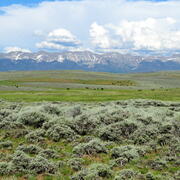
Shrubland, Alpine and Grassland Ecology (SAGE) Wildlife Research Group

The SAGE Wildlife Research Group consists of a large team of research scientists with an interest in conservation and management of wildlife and their ecosystems. Broadly, research involves understanding animal-habitat relationships, with an emphasis on conservation ecology and population demography, and a focus on shrubland, alpine, and grassland ecosystems. We are addressing the effects of...
Shrubland, Alpine and Grassland Ecology (SAGE) Wildlife Research Group

Shrubland, Alpine and Grassland Ecology (SAGE) Wildlife Research Group

The SAGE Wildlife Research Group consists of a large team of research scientists with an interest in conservation and management of wildlife and their ecosystems. Broadly, research involves understanding animal-habitat relationships, with an emphasis on conservation ecology and population demography, and a focus on shrubland, alpine, and grassland ecosystems. We are addressing the effects of...
Learn More

Supporting energy and mineral development through successful reclamation

Federal lands of the US contain important reserves of oil, gas and other resources important for Unleashing American Energy (SO 3418). After development of these resources is complete, successfully reclaiming disturbed lands is a necessary step towards restoring wildlife habitat, forage production, and maintaining natural resources for future use. To improve reclamation outcomes on these lands and...

Supporting energy and mineral development through successful reclamation

Supporting energy and mineral development through successful reclamation

Federal lands of the US contain important reserves of oil, gas and other resources important for Unleashing American Energy (SO 3418). After development of these resources is complete, successfully reclaiming disturbed lands is a necessary step towards restoring wildlife habitat, forage production, and maintaining natural resources for future use. To improve reclamation outcomes on these lands and...
Learn More

USGS Sagebrush Science: Supporting Public Safety and Economic Decision Making Across the West

The sagebrush biome is one of the largest ecosystems in North America. Encompassing nearly one-third of the continental U.S., it provides critical resources for millions of Americans and a home for hundreds of plants and animal species in the West. Natural resource management in sagebrush ecosystems can be complex, and science can support management decisions by providing knowledge and tools to...
USGS Sagebrush Science: Supporting Public Safety and Economic Decision Making Across the West

USGS Sagebrush Science: Supporting Public Safety and Economic Decision Making Across the West

The sagebrush biome is one of the largest ecosystems in North America. Encompassing nearly one-third of the continental U.S., it provides critical resources for millions of Americans and a home for hundreds of plants and animal species in the West. Natural resource management in sagebrush ecosystems can be complex, and science can support management decisions by providing knowledge and tools to...
Learn More

Prioritizing restoration and conservation of Wyoming’s sagebrush ecosystems for wildlife and sagebrush connectivity

To support strategic ecosystem management across the imperiled sagebrush steppe in Wyoming, USA, we developed an extension of the Prioritizing Restoration of Sagebrush Ecosystems Tool (PReSET). Our expanded tool leverages emerging spatial data resources to provide a structured but customizable set of scenarios that can guide landscape-scale planning efforts by prioritizing conservation and...
Prioritizing restoration and conservation of Wyoming’s sagebrush ecosystems for wildlife and sagebrush connectivity

Prioritizing restoration and conservation of Wyoming’s sagebrush ecosystems for wildlife and sagebrush connectivity

To support strategic ecosystem management across the imperiled sagebrush steppe in Wyoming, USA, we developed an extension of the Prioritizing Restoration of Sagebrush Ecosystems Tool (PReSET). Our expanded tool leverages emerging spatial data resources to provide a structured but customizable set of scenarios that can guide landscape-scale planning efforts by prioritizing conservation and...
Learn More

Prioritizing Restoration of Sagebrush Ecosystems Tool (PReSET): A USGS-facilitated Decision-support Tool for Sagebrush Ecosystem Conservation and Restoration Actions

Sagebrush ecosystems represent one of the most imperiled systems in North America and face continued and widespread degradation due to multiple factors including invasive species and increased human development. Effective sagebrush management must consider how to best conserve and restore habitats to stem the decline of species that rely on them, especially given limited conservation resources. To...
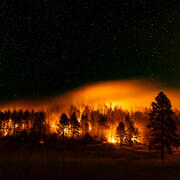
Prioritizing Restoration of Sagebrush Ecosystems Tool (PReSET): A USGS-facilitated Decision-support Tool for Sagebrush Ecosystem Conservation and Restoration Actions

Prioritizing Restoration of Sagebrush Ecosystems Tool (PReSET): A USGS-facilitated Decision-support Tool for Sagebrush Ecosystem Conservation and Restoration Actions

Sagebrush ecosystems represent one of the most imperiled systems in North America and face continued and widespread degradation due to multiple factors including invasive species and increased human development. Effective sagebrush management must consider how to best conserve and restore habitats to stem the decline of species that rely on them, especially given limited conservation resources. To...
Learn More

Ecosystem change science in support of wildfire management, water conservation, public land reclamation, and food security

FORT researchers provide sound science to support the Department of the Interior in its efforts to manage wildfires, conserve water, reclaim public lands for multiple uses, and promote food security. This research is developed in partnership with resource managers from local, State, Federal and Tribal governments, industry, and nongovernmental organizations, empowering local and rural communities...
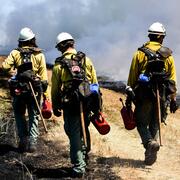
Ecosystem change science in support of wildfire management, water conservation, public land reclamation, and food security

Ecosystem change science in support of wildfire management, water conservation, public land reclamation, and food security

FORT researchers provide sound science to support the Department of the Interior in its efforts to manage wildfires, conserve water, reclaim public lands for multiple uses, and promote food security. This research is developed in partnership with resource managers from local, State, Federal and Tribal governments, industry, and nongovernmental organizations, empowering local and rural communities...
Learn More

Land management research in support of streamlined energy development, economic growth, and wildfire management

FORT researchers provide sound science to support the Department of the Interior in its efforts to streamline reliable energy development, enhance cost efficiency in public lands management, and manage fire-prone habitats for public safety. This research is developed in partnership with resource managers from local, State, Federal and Tribal governments, industry, and nongovernmental organizations...
Land management research in support of streamlined energy development, economic growth, and wildfire management

Land management research in support of streamlined energy development, economic growth, and wildfire management

FORT researchers provide sound science to support the Department of the Interior in its efforts to streamline reliable energy development, enhance cost efficiency in public lands management, and manage fire-prone habitats for public safety. This research is developed in partnership with resource managers from local, State, Federal and Tribal governments, industry, and nongovernmental organizations...
Learn More

Prioritizing restoration and conservation of sagebrush ecosystems in northwestern Colorado

We are working with Colorado Parks and Wildlife (CPW) to pilot an expansion of the Prioritizing Restoration of Sagebrush Ecosystems Tool (PReSET; Duchardt et al. 2021) across northwestern Colorado. We recently completed Phase I of this project where we leveraged existing data resources to provide customized scenarios that are now directly guiding landscape-scale conservation delivery by CPW...
Prioritizing restoration and conservation of sagebrush ecosystems in northwestern Colorado

Prioritizing restoration and conservation of sagebrush ecosystems in northwestern Colorado

We are working with Colorado Parks and Wildlife (CPW) to pilot an expansion of the Prioritizing Restoration of Sagebrush Ecosystems Tool (PReSET; Duchardt et al. 2021) across northwestern Colorado. We recently completed Phase I of this project where we leveraged existing data resources to provide customized scenarios that are now directly guiding landscape-scale conservation delivery by CPW...
Learn More

Economic Impacts of Public Lands Management

Federal investments in land management projects protect Federal trusts, ensure public health and safety, and preserve and enhance the benefits provided by ecosystems to people. These investments also generate business activity and create jobs. However, limited information often exists on the costs and associated economic impacts of public land management activities.
Economic Impacts of Public Lands Management

Economic Impacts of Public Lands Management

Federal investments in land management projects protect Federal trusts, ensure public health and safety, and preserve and enhance the benefits provided by ecosystems to people. These investments also generate business activity and create jobs. However, limited information often exists on the costs and associated economic impacts of public land management activities.
Learn More

Economic Implications of Sagebrush Treatment and Restoration Practices Across the Great Basin and Wyoming

USGS and Colorado State University researchers are conducting analyses and predictions of sagebrush recovery in the Great Basin and Wyoming and assess the role of weather, soils, and reseeding treatments.
Economic Implications of Sagebrush Treatment and Restoration Practices Across the Great Basin and Wyoming

Economic Implications of Sagebrush Treatment and Restoration Practices Across the Great Basin and Wyoming

USGS and Colorado State University researchers are conducting analyses and predictions of sagebrush recovery in the Great Basin and Wyoming and assess the role of weather, soils, and reseeding treatments.
Learn More

Assessing vegetation and avian community response to juniper reduction treatments in Southwest Montana

The Southwest Montana Sagebrush Partnership (SMSP) team, including land managers, landowners, and scientists, is implementing conifer removal projects encompassing over 55,000 acres of private, state, and federal lands throughout the region. To date, little place-based information exists regarding likely vegetation and bird responses to such treatments in Southwestern Montana. To address this...
Assessing vegetation and avian community response to juniper reduction treatments in Southwest Montana

Assessing vegetation and avian community response to juniper reduction treatments in Southwest Montana

The Southwest Montana Sagebrush Partnership (SMSP) team, including land managers, landowners, and scientists, is implementing conifer removal projects encompassing over 55,000 acres of private, state, and federal lands throughout the region. To date, little place-based information exists regarding likely vegetation and bird responses to such treatments in Southwestern Montana. To address this...
Learn More

Effects of the herbicide, Indaziflam, on invasive annual grasses

Invasive annual grasses are spreading across the sagebrush ecosystem, threatening the survival of native plant species and the wildlife habitats they support. Researchers from the U.S. Geological Survey, Colorado State University, University of Wyoming, the Bureau of Land Management, National Park Service, and the U.S. Fish and Wildlife Service are collaboratively investigating the factors that...
Effects of the herbicide, Indaziflam, on invasive annual grasses

Effects of the herbicide, Indaziflam, on invasive annual grasses

Invasive annual grasses are spreading across the sagebrush ecosystem, threatening the survival of native plant species and the wildlife habitats they support. Researchers from the U.S. Geological Survey, Colorado State University, University of Wyoming, the Bureau of Land Management, National Park Service, and the U.S. Fish and Wildlife Service are collaboratively investigating the factors that...
Learn More
Was this page helpful?