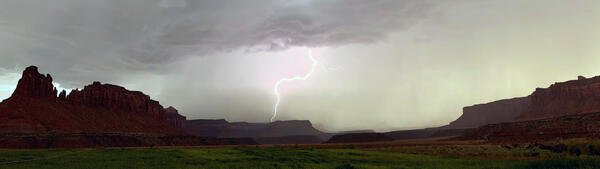
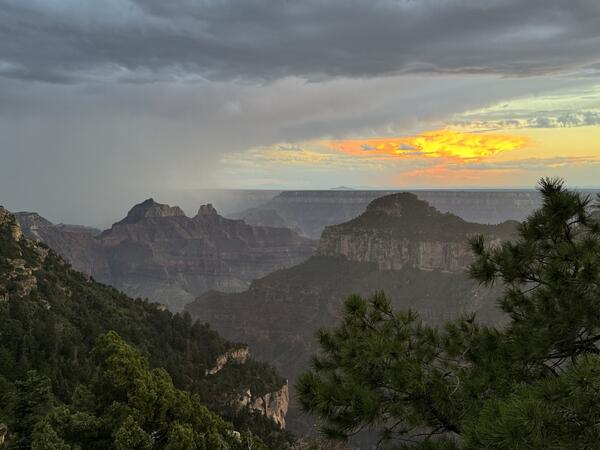
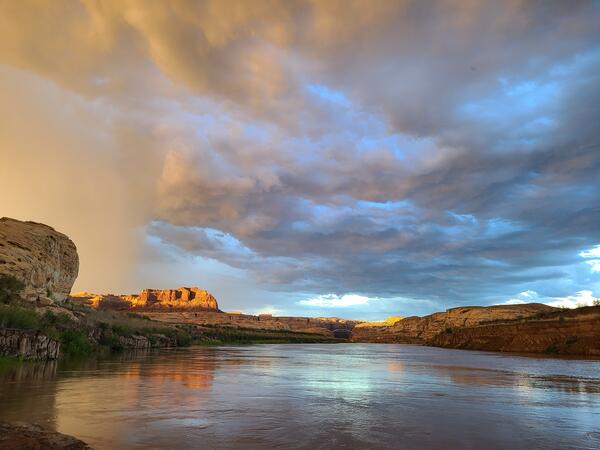
A monsoon rainstorm at the north rim of the Grand Canyon
A monsoon rainstorm at the north rim of the Grand CanyonA monsoon rainstorm moves across the north rim of the Grand Canyon during sunset, August 2024. Photo by Tom Gushue, USGS.
An official website of the United States government
Here's how you know
Official websites use .gov
A .gov website belongs to an official government organization in the United States.
Secure .gov websites use HTTPS
A lock () or https:// means you’ve safely connected to the .gov website. Share sensitive information only on official, secure websites.
Below are images associated with SBSC's science and staff. Images appear according to the year they were taken. To search, type a keyword or select a year from the dropdown menu. Or, click through the pages using the arrows at the bottom of the page.
A monsoon rainstorm moves across the north rim of the Grand Canyon during sunset, August 2024. Photo by Tom Gushue, USGS.
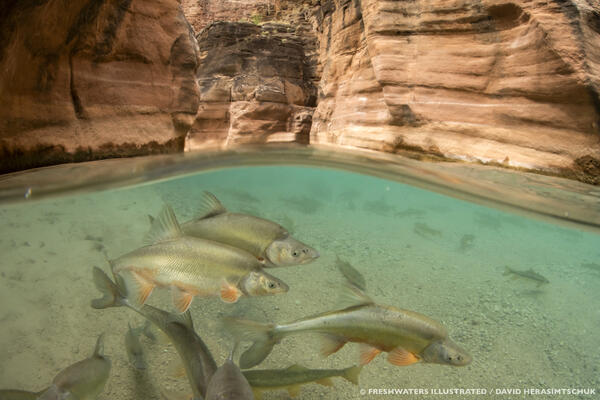
Humpback chub in the Colorado River. Photo by David Herasimtschuk, Freshwaters Illustrated.
Ancestral Lands Conservation Corps Grand Canyon Youth cool down in the water before dinner after a day of science studies, at Dinosaur Camp on the Colorado River, Grand Canyon. Photo by John Napier, Grand Canyon Youth.
The entire Ancestral Lands Conservation Corps / Grand Canyon Youth / Partners in Science trip jumps for joy after enjoying lunch in the shade of Redwall Cavern, July 2024. Photo courtesy of Chris Kotalik, USGS.
USGS hydrologist Shannon Sartain and Ancestral Lands Conservation Corps Grand Canyon Youth Hopi crewmembers carving, inking, and printing linoleum block prints on a hot July afternoon on a Colorado River trip.
Ancestral Lands Conservation Corps Grand Canyon Youth having dinner at sunset on a Colorado River trip, July 2024. Photo by Shannon Sartain, USGS, SBSC.
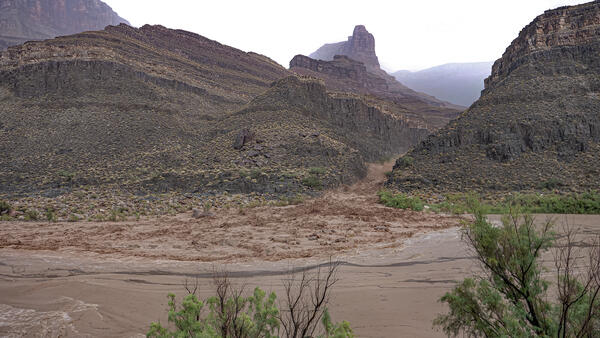
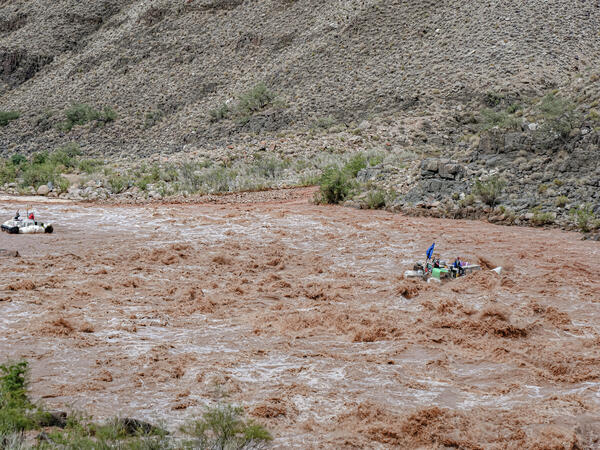
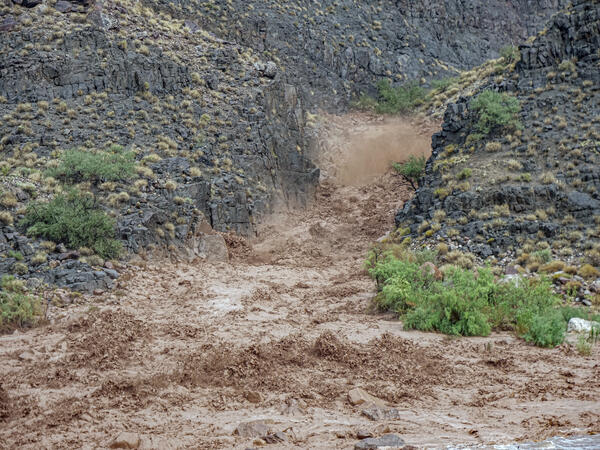
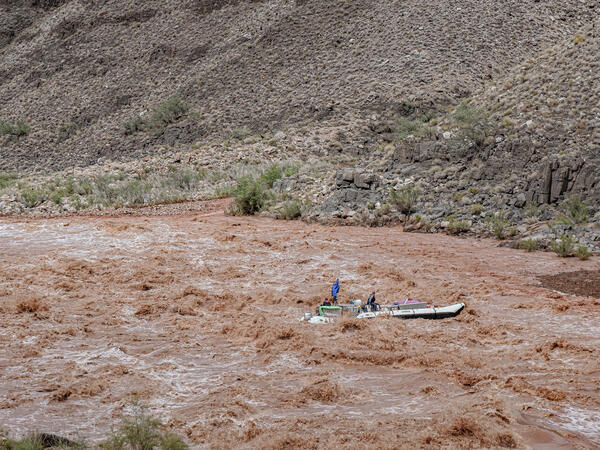
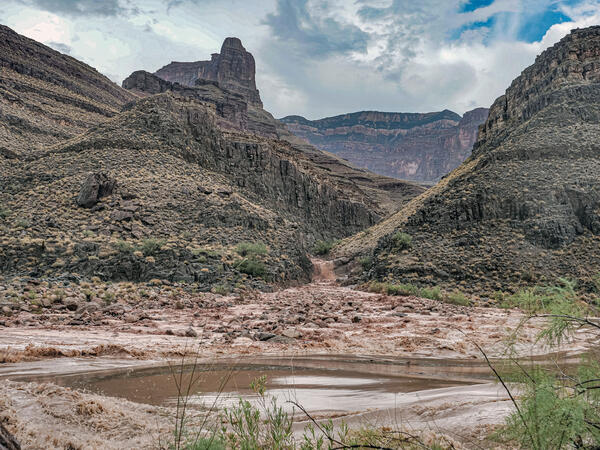
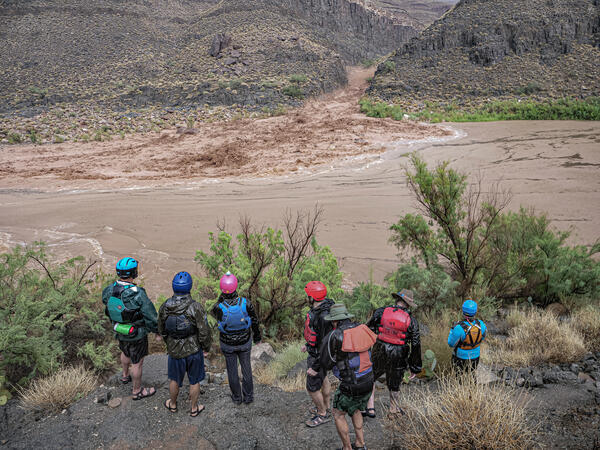
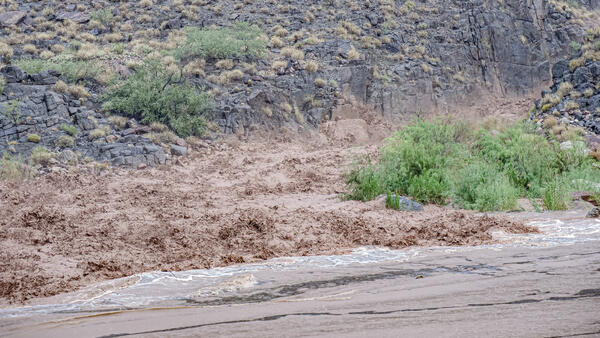
A rainstorm at North Wash at the tail end of the Cataract Canyon on the Colorado River as it enters Lake Powell in June 2024. USGS Southwest Biological Science Center, Grand Canyon Monitoring Research Center were conducting multibeam sonar work in collaboration with the 'Returning Rapids' project. At this spot, the river is no longer in its original channel.
Desert bighorn sheep traverse a rocky hillside in Cabeza Prieta National Wildlife Refuge in southern Arizona, on their way to drink at a water catchment called a tinaja. Video by Ron Finney, North Woods Productions.
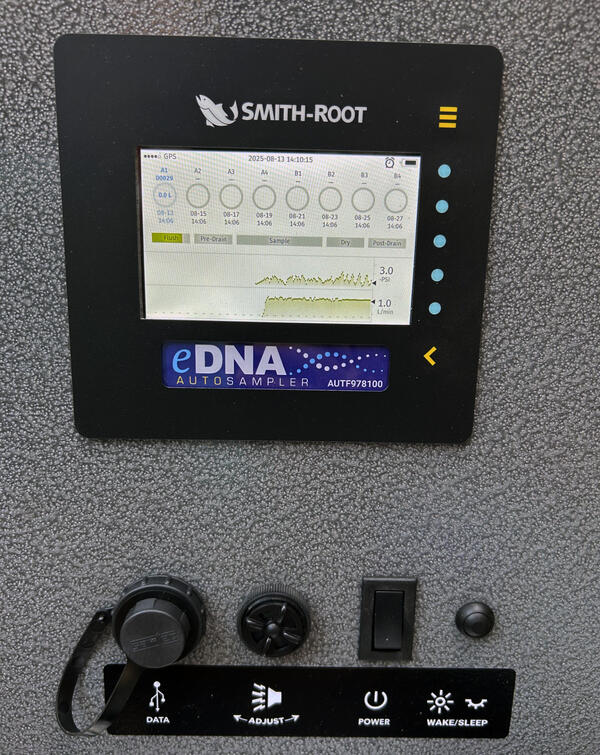
An eDNA autosampler console screen.
An eDNA autosampler device with the lid open, showing the console and inner mechanisms.
Ancestral Lands Conservation Corps / Science Conservation Corps / Grand Canyon Youth crewmembers on a Colorado River trip with National Park Service ecologist Colleen Flanagan-Pritz, who is explaining what they will be studying at Little Nankoweap Creek. Photo by Adriana Huizar, Ancestral Lands Conservation Corps.
Ancestral Lands Conservation Corps Grand Canyon Youth participants in a USGS boat on the Colorado River, June 2024. Photo by Adriana Huizar, Ancestral Lands Conservation Corps.
Ancestral Lands Conservation Corps and Science Conservation Corps crewmembers receive a briefing on the Dragonfly Mercury Project from NPS Ecologist Colleen Flanagan-Pritz and Research Ecologist Chris Kotalik while standing in the water to keep cool on a Colorado River trip, June 2024. Photo by Shannon Sartain, USGS, SBSC.
Ancestral Lands Conservation Corps / Science Conservation Corps youth on a Colorado River trip. Here they listen for instructions on gathering dragonfly larvae for a study with National Park Service (NPS) ecologist, before hiking up the Little Nankoweap Creek drainage. Photo by Adriana Huizar, Ancestral Lands Conservation Corps.
A flowering agave along the Colorado River in Glen Canyon, AZ. Photo by Joel Sankey, USGS.
Two cows on the range in a grazing experiment study site at Bar T Bar Ranch, AZ. Photo by Laura Shriver, USGS, SBSC.
From left to right: RAMPS Ecologist Seth Munson, RAMPS Coordinator Laura Shriver, RAMPS Biologist Sarah Costanzo, NAU postdoctoral researcher Collin VanBuren, and Diablo Trust Program Manager Corinne LaViolette. Photo by Seth Munson (USGS).
Cattle inside a grazing enclosure at the Bar T Bar Ranch RestoreNet site in Northern Arizona.
Newly installed RestoreNet Version 2.0 treatment plots at Bar T Bar Ranch in Northern Arizona. Left: a plot that received pitting + seedballs + live topsoil inoculum (in the seedballs), Right: a plot that received live topsoil inoculum (spread across the plot) and direct seeding.
USGS Geology, Minerals, Energy, Geophysics Science Center (GMEG) staff display rocks and maps and talk to kids about geology at the 2024 STEM event.
USGS Astrogeology staff table at the Spring 2024 STEM event. Photo courtesy of Lori Pigue, USGS Astrogeology.