Grand Canyon community science natural hazard event reporting app
Grand Canyon community science natural hazard event reporting appA screenshot of the Grand Canyon community science natural hazard event reporting app form fields.


Official websites use .gov
A .gov website belongs to an official government organization in the United States.

Secure .gov websites use HTTPS
A lock () or https:// means you’ve safely connected to the .gov website. Share sensitive information only on official, secure websites.

Below are images associated with SBSC's science and staff. Images appear according to the year they were taken. To search, type a keyword or select a year from the dropdown menu. Or, click through the pages using the arrows at the bottom of the page.
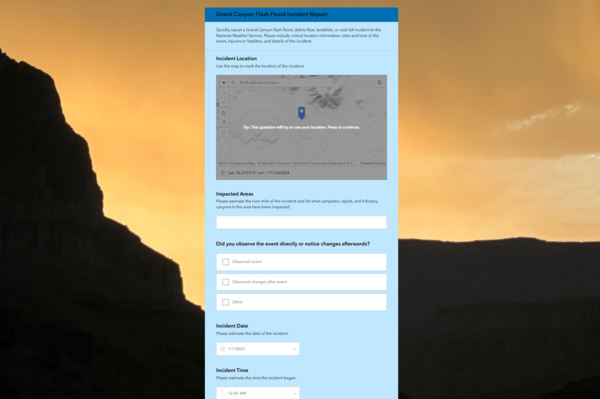
A screenshot of the Grand Canyon community science natural hazard event reporting app form fields.
A screenshot of the Grand Canyon community science natural hazard event reporting app form fields.
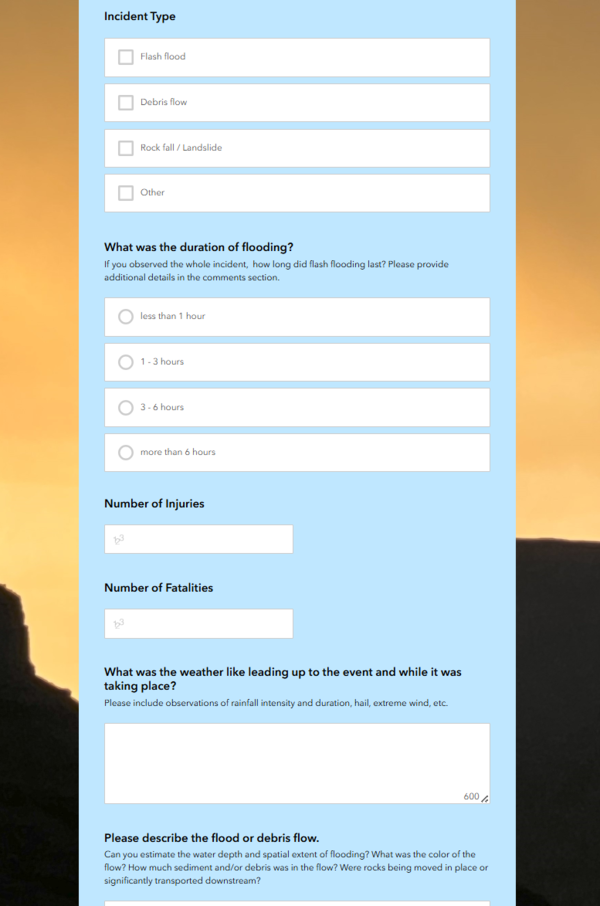
A screenshot of the Grand Canyon community science natural hazard event reporting app form fields.
A screenshot of the Grand Canyon community science natural hazard event reporting app form fields.
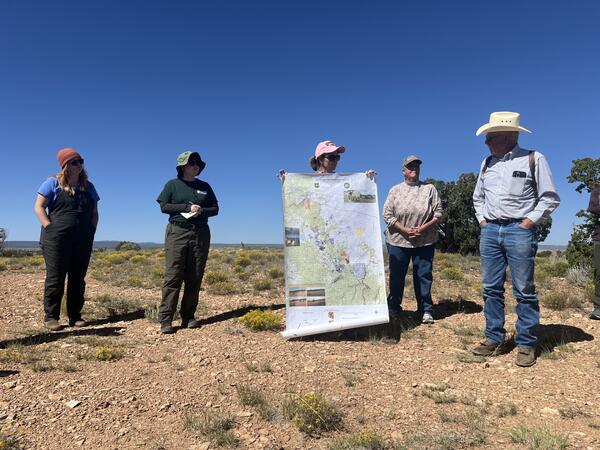
Researchers from the U.S. Geological Survey and University of Arizona collaborate with Diablo Trust ranchers on range improvement and restoration efforts on Northern Arizona rangelands. Photo by Jessica Archibald (Diablo Trust).
Researchers from the U.S. Geological Survey and University of Arizona collaborate with Diablo Trust ranchers on range improvement and restoration efforts on Northern Arizona rangelands. Photo by Jessica Archibald (Diablo Trust).
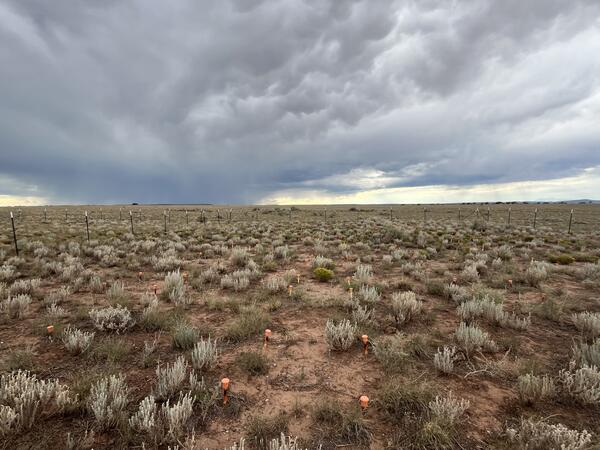
A RestoreNet site in Northern Arizona with late summer monsoon rain clouds in the background. Photo by Laura Shriver.
A RestoreNet site in Northern Arizona with late summer monsoon rain clouds in the background. Photo by Laura Shriver.
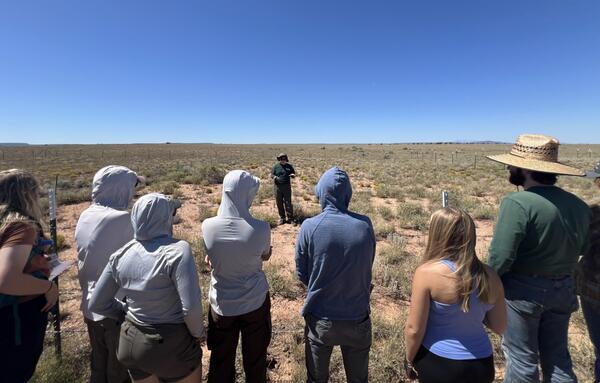
Laura Shriver, RAMPS coordinator, gives a tour of a Northern Arizona RestoreNet site to Northern Arizona University students. Photo by Jessica Archibald (Diablo Trust).
Laura Shriver, RAMPS coordinator, gives a tour of a Northern Arizona RestoreNet site to Northern Arizona University students. Photo by Jessica Archibald (Diablo Trust).
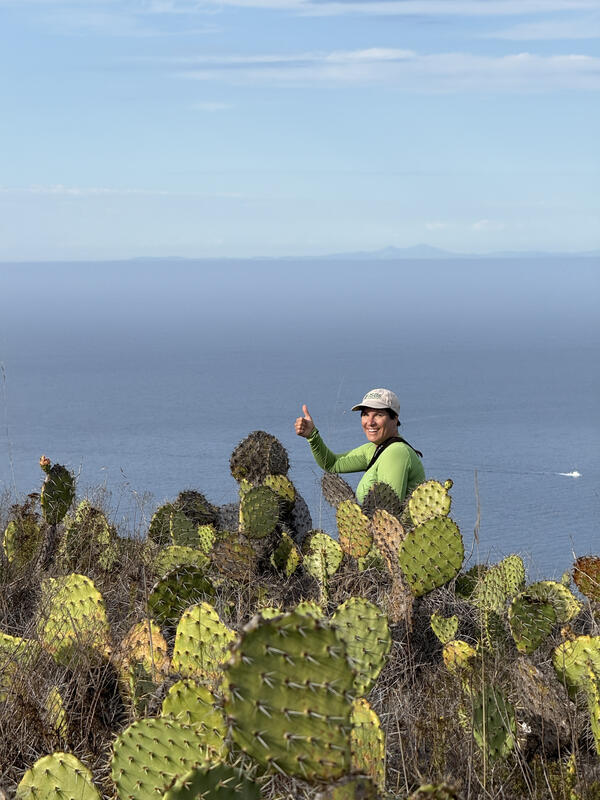
Biologist Sarah Birchard at Pyramid Point, San Clemente Island, Channel Islands, CA. Photo by Mark Sogge, USGS Emeritus.
Biologist Sarah Birchard at Pyramid Point, San Clemente Island, Channel Islands, CA. Photo by Mark Sogge, USGS Emeritus.
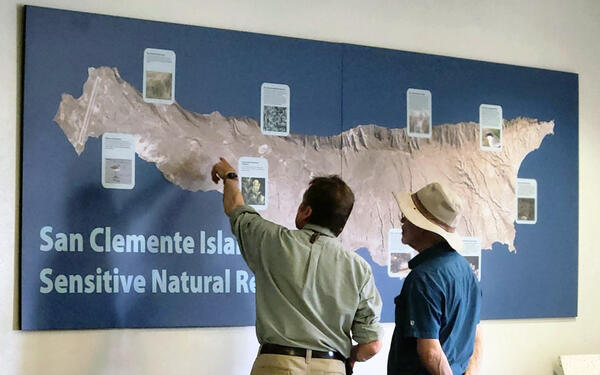
Scientist Charles Drost and Emeritus Mark Sogge look at a map of San Clemente Island, Channel Islands, CA. Photo by Sarah Birchard, USGS.
Scientist Charles Drost and Emeritus Mark Sogge look at a map of San Clemente Island, Channel Islands, CA. Photo by Sarah Birchard, USGS.
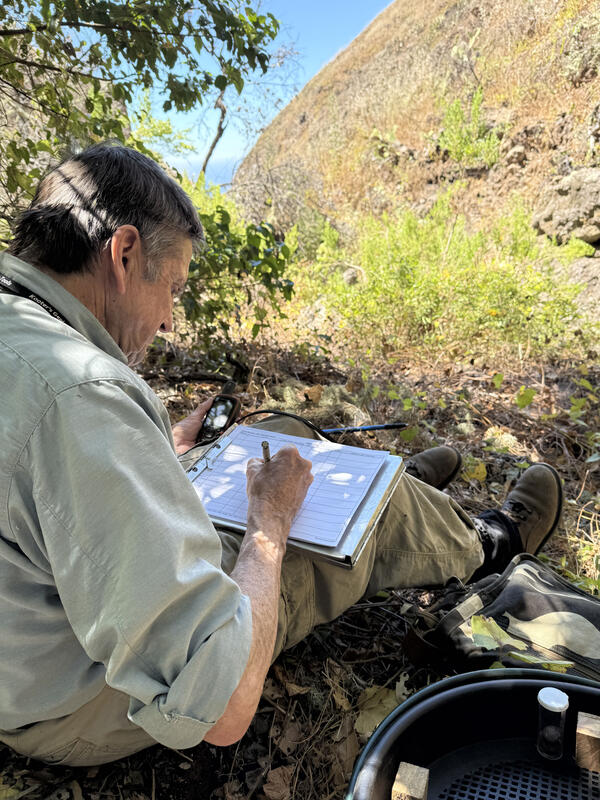
Scientist Charles Drost records data on San Clemente Island during a population monitoring study. Photo by Mark Sogge, USGS Emeritus.
Scientist Charles Drost records data on San Clemente Island during a population monitoring study. Photo by Mark Sogge, USGS Emeritus.

Illustrations of eight Grand Canyon native fish species by Lindsay Hansen, USGS, SBSC.
Illustrations of eight Grand Canyon native fish species by Lindsay Hansen, USGS, SBSC.
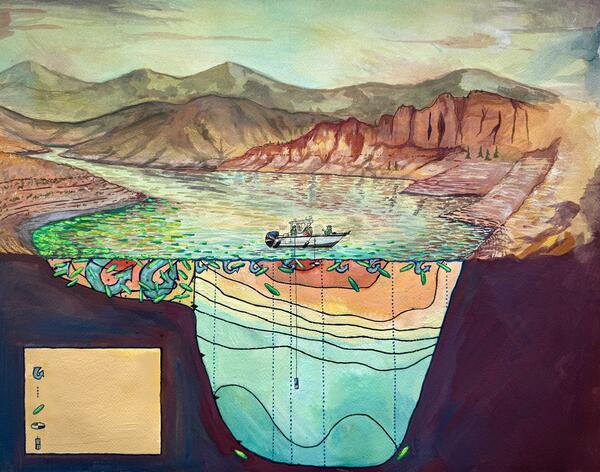
Painting (gouache painting) depicting the Blue Mesa Reservoir during a year of low precipitation totals and the resulting cyanobacteria distribution.
Painting (gouache painting) depicting the Blue Mesa Reservoir during a year of low precipitation totals and the resulting cyanobacteria distribution.
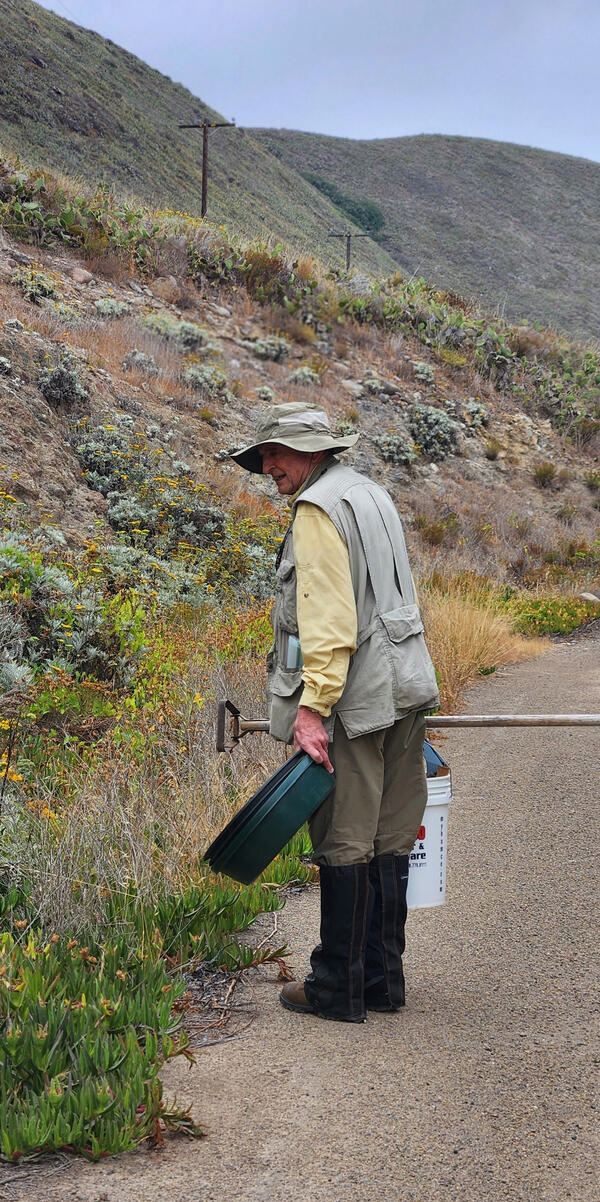
Scientist Charles Drost carries gear along a road on San Clemente Island during a population monitoring study. Photo by Sarah Birchard, USGS.
Scientist Charles Drost carries gear along a road on San Clemente Island during a population monitoring study. Photo by Sarah Birchard, USGS.
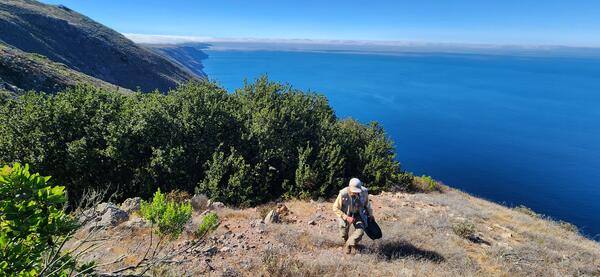
Charles Drost walks up a steep hill on San Clemente Island, one of the Channel Islands, CA, during a population monitoring survey. Photo by Sarah Birchard, 2025.
Charles Drost walks up a steep hill on San Clemente Island, one of the Channel Islands, CA, during a population monitoring survey. Photo by Sarah Birchard, 2025.

A series of flash flood warnings sent by text on June 3, 2025, from the Grand Canyon River Alerts System (GCRAS) for the Colorado River Basin.
A series of flash flood warnings sent by text on June 3, 2025, from the Grand Canyon River Alerts System (GCRAS) for the Colorado River Basin.
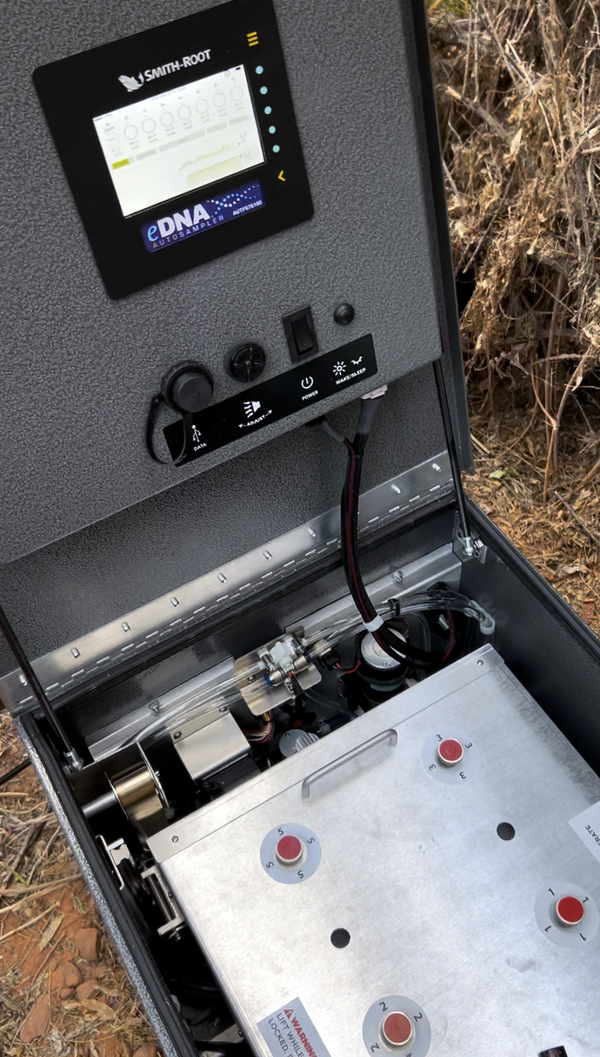
An open eDNA autosampler device showing the console.
An open eDNA autosampler device showing the console.
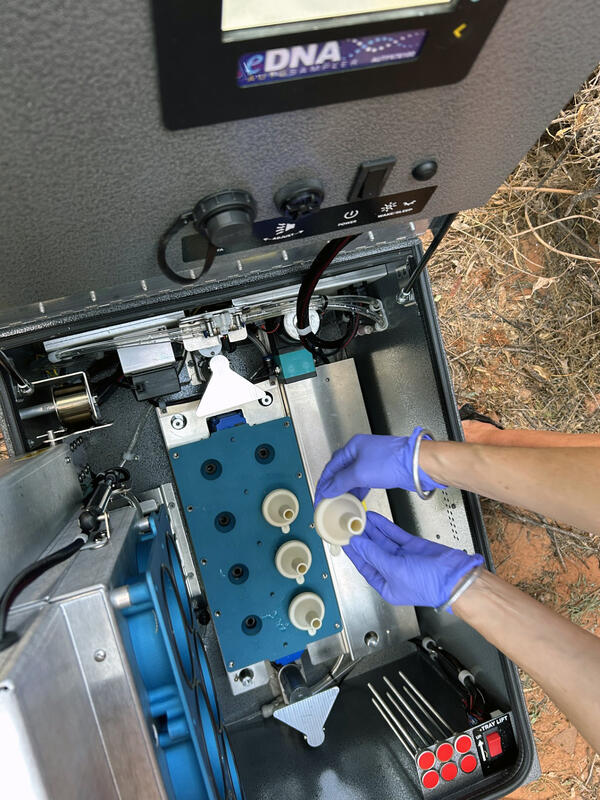
An inside view of an eDNA autosampler to monitor for invasive aquatic species.
An inside view of an eDNA autosampler to monitor for invasive aquatic species.

Benjamin Miller is a fish biologist with the USGS Southwest Biological Science Center’s Grand Canyon and Monitoring and Research Center in Flagstaff, AZ.
Benjamin Miller is a fish biologist with the USGS Southwest Biological Science Center’s Grand Canyon and Monitoring and Research Center in Flagstaff, AZ.

USGS scientists collect vegetation forage data from a grazing and drought drylands experiment on the Colorado Plateau, Utah.
USGS scientists collect vegetation forage data from a grazing and drought drylands experiment on the Colorado Plateau, Utah.

USGS and university scientists observe a herd of cattle while taking a break from collecting vegetation cover data from an experiment examining the impacts of drought and grazing on grassland productivity on the Colorado Plateau, Utah.
USGS and university scientists observe a herd of cattle while taking a break from collecting vegetation cover data from an experiment examining the impacts of drought and grazing on grassland productivity on the Colorado Plateau, Utah.

USGS researchers conducting vegetation and soil research as part of grasslands and drought research in rangelands, Canyonlands National Park, Utah.
USGS researchers conducting vegetation and soil research as part of grasslands and drought research in rangelands, Canyonlands National Park, Utah.
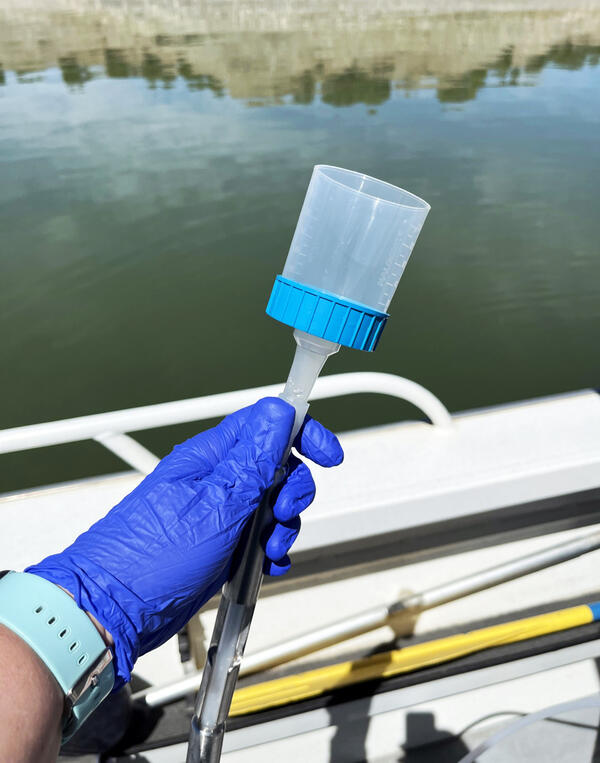
Sampling for invasive aquatic species in a reservoir in the southwest US.
Sampling for invasive aquatic species in a reservoir in the southwest US.
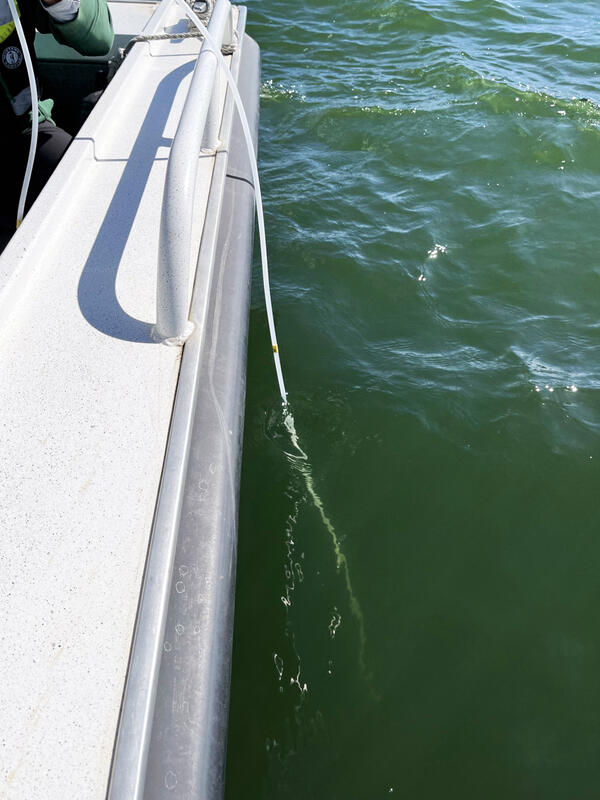
An eDNA sampling device is lowered into a reservoir's water column to monitor for invasive aquatic species including zebra, quagga, and golden mussels.
An eDNA sampling device is lowered into a reservoir's water column to monitor for invasive aquatic species including zebra, quagga, and golden mussels.