



Sophie Lafond-Hudson stands on a frozen lake in northern Minnesota on the spring equinox.
Images
Upper Midwest Water Science Center images.
Filter Total Items: 581

Sophie Lafond-Hudson
Sophie Lafond-Hudson stands on a frozen lake in northern Minnesota on the spring equinox.

Scientist sampling plankton on Lake Mendota in Madison, Wisconsin
Scientist sampling plankton on Lake Mendota in Madison, WisconsinUSGS scientist Grace Armstrong sampling plankton on Lake Mendota in Madison, Wisconsin.
Scientist sampling plankton on Lake Mendota in Madison, Wisconsin
Scientist sampling plankton on Lake Mendota in Madison, WisconsinUSGS scientist Grace Armstrong sampling plankton on Lake Mendota in Madison, Wisconsin.

MC-ICP-MS used for mercury stable isotope analyses
MC-ICP-MS used for mercury stable isotope analysesMC-ICP-MS used for mercury stable isotope analyses.
MC-ICP-MS used for mercury stable isotope analyses
MC-ICP-MS used for mercury stable isotope analysesMC-ICP-MS used for mercury stable isotope analyses.

Nippon mercury analyzer for sediments and fish
Nippon mercury analyzer for sediments and fish.
Nippon mercury analyzer for sediments and fish.
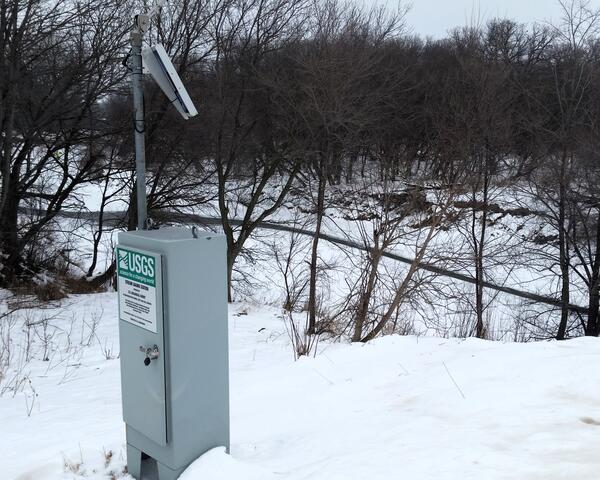
Streamgage 05300000 Lac Qui Parle River Near Lac Qui Parle, Minnesota
Streamgage 05300000 Lac Qui Parle River Near Lac Qui Parle, MinnesotaStreamgage 05300000 Lac Qui Parle River Near Lac Qui Parle, Minnesota.
https://waterdata.usgs.gov/monitoring-location/USGS-05300000/
Streamgage 05300000 Lac Qui Parle River Near Lac Qui Parle, Minnesota
Streamgage 05300000 Lac Qui Parle River Near Lac Qui Parle, MinnesotaStreamgage 05300000 Lac Qui Parle River Near Lac Qui Parle, Minnesota.
https://waterdata.usgs.gov/monitoring-location/USGS-05300000/

Carrying an ice auger on the St. Croix River at Stillwater, Minnesota
Carrying an ice auger on the St. Croix River at Stillwater, MinnesotaHydrologic technician Garret Welsh carries a large ice auger while walking across the frozen St. Croix river near streamgage 05341550 in Stillwater, Minnesota.
Carrying an ice auger on the St. Croix River at Stillwater, Minnesota
Carrying an ice auger on the St. Croix River at Stillwater, MinnesotaHydrologic technician Garret Welsh carries a large ice auger while walking across the frozen St. Croix river near streamgage 05341550 in Stillwater, Minnesota.

Measuring stream velocity through an augered hole in the frozen St. Croix River, Minnesota
Measuring stream velocity through an augered hole in the frozen St. Croix River, MinnesotaHydrologic technician Garret Welsh conducts an Ice Rod measurement through an augered hole in the frozen St. Croix river near streamgage 05341550 in Stillwater, Minnesota. An Ice Rod is a heavy-duty, 1-inch (2.5 centimeter) diameter, lightweight aluminum rod used for suspending ice meters in fast velocities.
Measuring stream velocity through an augered hole in the frozen St. Croix River, Minnesota
Measuring stream velocity through an augered hole in the frozen St. Croix River, MinnesotaHydrologic technician Garret Welsh conducts an Ice Rod measurement through an augered hole in the frozen St. Croix river near streamgage 05341550 in Stillwater, Minnesota. An Ice Rod is a heavy-duty, 1-inch (2.5 centimeter) diameter, lightweight aluminum rod used for suspending ice meters in fast velocities.

Graduate student performing mercury uptake studies in plankton
Graduate student performing mercury uptake studies in planktonGraduate student, Grace Armstrong, performing mercury uptake studies in plankton at Mercury Research Laboratory, Middleton, Wisconsin.
Graduate student performing mercury uptake studies in plankton
Graduate student performing mercury uptake studies in planktonGraduate student, Grace Armstrong, performing mercury uptake studies in plankton at Mercury Research Laboratory, Middleton, Wisconsin.

Helicopter with geophysical survey equipment loop deployed below for airborne electromagnetic survey, Northeastern Wisconsin, January 2021
Helicopter with geophysical survey equipment loop deployed below for airborne electromagnetic survey, Northeastern Wisconsin, January 2021Photo of helicopter with geophysical equipment loop deployed below it via slingload. Technician for scale. In January 2021 a helicopter carried an airborne electromagnetic induction sensor over parts of northeastern Wisconsin as part of a USGS study to map the aquifers in the region.
Helicopter with geophysical survey equipment loop deployed below for airborne electromagnetic survey, Northeastern Wisconsin, January 2021
Helicopter with geophysical survey equipment loop deployed below for airborne electromagnetic survey, Northeastern Wisconsin, January 2021Photo of helicopter with geophysical equipment loop deployed below it via slingload. Technician for scale. In January 2021 a helicopter carried an airborne electromagnetic induction sensor over parts of northeastern Wisconsin as part of a USGS study to map the aquifers in the region.

Helicopter towing hoop for airborne electromagnetic survey northeastern Wisconsin, January 2021
Helicopter towing hoop for airborne electromagnetic survey northeastern Wisconsin, January 2021Photo of helicopter with geophysical equipment loop deployed below it via slingload. In January 2021 a helicopter carried an airborne electromagnetic induction sensor over parts of northeastern Wisconsin as part of a USGS study to map the aquifers in the region.
Helicopter towing hoop for airborne electromagnetic survey northeastern Wisconsin, January 2021
Helicopter towing hoop for airborne electromagnetic survey northeastern Wisconsin, January 2021Photo of helicopter with geophysical equipment loop deployed below it via slingload. In January 2021 a helicopter carried an airborne electromagnetic induction sensor over parts of northeastern Wisconsin as part of a USGS study to map the aquifers in the region.

Geophysical equipment loop with sensor for airborne electromagnetic survey January 2021
Geophysical equipment loop with sensor for airborne electromagnetic survey January 2021Geophysical equipment loop with sensor from SKYTEM. In January 2021 a helicopter carried an airborne electromagnetic induction sensor over parts of northeastern Wisconsin as part of a USGS study to map the aquifers in the region.
Geophysical equipment loop with sensor for airborne electromagnetic survey January 2021
Geophysical equipment loop with sensor for airborne electromagnetic survey January 2021Geophysical equipment loop with sensor from SKYTEM. In January 2021 a helicopter carried an airborne electromagnetic induction sensor over parts of northeastern Wisconsin as part of a USGS study to map the aquifers in the region.

Helicopter towing geophysical survey hoop via slingload for airborne electromagnetic (AEM) survey
Helicopter towing geophysical survey hoop via slingload for airborne electromagnetic (AEM) surveyHelicopter with geophysical equipment loop deployed below it via slingload. In January 2021 a helicopter carried an airborne electromagnetic induction sensor over parts of northeastern Wisconsin as part of a USGS study to map the aquifers in the region.
Helicopter towing geophysical survey hoop via slingload for airborne electromagnetic (AEM) survey
Helicopter towing geophysical survey hoop via slingload for airborne electromagnetic (AEM) surveyHelicopter with geophysical equipment loop deployed below it via slingload. In January 2021 a helicopter carried an airborne electromagnetic induction sensor over parts of northeastern Wisconsin as part of a USGS study to map the aquifers in the region.

Explanation of electromagnetic geophysical survey equipment
Explanation of electromagnetic geophysical survey equipmentA SkyTEM team member explains technology behind geophysical equipment loop to USGS employees. In January 2021 a helicopter carried an airborne electromagnetic induction sensor over parts of northeastern Wisconsin as part of a USGS study to map the aquifers in the region.
Explanation of electromagnetic geophysical survey equipment
Explanation of electromagnetic geophysical survey equipmentA SkyTEM team member explains technology behind geophysical equipment loop to USGS employees. In January 2021 a helicopter carried an airborne electromagnetic induction sensor over parts of northeastern Wisconsin as part of a USGS study to map the aquifers in the region.

Helicopter with electromagnetic geophysical equipment loop deployed below it via slingload taking off for survey flight
Helicopter with electromagnetic geophysical equipment loop deployed below it via slingload taking off for survey flightHelicopter with geophysical equipment loop deployed below it via slingload taking off for survey flight. In January 2021 a helicopter carried an airborne electromagnetic induction sensor over parts of northeastern Wisconsin as part of a USGS study to map the aquifers in the region.
Helicopter with electromagnetic geophysical equipment loop deployed below it via slingload taking off for survey flight
Helicopter with electromagnetic geophysical equipment loop deployed below it via slingload taking off for survey flightHelicopter with geophysical equipment loop deployed below it via slingload taking off for survey flight. In January 2021 a helicopter carried an airborne electromagnetic induction sensor over parts of northeastern Wisconsin as part of a USGS study to map the aquifers in the region.

Geophysical equipment loop for electromagnetic survey on ground prior to liftoff by helicopter
Geophysical equipment loop for electromagnetic survey on ground prior to liftoff by helicopterGeophysical equipment loop for electromagnetic survey on ground prior to liftoff by helicopter. In January 2021 a helicopter carried an airborne electromagnetic induction sensor over parts of northeastern Wisconsin as part of a USGS study to map the aquifers in the region.
Geophysical equipment loop for electromagnetic survey on ground prior to liftoff by helicopter
Geophysical equipment loop for electromagnetic survey on ground prior to liftoff by helicopterGeophysical equipment loop for electromagnetic survey on ground prior to liftoff by helicopter. In January 2021 a helicopter carried an airborne electromagnetic induction sensor over parts of northeastern Wisconsin as part of a USGS study to map the aquifers in the region.

Electromagnetic geophysical survey hoop
Geophysical equipment survey hoop resting on ground in between flights. In January 2021 a helicopter carried an airborne electromagnetic induction sensor over parts of northeastern Wisconsin as part of a USGS study to map the aquifers in the region.
Geophysical equipment survey hoop resting on ground in between flights. In January 2021 a helicopter carried an airborne electromagnetic induction sensor over parts of northeastern Wisconsin as part of a USGS study to map the aquifers in the region.

Evapotranspiration Uranium Mill Tailing Covers
The U.S. Nuclear Regulatory Commission (NRC) regulates uranium mill tailings under the Uranium Mill Tailings Control Act of 1978. This drawing is a straight-forward cross sectional schematic of the different types of mill tailing covers.
The U.S. Nuclear Regulatory Commission (NRC) regulates uranium mill tailings under the Uranium Mill Tailings Control Act of 1978. This drawing is a straight-forward cross sectional schematic of the different types of mill tailing covers.

A Grand Canyon View
This image was drawn for a fact sheet on Uranium mining in the Grand Canyon region, but was ultimately unused. It still has utility to serve as inspiration to those who want to form ideas on how their science can be represented. The image is quite literally, a view into the Grand Canyon. But on a deeper level also is a conglomerate of both the geol
This image was drawn for a fact sheet on Uranium mining in the Grand Canyon region, but was ultimately unused. It still has utility to serve as inspiration to those who want to form ideas on how their science can be represented. The image is quite literally, a view into the Grand Canyon. But on a deeper level also is a conglomerate of both the geol

Acoustic Doppler current profiler (ADCP) measures stream velocity at streamgage 04045500, Tahquamenon River Near Paradise, MI
Acoustic Doppler current profiler (ADCP) measures stream velocity at streamgage 04045500, Tahquamenon River Near Paradise, MIAn acoustic Doppler current profiler (ADCP) measures stream velocity at streamgage 04045500, Tahquamenon River Near Paradise, Michigan.
Acoustic Doppler current profiler (ADCP) measures stream velocity at streamgage 04045500, Tahquamenon River Near Paradise, MI
Acoustic Doppler current profiler (ADCP) measures stream velocity at streamgage 04045500, Tahquamenon River Near Paradise, MIAn acoustic Doppler current profiler (ADCP) measures stream velocity at streamgage 04045500, Tahquamenon River Near Paradise, Michigan.
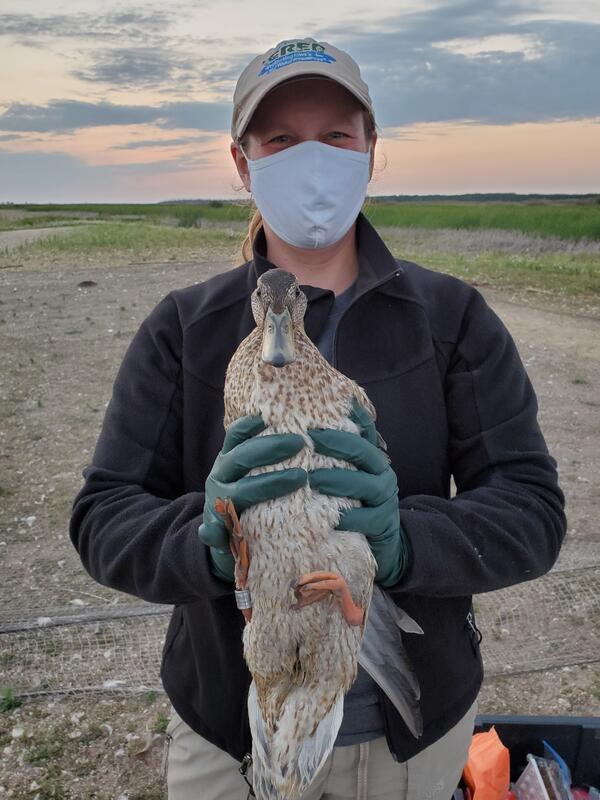
Holding duck while banding
Research hydrologist Laura Hubbard got to experience being a wildlife biologist for a few hours, holding her first duck as part of a planned Minnesota Department of Natural Resources banding in August 2020 near Thief River Falls, MN. The banding was part of research to understand the persistence of influenza A viruses in the environment.
Research hydrologist Laura Hubbard got to experience being a wildlife biologist for a few hours, holding her first duck as part of a planned Minnesota Department of Natural Resources banding in August 2020 near Thief River Falls, MN. The banding was part of research to understand the persistence of influenza A viruses in the environment.

Visualization of an ensemble of solutions for PEST++
Visualization of an ensemble of solutions for PEST++The left axis is a visualization of an ensemble of solutions (crosses and dashed lines) iteratively moving down gradient on an objective function surface (color flood) in 2-D parameters space, with the associated prior (gray) and posterior (blue) parameter marginal distributions shown on the two right stacked axes.
Visualization of an ensemble of solutions for PEST++
Visualization of an ensemble of solutions for PEST++The left axis is a visualization of an ensemble of solutions (crosses and dashed lines) iteratively moving down gradient on an objective function surface (color flood) in 2-D parameters space, with the associated prior (gray) and posterior (blue) parameter marginal distributions shown on the two right stacked axes.