U.S. flag

An official website of the United States government

Species Management Research Program

WERC scientists study the ecology of sensitive species, including threatened and endangered animals and plants. Their research supports the recovery and conservation of iconic species like the Greater Sage-grouse, Giant garter snake, Southern sea otter, and Desert tortoise, and inform critical decision-making by Department of the Interior (DOI) as well as other resource managers. WERC’s projects detect environmental threats that could affect the health of vulnerable species. Habitat loss, invasive species, and contaminants are some of the stressors that can change the way ecosystems function and affect the species that depend on them. Explore the projects below to learn more about how WERC scientists meet the needs of land and resource managers across California and Nevada, as well as international and indigenous lands.

Filter Total Items: 58

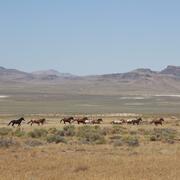
Science for management of America’s iconic wild horses and burros

Wild horses and burros are iconic wildlife of the western USA as well as a complicated management issue on tribal, state, and federal lands. Due to their history as domesticated animals, these wild equids – also called “free-roaming” or “feral” equids – can reproduce quickly, and have few natural predators, allowing their populations to grow rapidly if not managed. When populations are too large...
Science for management of America’s iconic wild horses and burros

Science for management of America’s iconic wild horses and burros

Wild horses and burros are iconic wildlife of the western USA as well as a complicated management issue on tribal, state, and federal lands. Due to their history as domesticated animals, these wild equids – also called “free-roaming” or “feral” equids – can reproduce quickly, and have few natural predators, allowing their populations to grow rapidly if not managed. When populations are too large...
Learn More

Greater Sage-Grouse Population Monitoring Framework: Cheat Sheet

The Greater Sage-grouse Population Monitoring Framework fills a prominent information gap to help inform current assessments of sage-grouse population trends at nested spatial and temporal scales. It is centered on four objectives: (1) create a standardized database of lek counts; (2) develop biologically based spatial population structures by clustering leks; (3) estimate spatial trends at...
Greater Sage-Grouse Population Monitoring Framework: Cheat Sheet

Greater Sage-Grouse Population Monitoring Framework: Cheat Sheet

The Greater Sage-grouse Population Monitoring Framework fills a prominent information gap to help inform current assessments of sage-grouse population trends at nested spatial and temporal scales. It is centered on four objectives: (1) create a standardized database of lek counts; (2) develop biologically based spatial population structures by clustering leks; (3) estimate spatial trends at...
Learn More

Greater Sage-Grouse Population Monitoring Framework: Targeted Annual Warning System Information Sheet

The Greater Sage-grouse Population Monitoring Framework helps fill a major information gap to aid current assessments of sage-grouse population trends across spatial and temporal scales. It centers on four objectives: 1) create a standardized database of lek counts; 2) cluster leks to develop spatial population structures; 3) estimate spatial trends across temporal extents; and 4) develop a system...
Greater Sage-Grouse Population Monitoring Framework: Targeted Annual Warning System Information Sheet

Greater Sage-Grouse Population Monitoring Framework: Targeted Annual Warning System Information Sheet

The Greater Sage-grouse Population Monitoring Framework helps fill a major information gap to aid current assessments of sage-grouse population trends across spatial and temporal scales. It centers on four objectives: 1) create a standardized database of lek counts; 2) cluster leks to develop spatial population structures; 3) estimate spatial trends across temporal extents; and 4) develop a system...
Learn More

Data Harmonization for Greater Sage-Grouse Populations

Long-term wildlife monitoring is imperative for understanding population changes that can inform managers. However, working with population data collected by different organizations across multiple jurisdictions and over long time periods can be challenging due to varying data management approaches and organizational priorities. Through this project, we aimed to collaborate with eleven state...
Data Harmonization for Greater Sage-Grouse Populations

Data Harmonization for Greater Sage-Grouse Populations

Long-term wildlife monitoring is imperative for understanding population changes that can inform managers. However, working with population data collected by different organizations across multiple jurisdictions and over long time periods can be challenging due to varying data management approaches and organizational priorities. Through this project, we aimed to collaborate with eleven state...
Learn More

Greater Sage-Grouse Population Monitoring Framework: Glossary of Terms

The Greater Sage-grouse Population Monitoring Framework helps aid current assessments of sage-grouse population trends across spatial and temporal scales. It centers on four objectives: 1) create a standardized database of lek counts; 2) cluster leks to develop spatial population structures; 3) estimate spatial trends across temporal extents; and 4) develop a system to estimate where and when...
Greater Sage-Grouse Population Monitoring Framework: Glossary of Terms

Greater Sage-Grouse Population Monitoring Framework: Glossary of Terms

The Greater Sage-grouse Population Monitoring Framework helps aid current assessments of sage-grouse population trends across spatial and temporal scales. It centers on four objectives: 1) create a standardized database of lek counts; 2) cluster leks to develop spatial population structures; 3) estimate spatial trends across temporal extents; and 4) develop a system to estimate where and when...
Learn More

Greater Sage-Grouse Population Monitoring Framework: Frequently Asked Questions

The Greater Sage-grouse Population Monitoring Framework helps aid current assessments of sage-grouse population trends across spatial and temporal scales. It centers on four objectives: 1) create a standardized database of lek counts; 2) cluster leks to develop spatial population structures; 3) estimate spatial trends across temporal extents; and 4) develop a system to estimate where and when...
Greater Sage-Grouse Population Monitoring Framework: Frequently Asked Questions

Greater Sage-Grouse Population Monitoring Framework: Frequently Asked Questions

The Greater Sage-grouse Population Monitoring Framework helps aid current assessments of sage-grouse population trends across spatial and temporal scales. It centers on four objectives: 1) create a standardized database of lek counts; 2) cluster leks to develop spatial population structures; 3) estimate spatial trends across temporal extents; and 4) develop a system to estimate where and when...
Learn More

Greater Sage-Grouse Population Monitoring Framework

Greater sage-grouse ( Centrocercus urophasianus) are at the center of state and national land use policies largely because of their unique life-history traits and their role as an ecological indicator for the health of sagebrush ecosystems. Multiple science centers with the U.S. Geological Survey (USGS) in conjunction with Colorado State University (CSU) have developed the Greater Sage-Grouse...
Greater Sage-Grouse Population Monitoring Framework

Greater Sage-Grouse Population Monitoring Framework

Greater sage-grouse ( Centrocercus urophasianus) are at the center of state and national land use policies largely because of their unique life-history traits and their role as an ecological indicator for the health of sagebrush ecosystems. Multiple science centers with the U.S. Geological Survey (USGS) in conjunction with Colorado State University (CSU) have developed the Greater Sage-Grouse...
Learn More

A user-friendly decision support tool for monitoring and managing greater sage-grouse populations

Researchers at the U.S. Geological Survey (USGS) and Colorado State University (CSU) collaborated with the Bureau of Land Management and state wildlife agencies to develop a hierarchical population monitoring framework for managing greater sage-grouse ( Centrocercus urophasianus) populations and the sagebrush ecosystems they depend on for survival and reproduction. This greater sage-grouse...
A user-friendly decision support tool for monitoring and managing greater sage-grouse populations

A user-friendly decision support tool for monitoring and managing greater sage-grouse populations

Researchers at the U.S. Geological Survey (USGS) and Colorado State University (CSU) collaborated with the Bureau of Land Management and state wildlife agencies to develop a hierarchical population monitoring framework for managing greater sage-grouse ( Centrocercus urophasianus) populations and the sagebrush ecosystems they depend on for survival and reproduction. This greater sage-grouse...
Learn More

Greater Sage-Grouse Population Monitoring Framework Data Inputs Information Sheet

To support management decisions, western state wildlife agencies identified the need for a range-wide database that tracks annual counts of greater sage-grouse ( Centrocercus urophasianus; sage-grouse) at leks (breeding sites), which have been recorded since the early 1950s. Researchers at Colorado State University (CSU) and U.S. Geological Survey (USGS) worked with state wildlife agencies to: 1)...
Greater Sage-Grouse Population Monitoring Framework Data Inputs Information Sheet

Greater Sage-Grouse Population Monitoring Framework Data Inputs Information Sheet

To support management decisions, western state wildlife agencies identified the need for a range-wide database that tracks annual counts of greater sage-grouse ( Centrocercus urophasianus; sage-grouse) at leks (breeding sites), which have been recorded since the early 1950s. Researchers at Colorado State University (CSU) and U.S. Geological Survey (USGS) worked with state wildlife agencies to: 1)...
Learn More

Estimating trends for greater sage-grouse populations within highly stochastic environments

Land and wildlife managers require accurate estimates of sensitive species’ trends to help guide conservation decisions that maintain biodiversity and promote healthy ecosystems. The U.S. Geological Survey (USGS), in conjunction with Colorado State University (CSU), developed a hierarchical population monitoring framework for managing greater sage-grouse ( Centrocercus urophasianus; sage-grouse)...
Estimating trends for greater sage-grouse populations within highly stochastic environments

Estimating trends for greater sage-grouse populations within highly stochastic environments

Land and wildlife managers require accurate estimates of sensitive species’ trends to help guide conservation decisions that maintain biodiversity and promote healthy ecosystems. The U.S. Geological Survey (USGS), in conjunction with Colorado State University (CSU), developed a hierarchical population monitoring framework for managing greater sage-grouse ( Centrocercus urophasianus; sage-grouse)...
Learn More

USGS Sagebrush Science: Supporting Public Safety and Economic Decision Making Across the West

The sagebrush biome is one of the largest ecosystems in North America. Encompassing nearly one-third of the continental U.S., it provides critical resources for millions of Americans and a home for hundreds of plants and animal species in the West. Natural resource management in sagebrush ecosystems can be complex, and science can support management decisions by providing knowledge and tools to...
USGS Sagebrush Science: Supporting Public Safety and Economic Decision Making Across the West

USGS Sagebrush Science: Supporting Public Safety and Economic Decision Making Across the West

The sagebrush biome is one of the largest ecosystems in North America. Encompassing nearly one-third of the continental U.S., it provides critical resources for millions of Americans and a home for hundreds of plants and animal species in the West. Natural resource management in sagebrush ecosystems can be complex, and science can support management decisions by providing knowledge and tools to...
Learn More

Heat Stress in Alaska's Pacific Salmon
Alaska's freshwater spans a wide range of summer water temperatures, from ice-cold glacier water to warm rivers that routinely reach stressful levels for salmon, exceeding 18°C/64°F and even surpassing 21°C/70°F. Pacific salmon population trends are also varied and include declines in many Chinook salmon populations. Salmon declines are kitchen table issues because salmon fishing is key to the...
Heat Stress in Alaska's Pacific Salmon

Heat Stress in Alaska's Pacific Salmon

Alaska's freshwater spans a wide range of summer water temperatures, from ice-cold glacier water to warm rivers that routinely reach stressful levels for salmon, exceeding 18°C/64°F and even surpassing 21°C/70°F. Pacific salmon population trends are also varied and include declines in many Chinook salmon populations. Salmon declines are kitchen table issues because salmon fishing is key to the...
Learn More
Was this page helpful?