



Water Availability and Use
Water Availability and Use
Filter Total Items: 66

Hydrologic Instrumentation Facility (HIF) Construction
The U.S. Geological Survey, in partnership with the University of Alabama, is constructing a new Hydrologic Instrumentation Facility, a science and engineering facility that will support our water observing networks and research.

Water Use
Through the Water Availability and Use Science Program, USGS will provide national information on withdrawal, conveyance, consumptive use, and return flow by water-use category at spatial and temporal resolutions important for risk-informed water management decisions. Water-use data provide a foundation for water managers to analyze trends over time, plan more strategically, identify, and...

Water Use in the United States
Water use estimates for 2000 through 2020 are now available for the three largest categories of use in the United States: self-supplied thermoelectric power generation, self-supplied irrigation, and public supply. Five additional categories of use (self-supplied industrial, domestic, mining, livestock, and aquaculture) will be available in 2025.

High-frequency Monitoring of Delta Island Drainage Waters
From the second half of the 19th century, land reclamation has transformed the Sacramento-San Joaquin Delta (Delta). The landscape of the Delta has gone from a network of shifting waterways and tidal marshland to channels and islands fixed in position by hardened levees.

Regional Water Availability Assessment: Upper Colorado River Basin
Regional Water Availability Assessments are scientific assessments of water availability in different hydrologic regions across the Nation. In the Upper Colorado River Basin, the USGS will conduct a focused assessment of how snowpack and snowmelt influence hydrology and water quality, and an integrated and comprehensive assessment of multiple water quantity, quality and use factors.

Regional Water Availability Assessment: Delaware River Basin
Regional Water Availability Assessments are scientific assessments of water availability in different hydrologic regions across the Nation. In the Delaware River Basin, the USGS will conduct a focused assessment of increasing freshwater salinity and an integrated and comprehensive assessment of multiple water quantity, quality and use factors.

Understanding Water Availability
The United States faces growing challenges to its water supply, and we need to know where there is not enough water, where we have more than we need, and the quality of the water. The USGS is charged with understanding and reporting on water availability including influences on water supply (how much water and of what quality) and water demand (how much water do humans and ecosystems need).
Drought Prediction Science
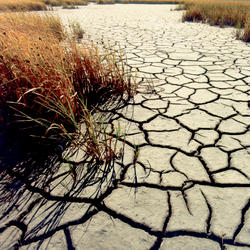
Drought is a prolonged and widespread deficit in available water supplies that creates multiple stressors across ecosystems and communities. The U.S. Geological Survey Water Mission Area conducts drought research and modeling to improve drought prediction capabilities. The research focus is on understanding the hydrological, ecological, and economic ramifications of drought. The modeling focus...

Future Streamflow Estimates for Tongue River to Enable Northern Cheyenne Data Driven Water Management and Planning
Atmospheric warming is driving: - a shift in precipitation from snow to rain - changing precipitation intensity and seasonality - increasing atmospheric demand for moisture in mountain river watersheds across the western United States (Seager and others, 2015). These changes will likely alter the timing and quantity of streamflow in rivers draining mountains. The Tongue River flows from the...

MODFLOW and Related Programs
MODFLOW is the USGS's modular hydrologic model. MODFLOW is considered an international standard for simulating and predicting groundwater conditions and groundwater/surface-water interactions. MODFLOW 6 is presently the core MODFLOW version distributed by the USGS.

Water-Use Data and Research (WUDR) program
The USGS Water-Use Data and Research (WUDR) program provides financial assistance through cooperative agreements with State water resource agencies to improve the availability, quality, compatibility, and delivery of water-use data that is collected or estimated by States.

Karst Aquifers
Karst terrain is created from the dissolution of soluble rocks, principally limestone and dolomite. Karst areas are characterized by distinctive landforms (like springs, caves, sinkholes) and a unique hydrogeology that results in aquifers that are highly productive but extremely vulnerable to contamination.