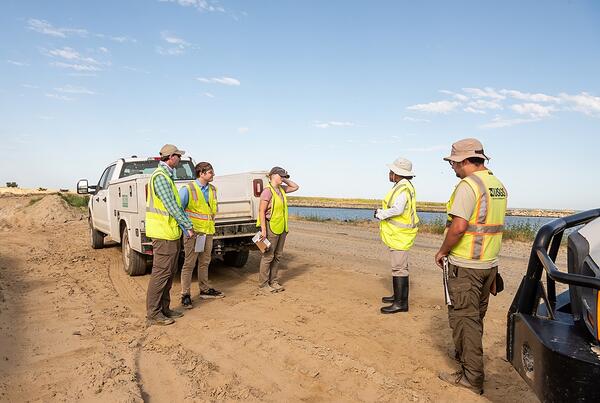
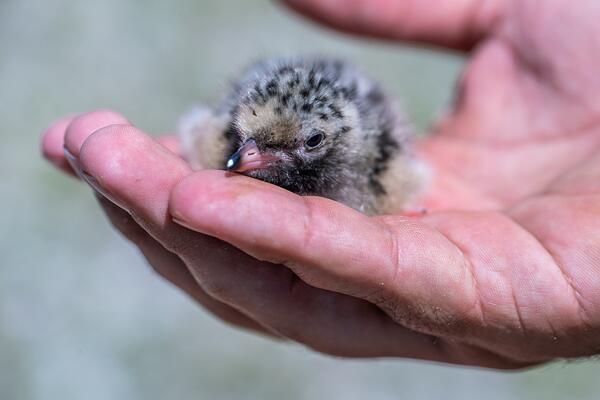
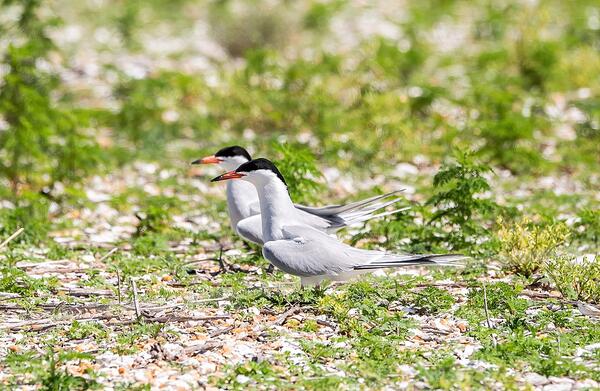
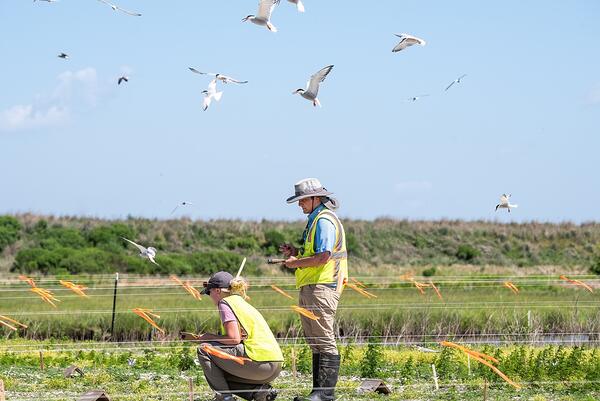
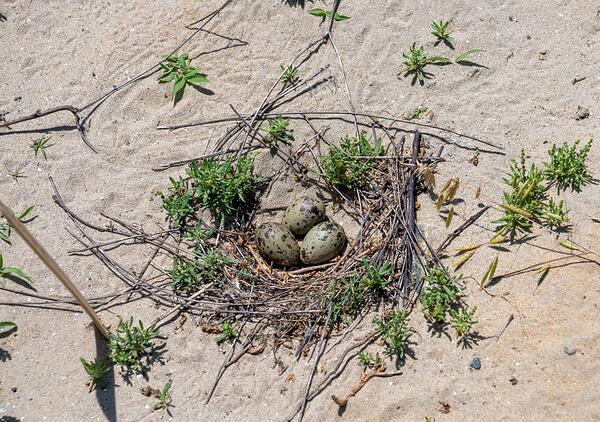
This Prosser Lab project aims to understand the factors driving breeding success of multiple waterbird species, with special emphasis on Least and Common Terns (two species of concern) on Poplar Island Environmental Restoration Project.
Images
See our science through the images below.
This Prosser Lab project aims to understand the factors driving breeding success of multiple waterbird species, with special emphasis on Least and Common Terns (two species of concern) on Poplar Island Environmental Restoration Project.
Lake Abert, Oregon is one of the 20 terminal lakes identified by USGS partners as priority ecosystems for study by the Saline Lakes Ecosystems IWAA.
How hot do wildfires get?
- 570 F degrees - TEMPERATURE AT WHICH WOOD WILL BURST INTO FLAMES
- 2,200 F degrees - TEMPERATURE WILDFIRES COULD REACH IN EXTREME CONDITIONS
How hot do wildfires get?
- 570 F degrees - TEMPERATURE AT WHICH WOOD WILL BURST INTO FLAMES
- 2,200 F degrees - TEMPERATURE WILDFIRES COULD REACH IN EXTREME CONDITIONS
Fast-moving, highly destructive debris flows triggered by intense rainfall are one of the most dangerous post-fire hazards. The risk of floods and debris flows after fires increases due to vegetation loss and soil exposure. Cases of sudden and deadly debris flow are well documented along the western United States, particularly in Southern California.
Pair of Pelagic Cormorant (Urile pelagicus) nest along the sea cliffs of a grotto on St. Matthew Island. The island is home to over 1.6 million nesting seabirds, including murres, kittiwakes, puffins and auklets.
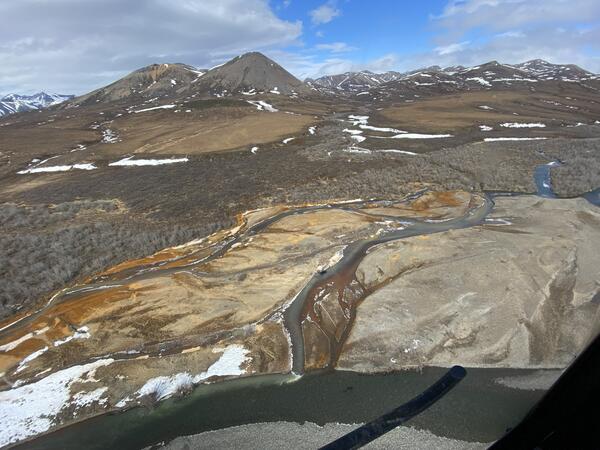
An orange tributary of the Kugururok River, Noatak National Preserve in Alaska
An orange tributary of the Kugururok River, Noatak National Preserve in AlaskaOrange streams are increasingly common in the Brooks Range of northern Alaska. The orange stream color reflects oxidized iron, but also often indicates elevated heavy metal concentrations. Our ongoing study aims to document these occurrences and the timing of their onset.
An orange tributary of the Kugururok River, Noatak National Preserve in Alaska
An orange tributary of the Kugururok River, Noatak National Preserve in AlaskaOrange streams are increasingly common in the Brooks Range of northern Alaska. The orange stream color reflects oxidized iron, but also often indicates elevated heavy metal concentrations. Our ongoing study aims to document these occurrences and the timing of their onset.
Photomicrographs from little brown bats, one with square-eared anomaly, found dead in Montana, USA.
Photomicrographs from little brown bats, one with square-eared anomaly, found dead in Montana, USA.Photomicrographs from an unaffected Little Brown Bat (M. lucifugus; A-B) and Little Brown Bat found dead in Montana, USA with the square-eared anomaly (C-E). Periodic Acid Schiff-Hematoxylin. (A) Pinna of an unaffected Little Brown Bat showing the epidermis (e and arrow), dermis (d) and central elastic cartilage plate (c).
Photomicrographs from little brown bats, one with square-eared anomaly, found dead in Montana, USA.
Photomicrographs from little brown bats, one with square-eared anomaly, found dead in Montana, USA.Photomicrographs from an unaffected Little Brown Bat (M. lucifugus; A-B) and Little Brown Bat found dead in Montana, USA with the square-eared anomaly (C-E). Periodic Acid Schiff-Hematoxylin. (A) Pinna of an unaffected Little Brown Bat showing the epidermis (e and arrow), dermis (d) and central elastic cartilage plate (c).
Coral reefs provide ample opportunities for recreational activities and fishing and add important cultural value to coastal communities.
They also bolster biodiversity by giving food and shelter to many species.
The structure of a reef helps dampen waves and protects coastlines from storms and erosion.
Coral reefs provide ample opportunities for recreational activities and fishing and add important cultural value to coastal communities.
They also bolster biodiversity by giving food and shelter to many species.
The structure of a reef helps dampen waves and protects coastlines from storms and erosion.
Goose Lake, on the Oregon-California border, is one of the 20 terminal lakes identified by USGS partners as priority ecosystems for study by the Saline Lakes Ecosystems IWAA.
A buoy marking the location of monitoring equipment in Pool 13 of the Upper Mississippi River in 2024. The equipment is placed below the water surface to monitor waves and water clarity in the spring and summer.
How Streamgages are Used in Postfire Flood Forecasting
How Streamgages are Used in Postfire Flood ForecastingHow Streamgages are Used in Postfire Flood Forecasting
Stream data is recorded in real time and posted online.
Stream data include water level, velocity, and turbidity.
During storms, rainfall data is compared to the stream data.
The National Weather Service uses the data to issue flood warnings.
How Streamgages are Used in Postfire Flood Forecasting
How Streamgages are Used in Postfire Flood ForecastingHow Streamgages are Used in Postfire Flood Forecasting
Stream data is recorded in real time and posted online.
Stream data include water level, velocity, and turbidity.
During storms, rainfall data is compared to the stream data.
The National Weather Service uses the data to issue flood warnings.
Many new big sagebrush (Artemisia tridentata) plants that have just sprouted from the ground in the Morley Nelson Snake River Birds of Prey National Conservation Area in Idaho.
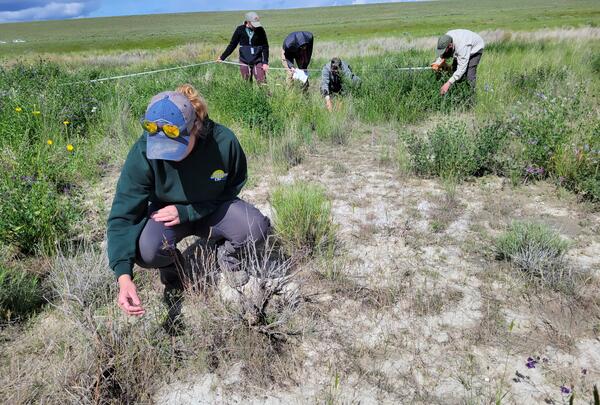
A field crew member collecting stick-point intercept data at a Project ROAM (Rapid and Other Methods for Assessment and Monitoring) plot. A meter-long 'stick' is dropped and five recordings of vegetation are collected by dropping a pin flag along the stick. The vegetation it comes into contact with is recorded to estimate cover.
A scarlet globemallow (Sphaeralcea coccinea) photographed during a Project ROAM (Rapid and Other Methods for Assessment and Monitoring) survey in the Morley Nelson Snake River Birds of Prey National Conservation Area. ROAM protocols are tailored to detect uncommon species, such as native forbs.
RAMPS employees and partners pose in front of a cattle grazing enclosure at a RestoreNet site
RAMPS employees and partners pose in front of a cattle grazing enclosure at a RestoreNet siteFrom left to right: RAMPS Ecologist Seth Munson, RAMPS Coordinator Laura Shriver, RAMPS Biologist Sarah Costanzo, NAU postdoctoral researcher Collin VanBuren, and Diablo Trust Program Manager Corinne LaViolette. Photo by Seth Munson (USGS).
RAMPS employees and partners pose in front of a cattle grazing enclosure at a RestoreNet site
RAMPS employees and partners pose in front of a cattle grazing enclosure at a RestoreNet siteFrom left to right: RAMPS Ecologist Seth Munson, RAMPS Coordinator Laura Shriver, RAMPS Biologist Sarah Costanzo, NAU postdoctoral researcher Collin VanBuren, and Diablo Trust Program Manager Corinne LaViolette. Photo by Seth Munson (USGS).
Cattle at a Northern Arizona RestoreNet experimental study site, Bar T Bar Ranch, AZ
Cattle at a Northern Arizona RestoreNet experimental study site, Bar T Bar Ranch, AZCattle inside a grazing enclosure at the Bar T Bar Ranch RestoreNet site in Northern Arizona.
Cattle at a Northern Arizona RestoreNet experimental study site, Bar T Bar Ranch, AZ
Cattle at a Northern Arizona RestoreNet experimental study site, Bar T Bar Ranch, AZCattle inside a grazing enclosure at the Bar T Bar Ranch RestoreNet site in Northern Arizona.
Newly installed RestoreNet treatments including pits + seedballs + live topsoil and live topsoil + direct seeding
Newly installed RestoreNet treatments including pits + seedballs + live topsoil and live topsoil + direct seedingNewly installed RestoreNet Version 2.0 treatment plots at Bar T Bar Ranch in Northern Arizona. Left: a plot that received pitting + seedballs + live topsoil inoculum (in the seedballs), Right: a plot that received live topsoil inoculum (spread across the plot) and direct seeding.
Newly installed RestoreNet treatments including pits + seedballs + live topsoil and live topsoil + direct seeding
Newly installed RestoreNet treatments including pits + seedballs + live topsoil and live topsoil + direct seedingNewly installed RestoreNet Version 2.0 treatment plots at Bar T Bar Ranch in Northern Arizona. Left: a plot that received pitting + seedballs + live topsoil inoculum (in the seedballs), Right: a plot that received live topsoil inoculum (spread across the plot) and direct seeding.
Observing southern sea otter foraging behavior from San Nicolas Island, California.
Image of trees taken from passenger window along 170 outside of Denver before sunset. Trees appear almost black and sky is blue with pink, orange and purple clouds.