



In this photo, Paul Hershberger is conducting research in the Seattle Western Fisheries Research Center wet laboratory. He is working to study diseases in fish.
Images
See our science through the images below.
Filter Total Items: 3543
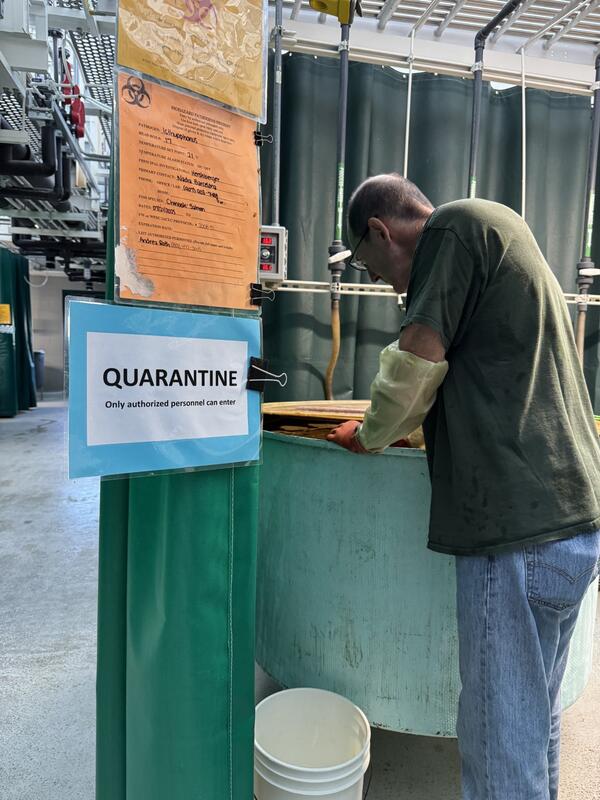
Scientist, Paul Hershberger Works in the Wet Lab
In this photo, Paul Hershberger is conducting research in the Seattle Western Fisheries Research Center wet laboratory. He is working to study diseases in fish.
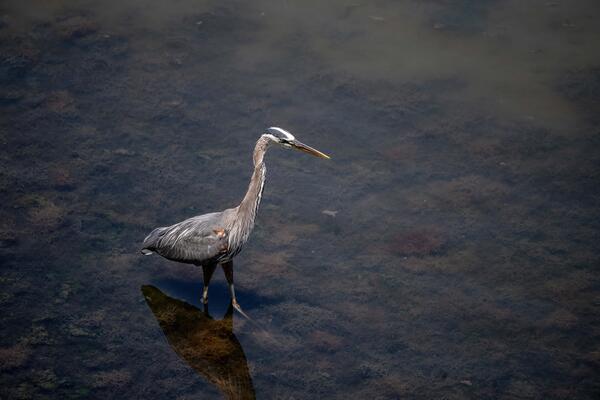
Great Blue Heron
The great blue heron (Ardea herodias) is a large, wading bird known for its striking blue-gray plumage, long legs, and graceful demeanor, commonly found near water bodies across North America. This one was photographed in Ocean City, MD.
The great blue heron (Ardea herodias) is a large, wading bird known for its striking blue-gray plumage, long legs, and graceful demeanor, commonly found near water bodies across North America. This one was photographed in Ocean City, MD.
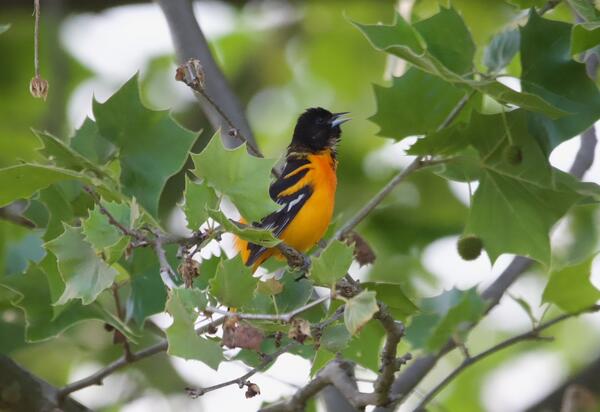
Baltimore Oriole
A Baltimore Oriole sits in a tree.
A Baltimore Oriole sits in a tree.
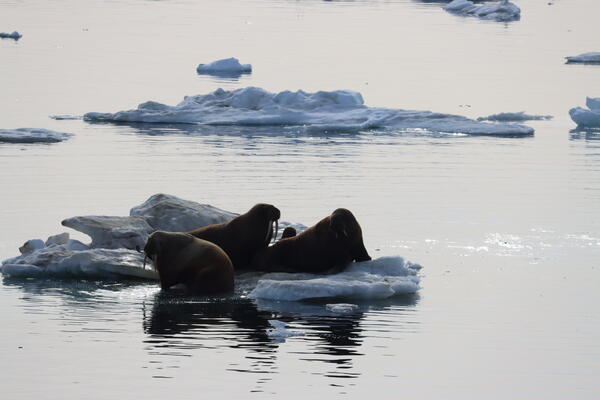
Pacific walruses hauled out on sea ice evaluating their surroundings
Pacific walruses hauled out on sea ice evaluating their surroundingsA small group of Pacific walruses consider entering the water as they assess their surroundings. A calf can be seen in the back of the group. USGS and the U.S.
Pacific walruses hauled out on sea ice evaluating their surroundings
Pacific walruses hauled out on sea ice evaluating their surroundingsA small group of Pacific walruses consider entering the water as they assess their surroundings. A calf can be seen in the back of the group. USGS and the U.S.

Sea Duckling Room
Ducklings born in the Sea Duck colony at the Eastern Ecological Science Center in Laurel, MD, are housed in a separate building. The ducklings receive round-the-clock care.
Ducklings born in the Sea Duck colony at the Eastern Ecological Science Center in Laurel, MD, are housed in a separate building. The ducklings receive round-the-clock care.
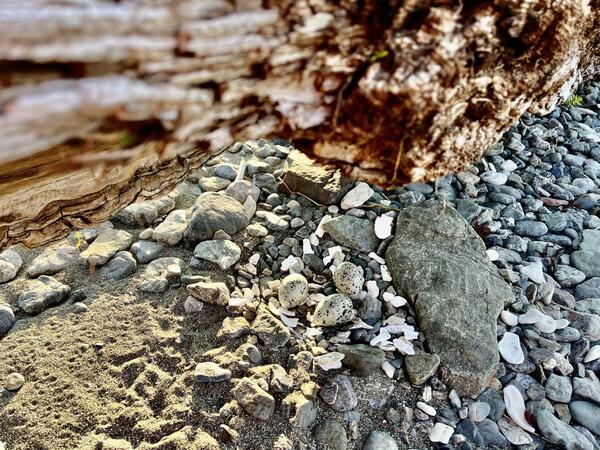
Black Oystercatcher nest under driftwood
Black Oystercatcher (Haematopus bachmani) nests in the northern Gulf of Alaska are monitored annually to determine the nest status, productivity, chick diet, and egg float stages.
Black Oystercatcher (Haematopus bachmani) nests in the northern Gulf of Alaska are monitored annually to determine the nest status, productivity, chick diet, and egg float stages.

Sea Duck Pens
The Sea Duck colony at the Eastern Ecological Science Center in Laurel, MD, is the only facility of its kind in the United States. Pictured are White-winged Scoters on the edge of their pond.
The Sea Duck colony at the Eastern Ecological Science Center in Laurel, MD, is the only facility of its kind in the United States. Pictured are White-winged Scoters on the edge of their pond.

Sea Duck Pens 2
The Sea Duck colony at the Eastern Ecological Science Center in Laurel, MD, is the only facility of its kind in the United States. Pictured are two male and one female Common Eiders floating in their pond.
The Sea Duck colony at the Eastern Ecological Science Center in Laurel, MD, is the only facility of its kind in the United States. Pictured are two male and one female Common Eiders floating in their pond.

Ruby-throated Hummingbird at Bee Balm Flower
A female Ruby-throated Hummingbird buzzing among the bee balm stops to get some nectar. Shot in front of the Gabrielson Building at the Eastern Ecological Science Center in Laurel, MD.
A female Ruby-throated Hummingbird buzzing among the bee balm stops to get some nectar. Shot in front of the Gabrielson Building at the Eastern Ecological Science Center in Laurel, MD.

Brian Richardson
Brian Richardson is the Assistant Center Director for the Eastern Ecological Science Center
Brian Richardson is the Assistant Center Director for the Eastern Ecological Science Center
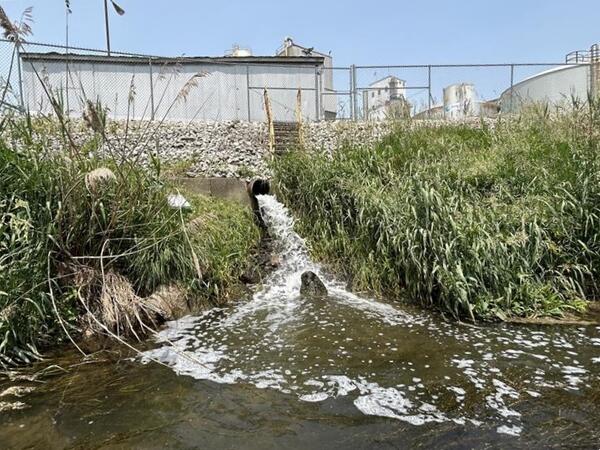
Treated Wastewater from Soybean Processing Facility
Treated Wastewater from Soybean Processing FacilityEffluent from soybean processing facility following treatment, entering nearby surface water body. Photo taken by USGS, Sandra Leal.
Treated Wastewater from Soybean Processing Facility
Treated Wastewater from Soybean Processing FacilityEffluent from soybean processing facility following treatment, entering nearby surface water body. Photo taken by USGS, Sandra Leal.
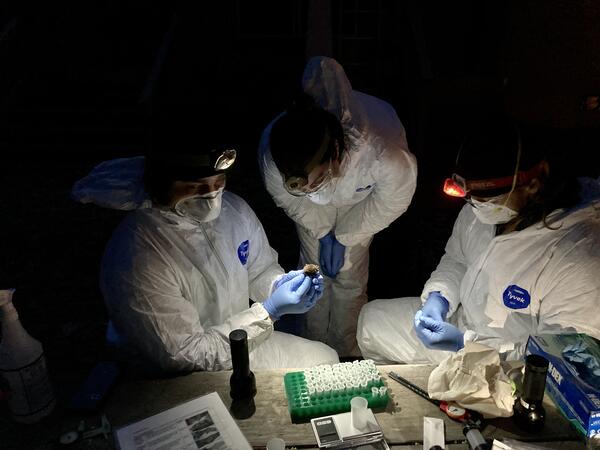
Setting up to collect samples from a bat
Scientists get ready to collect samples from a bat to test for Pseudogymnoascus destructans, the fungus that causes white-nose syndrome.
Scientists get ready to collect samples from a bat to test for Pseudogymnoascus destructans, the fungus that causes white-nose syndrome.
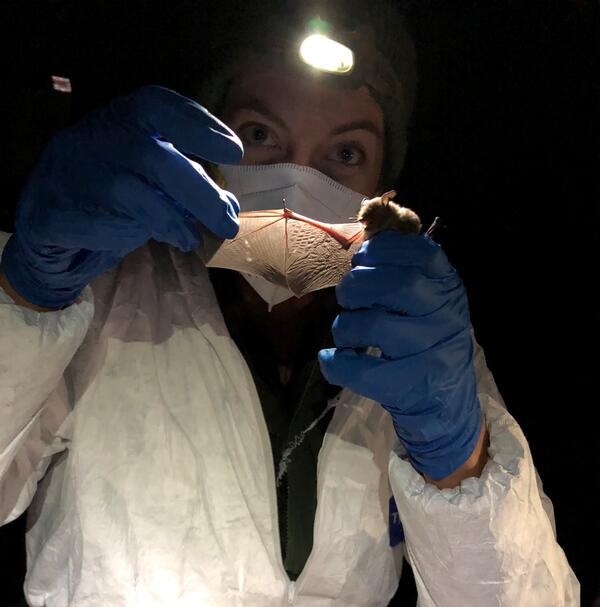
Looking for wing damage
Scientists look for damage on the skin of a bat's wing as an indicator of white-nose syndrome infection. This bat has no wing damage.
Scientists look for damage on the skin of a bat's wing as an indicator of white-nose syndrome infection. This bat has no wing damage.

Angler in western Montana holding brown trout
Angler who was fishing in a western Montana river holding a brown trout they caught
Angler who was fishing in a western Montana river holding a brown trout they caught

Two anglers in western Montana
Two anglers enjoying the World class fishing that western Montana rivers has to offer.
Two anglers enjoying the World class fishing that western Montana rivers has to offer.
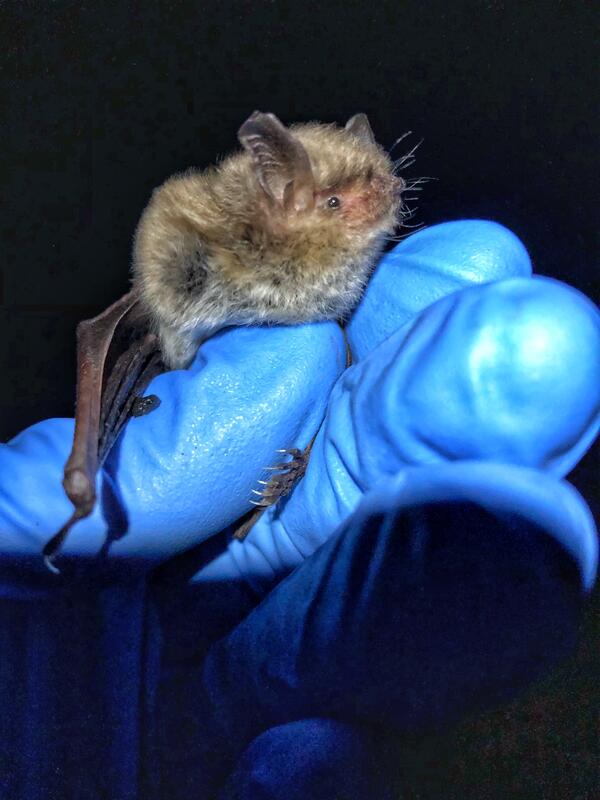
Yuma myotis bat
The Yuma myotis bat, Myotis yumanensis, has a body length of only 1.5-1.9 inches and they weigh less than half an ounce.
The Yuma myotis bat, Myotis yumanensis, has a body length of only 1.5-1.9 inches and they weigh less than half an ounce.
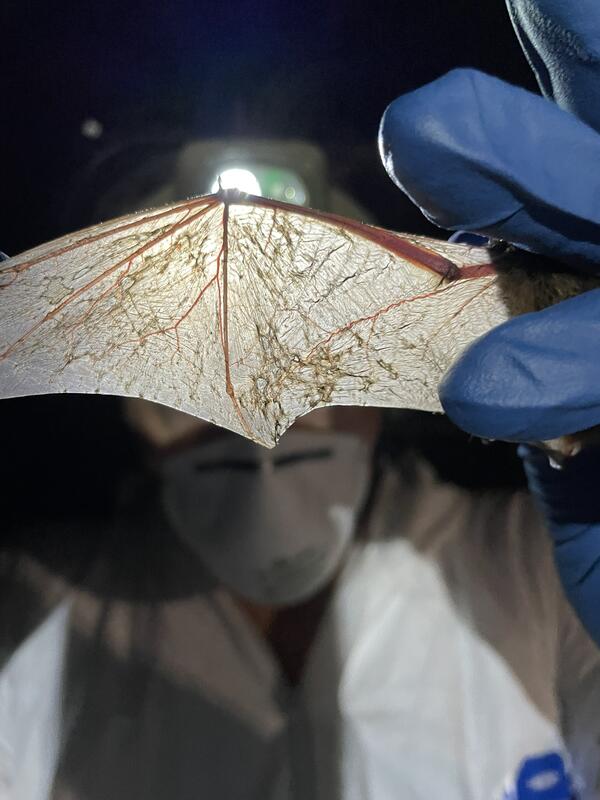
A bat's wing scarred by white-nose syndrome
Scars on the skin of this bat's wing suggest white-nose syndrome infection over the previous winter.
Scars on the skin of this bat's wing suggest white-nose syndrome infection over the previous winter.
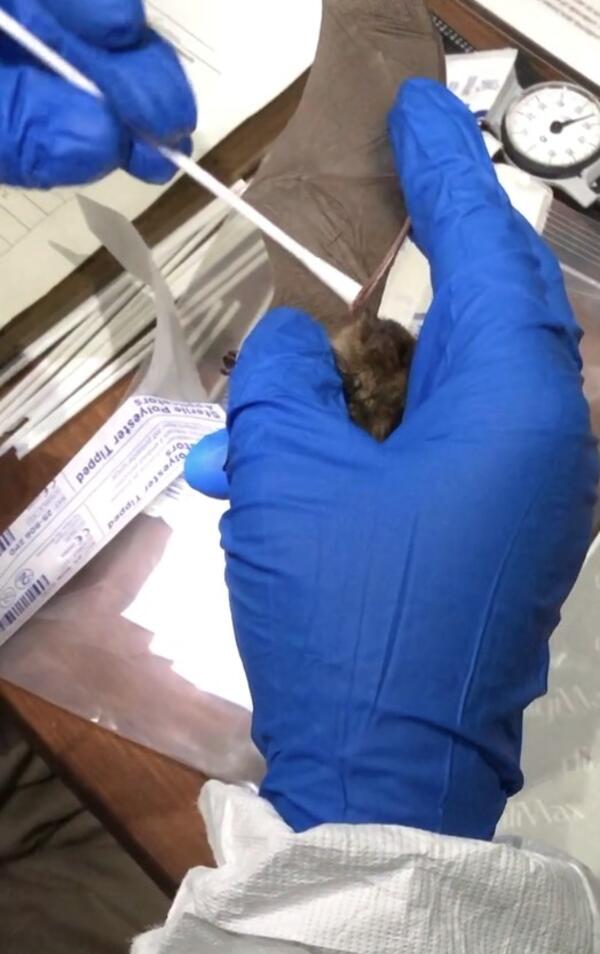
Collecting fungal samples to test for Pseudogymnoascus destructans
Collecting fungal samples to test for Pseudogymnoascus destructansIndividual bats are tested for Pseudogymnoascus destructans, the fungus that causes white-nose syndrome, by wiping a sterile swab across the skin of a bat's outstretched wing and muzzle.
Collecting fungal samples to test for Pseudogymnoascus destructans
Collecting fungal samples to test for Pseudogymnoascus destructansIndividual bats are tested for Pseudogymnoascus destructans, the fungus that causes white-nose syndrome, by wiping a sterile swab across the skin of a bat's outstretched wing and muzzle.
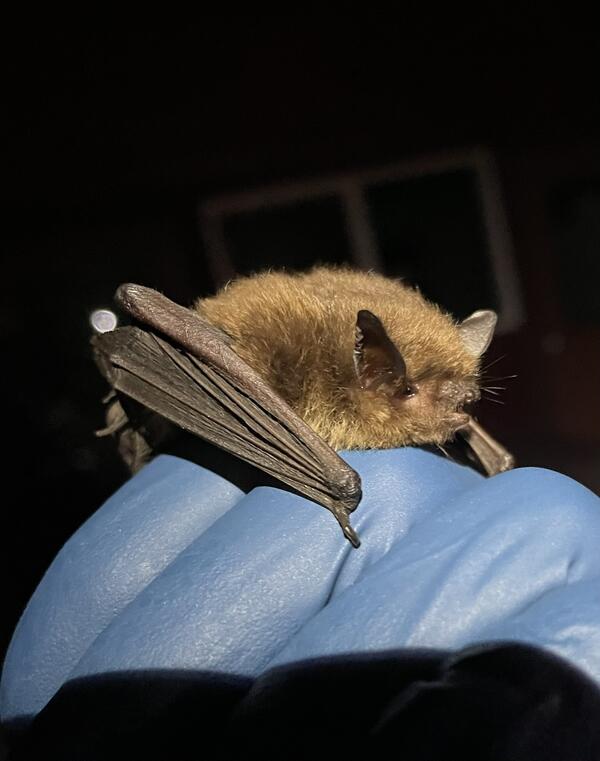
Perched Yuma myotis
Yuma myotis has a wide range throughout western North America, from the Southwestern regions of Canada into Mexico.
Yuma myotis has a wide range throughout western North America, from the Southwestern regions of Canada into Mexico.
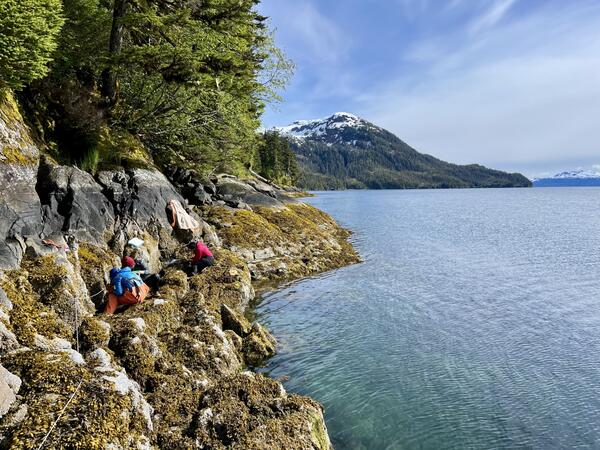
Monitoring mussel beds along the rocky coastline of western Prince William Sound, Alaska
Monitoring mussel beds along the rocky coastline of western Prince William Sound, AlaskaTwo scientists work to identify change in the density and size distribution of mussels (Mytilus trossulus) in mussel beds. Long-term data collected are used as an indicator of mussel prey availability for various predators, including Sea Otters, Black Oystercatchers, sea ducks and sea stars.
Monitoring mussel beds along the rocky coastline of western Prince William Sound, Alaska
Monitoring mussel beds along the rocky coastline of western Prince William Sound, AlaskaTwo scientists work to identify change in the density and size distribution of mussels (Mytilus trossulus) in mussel beds. Long-term data collected are used as an indicator of mussel prey availability for various predators, including Sea Otters, Black Oystercatchers, sea ducks and sea stars.
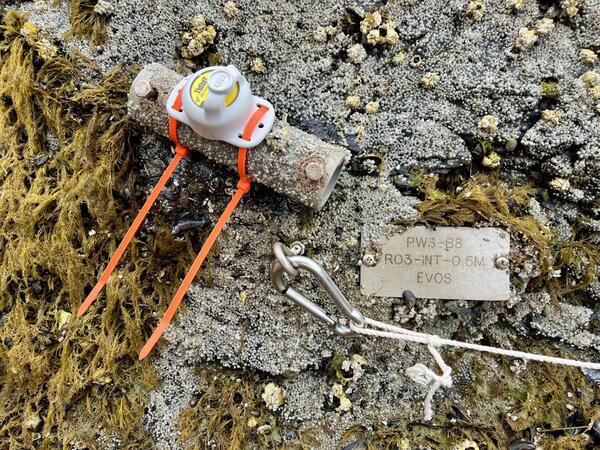
Air and water temperature collection at long-term rocky intertidal monitoring site
Air and water temperature collection at long-term rocky intertidal monitoring siteA temperature logger (HOBO) affixed to a rocky outcrop in western Prince Wiliam Sound. Long-term change in intertidal invertebrate and algal communities is assessed by using temperature loggers.
Air and water temperature collection at long-term rocky intertidal monitoring site
Air and water temperature collection at long-term rocky intertidal monitoring siteA temperature logger (HOBO) affixed to a rocky outcrop in western Prince Wiliam Sound. Long-term change in intertidal invertebrate and algal communities is assessed by using temperature loggers.