



Orange streams are increasingly common in the Brooks Range of northern Alaska. The orange stream color reflects oxidized iron, but also often indicates elevated heavy metal concentrations. Our ongoing study aims to document these occurrences and the timing of their onset.
Images
Explore water-related photography, imagery, and illustrations.
Filter Total Items: 2553

An orange tributary of the Kugururok River
Orange streams are increasingly common in the Brooks Range of northern Alaska. The orange stream color reflects oxidized iron, but also often indicates elevated heavy metal concentrations. Our ongoing study aims to document these occurrences and the timing of their onset.

An orange tributary joins the Kugururok River
Orange streams are increasingly common in the Brooks Range of northern Alaska. The orange stream color reflects oxidized iron, but also often indicates elevated heavy metal concentrations. Our ongoing study aims to document these occurrences and the timing of their onset.
Orange streams are increasingly common in the Brooks Range of northern Alaska. The orange stream color reflects oxidized iron, but also often indicates elevated heavy metal concentrations. Our ongoing study aims to document these occurrences and the timing of their onset.

U.S. River Conditions, April to June 2023 Viz Thumbnail Image
U.S. River Conditions, April to June 2023 Viz Thumbnail ImageU.S. River Conditions, April to June 2023 visualization thumbnail image. For more visualizations, check out https://labs.waterdata.usgs.gov/visualizations/vizlab-home/index.html#/
U.S. River Conditions, April to June 2023 Viz Thumbnail Image
U.S. River Conditions, April to June 2023 Viz Thumbnail ImageU.S. River Conditions, April to June 2023 visualization thumbnail image. For more visualizations, check out https://labs.waterdata.usgs.gov/visualizations/vizlab-home/index.html#/
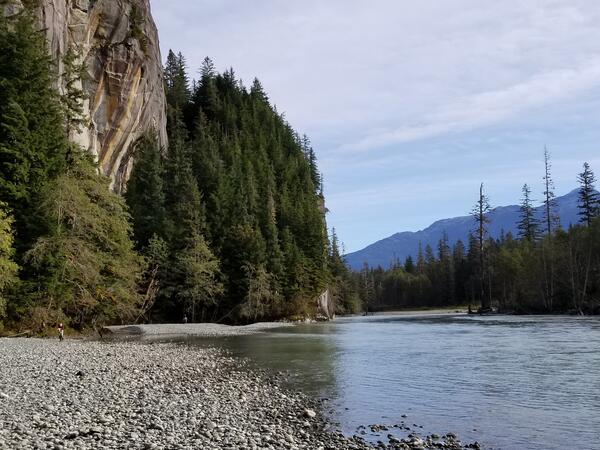
Unuk River Streamgage
USGS Staff at the Unuk River Streamgage in Southeast Alaska. The Unuk River is the second smallest watershed in the transboundary study of Southeast Alaska, but has three large mining projects in development (Kerr-Sulplherets-Mitchell (KSM), Brucejack, and Eskay Creek)
USGS Staff at the Unuk River Streamgage in Southeast Alaska. The Unuk River is the second smallest watershed in the transboundary study of Southeast Alaska, but has three large mining projects in development (Kerr-Sulplherets-Mitchell (KSM), Brucejack, and Eskay Creek)
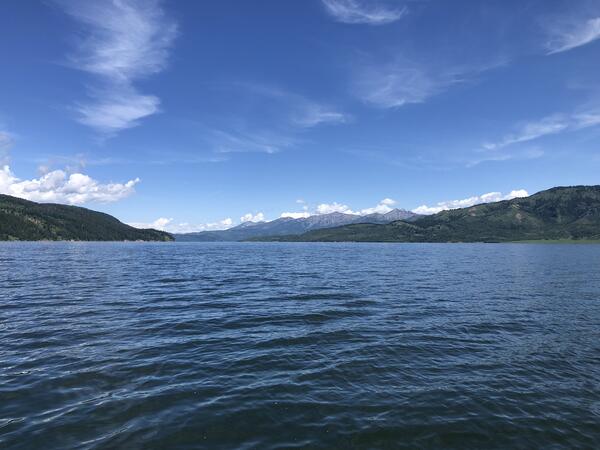
Palisades Reservoir on the Idaho-Wyoming border
View of Palisades Reservoir, on the Idaho-Wyoming border. This waterbody was included in a state-wide effort to validate satellite remote sensing of water quality.
View of Palisades Reservoir, on the Idaho-Wyoming border. This waterbody was included in a state-wide effort to validate satellite remote sensing of water quality.
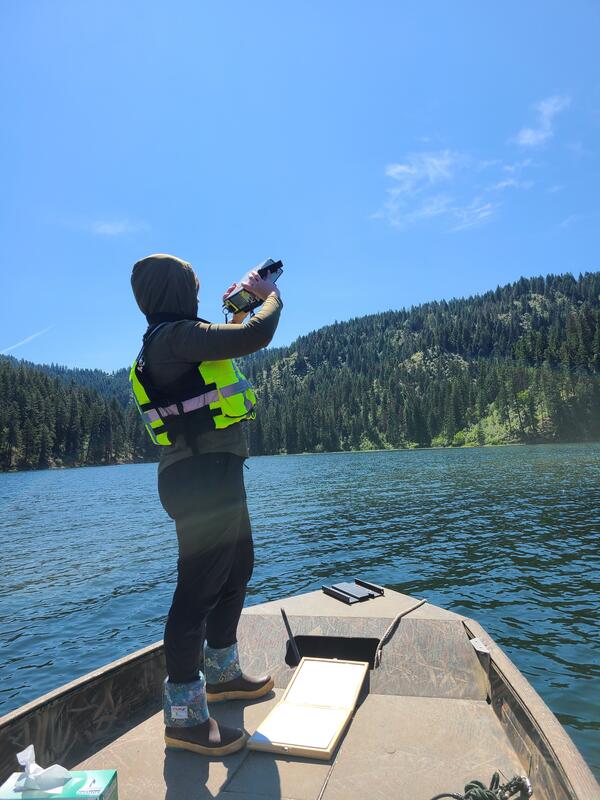
Spectral radiometer measurement on Fernan Lake, Idaho
Spectral radiometer measurement on Fernan Lake, IdahoValidating satellite observations of water quality includes measuring the incident lighting conditions. Here solar radiation is measured with a spectral radiometer on Fernan Lake, Idaho.
Spectral radiometer measurement on Fernan Lake, Idaho
Spectral radiometer measurement on Fernan Lake, IdahoValidating satellite observations of water quality includes measuring the incident lighting conditions. Here solar radiation is measured with a spectral radiometer on Fernan Lake, Idaho.
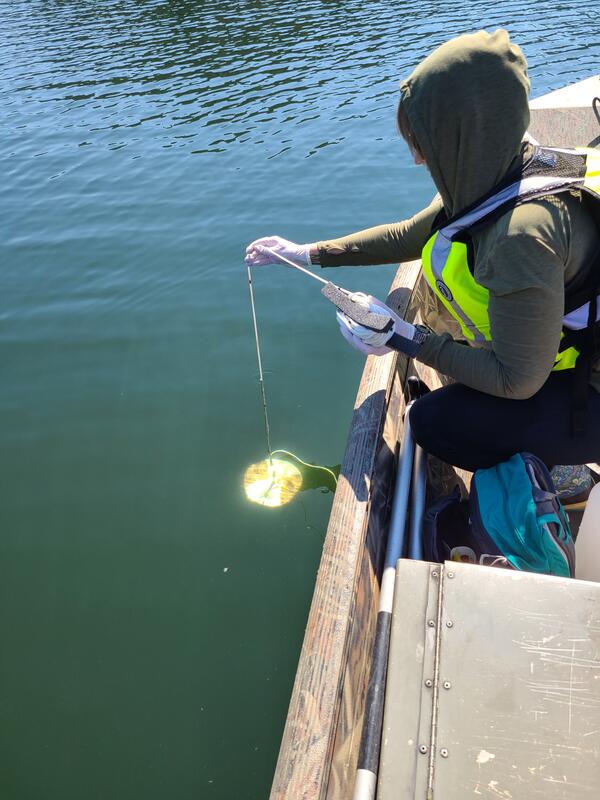
Secchi disk measurement on Lake Fernan, Idaho
Water clarity, a fundamental measure of water quality, is measured using a standard sized “Secchi” disk that is lowered until it is no longer visible. Measurements like this from Lake Fernan, Idaho, are used to validate satellite remote sensing estimates of water quality.
Water clarity, a fundamental measure of water quality, is measured using a standard sized “Secchi” disk that is lowered until it is no longer visible. Measurements like this from Lake Fernan, Idaho, are used to validate satellite remote sensing estimates of water quality.

Walking the shallows of Lake Abert, Oregon
Lake Abert, Oregon is one of the 20 terminal lakes identified by USGS partners as priority ecosystems for study by the Saline Lakes Ecosystems IWAA.
By
Ecosystems Mission Area, Water Resources Mission Area, Species Management Research Program, Water Availability and Use Science Program, Forest and Rangeland Ecosystem Science Center, Fort Collins Science Center, Nevada Water Science Center, Oregon Water Science Center, Utah Water Science Center, Western Ecological Research Center (WERC), Saline Lake Ecosystems Integrated Water Availability Assessment
Lake Abert, Oregon is one of the 20 terminal lakes identified by USGS partners as priority ecosystems for study by the Saline Lakes Ecosystems IWAA.
By
Ecosystems Mission Area, Water Resources Mission Area, Species Management Research Program, Water Availability and Use Science Program, Forest and Rangeland Ecosystem Science Center, Fort Collins Science Center, Nevada Water Science Center, Oregon Water Science Center, Utah Water Science Center, Western Ecological Research Center (WERC), Saline Lake Ecosystems Integrated Water Availability Assessment

Avocets flying above Farmington Bay Wildlife Management Area, Utah
Avocets flying above Farmington Bay Wildlife Management Area, UtahThe Saline Lake Ecosystems IWAA Waterbird Movement Project began tagging American Avocets in March 2023 to track their movements across the landscape. Tracking data from these birds will help scientists better understand why these birds choose to use the terminal lake and wetland habitats they do in the Great Basin.
By
Ecosystems Mission Area, Water Resources Mission Area, Species Management Research Program, Water Resources Research Act Program, Forest and Rangeland Ecosystem Science Center, Fort Collins Science Center, Nevada Water Science Center, Oregon Water Science Center, Utah Water Science Center, Western Ecological Research Center (WERC), Saline Lake Ecosystems Integrated Water Availability Assessment
Avocets flying above Farmington Bay Wildlife Management Area, Utah
Avocets flying above Farmington Bay Wildlife Management Area, UtahThe Saline Lake Ecosystems IWAA Waterbird Movement Project began tagging American Avocets in March 2023 to track their movements across the landscape. Tracking data from these birds will help scientists better understand why these birds choose to use the terminal lake and wetland habitats they do in the Great Basin.
By
Ecosystems Mission Area, Water Resources Mission Area, Species Management Research Program, Water Resources Research Act Program, Forest and Rangeland Ecosystem Science Center, Fort Collins Science Center, Nevada Water Science Center, Oregon Water Science Center, Utah Water Science Center, Western Ecological Research Center (WERC), Saline Lake Ecosystems Integrated Water Availability Assessment
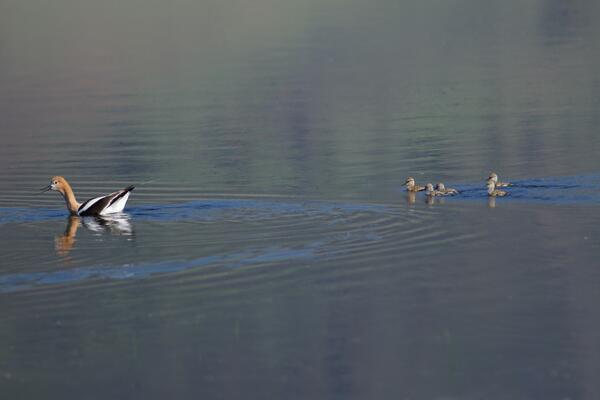
American Avocet trailed by chicks
American Avocet are a bird that relies heavily on the Saline Lakes ecosystem during their spring migration periods. Over 50% of these birds exist here. Part of their use includes using the terminal lakes there to breed.
By
Ecosystems Mission Area, Water Resources Mission Area, Species Management Research Program, Forest and Rangeland Ecosystem Science Center, Fort Collins Science Center, Nevada Water Science Center, Oregon Water Science Center, Utah Water Science Center, Western Ecological Research Center (WERC), Saline Lake Ecosystems Integrated Water Availability Assessment
American Avocet are a bird that relies heavily on the Saline Lakes ecosystem during their spring migration periods. Over 50% of these birds exist here. Part of their use includes using the terminal lakes there to breed.
By
Ecosystems Mission Area, Water Resources Mission Area, Species Management Research Program, Forest and Rangeland Ecosystem Science Center, Fort Collins Science Center, Nevada Water Science Center, Oregon Water Science Center, Utah Water Science Center, Western Ecological Research Center (WERC), Saline Lake Ecosystems Integrated Water Availability Assessment

IWAA Water Availability Components
The USGS Water Resources Mission Area will assess water availability based on these core components of water supply and demand.
The USGS Water Resources Mission Area will assess water availability based on these core components of water supply and demand.

Examining Tree Roots
Physical Scientist Molly Huber of the Florence Bascom Geoscience Center examines tree roots in a location where a root cookie was recently cut.
Molly was there as part of a stream habitat/riparian assessment at Orson Creek in south central Pennsylvania.
Physical Scientist Molly Huber of the Florence Bascom Geoscience Center examines tree roots in a location where a root cookie was recently cut.
Molly was there as part of a stream habitat/riparian assessment at Orson Creek in south central Pennsylvania.

Participate in the National Photo Contest #RecreateWithUSGS
Participate in the National Photo Contest #RecreateWithUSGS#RecreateWithUSGS is a national photo contest to raise awareness of the importance of USGS water data collected on public lands where people recreate in, on, and around water. Participate in this national photo contest and share your photo with us. Post on Instagram using #RecreateWithUSGS and tag @USGS_Water. The contest is open from June 12th - August 20th, 2023.
Participate in the National Photo Contest #RecreateWithUSGS
Participate in the National Photo Contest #RecreateWithUSGS#RecreateWithUSGS is a national photo contest to raise awareness of the importance of USGS water data collected on public lands where people recreate in, on, and around water. Participate in this national photo contest and share your photo with us. Post on Instagram using #RecreateWithUSGS and tag @USGS_Water. The contest is open from June 12th - August 20th, 2023.

An orange tributary mixing into the pristine Kugururok River
An orange tributary mixing into the pristine Kugururok RiverOrange streams are increasingly common in the Brooks Range of northern Alaska. The orange stream color reflects oxidized iron, but also often indicates elevated heavy metal concentrations. Our ongoing study aims to document these occurrences and the timing of their onset.
An orange tributary mixing into the pristine Kugururok River
An orange tributary mixing into the pristine Kugururok RiverOrange streams are increasingly common in the Brooks Range of northern Alaska. The orange stream color reflects oxidized iron, but also often indicates elevated heavy metal concentrations. Our ongoing study aims to document these occurrences and the timing of their onset.

Orange water from a tributary of the Kugururok River
Orange water from a tributary of the Kugururok RiverOrange streams are increasingly common in the Brooks Range of northern Alaska. The orange stream color reflects oxidized iron, but also often indicates elevated heavy metal concentrations. Our ongoing study aims to document these occurrences and the timing of their onset.
Orange water from a tributary of the Kugururok River
Orange water from a tributary of the Kugururok RiverOrange streams are increasingly common in the Brooks Range of northern Alaska. The orange stream color reflects oxidized iron, but also often indicates elevated heavy metal concentrations. Our ongoing study aims to document these occurrences and the timing of their onset.

Limited mixing of orange water and the Kugururok River
Limited mixing of orange water and the Kugururok RiverOrange streams are increasingly common in the Brooks Range of northern Alaska. The orange stream color reflects oxidized iron, but also often indicates elevated heavy metal concentrations. Our ongoing study aims to document these occurrences and the timing of their onset.
Limited mixing of orange water and the Kugururok River
Limited mixing of orange water and the Kugururok RiverOrange streams are increasingly common in the Brooks Range of northern Alaska. The orange stream color reflects oxidized iron, but also often indicates elevated heavy metal concentrations. Our ongoing study aims to document these occurrences and the timing of their onset.

Survey of Lake Anna, Virginia
Photo of Blake Dudding, USGS, performing a survey on the banks of Lake Anna, Virginia
Photo of Blake Dudding, USGS, performing a survey on the banks of Lake Anna, Virginia

Measuring the amount of water flowing in the East Fork Carson River near Markleeville, California
Measuring the amount of water flowing in the East Fork Carson River near Markleeville, CaliforniaUSGS hydrographer Kristopher Ross makes an acoustic streamflow measurement from a cableway at streamgage 10308200 East Fork Carson River below Markleeville Creek, near Markleeville, CA. This station was recently nominated to be a part of the new Federal Priority Streamgage network design.
Measuring the amount of water flowing in the East Fork Carson River near Markleeville, California
Measuring the amount of water flowing in the East Fork Carson River near Markleeville, CaliforniaUSGS hydrographer Kristopher Ross makes an acoustic streamflow measurement from a cableway at streamgage 10308200 East Fork Carson River below Markleeville Creek, near Markleeville, CA. This station was recently nominated to be a part of the new Federal Priority Streamgage network design.

IWAA Water Availability Components
The USGS Water Resources Mission Area will assess water availability based on these core components of water supply and demand.
The USGS Water Resources Mission Area will assess water availability based on these core components of water supply and demand.

All Regional Study Basins
Regional water availability assessment basins, as of 2023. USGS is conducting regional water availability assessments in medium-sized watersheds throughout the US. These assessments are designed to capture a range of conditions in major drivers of water availability.
Regional water availability assessment basins, as of 2023. USGS is conducting regional water availability assessments in medium-sized watersheds throughout the US. These assessments are designed to capture a range of conditions in major drivers of water availability.

USGS Scientist Taking Algal Samples, Lake Anna
USGS Scientist Brendan Foster taking and sealing an algal sample on a dock at Lake Anna, Virginia.
USGS Scientist Brendan Foster taking and sealing an algal sample on a dock at Lake Anna, Virginia.