



Invasive Animals
Invasive Animals
Filter Total Items: 99

Molecular Ecology Lab (MEL)
The Molecular Ecology Laboratory applies innovative genetic and genomic technologies to address a variety of complex questions and issues facing the Nation's natural resources. While we continually update the scale and efficiency of laboratory procedures to meet stakeholder needs, we must also be innovative and flexible in addressing those needs that have no off-the-shelf solution. We help...

Invasive Burmese python research in the Greater Everglades
USGS leads federal research to control the highly invasive Burmese python ( Python bivittatus), which has become firmly established across the Greater Everglades Ecosystem and poses a serious threat to native wildlife. Capable of reaching over 17 feet long, this massive constrictor is believed to be a key factor in the sharp decline of mammal populations in the region. For over a decade...
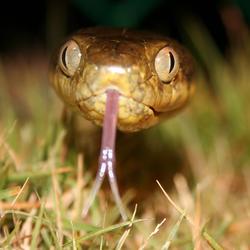
A Matter of Scales: USGS Science to Reduce Invasive Snake Impacts
The U.S. Geological Survey Ecosystem Mission Area plays a major role in invasive snake science across the country and the globe, ranging from research on improving snake detection to projects that enhance eradication. Our extensive science ultimately scales up to benefiting public health, energy transmission, tourism, and other key aspects of American prosperity.
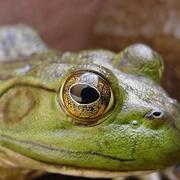
Battling Invaders: Invasive Species Detection with eDNA
Early detection equals stronger protection. DNA in the environment is the front line against invasive species.
By
Ecosystems Mission Area, Biological Threats and Invasive Species Research Program, Species Management Research Program, Alaska Science Center, Columbia Environmental Research Center, Eastern Ecological Science Center, Forest and Rangeland Ecosystem Science Center, Fort Collins Science Center, Great Lakes Science Center, National Wildlife Health Center, Northern Prairie Wildlife Research Center, Northern Rocky Mountain Science Center, Pacific Island Ecosystems Research Center, Southwest Biological Science Center, Upper Midwest Environmental Sciences Center, Western Ecological Research Center (WERC), Western Fisheries Research Center, Wetland and Aquatic Research Center

Key Values of a Century of EESC Science
The USGS Eastern Ecological Science Center (EESC) is rooted in a proud tradition of service to the nation—advancing science that informs the conservation and management of fish, wildlife, and habitats across the eastern United States and beyond. Our mission is clear: deliver reliable, partner-driven science that supports natural resource decisions today, while ensuring these resources remain...
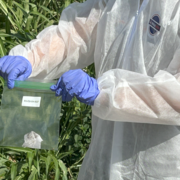
From Water, Soil, and Air: Building USGS Leadership in Environmental DNA (eDNA)
The USGS is a pioneer in environmental DNA (eDNA) science, applying cutting-edge molecular tools to identify, detect, or track species, monitor ecosystems, and safeguard biodiversity.
By
Ecosystems Mission Area, Biological Threats and Invasive Species Research Program, Environmental Health Program, Species Management Research Program, Alaska Science Center, Columbia Environmental Research Center, Eastern Ecological Science Center, Forest and Rangeland Ecosystem Science Center, Fort Collins Science Center, Great Lakes Science Center, National Wildlife Health Center, Northern Prairie Wildlife Research Center, Northern Rocky Mountain Science Center, Pacific Island Ecosystems Research Center, Southwest Biological Science Center, Upper Midwest Environmental Sciences Center, Western Ecological Research Center (WERC), Western Fisheries Research Center, Wetland and Aquatic Research Center , Pacific Northwest Environmental DNA Laboratory

SBSC: Providing Unbiased Actionable Science & Information to Support Natural Resource Management Needs of the U.S. & Department of the Interior Priorities
The U.S. Geological Survey Southwest Biological Science Center (SBSC) is uniquely positioned in the Colorado River Basin to provide sound information, specialized expertise, and innovative tools to support the management and sustained use of natural resources on public and Tribal lands in the Southwest U.S.
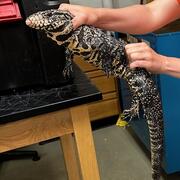
Early detection and rapid response tools for invasive tegu lizards
Scientists at USGS have shown that much of the US is suitable for invasion by tegu lizards, and suitability will likely increase in the future. While tegus can be removed via trapping, it is difficult to monitor every geographic area where tegus could invade. Thus, methods for quickly detecting and removing tegus in new areas are the best way to prevent spread and minimize damage from these...

Developing and evaluating a point-of-use environmental DNA test for rapid field detection of highly invasive brown treesnakes
New terrestrial environmental DNA (eDNA) sampling techniques are sensitive tools for early detection of the highly invasive brown treesnakes (BTS). In a new collaborative research effort involving four USGS science centers, scientists have initiated the development of an innovative point-of-use (POU) assay for BTS. POU assays are tests that can be run in the field with minimal equipment and no...

Asian Tiger Shrimp Distribution and Genetics
The Asian tiger shrimp began appearing in commercial shrimp catches in 2006. They grow larger than native shrimp and are known to be fierce predators - so shrimpers and managers are concerned about the potential effects this species might have.

Fort Collins Science Center Labs and Facilities
The Fort Collins Science Center has scientists working in several diverse locations as well as three in house highly specialized laboratories, studying subjects from molecular ecology to brown treesnakes, dendroecology to streamflows, and macroinvertebrate species to Burmese pythons. Our extraordinary scientists work in each of these locations advancing studies in their particular areas of study...

Monitoring Bird and Rat Behavior to Improve Invasive Species Management
Introduced rats are notorious predators of birds and their nests worldwide, but especially on remote islands. Rats ( Rattus exulans) first arrived in Hawai‘i with Polynesian colonists about 1,000 years ago, resulting in deleterious consequences for native birds and ecosystems. Since Western contact in 1778, two additional rat species have become established in Hawai‘i, including the highly...