



Glaciers
Glaciers
Glaciers store water as ice, transport it from where it fell as precipitation, and release it to streams and rivers years to millennia later. The Ecosystems Land Change Science Program focuses on documenting changes in glacier mass balance (how much water contained), understanding magnitudes and drivers of change, and evaluating impacts on freshwater availability, sea-level rise, and communities.
Filter Total Items: 12
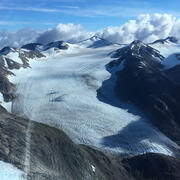
Lemon Creek Glacier
Lemon Creek Glacier is located in southeast Alaska, at the southernmost tip of the Juneau Icefield. Glacier observations began at this site in 1953 and continue through present, serving as a central site between glaciers in the contiguous USA and those in mainland Alaska.
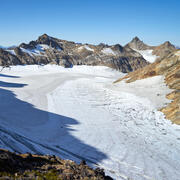
Glaciers and Landscape Change
Mountain glaciers are dynamic reservoirs of frozen water, deeply interconnected with their surrounding ecosystems. Glacier change in North America has major societal impacts, including to water resources, natural hazard risk, tourism disruption, fisheries, and global sea level change. Understanding and quantifying precise connections between changing glaciers, the surrounding landscape and climate...

USGS Northern Rocky Mountain Science Center Fiscal Year 2025 Highlights
The USGS Northern Rocky Mountain Science Center (NOROCK) proudly supports Federal, State, Tribal, and other partners by delivering high-quality data, cutting-edge science, and practical tools to support natural resource management. Below are some of NOROCK’s highlights during fiscal year 2025.
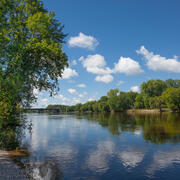
How Science Helps Manage Changing Water Availability and Quality: Droughts, Floods, Avalanches and More
Droughts, floods, and avalanches are extreme events in the water cycle that can have catastrophic and lasting impacts on ecosystems and society. In addition to these extreme events, human changes to the landscape (including land use changes) can have substantial impacts on freshwater resources as well. Science from the USGS Ecosystems Land Change Science Program helps managers and decision-makers...
By
Ecosystems Land Change Science Program, Alaska Science Center, Earth Resources Observation and Science (EROS) Center, Geosciences and Environmental Change Science Center, New England Water Science Center, Northern Rocky Mountain Science Center, Southwest Biological Science Center, Wetland and Aquatic Research Center
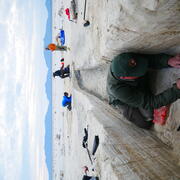
Research Enhancing Park Recreation and Tourism
Scientists from the USGS Ecosystems Land Change Science Program work hand-in-hand with park managers to support abundant and enduring outdoor recreation and tourism opportunities in the Nation’s national parks.

Did we start the fire? Drought, Fire and Humans
The past decade encompasses some of the most extensive fire activity in recorded history. An area the size of Vermont (~24,000 km2) burned in a single Siberian fire in the summer of 2019 (Kehrwald et al., 2020 and references therein) while Australia, Indonesia and the Amazon have all experienced their most intense fires in recorded history (van Wees et al, 2021 and references therein). As more...

Past Perspectives of Water in the West
In the intermountain west, seasonal precipitation extremes, combined with population growth, are creating new challenges for the management of water resources, ecosystems, and geologic hazards. This research contributes a comprehensive long-term context for a deeper understanding of past hydrologic variability, including the magnitude and frequency of drought and flood extremes and ecosystem...

Biogeochemistry of glaciers
Significant change to the Arctic and sub-arctic water cycle is underway, impacting hydrologic and biogeochemical fluxes. In southcentral Alaska, glacier mass loss, changes to precipitation (including the rain/snow fraction), thawing ground ice, and vegetation encroachment will change both magnitude and timing of water and solute fluxes downstream. Although altered fluxes of limiting nutrients are...

Sea Level and Storm Hazards: Past and Present
Sea level and Storm Hazards: Past and Present is a multidisciplinary study of past changes in sea level. Prehistoric shorelines can be used as a baseline for current and future sea level changes under warmer-than-present climate. Emphasis is placed on looking at sea levels during warm periods of the last 500,000 years as well as how base level changes increase the risk of coastal inundation during...

Reconstructing Ancient Human and Ecosystem Responses to Holocene Climate Conditions
This research project will reconstruct Holocene climatic conditions to better understand human adaptation and response to past environmental variability.

Holocene Hydroclimate of Western North America
The objectives of this project are to reconstruct detailed histories of Holocene hydroclimate and corresponding environmental change from geological archives such as lake sediment, peat, and wood to more fully understand past, ongoing, and future change and its impacts.

Terrestrial Records of Holocene Climate Change: Fire, climate and humans
Large wildfires have raged across the western Americas in the past decade including the Las Conchas, New Mexico fire that burned 44,000 acres in a single day in 2011 (Orem and Pelletier, 2015, Geomorphology 232: 224-238, and references therein), the 2016 Fort McMurray, Alberta fire that required evacuating an entire city, and the 2015 Alaskan fire season that burned more than 5 million acres...