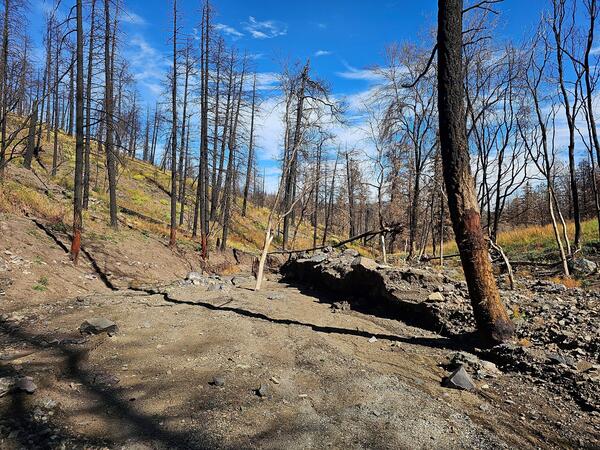
Wildfires can dramatically alter how water moves across the landscape. After a fire, vegetation is removed and soil properties change, reducing the ground’s ability to absorb rainfall. As a result, even modest rainstorms can trigger dangerous flash floods and debris flows in steep burned areas.
Postfire debris flows are fast-moving mixtures of water, mud, rocks, and vegetation that can surge downslope like flowing concrete. These flows often move faster than a person can run and may travel far beyond the burned area, posing risks to people, homes, roads, and infrastructure. They are typically triggered by short bursts of intense rainfall and can occur during the first storm following a wildfire.
This project develops rapid methods to evaluate postfire debris-flow hazards and advances research on the processes that control their initiation and growth. The goal is to provide reliable scientific information that helps federal, state, and local agencies reduce risks and improve preparedness in recently burned landscapes.