
Keith A Loftin, Ph.D.
Products and information related to Keith Loftin.
Science and Products
Filter Total Items: 32
Collaborative Science Provides Understanding of Contaminants in Bottled Water-an Increasingly Common Alternate Drinking Water Source
U.S. Geological Survey researchers and public health experts collaborated to determine what contaminants occur in bottled water, which is an increasingly common alternate drinking water source, to broaden their understanding of human exposure to contaminants in drinking water supply chains. Bottled water, like public-supply and private-well tap water supply chains, contained multiple organic...
Web-Based Tool Developed through Multiagency Effort Allows Visualization of Cyanobacteria Blooms in Lakes and Reservoirs—Steps Toward Public Awareness and Exposure Prevention
A web-based application tool utilizing satellite data—CyANWeb—developed through collaborative interagency efforts was released as part of the Cyanobacteria Assessment Network (CyAN) to help Federal, State, Tribal, and local partners identify when cyanobacterial blooms may be forming. Available through a web browser or as an application, the tool can access, download, and provide data to notify...
Characterization of Potentially Toxic CyanoHAB Initiation in Slow-Moving Streams, Wetlands, and Oxbows
Targeted sampling in selected slow-moving streams, wetlands, and oxbows to receiving reservoirs and rivers will allow us to better characterize the hydrologic, water-quality, and biological conditions present during the formation and transport of potentially toxic cyanobacteria blooms.
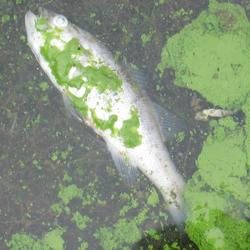
Toxins and Harmful Algal Blooms Science Team
The team develops advanced methods to study factors driving algal toxin production, how and where wildlife or humans are exposed to toxins, and ecotoxicology. That information is used to develop decision tools to understand if toxin exposure leads to adverse health effects in order to protect human and wildlife health.
Detecting Sublethal Effects of Harmful Algal Blooms in Mammalian and Avian Cells
USGS Researchers are collaborating to study avian and mammalian cells to detect sublethal toxin effects following exposure to harmful algal blooms.
Review of Cyanobacterial Neurotoxins—Information for Prioritizing Future Science Directions
The current state of knowledge on the modes of action, production, fate, and occurrence of the freshwater cyanobacterial neurotoxins, anatoxin-a and saxitoxin, was reviewed and synthesized to identify gaps and critical research needs to better understand the health effects of algal toxins.
Filter Total Items: 28
Response of natural phytoplankton communities from Green Bay (Lake Michigan) and Maumee Bay (Lake Erie) to laboratory manipulations of nutrient and trace metal availability during late summer 2018 Response of natural phytoplankton communities from Green Bay (Lake Michigan) and Maumee Bay (Lake Erie) to laboratory manipulations of nutrient and trace metal availability during late summer 2018
Microcystins (MC) are a class of cyanotoxins produced by many cyanobacteria taxa. Although toxic to metazoans, the evolution of microcystin pre-dates the appearance of metazoans, and so MC did not originate as a toxin to potential metazoan grazers. One hypothesized functional role of microcystin is the management and acquisition of metals, several of which form complexes with MC...
Water-quality and phytoplankton data for Lake Pontchartrain and the western Mississippi Sound associated with operation of the Bonnet Carre Spillway, 2008-2020 Water-quality and phytoplankton data for Lake Pontchartrain and the western Mississippi Sound associated with operation of the Bonnet Carre Spillway, 2008-2020
The Bonnet Carré Spillway (BCS), located about 28 miles northwest of New Orleans, Louisiana, was constructed in the early 1930s as part of an integrated flood-control system for the lower Mississippi River Plain. The BCS is designed to divert water from the Mississippi River (MSR) into Lake Pontchartrain (LP), which then flows into Lake Borgne and the Mississippi Sound (MS Sound), thus...
Cyanotoxin, chlorophyll-a, and cyanobacterial toxin genetic data for samples collected at twelve large river sites throughout the United States, June through October 2019 Cyanotoxin, chlorophyll-a, and cyanobacterial toxin genetic data for samples collected at twelve large river sites throughout the United States, June through October 2019
This U.S. Geological Survey (USGS) data release provides discretely measured cyanotoxin, chlorophyll-a, and cyanobacterial toxin genetic data for samples collected from twelve large river sites throughout the United States, from June through October 2019. Discrete water-quality samples were analyzed for cyanotoxins (anatoxin, cylindrospermopsin, microcystin, and saxitoxin), chlorophyll-a...
Current use pesticides in larval amphibian tissues, amphibian pathogen and wetland sediment screening data from three northeastern National Wildlife Refuges, 2013-2014 Current use pesticides in larval amphibian tissues, amphibian pathogen and wetland sediment screening data from three northeastern National Wildlife Refuges, 2013-2014
The data include concentrations of current use pesticides in tissues of larval wood frog (Lithobates sylvaticus) and spotted salamander (Ambystoma maculatum) and the presence of ranavirus in wood frogs and spotted salamanders from three northeastern National Wildlife Refuges sampled in 2013 and 2014. The data also include estrogenicity, protein phosphatase 2A inhibition and a suite of 15...
Phytoplankton data for samples collected at eleven large river sites throughout the United States, June through October 2018 Phytoplankton data for samples collected at eleven large river sites throughout the United States, June through October 2018
This U.S. Geological Survey (USGS) Data Release provides phytoplankton data for samples collected from eleven large river sites throughout the United States, from June through October 2018. All data are reported as raw calculated values and are not rounded to USGS significant figures. The dataset includes all routine and quality assurance/quality control samples collected as part of a...
Cyanotoxin, chlorophyll-a, and cyanobacterial toxin genetic data for samples collected at eleven large river sites throughout the United States, June through October 2018 Cyanotoxin, chlorophyll-a, and cyanobacterial toxin genetic data for samples collected at eleven large river sites throughout the United States, June through October 2018
This U.S. Geological Survey (USGS) data release provides discretely measured cyanotoxin, chlorophyll-a, and cyanobacterial toxin genetic data for samples collected from eleven large river sites throughout the United States, from June through October 2018. Discrete water-quality samples were analyzed for cyanotoxins (anatoxin, cylindrospermopsin, microcystin, and saxitoxin), chlorophyll-a...
Filter Total Items: 87
Microbial diversity, genomics, and phage–host interactions of cyanobacterial harmful algal blooms Microbial diversity, genomics, and phage–host interactions of cyanobacterial harmful algal blooms
The occurrence of cyanobacterial harmful algal blooms (cyanoHABs) is related to their physical and chemical environment. However, less is known about their associated microbial interactions and processes. In this study, cyanoHABs were analyzed as a microbial ecosystem, using 1 year of 16S rRNA sequencing and 70 metagenomes collected during the bloom season from Lake Okeechobee (Florida...
Authors
Lauren E Krausfeldt, Elizaveta Shmakova, Hyo Won Lee, Viviana Mazzei, Keith A. Loftin, Robert P Smith, Emily E. Karwacki, Eric Fortman, B.H. Rosen, Hidetoshi Urakawa, Manoj Dadlani, Rita Colwell, Jose V Lopez
Assessing the relationship between cyanobacteria blooms and respiratory-related hospital visits: Green Bay, Wisconsin 2017–2019 Assessing the relationship between cyanobacteria blooms and respiratory-related hospital visits: Green Bay, Wisconsin 2017–2019
Potential acute and chronic human health effects associated with exposure to cyanobacteria and cyanotoxins, including respiratory symptoms, are an understudied public health concern. We examined the relationship between estimated cyanobacteria biomass and the frequency of respiratory-related hospital visits for residents living near Green Bay, Lake Michigan, Wisconsin during 2017–2019...
Authors
Jordan Murray, Amy M. Lavery, Blake A. Schaeffer, Bridget N. Seegers, Audrey F. Pennington, Elizabeth D. Hilborn, Savannah Boerger, Jennifer D. Runkle, Keith A. Loftin, Jennifer L. Graham, Richard Stumpf, Amanda Koch, Lorraine Backer
Role of trace metal co-limitation in cyanobacterial blooms of Maumee Bay (Lake Erie) and Green Bay (Lake Michigan) Role of trace metal co-limitation in cyanobacterial blooms of Maumee Bay (Lake Erie) and Green Bay (Lake Michigan)
The open waters of large lakes can sometimes become so depleted in important metals that phytoplankton communities become either growth limited or limited in some metabolic function. Metals such as Fe, Ni, Mo, and Zn are used as co-factors for enzymes by phytoplankton in core metabolic functions, as well as metabolic pathways that allow phytoplankton to use less preferred forms of N and...
Authors
James H. Larson, Keith A. Loftin, Erin A. Stelzer, David M. Costello, Sean Bailey, Mary Anne Evans, Carrie E. Givens, Lisa R. Fogarty
Exposures and potential health implications of contaminant mixtures in linked source water, finished drinking water, and tapwater from public-supply drinking water systems in Minneapolis/St. Paul area, USA Exposures and potential health implications of contaminant mixtures in linked source water, finished drinking water, and tapwater from public-supply drinking water systems in Minneapolis/St. Paul area, USA
Continued improvements in drinking-water quality characterization and treatment/distribution infrastructure are required to address the expanding number of documented environmental contaminants. To better understand the variability in contaminant exposures from the drinking water resource (surface and groundwater), through the distribution process, to the point-of-use (tapwater), in 2019...
Authors
Kelly L. Smalling, Paul M. Bradley, Kristin M. Romanok, Sarah M. Elliott, Jane de Lambert, Michael J. Focazio, Stephanie E. Gordon, James L. Gray, Leslie K. Kanagy, Michelle L. Hladik, Keith A. Loftin, R. Blaine McCleskey, Elizabeth Medlock-Kakaley, Mary C. Cardon, Nicola Evans, Christopher P. Weis
Pesticide prioritization by potential biological effects in tributaries of the Laurentian Great Lakes Pesticide prioritization by potential biological effects in tributaries of the Laurentian Great Lakes
Watersheds of the Great Lakes Basin (USA/Canada) are highly modified and impacted by human activities including pesticide use. Despite labeling restrictions intended to minimize risks to nontarget organisms, concerns remain that environmental exposures to pesticides may be occurring at levels negatively impacting nontarget organisms. We used a combination of organismal-level toxicity...
Authors
Samantha K. Oliver, Steven R. Corsi, Austin K. Baldwin, Michelle A. Nott, Gerald T. Ankley, Brett R. Blackwell, Daniel L. Villeneuve, Michelle Hladik, Dana W. Kolpin, Luke C. Loken, Laura A. DeCicco, Michael T. Meyer, Keith A. Loftin
Bottled water contaminant exposures and potential human effects Bottled water contaminant exposures and potential human effects
Bottled water (BW) consumption in the United States and globally has increased amidst heightened concern about environmental contaminant exposures and health risks in drinking water supplies, despite a paucity of directly comparable, environmentally-relevant contaminant exposure data for BW. This study provides insight into exposures and cumulative risks to human health from inorganic...
Authors
Paul M. Bradley, Kristin M. Romanok, Kelly L. Smalling, Michael J. Focazio, Nicola Evans, Suzanne C. Fitzpatrick, Carrie E. Givens, Stephanie E. Gordon, James L. Gray, Emily M. Green, Dale W. Griffin, Michelle L. Hladik, Leslie K. Kanagy, John T. Lisle, Keith A. Loftin, R. Blaine McCleskey, Elizabeth Medlock-Kakaley, Ana Navas-Acien, David A. Roth, Paul F. South, Christopher P. Weis
Science and Products
Filter Total Items: 32
Collaborative Science Provides Understanding of Contaminants in Bottled Water-an Increasingly Common Alternate Drinking Water Source
U.S. Geological Survey researchers and public health experts collaborated to determine what contaminants occur in bottled water, which is an increasingly common alternate drinking water source, to broaden their understanding of human exposure to contaminants in drinking water supply chains. Bottled water, like public-supply and private-well tap water supply chains, contained multiple organic...
Web-Based Tool Developed through Multiagency Effort Allows Visualization of Cyanobacteria Blooms in Lakes and Reservoirs—Steps Toward Public Awareness and Exposure Prevention
A web-based application tool utilizing satellite data—CyANWeb—developed through collaborative interagency efforts was released as part of the Cyanobacteria Assessment Network (CyAN) to help Federal, State, Tribal, and local partners identify when cyanobacterial blooms may be forming. Available through a web browser or as an application, the tool can access, download, and provide data to notify...
Characterization of Potentially Toxic CyanoHAB Initiation in Slow-Moving Streams, Wetlands, and Oxbows
Targeted sampling in selected slow-moving streams, wetlands, and oxbows to receiving reservoirs and rivers will allow us to better characterize the hydrologic, water-quality, and biological conditions present during the formation and transport of potentially toxic cyanobacteria blooms.
Toxins and Harmful Algal Blooms Science Team
The team develops advanced methods to study factors driving algal toxin production, how and where wildlife or humans are exposed to toxins, and ecotoxicology. That information is used to develop decision tools to understand if toxin exposure leads to adverse health effects in order to protect human and wildlife health.
Detecting Sublethal Effects of Harmful Algal Blooms in Mammalian and Avian Cells
USGS Researchers are collaborating to study avian and mammalian cells to detect sublethal toxin effects following exposure to harmful algal blooms.
Review of Cyanobacterial Neurotoxins—Information for Prioritizing Future Science Directions
The current state of knowledge on the modes of action, production, fate, and occurrence of the freshwater cyanobacterial neurotoxins, anatoxin-a and saxitoxin, was reviewed and synthesized to identify gaps and critical research needs to better understand the health effects of algal toxins.
Filter Total Items: 28
Response of natural phytoplankton communities from Green Bay (Lake Michigan) and Maumee Bay (Lake Erie) to laboratory manipulations of nutrient and trace metal availability during late summer 2018 Response of natural phytoplankton communities from Green Bay (Lake Michigan) and Maumee Bay (Lake Erie) to laboratory manipulations of nutrient and trace metal availability during late summer 2018
Microcystins (MC) are a class of cyanotoxins produced by many cyanobacteria taxa. Although toxic to metazoans, the evolution of microcystin pre-dates the appearance of metazoans, and so MC did not originate as a toxin to potential metazoan grazers. One hypothesized functional role of microcystin is the management and acquisition of metals, several of which form complexes with MC...
Water-quality and phytoplankton data for Lake Pontchartrain and the western Mississippi Sound associated with operation of the Bonnet Carre Spillway, 2008-2020 Water-quality and phytoplankton data for Lake Pontchartrain and the western Mississippi Sound associated with operation of the Bonnet Carre Spillway, 2008-2020
The Bonnet Carré Spillway (BCS), located about 28 miles northwest of New Orleans, Louisiana, was constructed in the early 1930s as part of an integrated flood-control system for the lower Mississippi River Plain. The BCS is designed to divert water from the Mississippi River (MSR) into Lake Pontchartrain (LP), which then flows into Lake Borgne and the Mississippi Sound (MS Sound), thus...
Cyanotoxin, chlorophyll-a, and cyanobacterial toxin genetic data for samples collected at twelve large river sites throughout the United States, June through October 2019 Cyanotoxin, chlorophyll-a, and cyanobacterial toxin genetic data for samples collected at twelve large river sites throughout the United States, June through October 2019
This U.S. Geological Survey (USGS) data release provides discretely measured cyanotoxin, chlorophyll-a, and cyanobacterial toxin genetic data for samples collected from twelve large river sites throughout the United States, from June through October 2019. Discrete water-quality samples were analyzed for cyanotoxins (anatoxin, cylindrospermopsin, microcystin, and saxitoxin), chlorophyll-a...
Current use pesticides in larval amphibian tissues, amphibian pathogen and wetland sediment screening data from three northeastern National Wildlife Refuges, 2013-2014 Current use pesticides in larval amphibian tissues, amphibian pathogen and wetland sediment screening data from three northeastern National Wildlife Refuges, 2013-2014
The data include concentrations of current use pesticides in tissues of larval wood frog (Lithobates sylvaticus) and spotted salamander (Ambystoma maculatum) and the presence of ranavirus in wood frogs and spotted salamanders from three northeastern National Wildlife Refuges sampled in 2013 and 2014. The data also include estrogenicity, protein phosphatase 2A inhibition and a suite of 15...
Phytoplankton data for samples collected at eleven large river sites throughout the United States, June through October 2018 Phytoplankton data for samples collected at eleven large river sites throughout the United States, June through October 2018
This U.S. Geological Survey (USGS) Data Release provides phytoplankton data for samples collected from eleven large river sites throughout the United States, from June through October 2018. All data are reported as raw calculated values and are not rounded to USGS significant figures. The dataset includes all routine and quality assurance/quality control samples collected as part of a...
Cyanotoxin, chlorophyll-a, and cyanobacterial toxin genetic data for samples collected at eleven large river sites throughout the United States, June through October 2018 Cyanotoxin, chlorophyll-a, and cyanobacterial toxin genetic data for samples collected at eleven large river sites throughout the United States, June through October 2018
This U.S. Geological Survey (USGS) data release provides discretely measured cyanotoxin, chlorophyll-a, and cyanobacterial toxin genetic data for samples collected from eleven large river sites throughout the United States, from June through October 2018. Discrete water-quality samples were analyzed for cyanotoxins (anatoxin, cylindrospermopsin, microcystin, and saxitoxin), chlorophyll-a...
Filter Total Items: 87
Microbial diversity, genomics, and phage–host interactions of cyanobacterial harmful algal blooms Microbial diversity, genomics, and phage–host interactions of cyanobacterial harmful algal blooms
The occurrence of cyanobacterial harmful algal blooms (cyanoHABs) is related to their physical and chemical environment. However, less is known about their associated microbial interactions and processes. In this study, cyanoHABs were analyzed as a microbial ecosystem, using 1 year of 16S rRNA sequencing and 70 metagenomes collected during the bloom season from Lake Okeechobee (Florida...
Authors
Lauren E Krausfeldt, Elizaveta Shmakova, Hyo Won Lee, Viviana Mazzei, Keith A. Loftin, Robert P Smith, Emily E. Karwacki, Eric Fortman, B.H. Rosen, Hidetoshi Urakawa, Manoj Dadlani, Rita Colwell, Jose V Lopez
Assessing the relationship between cyanobacteria blooms and respiratory-related hospital visits: Green Bay, Wisconsin 2017–2019 Assessing the relationship between cyanobacteria blooms and respiratory-related hospital visits: Green Bay, Wisconsin 2017–2019
Potential acute and chronic human health effects associated with exposure to cyanobacteria and cyanotoxins, including respiratory symptoms, are an understudied public health concern. We examined the relationship between estimated cyanobacteria biomass and the frequency of respiratory-related hospital visits for residents living near Green Bay, Lake Michigan, Wisconsin during 2017–2019...
Authors
Jordan Murray, Amy M. Lavery, Blake A. Schaeffer, Bridget N. Seegers, Audrey F. Pennington, Elizabeth D. Hilborn, Savannah Boerger, Jennifer D. Runkle, Keith A. Loftin, Jennifer L. Graham, Richard Stumpf, Amanda Koch, Lorraine Backer
Role of trace metal co-limitation in cyanobacterial blooms of Maumee Bay (Lake Erie) and Green Bay (Lake Michigan) Role of trace metal co-limitation in cyanobacterial blooms of Maumee Bay (Lake Erie) and Green Bay (Lake Michigan)
The open waters of large lakes can sometimes become so depleted in important metals that phytoplankton communities become either growth limited or limited in some metabolic function. Metals such as Fe, Ni, Mo, and Zn are used as co-factors for enzymes by phytoplankton in core metabolic functions, as well as metabolic pathways that allow phytoplankton to use less preferred forms of N and...
Authors
James H. Larson, Keith A. Loftin, Erin A. Stelzer, David M. Costello, Sean Bailey, Mary Anne Evans, Carrie E. Givens, Lisa R. Fogarty
Exposures and potential health implications of contaminant mixtures in linked source water, finished drinking water, and tapwater from public-supply drinking water systems in Minneapolis/St. Paul area, USA Exposures and potential health implications of contaminant mixtures in linked source water, finished drinking water, and tapwater from public-supply drinking water systems in Minneapolis/St. Paul area, USA
Continued improvements in drinking-water quality characterization and treatment/distribution infrastructure are required to address the expanding number of documented environmental contaminants. To better understand the variability in contaminant exposures from the drinking water resource (surface and groundwater), through the distribution process, to the point-of-use (tapwater), in 2019...
Authors
Kelly L. Smalling, Paul M. Bradley, Kristin M. Romanok, Sarah M. Elliott, Jane de Lambert, Michael J. Focazio, Stephanie E. Gordon, James L. Gray, Leslie K. Kanagy, Michelle L. Hladik, Keith A. Loftin, R. Blaine McCleskey, Elizabeth Medlock-Kakaley, Mary C. Cardon, Nicola Evans, Christopher P. Weis
Pesticide prioritization by potential biological effects in tributaries of the Laurentian Great Lakes Pesticide prioritization by potential biological effects in tributaries of the Laurentian Great Lakes
Watersheds of the Great Lakes Basin (USA/Canada) are highly modified and impacted by human activities including pesticide use. Despite labeling restrictions intended to minimize risks to nontarget organisms, concerns remain that environmental exposures to pesticides may be occurring at levels negatively impacting nontarget organisms. We used a combination of organismal-level toxicity...
Authors
Samantha K. Oliver, Steven R. Corsi, Austin K. Baldwin, Michelle A. Nott, Gerald T. Ankley, Brett R. Blackwell, Daniel L. Villeneuve, Michelle Hladik, Dana W. Kolpin, Luke C. Loken, Laura A. DeCicco, Michael T. Meyer, Keith A. Loftin
Bottled water contaminant exposures and potential human effects Bottled water contaminant exposures and potential human effects
Bottled water (BW) consumption in the United States and globally has increased amidst heightened concern about environmental contaminant exposures and health risks in drinking water supplies, despite a paucity of directly comparable, environmentally-relevant contaminant exposure data for BW. This study provides insight into exposures and cumulative risks to human health from inorganic...
Authors
Paul M. Bradley, Kristin M. Romanok, Kelly L. Smalling, Michael J. Focazio, Nicola Evans, Suzanne C. Fitzpatrick, Carrie E. Givens, Stephanie E. Gordon, James L. Gray, Emily M. Green, Dale W. Griffin, Michelle L. Hladik, Leslie K. Kanagy, John T. Lisle, Keith A. Loftin, R. Blaine McCleskey, Elizabeth Medlock-Kakaley, Ana Navas-Acien, David A. Roth, Paul F. South, Christopher P. Weis