
Mona Khalil, Ph.D.
Mona Khalil leads the Energy and Wildlife Research Program for the Ecosystems Mission Area at the U.S. Geological Survey.
As the lead for the Energy and Wildlife Research Program, Mona coordinates national science efforts focused on the development of tools, technologies and management solutions that government agencies and private industries can use to avoid, minimize, or mitigate impacts of energy infrastructure on natural resources including fish and wildlife and their habitats. Prior to joining USGS, Mona served as a Policy Advisor in the Office of Energy Efficiency and Renewable Energy at the U.S. Department of Energy (DOE).
Education and Certifications
B.S. from the University of Nevada, Las Vegas.
Ph.D. from Columbia University in the City of New York.
Science and Products
Energy & Wildlife
Energy & Wildlife
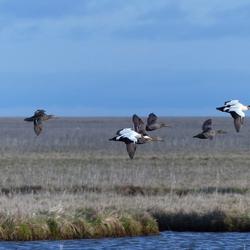
USGS Avian Research: Collaborative Science for Bird Management and Conservation
USGS scientists lead activities that are central to bird conservation and support both wildlife and communities. Through close collaboration with conservation partners, our scientists are meeting real-world needs—from maintaining sustainable harvest opportunities to advancing species recovery efforts.
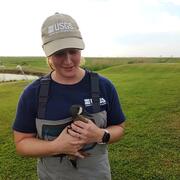
Science in Flight: Seven Ways Bird Science Serves Society
Explore seven case studies highlighting how USGS bird research informs real-world decisions.
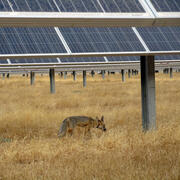
USGS Energy and Wildlife Research 2025 Year in Review
This collection features new information products released between October 2024 and September 2025 that provide a scientific foundation for natural resource management and the development of energy generation projects across North America and beyond.
USGS Energy and Wildlife Research Year in Review
Covering studies published October 2023 through September 2024
Realizing the potential of eDNA biodiversity monitoring tools in the marine environment with application to offshore renewable energy Realizing the potential of eDNA biodiversity monitoring tools in the marine environment with application to offshore renewable energy
The U.S. Geological Survey (USGS) researches the biological diversity and distribution of species to support management, conservation, and resource use decisions. USGS scientists advance detection and monitoring technologies to assess changes in fish and wildlife populations, biodiversity, and the health of ecosystems. The United States is planning to install 30 gigawatts of offshore...
Authors
Adam Sepulveda, Cheryl Morrison, Margaret Hunter, Mona Khalil
By
Ecosystems Mission Area, Biological Threats and Invasive Species Research Program, Species Management Research Program, Eastern Ecological Science Center, Northern Rocky Mountain Science Center, Wetland and Aquatic Research Center , Deep Sea Exploration, Mapping and Characterization, Gulf of America
Species management research program [postcard] Species management research program [postcard]
Executive Summary Our nation’s fish and wildlife species face increasingly complex threats and challenges. Ensuring a healthy future for these species benefits all Americans, contributing to the abundance of our food supply, the well-being of diverse cultures and communities, and the future of biodiverse ecosystems. The U.S. Geological Survey Species Management Research Program (SMRP)...
Authors
Melanie J. Steinkamp, Mona Khalil, Sally House, Mark Wimer, David H. Hu, Michael J. Adams
Supplying ecosystem services on US rangelands Supplying ecosystem services on US rangelands
Rangelands comprise 40% of the conterminous United States and they supply essential ecosystem services to society. A scenario assessment was conducted to determine how accelerating biophysical and societal drivers may modify their future availability. Four scenarios emerged: two may maintain rural communities by sustaining the prevailing ecosystem service of beef cattle production, and...
Authors
David D. Briske, Steven R. Archer, Emily Burchfield, William Burnidge, Justin D. Derner, Hannah Gosnell, Jerry Hatfield, Clare E. Kazanski, Mona Khalil, Tyler J. Lark, Pamela L. Nagler, Osvaldo E. Sala, Nathan F. Sayre, Kimberly R. Stackhouse-Lawson
By land, air, and water — U.S. Geological Survey science supporting fish and wildlife migrations throughout North America By land, air, and water — U.S. Geological Survey science supporting fish and wildlife migrations throughout North America
Countless species of animals—big game, birds, bats, insects, amphibians, reptiles, and fish—migrate to reach suitable habitats to feed, reproduce, and raise their young. Animal migrations developed over millennia commonly follow migration corridors—unique routes for each species—to move among seasonal habitats. Changes along those corridors, whether from human development (buildings...
Authors
Mona Khalil, Mark Wimer, David H. Hu, Michael J. Adams, Melanie J. Steinkamp, Suzanna C. Soileau
U.S. Geological Survey migratory bird science, 2020–21 U.S. Geological Survey migratory bird science, 2020–21
Bird conservation as an endeavor engages a broad range of partners and a coordinated effort across State and Federal agencies, nongovernment organizations, universities and, at times, international partnerships. To understand information needs and respond to the many challenges in bird conservation, U.S. Geological Survey (USGS) scientists participate in Flyway committees, on Joint...
Authors
Aaron T. Pearse, Mark H. Sherfy, Mark Wimer, Mona Khalil, Mark T. Wiltermuth
Energy development and production in the Great Plains: Implications and restoration opportunities Energy development and production in the Great Plains: Implications and restoration opportunities
Energy is an integral part of society. The major US energy sources of fossil fuels (coal, oil, natural gas); biofuels (ethanol); and wind are concentrated in grassland ecosystems of the Great Plains. As energy demand continues to increase, mounting pressures will be placed on North American grassland systems. In this review, we present the ecological effects of energy development and...
Authors
Jacqueline P. Ott, Brice B. Hanberry, Mona Khalil, Mark W. Paschke, Max Post van der Burg, Anthony J. Prenni
Science and Products
Energy & Wildlife
Energy & Wildlife
USGS Avian Research: Collaborative Science for Bird Management and Conservation
USGS scientists lead activities that are central to bird conservation and support both wildlife and communities. Through close collaboration with conservation partners, our scientists are meeting real-world needs—from maintaining sustainable harvest opportunities to advancing species recovery efforts.
Science in Flight: Seven Ways Bird Science Serves Society
Explore seven case studies highlighting how USGS bird research informs real-world decisions.
USGS Energy and Wildlife Research 2025 Year in Review
This collection features new information products released between October 2024 and September 2025 that provide a scientific foundation for natural resource management and the development of energy generation projects across North America and beyond.
USGS Energy and Wildlife Research Year in Review
Covering studies published October 2023 through September 2024
Realizing the potential of eDNA biodiversity monitoring tools in the marine environment with application to offshore renewable energy Realizing the potential of eDNA biodiversity monitoring tools in the marine environment with application to offshore renewable energy
The U.S. Geological Survey (USGS) researches the biological diversity and distribution of species to support management, conservation, and resource use decisions. USGS scientists advance detection and monitoring technologies to assess changes in fish and wildlife populations, biodiversity, and the health of ecosystems. The United States is planning to install 30 gigawatts of offshore...
Authors
Adam Sepulveda, Cheryl Morrison, Margaret Hunter, Mona Khalil
By
Ecosystems Mission Area, Biological Threats and Invasive Species Research Program, Species Management Research Program, Eastern Ecological Science Center, Northern Rocky Mountain Science Center, Wetland and Aquatic Research Center , Deep Sea Exploration, Mapping and Characterization, Gulf of America
Species management research program [postcard] Species management research program [postcard]
Executive Summary Our nation’s fish and wildlife species face increasingly complex threats and challenges. Ensuring a healthy future for these species benefits all Americans, contributing to the abundance of our food supply, the well-being of diverse cultures and communities, and the future of biodiverse ecosystems. The U.S. Geological Survey Species Management Research Program (SMRP)...
Authors
Melanie J. Steinkamp, Mona Khalil, Sally House, Mark Wimer, David H. Hu, Michael J. Adams
Supplying ecosystem services on US rangelands Supplying ecosystem services on US rangelands
Rangelands comprise 40% of the conterminous United States and they supply essential ecosystem services to society. A scenario assessment was conducted to determine how accelerating biophysical and societal drivers may modify their future availability. Four scenarios emerged: two may maintain rural communities by sustaining the prevailing ecosystem service of beef cattle production, and...
Authors
David D. Briske, Steven R. Archer, Emily Burchfield, William Burnidge, Justin D. Derner, Hannah Gosnell, Jerry Hatfield, Clare E. Kazanski, Mona Khalil, Tyler J. Lark, Pamela L. Nagler, Osvaldo E. Sala, Nathan F. Sayre, Kimberly R. Stackhouse-Lawson
By land, air, and water — U.S. Geological Survey science supporting fish and wildlife migrations throughout North America By land, air, and water — U.S. Geological Survey science supporting fish and wildlife migrations throughout North America
Countless species of animals—big game, birds, bats, insects, amphibians, reptiles, and fish—migrate to reach suitable habitats to feed, reproduce, and raise their young. Animal migrations developed over millennia commonly follow migration corridors—unique routes for each species—to move among seasonal habitats. Changes along those corridors, whether from human development (buildings...
Authors
Mona Khalil, Mark Wimer, David H. Hu, Michael J. Adams, Melanie J. Steinkamp, Suzanna C. Soileau
U.S. Geological Survey migratory bird science, 2020–21 U.S. Geological Survey migratory bird science, 2020–21
Bird conservation as an endeavor engages a broad range of partners and a coordinated effort across State and Federal agencies, nongovernment organizations, universities and, at times, international partnerships. To understand information needs and respond to the many challenges in bird conservation, U.S. Geological Survey (USGS) scientists participate in Flyway committees, on Joint...
Authors
Aaron T. Pearse, Mark H. Sherfy, Mark Wimer, Mona Khalil, Mark T. Wiltermuth
Energy development and production in the Great Plains: Implications and restoration opportunities Energy development and production in the Great Plains: Implications and restoration opportunities
Energy is an integral part of society. The major US energy sources of fossil fuels (coal, oil, natural gas); biofuels (ethanol); and wind are concentrated in grassland ecosystems of the Great Plains. As energy demand continues to increase, mounting pressures will be placed on North American grassland systems. In this review, we present the ecological effects of energy development and...
Authors
Jacqueline P. Ott, Brice B. Hanberry, Mona Khalil, Mark W. Paschke, Max Post van der Burg, Anthony J. Prenni