U.S. flag

An official website of the United States government

Images

Browse images from a wide range of science topics covered by USGS. All items in this gallery are considered public domain unless otherwise noted.

Filter Total Items: 1592
Upstream view of the Middle Fork Fortymile River, near Chicken Alaska
Upstream view of the Middle Fork Fortymile River, Alaska

Upstream view of the Middle Fork Fortymile River near U.S. Geological Survey streamgage 15331000, Middle Fork Fortymile River near mouth near Chicken, Alaska

Upstream view of the Middle Fork Fortymile River near U.S. Geological Survey streamgage 15331000, Middle Fork Fortymile River near mouth near Chicken, Alaska

Barry Arm of Harriman Fjord, Prince William Sound, Alaska
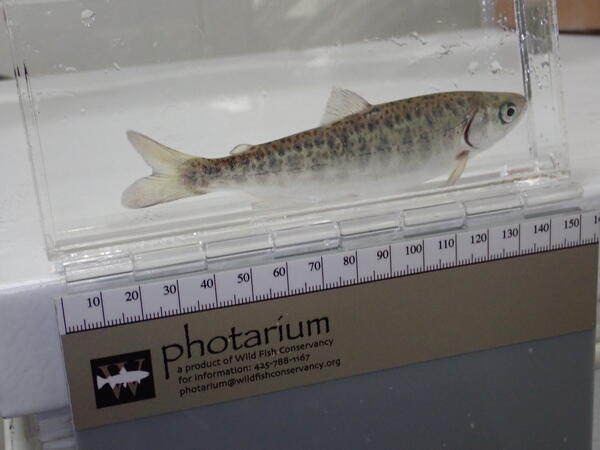
A small light colored fish with dark spots on its side in a clear plastic container with a ruler underneath the container
A juvenile Chinook salmon used in a heat stress experiment

A juvenile Chinook salmon (Oncorhynchus tshawytscha) used in a heat stress experiment. Alaska Department of Fish and Game’s William Jack Hernandez Sport Fish Hatchery, Anchorage, Alaska, USA.

A juvenile Chinook salmon (Oncorhynchus tshawytscha) used in a heat stress experiment. Alaska Department of Fish and Game’s William Jack Hernandez Sport Fish Hatchery, Anchorage, Alaska, USA.

Juvenile gull flying over water

This is a photo of a juvenile gull flying over water in the Aleutian Islands, Alaska.

This is a photo of a juvenile gull flying over water in the Aleutian Islands, Alaska.

Map graphic of marine bird surveys at sea. Survey transects from the Arctic to Hawaii, and from California to South Korea.
Figure 1 map of marine bird surveys at sea for NPPSD

Fig 1 map showing total sampling effort (strip transects) of marine bird surveys at sea in the North Pacific Pelagic Seabird Database (NPPSD).

Fig 1 map showing total sampling effort (strip transects) of marine bird surveys at sea in the North Pacific Pelagic Seabird Database (NPPSD).

Aerial survey for Black Brant at Izembek Lagoon, Alaska

Example of a photo from the USFWS fall aerial survey for geese at Izembek Lagoon. Inset shows a closer view of four Black Brant (bottom) with a Cackling Goose (top) foraging on eelgrass. Scientists from the USGS Alaska Science Center and the U.S.

Example of a photo from the USFWS fall aerial survey for geese at Izembek Lagoon. Inset shows a closer view of four Black Brant (bottom) with a Cackling Goose (top) foraging on eelgrass. Scientists from the USGS Alaska Science Center and the U.S.

Semipalmated Sandpipers with leg bands or leg bands plus flag

Semipalmated Sandpipers with A) Leg bands only (no flag), or B) leg bands plus flag From: Leg flags do not affect shorebird nests: https://doi.org/10.1111/jofo.12264

A sea otter mom nursing her pup. photo taken in Prince William Sound, Alaska
A sea otter mom nursing her pup

A sea otter mom nursing her pup. Photo taken in Prince William Sound, Alaska. A new born sea otter needs to stay with its mother for six months to learn how to survive on its own. 

A sea otter mom nursing her pup. Photo taken in Prince William Sound, Alaska. A new born sea otter needs to stay with its mother for six months to learn how to survive on its own. 

A young sea otter foraging for small invertebrates off an emergent rock covered with seaweed, snails, and barnacles.
A young sea otter foraging for invertebrates

A young sea otter foraging for small invertebrates off an emergent rock covered with seaweed, snails, and barnacles. Photo taken in Prince William Sound, Alaska.

A young sea otter foraging for small invertebrates off an emergent rock covered with seaweed, snails, and barnacles. Photo taken in Prince William Sound, Alaska.

Photograph of Red plumes burst out from the tops of these chemosynthetic tubeworms
Red plumes burst out from the tops of these chemosynthetic tubeworms

Red plumes burst out from the tops of these chemosynthetic tubeworms, capturing hydrogen sulfide and oxygen from the surrounding water to feed their bacterial endosymbionts. The tubeworm tubes provide a habitat for several benthic animals, including the pale pink branching octocorals seen here

Red plumes burst out from the tops of these chemosynthetic tubeworms, capturing hydrogen sulfide and oxygen from the surrounding water to feed their bacterial endosymbionts. The tubeworm tubes provide a habitat for several benthic animals, including the pale pink branching octocorals seen here

Black text on a white background with three drawings of fish and line graphs showing mortality and spawning success of salmon
Infographic showing Pacific salmon premature mortality and spawning success in Alaska

Infographic showing water temperature and discharge (flow) data from rivers with heat-related salmon mortality, drought-related salmon mortality, and normal salmon survival in Alaska during 2019.

USGS boat on bank of Stikine River, Alaska
USGS boat at the Stikine River gage site, Alaska

The USGS boat at the Stikine River gage site, Alaska. The Stikine River is one of the transboundary watersheds of Southeast Alaska. Visit USGS Transboundary River Monitoring in Southeast Alaska for more information about our research.

The USGS boat at the Stikine River gage site, Alaska. The Stikine River is one of the transboundary watersheds of Southeast Alaska. Visit USGS Transboundary River Monitoring in Southeast Alaska for more information about our research.

incredible sunrise on the Stikine River, Alaska
Early Morning on the Stikine River, Alaska

The USGS crew heads upriver early one winter day and sees an increible sunrise on the Stikine River.

The USGS crew heads upriver early one winter day and sees an increible sunrise on the Stikine River.

eDNA sampling at Izembek National Wildlife Refuge, Alaska
Scientist collects eDNA samples at Izembek NWR, Alaska

USGS Geneticist Damian Menning is performing eDNA sampling at Grant Point in Izembek National Wildlife Refuge, Alaska. This eDNA sampling is part of a project looking for eelgrass (Zostera marina) pathogens in the North Pacific. Izembek NWR is on the Alaska Peninsula located between the Bering Sea and the Gulf of Alaska.

USGS Geneticist Damian Menning is performing eDNA sampling at Grant Point in Izembek National Wildlife Refuge, Alaska. This eDNA sampling is part of a project looking for eelgrass (Zostera marina) pathogens in the North Pacific. Izembek NWR is on the Alaska Peninsula located between the Bering Sea and the Gulf of Alaska.

Keychain in Inupiaq for USGS outreach activities about bird banding and reporting
Keychain in Inupiaq for USGS outreach activities about bird banding

Keychain developed for USGS outreach activities about bird banding and reporting in Inupiaq and English. Inupiaq translation provided by Qaiyaan and Jana Harcharek.

Scientist standing in Unuk River next to boat getting ready to collect water samples
Sampling the Unuk River, Alaska

USGS Hydrologist Randy Host performs compass calibrations for discharge measurements at the Unuk River. The Unuk River is one of the transboundary watersheds of Southeast Alaska. This site has a Super Gage which is a conventional streamflow gage equipped with continuous water-quality monitors.

USGS Hydrologist Randy Host performs compass calibrations for discharge measurements at the Unuk River. The Unuk River is one of the transboundary watersheds of Southeast Alaska. This site has a Super Gage which is a conventional streamflow gage equipped with continuous water-quality monitors.

USGS scientists necropsy Common Murres and harvest tissues to test for harmful algal bloom toxins
Scientists necropsy Common Murres

USGS scientists Matthew Smith, Caitlin Marsteller, and Danielle Gerik necropsy Common Murres and harvest tissues to test for harmful algal bloom toxins.

USGS scientists Matthew Smith, Caitlin Marsteller, and Danielle Gerik necropsy Common Murres and harvest tissues to test for harmful algal bloom toxins.

Tundra swan on the Colville River Delta
Tundra swan on the Colville River Delta, Alaska
Was this page helpful?