U.S. flag

An official website of the United States government

Bird and Terrestrial Species Conservation

At the Eastern Ecological Science Center (EESC), we strive to provide world-class science to inform natural resource decisions that preserve and enhance our quality of life. Our team conducts a wide array of research to address the science needs of our partners. 

Filter Total Items: 103

Combining Field and Laboratory Studies to Understand Viral Ecology in Avian Species

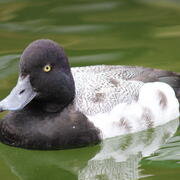
USGS researchers are pairing field and laboratory studies to gain deeper insights into the role of Lesser Scaup ( Aythya affinis) in the spread and persistence of avian influenza viruses.
Combining Field and Laboratory Studies to Understand Viral Ecology in Avian Species

Combining Field and Laboratory Studies to Understand Viral Ecology in Avian Species

USGS researchers are pairing field and laboratory studies to gain deeper insights into the role of Lesser Scaup ( Aythya affinis) in the spread and persistence of avian influenza viruses.
Learn More

Colonial Nesting Waterbird Ecology

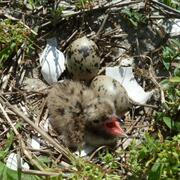
USGS is engaged in a variety of research aimed at understanding population dynamics in colonially nesting waterbirds of the Chesapeake Bay. Much of this work focuses on how focal species such as Common and Least Terns, Cattle and Snowy Egrets, and others respond to habitat restoration and management on Poplar Island, a large-scale effort lead by the U.S. Army Corps of Engineers and the Port of...
Colonial Nesting Waterbird Ecology

Colonial Nesting Waterbird Ecology

USGS is engaged in a variety of research aimed at understanding population dynamics in colonially nesting waterbirds of the Chesapeake Bay. Much of this work focuses on how focal species such as Common and Least Terns, Cattle and Snowy Egrets, and others respond to habitat restoration and management on Poplar Island, a large-scale effort lead by the U.S. Army Corps of Engineers and the Port of...
Learn More

Novel Management Techniques for Colonial Nesting Waterbirds

This project focuses on USGS collaborating with USFWS colleagues to understand how management practices on Poplar Island impact target and non-target wildlife species.
Novel Management Techniques for Colonial Nesting Waterbirds

Novel Management Techniques for Colonial Nesting Waterbirds

This project focuses on USGS collaborating with USFWS colleagues to understand how management practices on Poplar Island impact target and non-target wildlife species.
Learn More

Why We Band Birds

Birds are vital to our economy, ecosystems, and cultural heritage. Investing in bird conservation benefits communities, businesses, and working lands while reinforcing our nation’s legacy of stewardship and biodiversity. By valuing birds, we ensure a richer, healthier, and more vibrant future for all Americans. Bird banding allows for the unique identification of each individual bird. This...
Why We Band Birds

Why We Band Birds

Birds are vital to our economy, ecosystems, and cultural heritage. Investing in bird conservation benefits communities, businesses, and working lands while reinforcing our nation’s legacy of stewardship and biodiversity. By valuing birds, we ensure a richer, healthier, and more vibrant future for all Americans. Bird banding allows for the unique identification of each individual bird. This...
Learn More

EESC Makes an Impact

The U.S. Geological Survey Eastern Ecological Science Center (EESC) strives to provide world-class science to inform natural resource decisions that preserve and enhance our quality of life. We work directly with managers of our shared natural resources to provide the unbiased scientific tools, research and innovations needed to make informed decisions in today’s complex and rapidly changing...
EESC Makes an Impact

EESC Makes an Impact

The U.S. Geological Survey Eastern Ecological Science Center (EESC) strives to provide world-class science to inform natural resource decisions that preserve and enhance our quality of life. We work directly with managers of our shared natural resources to provide the unbiased scientific tools, research and innovations needed to make informed decisions in today’s complex and rapidly changing...
Learn More

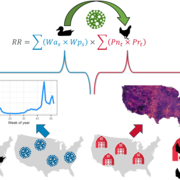
Advancing Risk Modeling for Highly Pathogenic Avian Influenza

Ongoing global outbreaks demonstrate the capacity of highly pathogenic avian influenza virus (HPAIV) to impact poultry, wild birds, and even human health. USGS research is advancing the understanding of the spatial and temporal interface between wild and domestic bird populations from which these viruses emerge to aid biosecurity planning and outbreak response.
Advancing Risk Modeling for Highly Pathogenic Avian Influenza

Advancing Risk Modeling for Highly Pathogenic Avian Influenza

Ongoing global outbreaks demonstrate the capacity of highly pathogenic avian influenza virus (HPAIV) to impact poultry, wild birds, and even human health. USGS research is advancing the understanding of the spatial and temporal interface between wild and domestic bird populations from which these viruses emerge to aid biosecurity planning and outbreak response.
Learn More

Understanding Circulating Avian Influenza Viruses and How They Spread

USGS research is quantifying the strains and prevalence of avian influenza viruses circulating in wild waterfowl and improving our understanding of how viruses move between and within migratory flyways.
Understanding Circulating Avian Influenza Viruses and How They Spread

Understanding Circulating Avian Influenza Viruses and How They Spread

USGS research is quantifying the strains and prevalence of avian influenza viruses circulating in wild waterfowl and improving our understanding of how viruses move between and within migratory flyways.
Learn More

Pathogens in the Aquatic Environment – Waterfowl, Avian Influenza

USGS research is investigating the prevalence and strains of avian influenza viruses in the aquatic environment, how those viruses compare to those circulating within wild birds in the same area, and how viruses persist in the environment across seasons.
Pathogens in the Aquatic Environment – Waterfowl, Avian Influenza

Pathogens in the Aquatic Environment – Waterfowl, Avian Influenza

USGS research is investigating the prevalence and strains of avian influenza viruses in the aquatic environment, how those viruses compare to those circulating within wild birds in the same area, and how viruses persist in the environment across seasons.
Learn More

Key Values of a Century of EESC Science

The USGS Eastern Ecological Science Center (EESC) is rooted in a proud tradition of service to the nation—advancing science that informs the conservation and management of fish, wildlife, and habitats across the eastern United States and beyond. Our mission is clear: deliver reliable, partner-driven science that supports natural resource decisions today, while ensuring these resources remain...
Key Values of a Century of EESC Science

Key Values of a Century of EESC Science

The USGS Eastern Ecological Science Center (EESC) is rooted in a proud tradition of service to the nation—advancing science that informs the conservation and management of fish, wildlife, and habitats across the eastern United States and beyond. Our mission is clear: deliver reliable, partner-driven science that supports natural resource decisions today, while ensuring these resources remain...
Learn More

EESC Makes an Impact: Preserving our Hunting Resources

Hunting is an economic engine for the U.S. and responsible management of these resources directly supports 45.2 billion dollars spent by hunters annually. Conservation and management of hunting resources also contributes substantially to the 394.8 billion dollars spent on all wildlife-related recreation. Hunting traditions are an integral component of our American heritage, with 14.4 million...
EESC Makes an Impact: Preserving our Hunting Resources

EESC Makes an Impact: Preserving our Hunting Resources

Hunting is an economic engine for the U.S. and responsible management of these resources directly supports 45.2 billion dollars spent by hunters annually. Conservation and management of hunting resources also contributes substantially to the 394.8 billion dollars spent on all wildlife-related recreation. Hunting traditions are an integral component of our American heritage, with 14.4 million...
Learn More

EESC Makes an Impact: Reducing Management Costs and Increasing Efficiency

Decision analysis is widely used in business applications to improve cost saving and increase efficiency under uncertainty. Scientists at the U.S. Geological Survey Eastern Ecological Science Center (EESC) include world-renowned experts who use data, mathematics, statistics, and computer science to help frame and solve decision problems to support U.S. national security, public health, wildlife...
EESC Makes an Impact: Reducing Management Costs and Increasing Efficiency

EESC Makes an Impact: Reducing Management Costs and Increasing Efficiency

Decision analysis is widely used in business applications to improve cost saving and increase efficiency under uncertainty. Scientists at the U.S. Geological Survey Eastern Ecological Science Center (EESC) include world-renowned experts who use data, mathematics, statistics, and computer science to help frame and solve decision problems to support U.S. national security, public health, wildlife...
Learn More

Using Global Telemetry to Understand Avian Movement and Migration

USGS researchers are collaborating with partners around the globe to leverage new and existing telemetry data to answer broad scale questions about factors influencing avian movement and migration.
Using Global Telemetry to Understand Avian Movement and Migration

Using Global Telemetry to Understand Avian Movement and Migration

USGS researchers are collaborating with partners around the globe to leverage new and existing telemetry data to answer broad scale questions about factors influencing avian movement and migration.
Learn More
Was this page helpful?