



USGS researchers (GLSC; Ann Arbor, Michigan) partner with the Monterey Bay Aquarium Research Institute to launch the Triton Long Range Autonomous Underwater Vehicle (LRAUV) in Lake Huron near Cheboygan, Michigan.
Images
Images captured by GLSC scientists while working in and around the Great Lakes.
Filter Total Items: 494
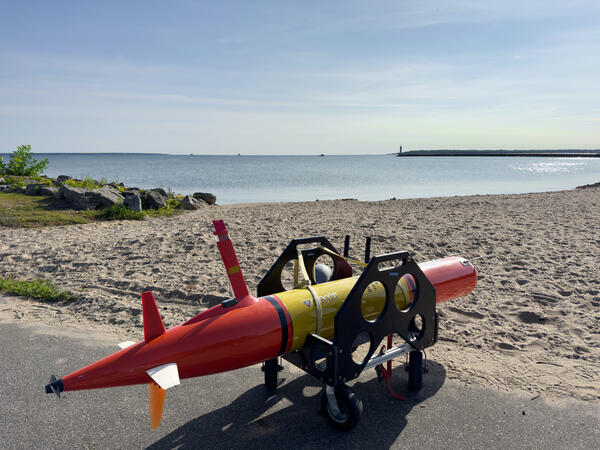
AUV Staging
USGS researchers (GLSC; Ann Arbor, Michigan) partner with the Monterey Bay Aquarium Research Institute to launch the Triton Long Range Autonomous Underwater Vehicle (LRAUV) in Lake Huron near Cheboygan, Michigan.
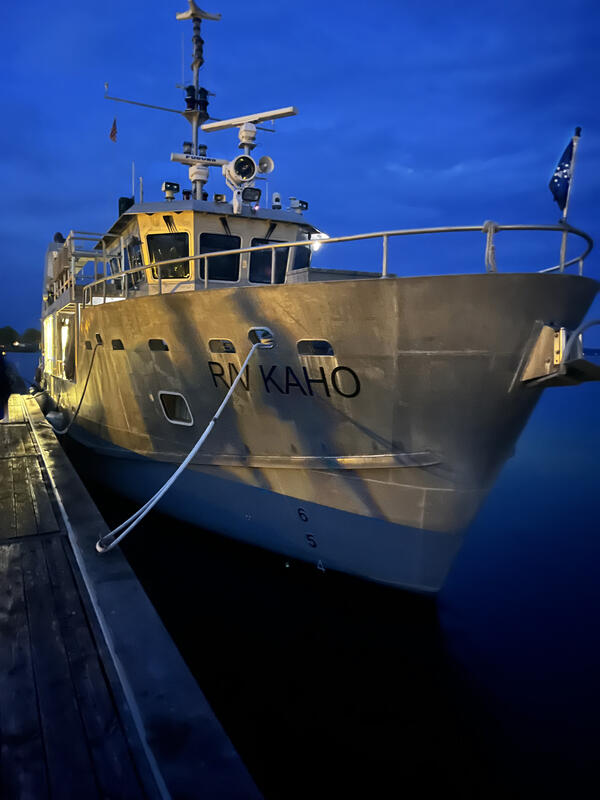
In Port for the Night
The USGS R/V Kaho (GLSC; Cortland, New York; Oswego, New York) docked in Sodus Point, New York after a day of sampling for larval bloaters (Coregonus hoyi) in Lake Ontario. Photo credit: Krystal Dixon, USGS-GLSC Contractor.
The USGS R/V Kaho (GLSC; Cortland, New York; Oswego, New York) docked in Sodus Point, New York after a day of sampling for larval bloaters (Coregonus hoyi) in Lake Ontario. Photo credit: Krystal Dixon, USGS-GLSC Contractor.
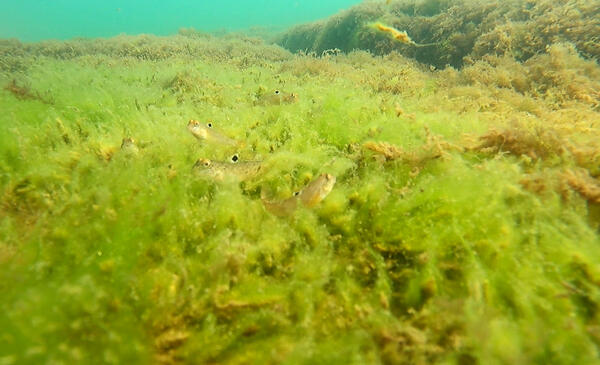
A Gaggle of Gobies
Invasive round gobies (Neogobius melanostomus) take refuge in a bed of Cladophora and non-branching filamentous green algae, photographed by USGS divers (GLSC; Ann Arbor, Michigan; Chesterton, Indiana) during project sampling in western Lake Erie. Photo credit: Megan Lewan, USGS-GLSC.
Invasive round gobies (Neogobius melanostomus) take refuge in a bed of Cladophora and non-branching filamentous green algae, photographed by USGS divers (GLSC; Ann Arbor, Michigan; Chesterton, Indiana) during project sampling in western Lake Erie. Photo credit: Megan Lewan, USGS-GLSC.
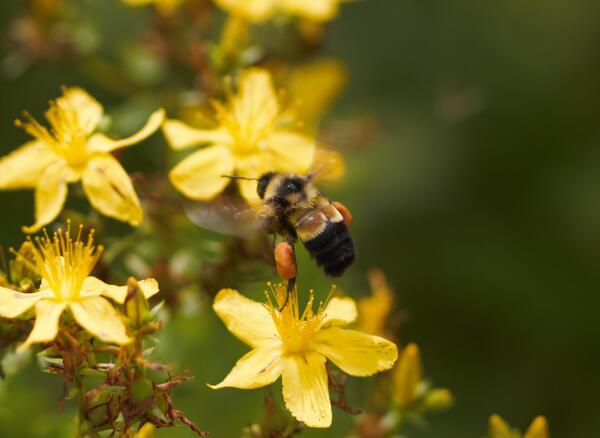
Rust Patched Bumble Bee
A rusty patched bumble bee-the only federally endangered bee in the lower 48 states-visits a St. John’s wort at the Ledgeview Nature Center in Calumet County, Wisconsin, July 2024. Photo credit: Bethany Dennis, USGS.
A rusty patched bumble bee-the only federally endangered bee in the lower 48 states-visits a St. John’s wort at the Ledgeview Nature Center in Calumet County, Wisconsin, July 2024. Photo credit: Bethany Dennis, USGS.
Field Day Wrap-Up
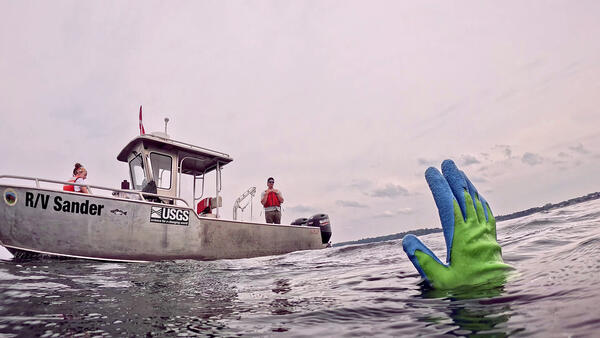
A USGS boat crew (GLSC; Ann Arbor, Michigan; Chesterton, Indiana) patiently waits for the other half of the team to finish underwater tasks as part of an on-going Cladophora Project, which assesses benthic algae community abundance in nearshore areas of the Great Lakes, and observes factors associated with algal growth, including dreissenid mussels, nutrien
A USGS boat crew (GLSC; Ann Arbor, Michigan; Chesterton, Indiana) patiently waits for the other half of the team to finish underwater tasks as part of an on-going Cladophora Project, which assesses benthic algae community abundance in nearshore areas of the Great Lakes, and observes factors associated with algal growth, including dreissenid mussels, nutrien
Sample Sorting
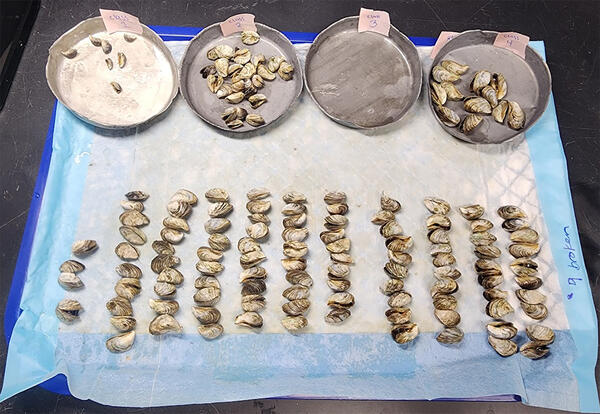
Invasive Dreissenid mussels, sorted by size, after a benthic quadrat sample has been processed at the USGS Lake Michigan Ecological Research Station (GLSC; Chesterton, Indiana) for the Cladophora assessment project. Photo Credit: Jessica Oswald, USGS-GLSC.
Invasive Dreissenid mussels, sorted by size, after a benthic quadrat sample has been processed at the USGS Lake Michigan Ecological Research Station (GLSC; Chesterton, Indiana) for the Cladophora assessment project. Photo Credit: Jessica Oswald, USGS-GLSC.

Diving Thunder Bay Reef
USGS divers gather samples on the Thunder Bay Reef complex in July 2024 to assess the abundance of mussels and lakebed algal growth two years before treatment. Photo credit: Madeleine Giordano, USGS.
USGS divers gather samples on the Thunder Bay Reef complex in July 2024 to assess the abundance of mussels and lakebed algal growth two years before treatment. Photo credit: Madeleine Giordano, USGS.
Eat. Sleep. Boat. Repeat.
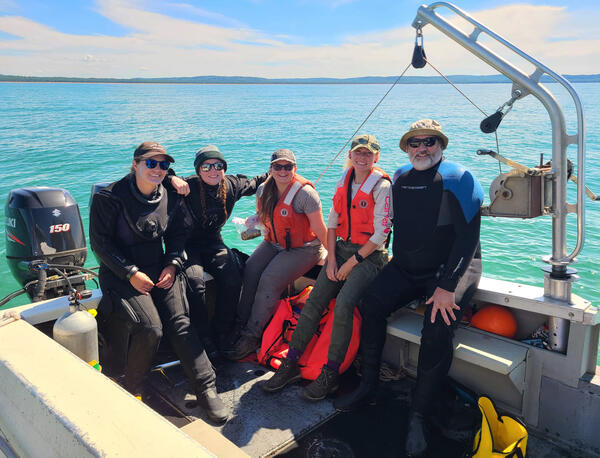
USGS researchers and technicians (GLSC; Ann Arbor, Michigan; Chesterton, Indiana) on the Cladophora team during summer sampling on Lake Michigan near Leland, Michigan. Photo credit: Greg Kennedy, USGS-GLSC.
USGS researchers and technicians (GLSC; Ann Arbor, Michigan; Chesterton, Indiana) on the Cladophora team during summer sampling on Lake Michigan near Leland, Michigan. Photo credit: Greg Kennedy, USGS-GLSC.
eDNA on a Clear Day
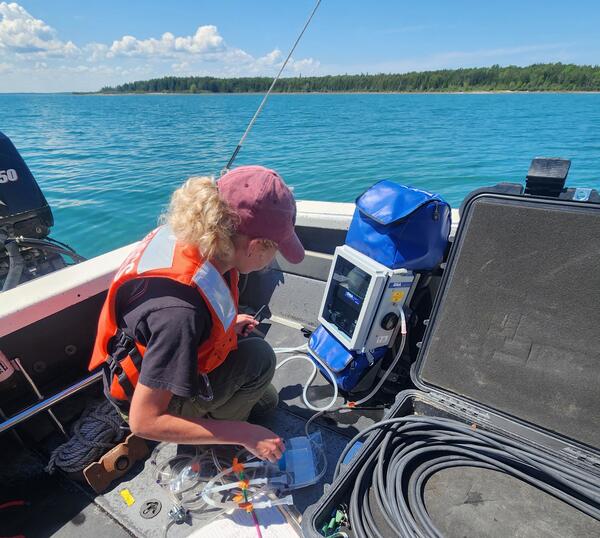
A USGS contractor (GLSC; Chesterton, Indiana), and Cladophora project team member, filters water samples through an environmental DNA (eDNA) backpack while sampling on Lake Huron. Information gathered will improve understanding of fish habitat usage while testing new DNA-based methods for fish population assessment.
A USGS contractor (GLSC; Chesterton, Indiana), and Cladophora project team member, filters water samples through an environmental DNA (eDNA) backpack while sampling on Lake Huron. Information gathered will improve understanding of fish habitat usage while testing new DNA-based methods for fish population assessment.

Research Vessel Muskie near Cleveland
Crew of the USGS Great Lakes Science Center R/V Muskie (Huron, Ohio) testing bottom trawl equipment in Lake Erie off the coast of Cleveland, Ohio, in preparation for the upcoming field season. Photo credit: Kevin Keretz, USGS-GLSC.
Crew of the USGS Great Lakes Science Center R/V Muskie (Huron, Ohio) testing bottom trawl equipment in Lake Erie off the coast of Cleveland, Ohio, in preparation for the upcoming field season. Photo credit: Kevin Keretz, USGS-GLSC.
Larval Fish Survey Aboard the Research Vessel Kaho
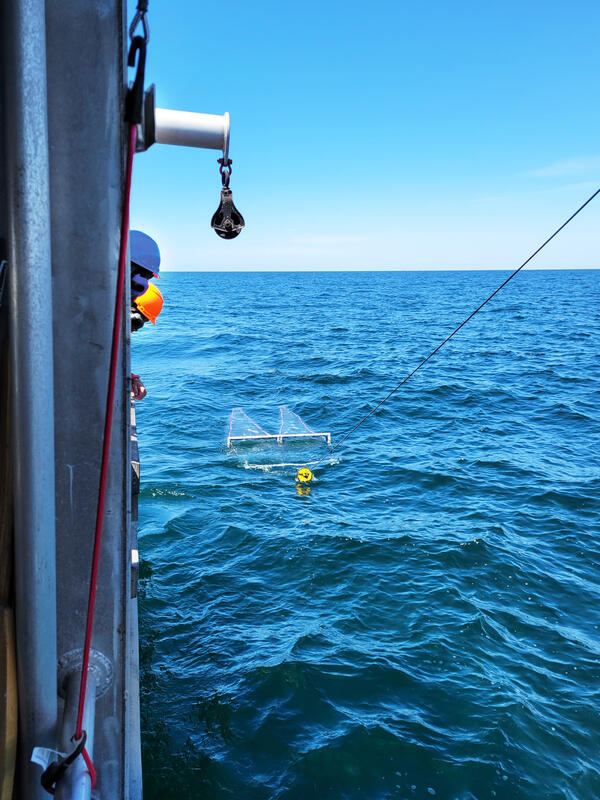
Larval Fish Survey Aboard the Research Vessel KahoUSGS researchers (GLSC; Cortland, New York; Oswego, New York) towing a neuston net to capture larval bloaters (Coregonus hoyi) during a field sampling survey aboard the R/V Kaho. Photo credit: Olivia Mitchinson, USGS-GLSC.
Larval Fish Survey Aboard the Research Vessel Kaho
Larval Fish Survey Aboard the Research Vessel KahoUSGS researchers (GLSC; Cortland, New York; Oswego, New York) towing a neuston net to capture larval bloaters (Coregonus hoyi) during a field sampling survey aboard the R/V Kaho. Photo credit: Olivia Mitchinson, USGS-GLSC.
Storm Front Rolling In
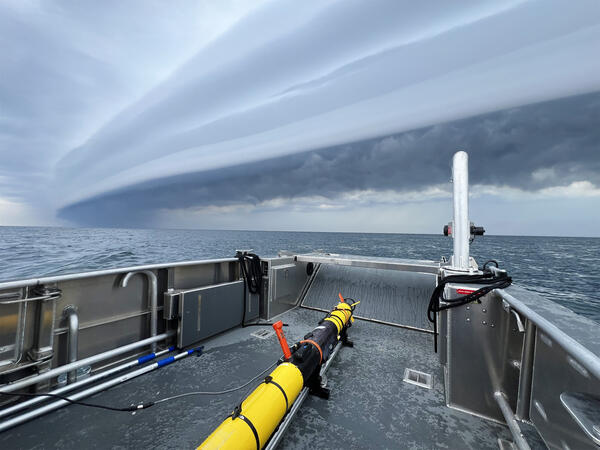
An autonomous underwater vehicle (AUV) on the deck of the USGS R/V Ghost Shiner (GLSC; Ann Arbor, Michigan) as a storm front blows in over Lake Michigan. Photo credit: Luke Sayler, USGS-GLSC.
An autonomous underwater vehicle (AUV) on the deck of the USGS R/V Ghost Shiner (GLSC; Ann Arbor, Michigan) as a storm front blows in over Lake Michigan. Photo credit: Luke Sayler, USGS-GLSC.
Benthic Sampling
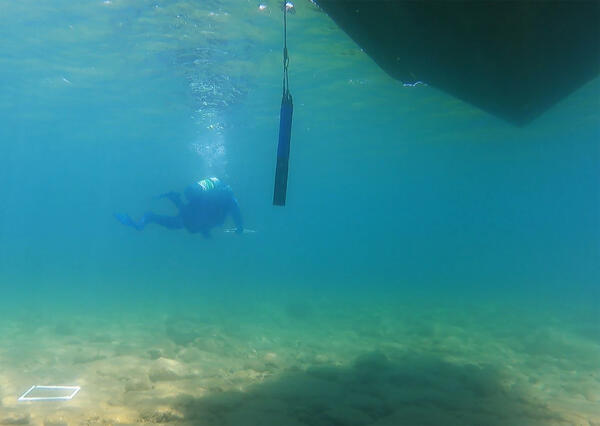
USGS science diver (GLSC; Ann Arbor, Michigan) lays down quadrats for benthic sampling (background), while a surface crew member takes a water profile using a multiparameter sonde deployed over the side of the vessel.
USGS science diver (GLSC; Ann Arbor, Michigan) lays down quadrats for benthic sampling (background), while a surface crew member takes a water profile using a multiparameter sonde deployed over the side of the vessel.
Research Vessel Sturgeon leaving Charlevoix
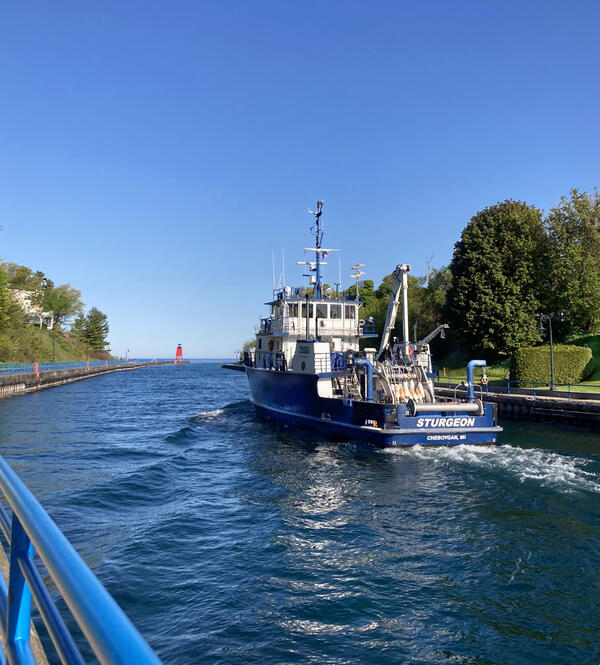
USGS Great Lakes Science Center R/V Sturgeon heading home to Cheboygan Vessel Base (Cheboygan, Michigan) after a spring gillnet survey in the Northern Refuge of Lake Michigan. This survey is completed annually and has been ongoing since 2001.
USGS Great Lakes Science Center R/V Sturgeon heading home to Cheboygan Vessel Base (Cheboygan, Michigan) after a spring gillnet survey in the Northern Refuge of Lake Michigan. This survey is completed annually and has been ongoing since 2001.
Active Light Trapping
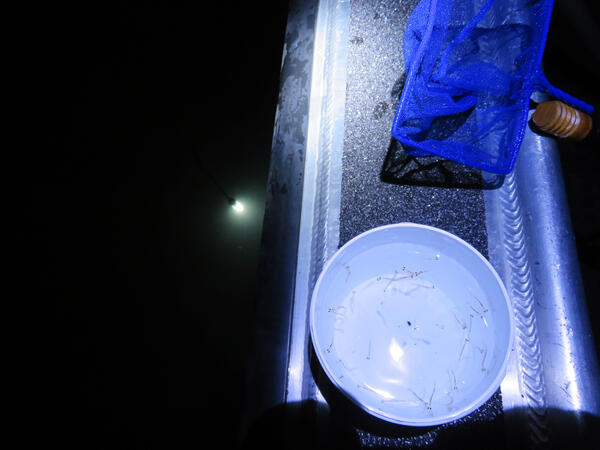
USGS researchers (GLSC; Millersburg, Michigan) use a light source to attract and capture lake whitefish (Coregonus clupeaformis) at night on Buffalo Reef in Lake Superior. Photo credit: Brad Buechel, USGS-GLSC.
USGS researchers (GLSC; Millersburg, Michigan) use a light source to attract and capture lake whitefish (Coregonus clupeaformis) at night on Buffalo Reef in Lake Superior. Photo credit: Brad Buechel, USGS-GLSC.
The Search for Alewives
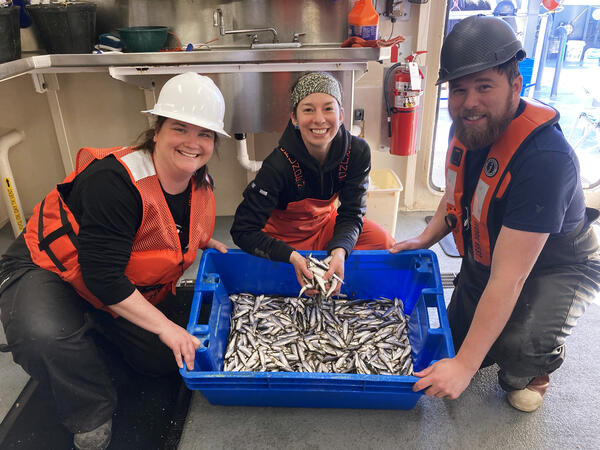
The USGS science crew (GLSC; Ann Arbor, Michigan) aboard the R/V Arcticus (GLSC; Cheboygan, Michigan) with a haul of invasive alewives (Alosa pseudoharengus) collected during a spring bottom trawl survey on Lake Michigan.
The USGS science crew (GLSC; Ann Arbor, Michigan) aboard the R/V Arcticus (GLSC; Cheboygan, Michigan) with a haul of invasive alewives (Alosa pseudoharengus) collected during a spring bottom trawl survey on Lake Michigan.

Teaching Early Life History and Fish Identification
Teaching Early Life History and Fish IdentificationGLSC’s Stacey Ireland and attendees reviewing a larval fish identification at the OMNRF Field Office in Wheatley, Ontario. Photo Credit: Robin DeBruyne, USGS.
Teaching Early Life History and Fish Identification
Teaching Early Life History and Fish IdentificationGLSC’s Stacey Ireland and attendees reviewing a larval fish identification at the OMNRF Field Office in Wheatley, Ontario. Photo Credit: Robin DeBruyne, USGS.

Sea lampreys in a tank
Sea lampreys in a tank at the Great Lakes Fishery Commission. Sea lampreys are a parasitic invasive species in the Great Lakes.
Sea lampreys in a tank at the Great Lakes Fishery Commission. Sea lampreys are a parasitic invasive species in the Great Lakes.

First Lab-Reared Transformer
Photo of the first ever sea lamprey reared in the laboratory at the USGS Hammond Bay Biological Station (GLSC; Millersburg, MI) to undergo transformation (metamorphosis), which entails moving from the larval life stage to the parasitic life stage. Photo credit: Trisha Searcy, USGS.
Photo of the first ever sea lamprey reared in the laboratory at the USGS Hammond Bay Biological Station (GLSC; Millersburg, MI) to undergo transformation (metamorphosis), which entails moving from the larval life stage to the parasitic life stage. Photo credit: Trisha Searcy, USGS.
Lake Whitefish Egg
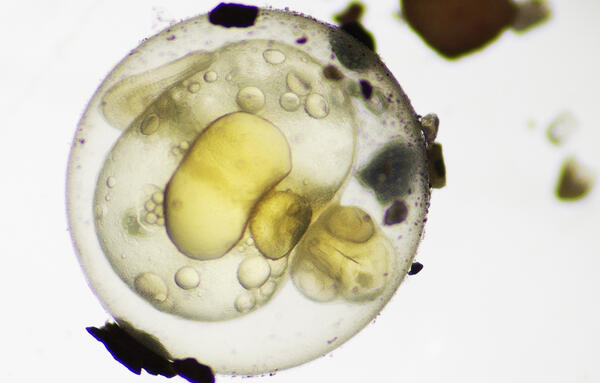
Three weeks post-fertilization, this lake whitefish (Coregonus clupeaformis) egg was reared at the USGS Hammond Bay Biological Station (GLSC; Millersburg, Michigan) as part of a study examining the effects of Lake Superior's Stamp Sands on lake whitefish. Fertilized eggs are incubated over increasing concentrations of stamp sand in experimental aquariu
Three weeks post-fertilization, this lake whitefish (Coregonus clupeaformis) egg was reared at the USGS Hammond Bay Biological Station (GLSC; Millersburg, Michigan) as part of a study examining the effects of Lake Superior's Stamp Sands on lake whitefish. Fertilized eggs are incubated over increasing concentrations of stamp sand in experimental aquariu

Fertilizing Cisco Eggs
USGS researchers (GLSC; Cortland and Oswego, New York) fertilize cisco (Coregonus artedi) eggs from adults captured in Chaumont Bay, Lake Ontario that were transported to Little Sodus Bay, Lake Ontario and seeded on cleaned substrate within the bay. Photo credit: Marc Chalupnicki, USGS.
USGS researchers (GLSC; Cortland and Oswego, New York) fertilize cisco (Coregonus artedi) eggs from adults captured in Chaumont Bay, Lake Ontario that were transported to Little Sodus Bay, Lake Ontario and seeded on cleaned substrate within the bay. Photo credit: Marc Chalupnicki, USGS.