



Advanced Capabilities and Data Visualization
Advanced Capabilities and Data Visualization
The NJWSC combines traditional hydrology with advanced scientific methods to produce innovative tools and technical capabilities to obtain and present scientific data.
Filter Total Items: 45
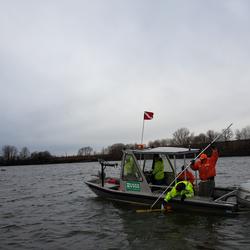
Tidal Discharge at USGS Streamgages
New Jersey has an extensive coastline with several rivers and streams close enough to interact with the bays and ocean. This interaction causes many waterways to be affected by the tidal actions of the ocean. Because there are no dams along these rivers, this effect can be felt some distance upstream requiring specialized observational techniques to measure and calculate discharge from these...

USGS National Water Quality Network
Understanding the quality of U.S. streams, rivers, and groundwater requires consistent data collection and analysis over decades for proper context of current conditions. The USGS collects nationally standardized data and information as part of the National Water Quality Network (NWQN). The NQWN is made up of sites across the Nation where USGS scientists regularly measure water-quality conditions.

Streamflow Characteristics and Trends in New Jersey, Water Years 1897 - 2017
Streamflow statistics computed by the USGS are often utilized by water-resource managers to understand the streamflow conditions across New Jersey. For example, streamflow statistics can assist agencies with establishing minimum passing flows, evaluating or updating water withdrawal limits among other water-resource management activities to help protect water supply and the environment. The...
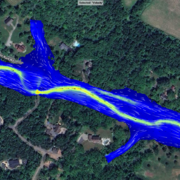
Flooded Roadway and Bridge Crossing Mapping and Early Warning System for Selected Communities in Hunterdon County, New Jersey
This project seeks to develop methods to identify when a flooded roadway or bridge crossing condition may exist and to provide a tool for users to select rainfall scenarios in addition to the selected river condition to estimate if road flooding may occur with the selected combination. These tools will provide officials in Hunterdon County and at the state level of management better early warning...
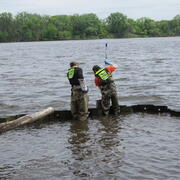
Novel Bacterial Monitoring of Urbanized Waterways in the Lower Delaware River and Passaic River Basins.
As part of the Urban Water Federal Partnership, the U.S. Geological Survey (USGS) New Jersey Water Science Center (NJWSC) is currently assessing the use of innovative, near real-time bacteria monitoring technology to provide rapid results on bacteria concentrations to water regulators. Traditional methods of collecting and quantifying fecal indicator bacteria (FIB) is labor intensive, expensive...

New Jersey Subbasin Paired Air & Stream Water Temperature Networks
The temperature, water quality, and channel connectivity along headwater stream networks often show highly dynamic spatiotemporal patterns that are tied to localized hydrogeologic and landcover controls. Groundwater exchanges exert a spatially discontinuous influence on streams that reflect, in part, the preferential nature of groundwater discharge as controlled by recharge, topography, and...

New Jersey: Coastal Flood Inundation Mapping
The U.S. Geological Survey (USGS) in cooperation with the New Jersey Department of Environmental Protection and New Jersey Office of Emergency Management conducted a study to produce flood-inundation maps for storm surge flooding scenarios in the coastal areas of 10 New Jersey counties. The coastal storm-surge inundation maps were created from data modelled in the FEMA Region II Coastal Storm...

Monitoring Harmful Algal Blooms in a Coastal System to Identify the Factors that Affect HAB Production and the Downstream Transport of Cyanobacteria and Associated Cyanotoxins from Freshwater to Marine Environments
Across the nation, Cyanobacterial harmful algal blooms (HABs) in freshwater coastal lakes and ponds have become a major environmental and public health concern. Under the right conditions, cyanobacteria can produce cyanotoxins that can pose health risks to both animals and humans (U.S. Environmental Protection Agency (USEPA), 2020) and have been shown to have severe impacts on water quality...

Computing Flow Statistics in the Barnegat Bay Watershed as a Step Toward Developing Ecological Flow Targets
Ecological flows (also referred to as environmental flows) collectively describe the components of streamflow that are needed to ensure the structure and function of a stream ecosystem. Five major components of streamflow that are important in shaping ecological processes in streams are: magnitude, frequency, duration, timing, and rate of change. The US Geological Survey, in cooperation with the...

Hurricane Sandy Science, Ten-years Later
On October 29, 2012, Hurricane Sandy made landfall in New Jersey after several days of impacting the Atlantic coastline. Ten years later the impacted communities have recovered and rebuilt, and the New Jersey Water Science Center has expanded its scientific understanding of storm impacts on our state.

An Evaluation of SPATT Technology to Assess Cyanotoxins Variability and Transport in the Salem River, New Jersey
As part of the USGS Next Generation Water Observing System the NJWSC is evaluating the use of passive samplers, or Solid Phase Adsorption Toxin Tracking (SPATT) samplers, to examine the temporal variability of dissolved cyanotoxin occurrence. These innovative, low-cost, time-integrated passive samplers offer several advantages over current water-column cyanotoxin monitoring techniques. However...

Africa Groundwater Exploration and Assessment Program
The purpose of the Program is to develop a sound understanding of the potential for development of potable groundwater supply in selected African countries and build local capacity to plan and conduct the hydrologic investigations and monitoring necessary to help ensure that groundwater resources are developed and managed efficiently and sustainably.