



Bird Conservation
Bird Conservation
Filter Total Items: 15

Key Values of a Century of EESC Science
The USGS Eastern Ecological Science Center (EESC) is rooted in a proud tradition of service to the nation—advancing science that informs the conservation and management of fish, wildlife, and habitats across the eastern United States and beyond. Our mission is clear: deliver reliable, partner-driven science that supports natural resource decisions today, while ensuring these resources remain...
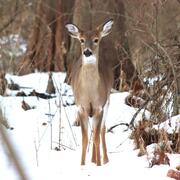
EESC Makes an Impact: Preserving our Hunting Resources
Hunting is an economic engine for the U.S. and responsible management of these resources directly supports 45.2 billion dollars spent by hunters annually. Conservation and management of hunting resources also contributes substantially to the 394.8 billion dollars spent on all wildlife-related recreation. Hunting traditions are an integral component of our American heritage, with 14.4 million...
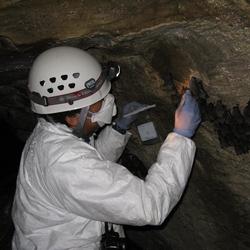
EESC Makes an Impact: Reducing Management Costs and Increasing Efficiency
Decision analysis is widely used in business applications to improve cost saving and increase efficiency under uncertainty. Scientists at the U.S. Geological Survey Eastern Ecological Science Center (EESC) include world-renowned experts who use data, mathematics, statistics, and computer science to help frame and solve decision problems to support U.S. national security, public health, wildlife...

Understanding Avian Influenza Exposure and Antibodies in Understudied Species
Recent outbreaks of highly pathogenic avian influenza have impacted a dramatically wider range of bird hosts than ever before. USGS researchers are working to identify which bird species have been exposed, which have developed immune responses, and how these species may influence viral ecology to inform risk management activities.

Using Telemetry to Understand Overlap in Habitat Use Between Waterfowl and Agricultural Birds in North America
USGS researchers are using telemetry to improve our understanding of how wild birds move throughout their environments and the potential implications for disease transmission within and to domestic poultry.

Understanding Avian Influenza Infection and Movement Behavior of Wild Birds
This project focuses on improving our understanding of how current and previous infection with avian influenza viruses impact the movement ecology of wild bird species.

Production, Behavior, and Survival of Juvenile Shad and River Herring
USGS is conducting research to better understand biology, behavior, and survival of juvenile fishes that travel between fresh and saltwater to complete their lifecycles. Migratory fishes as such as herring and shad are vital components in riverine and coastal ecosystems, transporting food and nutrients between fresh rivers and the ocean. They are also an important forage fish for predators in...

Sustaining Horseshoe Crabs and Supporting Migratory Shorebirds in the Delaware Bay
USGS is developing predictive models to inform sustainable harvest of horseshoe crabs ( Limulus polyphemus) in Delaware Bay to help managers make decisions to support needs of people and shorebirds including rufa red knot ( Calidris canutus rufa).

Osprey (Pandion haliaetus) Population and the Availability of Menhaden (Brevoortia tyrannus) as Their Food Source in Chesapeake Bay: Historical and Present-day Comparison
USGS is collaborating with many biologists in analysis of data on osprey ( Pandion haliaetus) and their prey (menhaden, Brevoortia tyrannus, and other species of fish) in the middle and lower Chesapeake Bay and its tributaries. The data compiled and collected will help determine if a lack of menhaden or other environmental factors are affecting osprey reproductive success in portions of the...

Asian Flyways Collaborative for Waterbirds (AFCoW)
The Asian Flyways Collaborative for Waterbirds (AFCoW) is a collaborative group effort that brings together research scientists engaged in understanding waterbird ecology in Eastern Asia. Due to the complexity of waterbird biology and unique threats to their populations in East Asia, we have established a voluntary international network of collaborators to promote advanced studies of large-scale...

Using Advanced Technology to Enhance Research, a Public-Private Partnership
This project is focused on exploring the use of new technology to collect data on colonially nesting waterbird species in ways that reduce disturbance, improve data accuracy, or allow for the examination of previously unanswerable questions.

Population Genetics and Emergency Management of Two Kauai Island Endangered Species
The Challenge: The Akeke’e (Loxops caeruleirostris) and the Akikiki (Oreomystis bairdi), two species of Hawaiian honeycreeper, are critically endangered bird species endemic to high elevation ohia forests on the Hawaiian island of Kauai. Both species have suffered severe population declines and range contractions in recent decades. Akeke’e are currently thought to number ca. 950 wild individuals...