



Lake trout historically supported the most valuable freshwater commercial fisheries in North America, but their populations crashed in parts of the Great Lakes during the 1950s and 1960s due to overfishing and invasive species.
Images
See our science through the images below.
Filter Total Items: 3543

Lake Trout
Lake trout historically supported the most valuable freshwater commercial fisheries in North America, but their populations crashed in parts of the Great Lakes during the 1950s and 1960s due to overfishing and invasive species.

31mm Sturgeon
A 31-mm sturgeon captured in the Missouri River near Williston, North Dakota, on July 8 using a beam trawl. Sampling efforts occurred in support of a recent inter-agency collaborative drift experiment involving 700,000 sturgeon embryos. This sturgeon will be genetically test to see if it is from those used for the experiment.
A 31-mm sturgeon captured in the Missouri River near Williston, North Dakota, on July 8 using a beam trawl. Sampling efforts occurred in support of a recent inter-agency collaborative drift experiment involving 700,000 sturgeon embryos. This sturgeon will be genetically test to see if it is from those used for the experiment.
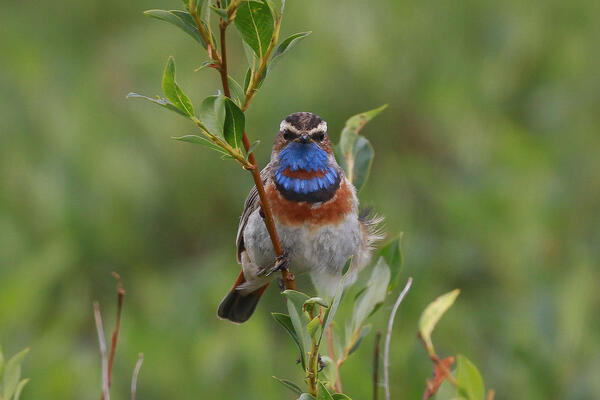
Male Bluethroat on the Seward Peninsula, Alaska
Male Bluethroat on the Seward Peninsula, Alaska. This photo was taken on the Seward Peninsula as part of the Changing Arctic Ecosystem Boreal-Arctic Transition Zone program.
Male Bluethroat on the Seward Peninsula, Alaska. This photo was taken on the Seward Peninsula as part of the Changing Arctic Ecosystem Boreal-Arctic Transition Zone program.

USGS - NOROCK Research team in the Northern Cascades.
USGS - NOROCK Research team in the Northern Cascades.USGS - NOROCK field team in the Northern Cascades studying Hoary marmots and American pika and snowpack dynamics.
USGS - NOROCK Research team in the Northern Cascades.
USGS - NOROCK Research team in the Northern Cascades.USGS - NOROCK field team in the Northern Cascades studying Hoary marmots and American pika and snowpack dynamics.

Fluorometer Retrieval
Research hydrologist Dr. Susannah Erwin retrieves fluorometer from the Upper Missouri River to download dye trace data.
Research hydrologist Dr. Susannah Erwin retrieves fluorometer from the Upper Missouri River to download dye trace data.

Night Sampling Boat
USGS fish biologist Dr. Pat Braaten and student contractor Garrett Cook inspect contents of a larval fish net during night sampling on the Upper Missouri River.
USGS fish biologist Dr. Pat Braaten and student contractor Garrett Cook inspect contents of a larval fish net during night sampling on the Upper Missouri River.

Hydraulic Habitat Assessment Boat
A U.S. Geological Survey hydraulic habitat assessment boat in not enough water.
A U.S. Geological Survey hydraulic habitat assessment boat in not enough water.

Merrimac River, Missouri
The Missouri Department of Conservation is frequently queried regarding the general status of endangered and threatened mussels in Missouri, a question that will remain incompletely answered until a sufficiently rigorous and comprehensive assessment and monitoring framework is implemented in Missouri.
The Missouri Department of Conservation is frequently queried regarding the general status of endangered and threatened mussels in Missouri, a question that will remain incompletely answered until a sufficiently rigorous and comprehensive assessment and monitoring framework is implemented in Missouri.

Night Sampling
USGS Fish Biologist Dave Combs searches through net contents for larval fish during night sampling on the Upper Missouri River.
USGS Fish Biologist Dave Combs searches through net contents for larval fish during night sampling on the Upper Missouri River.

Boat Launch for Night Sampling
USGS fish biologists launch at sunset on the Upper Missouri River for a night of sampling for larval pallid sturgeon.
USGS fish biologists launch at sunset on the Upper Missouri River for a night of sampling for larval pallid sturgeon.

Ichthyoplankton Sample
Typical contents of a net deployment showing larval fish, possibly pallid sturgeon.
Typical contents of a net deployment showing larval fish, possibly pallid sturgeon.

ADCP Boat
A US Geological Survey hydroacoustic survey boat measures velocity profiles on the Upper Missouri River.
A US Geological Survey hydroacoustic survey boat measures velocity profiles on the Upper Missouri River.

ADCP Data Review
Research hydrologist Dr. Susannah Erwin and hydrologic technician Brian Anderson inspect ADCP data on the Upper Missouri River.
Research hydrologist Dr. Susannah Erwin and hydrologic technician Brian Anderson inspect ADCP data on the Upper Missouri River.

Distribution of Free Embryos to Boats
Distribution of free embryos to boats in preparation for mass release.
Distribution of free embryos to boats in preparation for mass release.

Pre-Sample Briefing
Pre-deployment briefing for the Upper Missouri River Pallid Sturgeon Drift Study. Fish biologists and physical scientists from Montana Fish Wildlife and Parks, US Geological Survey, U.S. Fish and Wildlife Service, University of Montana, Nebraska Game and Parks Commission, and US Army Corps of Engineers go over the sample design and assignments.
Pre-deployment briefing for the Upper Missouri River Pallid Sturgeon Drift Study. Fish biologists and physical scientists from Montana Fish Wildlife and Parks, US Geological Survey, U.S. Fish and Wildlife Service, University of Montana, Nebraska Game and Parks Commission, and US Army Corps of Engineers go over the sample design and assignments.

Processing a Drift Sample
Student Contractor Garrett Cook processes a drift sample collected on June 27 shortly after the free embryos and beads were released. Note the small cluster of pallid sturgeon free embryos and green beads in the lower portion of the sorting tray. These embryos and beads were elements of the Upper Missouri River drift experiment.
Student Contractor Garrett Cook processes a drift sample collected on June 27 shortly after the free embryos and beads were released. Note the small cluster of pallid sturgeon free embryos and green beads in the lower portion of the sorting tray. These embryos and beads were elements of the Upper Missouri River drift experiment.

Larval Release
Simultaneous mass release of 700,000 free embryos from boats distributed across the channel of the Upper Missouri River.
Simultaneous mass release of 700,000 free embryos from boats distributed across the channel of the Upper Missouri River.

Dye Preparation
USGS scientists prepare to mix rhodamine-WT dye for the dye trace experiment. The suits are to keep the harmless dye off of clothing.
USGS scientists prepare to mix rhodamine-WT dye for the dye trace experiment. The suits are to keep the harmless dye off of clothing.

Monitoring riparian vegetation along the Colorado River
Monitoring riparian vegetation along the Colorado RiverMonitoring riparian vegetation along the Colorado River downstream of Glen Canyon Dam
Monitoring riparian vegetation along the Colorado River
Monitoring riparian vegetation along the Colorado RiverMonitoring riparian vegetation along the Colorado River downstream of Glen Canyon Dam

Pallid Sturgeon Embryo
Macro photo of a developing pallid sturgeon embryo. Developing embryo appears light gray
Macro photo of a developing pallid sturgeon embryo. Developing embryo appears light gray

Pallid Sturgeon Embryo
Developing pallid sturgeon embryo.
Developing pallid sturgeon embryo.