



A southwesterly view of Mount Konocti, which is one of the largest volcanic features in the Clear Lake Volcanic Field. Buckingham Peninsula can also be seen stretching from the base of Mount Konocti into the foreground toward the eastern shore of the lake. USGS photo by J.Ball
Images
California Volcano Observatory images.
Filter Total Items: 193

Mount Konocti, Clear Lake Volcanic Field
A southwesterly view of Mount Konocti, which is one of the largest volcanic features in the Clear Lake Volcanic Field. Buckingham Peninsula can also be seen stretching from the base of Mount Konocti into the foreground toward the eastern shore of the lake. USGS photo by J.Ball
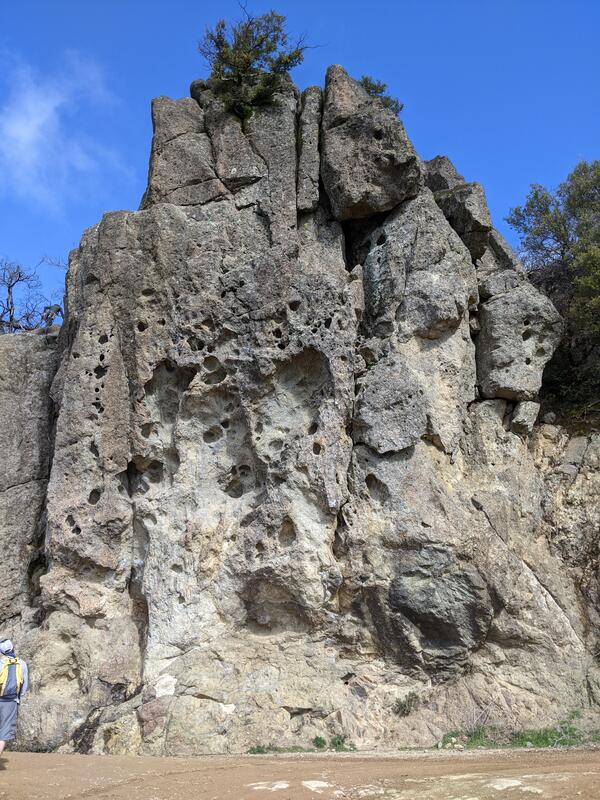
Intracaldera tuff on Mount St. Helena, Sonoma Volcanic Field, CA
Intracaldera tuff on Mount St. Helena, Sonoma Volcanic Field, CAAsh-flow tuff (ignimbrite) on the fire road leading to the summit of Mount St. Helena, mapped as part of the intracaldera Sonoma volcanics.
Intracaldera tuff on Mount St. Helena, Sonoma Volcanic Field, CA
Intracaldera tuff on Mount St. Helena, Sonoma Volcanic Field, CAAsh-flow tuff (ignimbrite) on the fire road leading to the summit of Mount St. Helena, mapped as part of the intracaldera Sonoma volcanics.
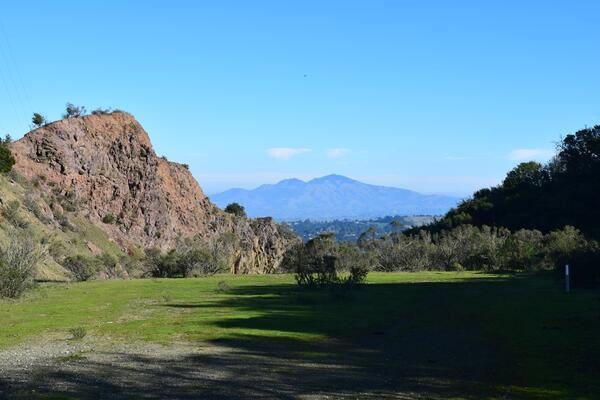
Berkeley Hills Volcanic Field
The Moraga Volcanics, one of several volcanic formations found in the Berkeley Hills Volcanic Field, frame a view of Mount Diablo to the east. The basaltic lava flows and their associated lapilli tuffs can be found in the Sibley Volcanic Regional Preserve. USGS photo by J. Ball
The Moraga Volcanics, one of several volcanic formations found in the Berkeley Hills Volcanic Field, frame a view of Mount Diablo to the east. The basaltic lava flows and their associated lapilli tuffs can be found in the Sibley Volcanic Regional Preserve. USGS photo by J. Ball
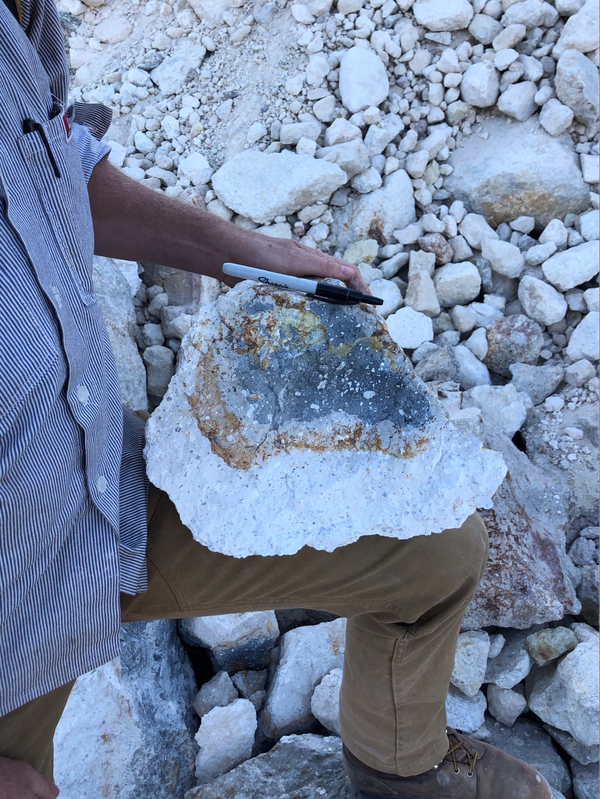
A heavily hydrothermally-altered sample of lava from the Clear Lake Volcanic Field
A heavily hydrothermally-altered sample of lava from the Clear Lake Volcanic FieldGeologists often break off the weathered surfaces of rocks in the field to get at the fresh, clean cores. This makes it easier to see the original mineralogy of the rock in question without oxidation, alteration, or other environmental impacts. USGS photo by D. Blatter
A heavily hydrothermally-altered sample of lava from the Clear Lake Volcanic Field
A heavily hydrothermally-altered sample of lava from the Clear Lake Volcanic FieldGeologists often break off the weathered surfaces of rocks in the field to get at the fresh, clean cores. This makes it easier to see the original mineralogy of the rock in question without oxidation, alteration, or other environmental impacts. USGS photo by D. Blatter
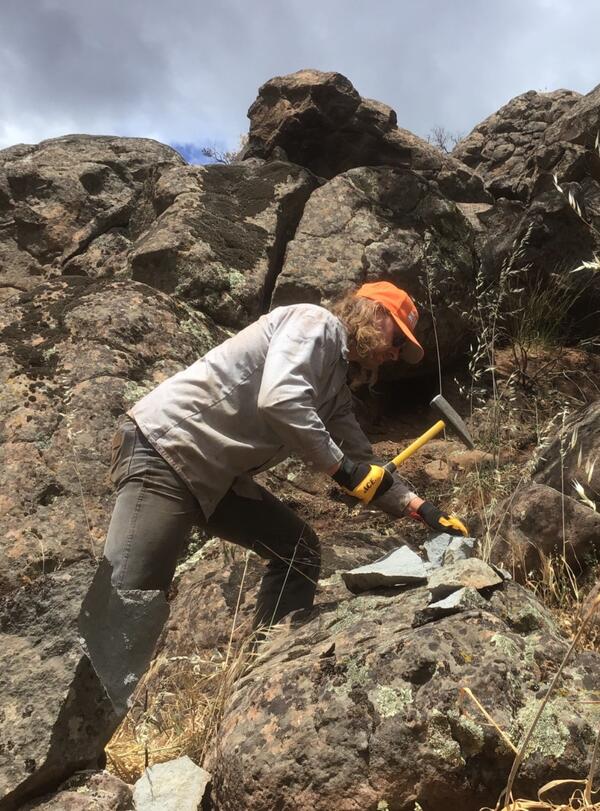
Breaking off the weathered surface of lavas in the Clear Lake Volcanic Field to sample the fresh, unaltered cores
Breaking off the weathered surface of lavas in the Clear Lake Volcanic Field to sample the fresh, unaltered coresGeologists often break off the weathered surfaces of rocks in the field to get at the fresh, clean cores. This makes it easier to see the original mineralogy of the rock in question without oxidation, alteration, or other environmental impacts. USGS photo by D. Blatter.
Breaking off the weathered surface of lavas in the Clear Lake Volcanic Field to sample the fresh, unaltered cores
Breaking off the weathered surface of lavas in the Clear Lake Volcanic Field to sample the fresh, unaltered coresGeologists often break off the weathered surfaces of rocks in the field to get at the fresh, clean cores. This makes it easier to see the original mineralogy of the rock in question without oxidation, alteration, or other environmental impacts. USGS photo by D. Blatter.

Basalt, Clear Lake Volcanic Field
These freshly excavated boulders along Spruce Grove Road are basalt, which is an iron and magnesium-rich rock that’s fairly uncommon in the Clear Lake Volcanic Field.
These freshly excavated boulders along Spruce Grove Road are basalt, which is an iron and magnesium-rich rock that’s fairly uncommon in the Clear Lake Volcanic Field.

Eruption Episode 3 rocks, Clear Lake Volcanic Field, California
Eruption Episode 3 rocks, Clear Lake Volcanic Field, CaliforniaEruption episode 3 is the most voluminous in the history of the Clear Lake Volcanic Field. Episode 3 rocks are of intermediate composition, primarily dacite, and make up many of the topographic high points in the field, including Mt. Konocti, where this photo is taken.
Eruption Episode 3 rocks, Clear Lake Volcanic Field, California
Eruption Episode 3 rocks, Clear Lake Volcanic Field, CaliforniaEruption episode 3 is the most voluminous in the history of the Clear Lake Volcanic Field. Episode 3 rocks are of intermediate composition, primarily dacite, and make up many of the topographic high points in the field, including Mt. Konocti, where this photo is taken.

CalVO geologists take paleomag samples from a basaltic andesite lava flow on Ash Creek Butte
CalVO geologists take paleomag samples from a basaltic andesite lava flow on Ash Creek ButteAndy Calvert and Tony Pivarunas drill into the face of a lava flow on Ash Creek Butte, a Pleistocene shield volcano northeast of Mount Shasta. USGS photo by Dawnika Blatter
CalVO geologists take paleomag samples from a basaltic andesite lava flow on Ash Creek Butte
CalVO geologists take paleomag samples from a basaltic andesite lava flow on Ash Creek ButteAndy Calvert and Tony Pivarunas drill into the face of a lava flow on Ash Creek Butte, a Pleistocene shield volcano northeast of Mount Shasta. USGS photo by Dawnika Blatter

Station PR05 is part of the Mount Rainier lahar detection network.
Station PR05 is part of the Mount Rainier lahar detection network.USGS-Cascades Volcano Observatory geophysicist Rebecca Kramer works on station PR05, which is part of the Mount Rainier lahar detection network (Mount Rainier is pictured in the distance). The purpose of the site visit was to upgrade the power system and deploy infrasound equipment.
Station PR05 is part of the Mount Rainier lahar detection network.
Station PR05 is part of the Mount Rainier lahar detection network.USGS-Cascades Volcano Observatory geophysicist Rebecca Kramer works on station PR05, which is part of the Mount Rainier lahar detection network (Mount Rainier is pictured in the distance). The purpose of the site visit was to upgrade the power system and deploy infrasound equipment.

Clearlake Oaks cinder cone, Clear Lake Volcanic Field, California
Clearlake Oaks cinder cone, Clear Lake Volcanic Field, CaliforniaCinder cones (or scoria cones) are relatively small, steep-sided volcanoes that are constructed around a single vent when lava is ejected into the air, breaks into smaller pieces, and builds up around the sides of the vent. This photo is looking across the quarry which exposes the interior of a cinder cone east of Clearlake Oaks in the Clear Lake Volcanic Field.
Clearlake Oaks cinder cone, Clear Lake Volcanic Field, California
Clearlake Oaks cinder cone, Clear Lake Volcanic Field, CaliforniaCinder cones (or scoria cones) are relatively small, steep-sided volcanoes that are constructed around a single vent when lava is ejected into the air, breaks into smaller pieces, and builds up around the sides of the vent. This photo is looking across the quarry which exposes the interior of a cinder cone east of Clearlake Oaks in the Clear Lake Volcanic Field.

Buckingham Peninsula, Clear Lake, CA
Located at the midpoint of Clear Lake in Lake County, California, Buckingham Peninsula shows evidence of young explosive volcanism in the Clear Lake Volcanic Field. Little Borax Lake, enclosed within the Buckingham golf course, is a water-filled maar crater, as is Horseshoe Bay to its northeast. USGS photo by J. Ball.
Located at the midpoint of Clear Lake in Lake County, California, Buckingham Peninsula shows evidence of young explosive volcanism in the Clear Lake Volcanic Field. Little Borax Lake, enclosed within the Buckingham golf course, is a water-filled maar crater, as is Horseshoe Bay to its northeast. USGS photo by J. Ball.
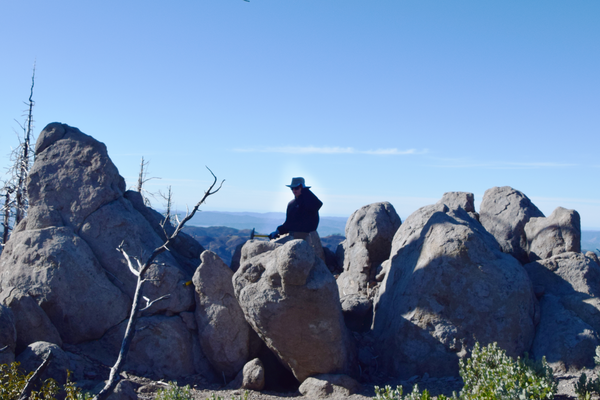
Sampling lava flows on Cobb Mountain, California
Collecting samples on Cobb Mountain south of the Clear Lake Volcanic Field helps CalVO scientists unravel the eruptive history of the area. By examining these samples on the macro and micro scales, they can derive the geochemical evolution and eruption age of the lavas that form Cobb Mountain. USGS photo by Sally Stevens.
Collecting samples on Cobb Mountain south of the Clear Lake Volcanic Field helps CalVO scientists unravel the eruptive history of the area. By examining these samples on the macro and micro scales, they can derive the geochemical evolution and eruption age of the lavas that form Cobb Mountain. USGS photo by Sally Stevens.

A digital elevation map of Yellowstone Caldera
Rhyolite lavas in the Yellowstone Caldera younger than 631,000 years
Rhyolite lavas in the Yellowstone Caldera younger than 631,000 years

Thurston Lake and Mount Konocti, Clear Lake Volcanic Field
Thurston Lake and Mount Konocti, Clear Lake Volcanic FieldThurston Lake and Mount Konocti, Clear Lake Volcanic Field, California.
Thurston Lake and Mount Konocti, Clear Lake Volcanic Field
Thurston Lake and Mount Konocti, Clear Lake Volcanic FieldThurston Lake and Mount Konocti, Clear Lake Volcanic Field, California.

Mount Konocti as seen from the town of Clear Lake.
Mount Konocti as seen from the town of Clear Lake.Mount Konocti as seen from the town of Clear Lake.
Mount Konocti as seen from the town of Clear Lake.
Mount Konocti as seen from the town of Clear Lake.Mount Konocti as seen from the town of Clear Lake.

Mammoth Mountain
View of the Mammoth Mountain lava dome complex overlooking Horseshoe Lake.
View of the Mammoth Mountain lava dome complex overlooking Horseshoe Lake.

Eddy covariance station at Mammoth Mountain, California
Eddy covariance station at Mammoth Mountain, CaliforniaPhotograph of permanent eddy covariance station installed since 2014 in area of volcanic CO2 emissions on Mammoth Mountain, California. USGS photo by Jennifer Lewicki, August 2019.
Eddy covariance station at Mammoth Mountain, California
Eddy covariance station at Mammoth Mountain, CaliforniaPhotograph of permanent eddy covariance station installed since 2014 in area of volcanic CO2 emissions on Mammoth Mountain, California. USGS photo by Jennifer Lewicki, August 2019.
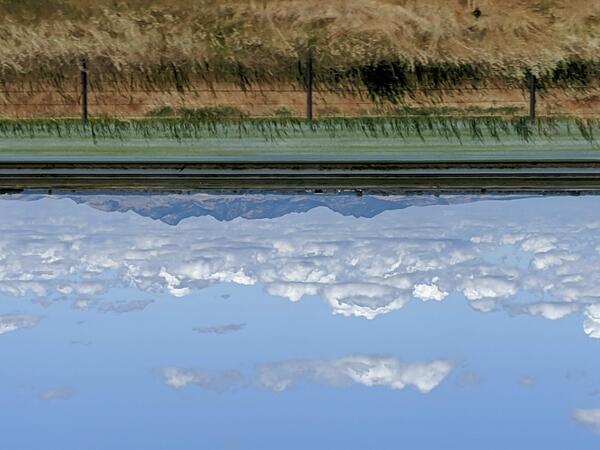
Sutter Buttes
Located 50 miles north-northwest of Sacramento, Sutter Buttes are the only volcano in the Central Valley. They consist of a central core of andesite, dacite, and rhyolite domes and flows. These are surrounded by a large apron of fragmental volcanic debris.
Located 50 miles north-northwest of Sacramento, Sutter Buttes are the only volcano in the Central Valley. They consist of a central core of andesite, dacite, and rhyolite domes and flows. These are surrounded by a large apron of fragmental volcanic debris.

Rear-arc basalt lava outcrop
A 3-4m (10-12 ft) high outcrop of basalt lava, part of a broader lava flow. These flows were erupted about 300,000 years ago following basalt dike intrusions in a rear-arc region of northern California. The eruptions of three of these flows are thought to have taken place within several hundred years of each other.
A 3-4m (10-12 ft) high outcrop of basalt lava, part of a broader lava flow. These flows were erupted about 300,000 years ago following basalt dike intrusions in a rear-arc region of northern California. The eruptions of three of these flows are thought to have taken place within several hundred years of each other.

Simplified geologic map (left) and diagrammatic cross section (right) of Long Valley Caldera.
Simplified geologic map (left) and diagrammatic cross section (right) of Long Valley Caldera.Simplified geologic map (left) and diagrammatic cross section (right) of Long Valley Caldera. The resurgent dome, Doe Ridge, Mammoth Mountain, and the Inyo Craters and Domes all reflect volcanic activity since 760,000 years ago, when a giant eruption formed the caldera.
Simplified geologic map (left) and diagrammatic cross section (right) of Long Valley Caldera.
Simplified geologic map (left) and diagrammatic cross section (right) of Long Valley Caldera.Simplified geologic map (left) and diagrammatic cross section (right) of Long Valley Caldera. The resurgent dome, Doe Ridge, Mammoth Mountain, and the Inyo Craters and Domes all reflect volcanic activity since 760,000 years ago, when a giant eruption formed the caldera.

Lidar image of Rocky Ridge and raised shorelines along Lake Tahoe
Lidar image of Rocky Ridge and raised shorelines along Lake TahoeHigh-resolution, bare-earth, airborne light detection and ranging (LiDAR) image, looking obliquely northwest into Rocky Ridge.
Lidar image of Rocky Ridge and raised shorelines along Lake Tahoe
Lidar image of Rocky Ridge and raised shorelines along Lake TahoeHigh-resolution, bare-earth, airborne light detection and ranging (LiDAR) image, looking obliquely northwest into Rocky Ridge.