Western California volcanoes geonarrative map screenshot
Western California volcanoes geonarrative map screenshotWestern California volcanoes geonarrative map screenshot from Western California Volcano Research Maps


Official websites use .gov
A .gov website belongs to an official government organization in the United States.

Secure .gov websites use HTTPS
A lock () or https:// means you’ve safely connected to the .gov website. Share sensitive information only on official, secure websites.

California Volcano Observatory images.
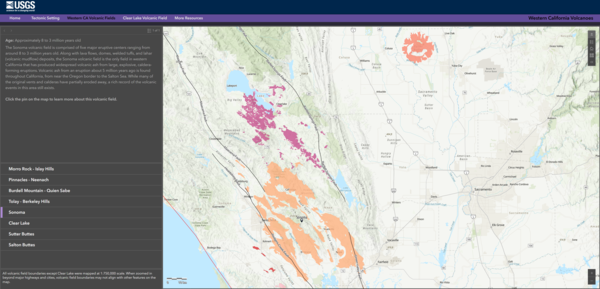
Western California volcanoes geonarrative map screenshot from Western California Volcano Research Maps
Western California volcanoes geonarrative map screenshot from Western California Volcano Research Maps
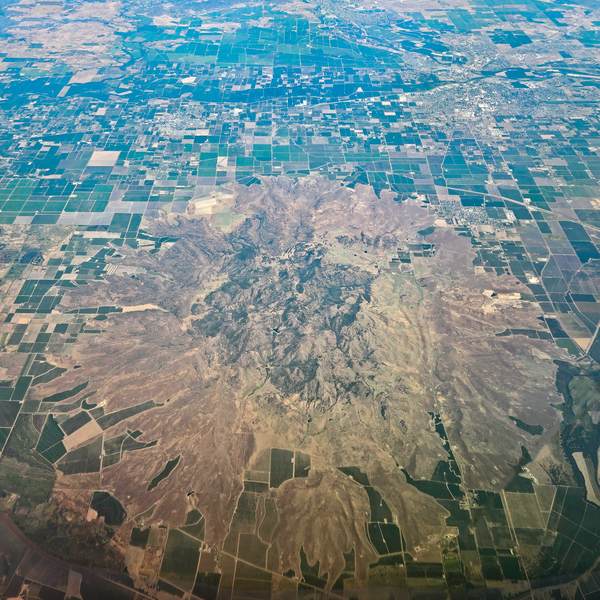
This aerial photo, taken from about 40,000 feet and looking east, highlights the rugged central lava domes and smooth circular debris apron of the Sutter Buttes. USGS photo by J. Ball.
This aerial photo, taken from about 40,000 feet and looking east, highlights the rugged central lava domes and smooth circular debris apron of the Sutter Buttes. USGS photo by J. Ball.
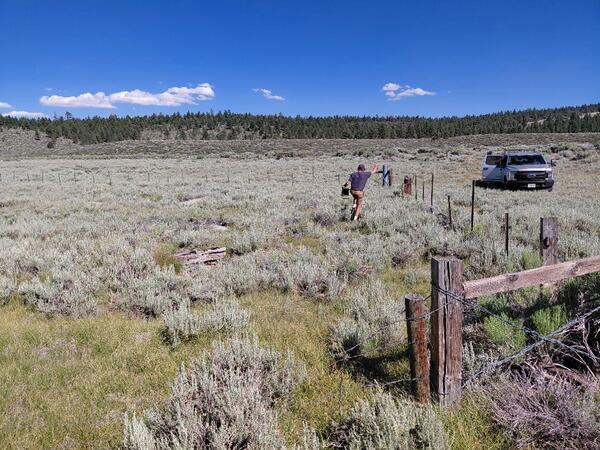
A USGS scientist pulls a conductivity sensor out of a water well. These wells are usually drilled for other purposes (like livestock or agriculture) but are useful for scientists doing geodetic surveys. USGS photo by J. Crozier.
A USGS scientist pulls a conductivity sensor out of a water well. These wells are usually drilled for other purposes (like livestock or agriculture) but are useful for scientists doing geodetic surveys. USGS photo by J. Crozier.
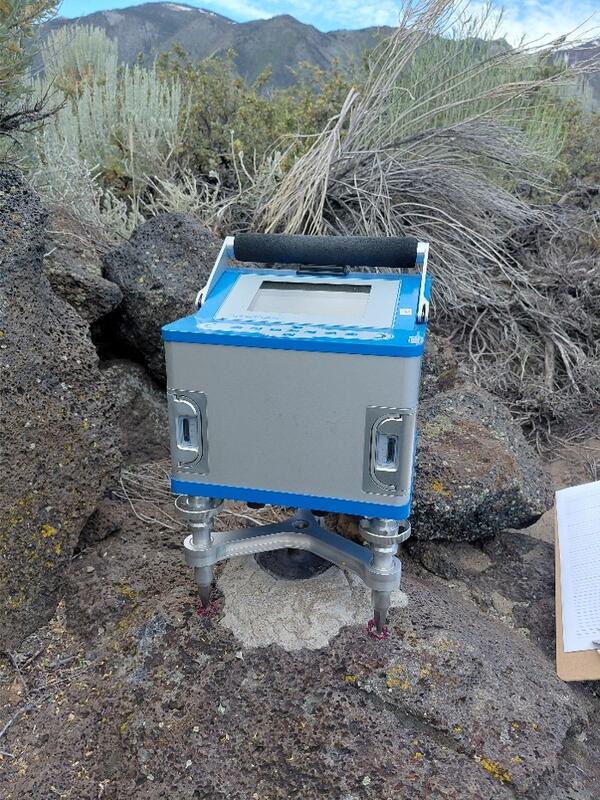
Gravimeters, or "gravity meters", measure the strength of the Earth's gravitational field at any given point. This value may be affected by ground elevation, the density of the rock or material on which the gravimeter sits, and the presence of magma or fluids beneath the Earth's surface. USGS photo by J. Crozier.
Gravimeters, or "gravity meters", measure the strength of the Earth's gravitational field at any given point. This value may be affected by ground elevation, the density of the rock or material on which the gravimeter sits, and the presence of magma or fluids beneath the Earth's surface. USGS photo by J. Crozier.
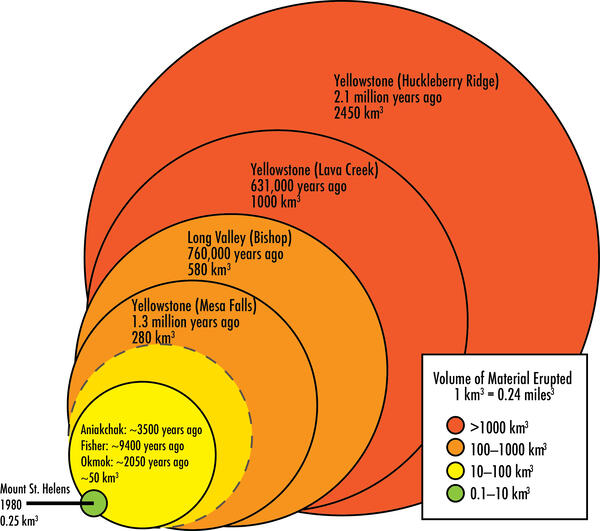
Comparison of caldera-forming eruption sizes (by volume of erupted magma) in the U.S., modified from an AVO/USGS figure. Also included for reference is the 1980 eruption of Mount St. Helens. The three caldera-forming eruptions in Alaska are more than 200 times the size of the 1980 eruption of Mount St.
Comparison of caldera-forming eruption sizes (by volume of erupted magma) in the U.S., modified from an AVO/USGS figure. Also included for reference is the 1980 eruption of Mount St. Helens. The three caldera-forming eruptions in Alaska are more than 200 times the size of the 1980 eruption of Mount St.
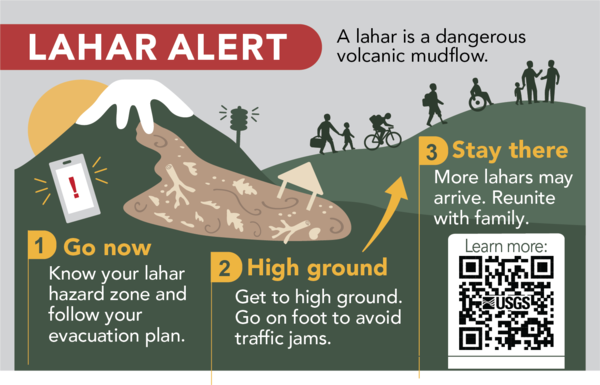
A lahar is a volcanic mudflow. Learn if you are if you are in a lahar hazard zone and how to evacuate to high ground. If you are in a lahar hazard zone and get a lahar alert - go now! Every second matters.
A lahar is a volcanic mudflow. Learn if you are if you are in a lahar hazard zone and how to evacuate to high ground. If you are in a lahar hazard zone and get a lahar alert - go now! Every second matters.
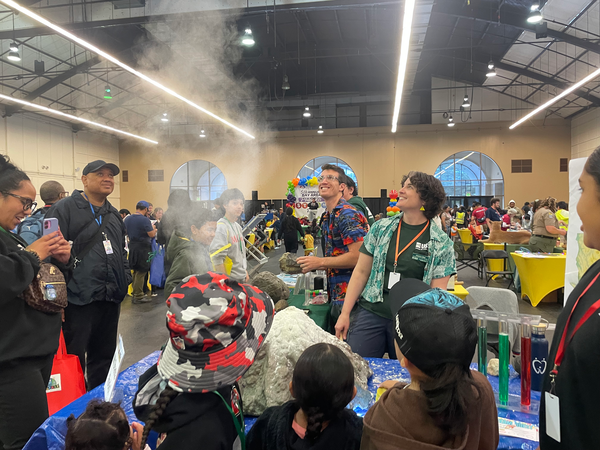
An eruption of the tabletop "Mount Shasta" using cornstarch as volcanic ash and puffed rice cereal as "lava bombs". USGS photo by M. Glasgow.
An eruption of the tabletop "Mount Shasta" using cornstarch as volcanic ash and puffed rice cereal as "lava bombs". USGS photo by M. Glasgow.
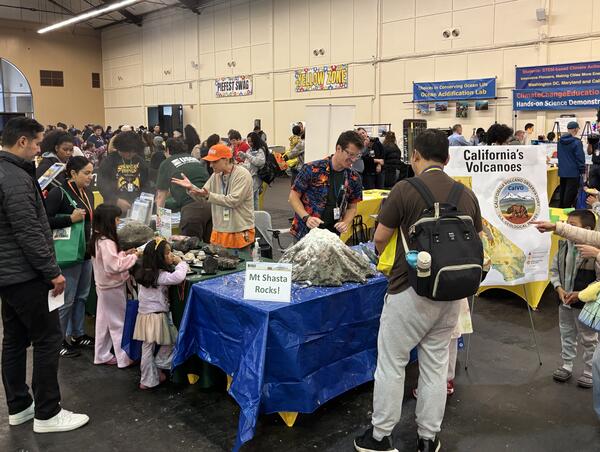
CalVO scientists explaining the differences between lava types to several future volcanologists while "Mount Shasta" prepares for its next eruption. USGS photo by J. Ball
CalVO scientists explaining the differences between lava types to several future volcanologists while "Mount Shasta" prepares for its next eruption. USGS photo by J. Ball
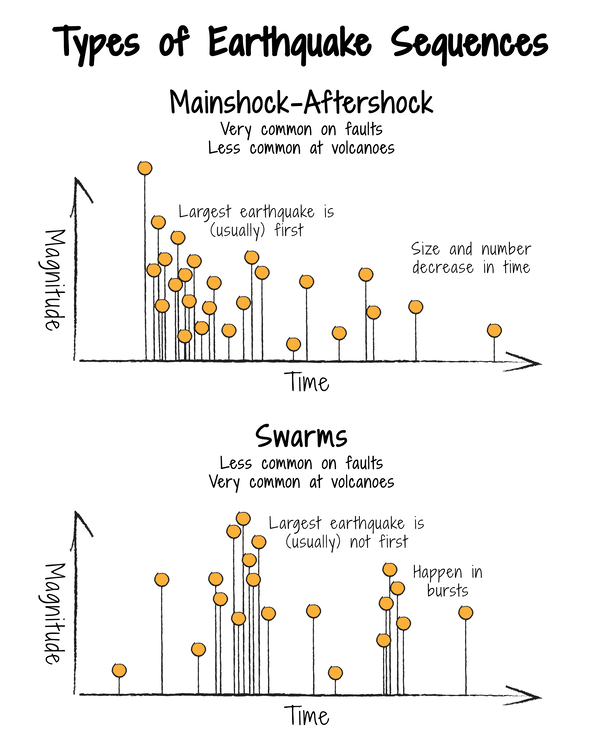
These simplified plots of earthquake magnitude versus time show the differences between tectonic earthquake sequences and magmatic earthquake swarms. Figure by Alicia Hotovec-Ellis, USGS.
These simplified plots of earthquake magnitude versus time show the differences between tectonic earthquake sequences and magmatic earthquake swarms. Figure by Alicia Hotovec-Ellis, USGS.
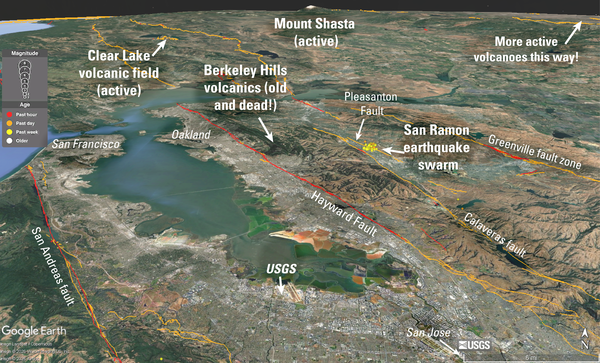
This oblique Google Earth map shows the location of the 2026 San Ramon earthquake swarm, along with notable faults in the San Francisco Bay area and the nearest volcanic areas to the swarm. Google Earth image modified by J. Ball, USGS.
This oblique Google Earth map shows the location of the 2026 San Ramon earthquake swarm, along with notable faults in the San Francisco Bay area and the nearest volcanic areas to the swarm. Google Earth image modified by J. Ball, USGS.
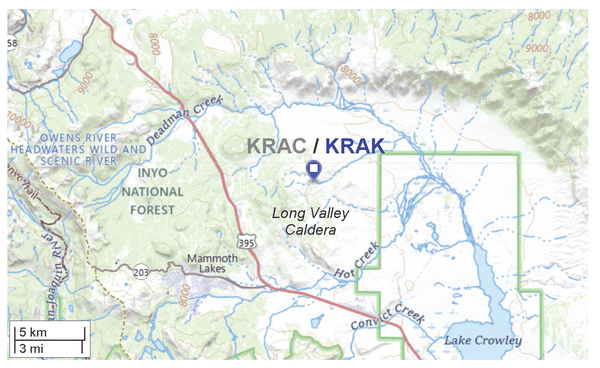
The location of GPS station KRAC and its predecessor KRAK, slightly north of the center of deflation in Long Valley. USGS figure by Josh Crozier and Alicia Hotovec-Ellis.
The location of GPS station KRAC and its predecessor KRAK, slightly north of the center of deflation in Long Valley. USGS figure by Josh Crozier and Alicia Hotovec-Ellis.
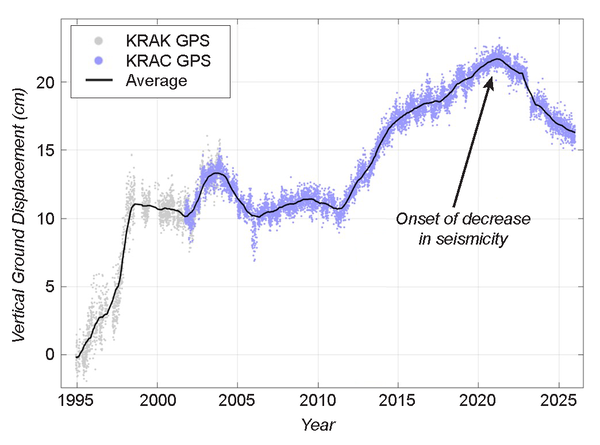
The average of individual measurements from GPS station KRAC/KRAK shows about 6 cm of ground subsidence since 2021. The multi-year deflation stands out above smaller fluctuations caused by noise in the data and seasonal water infiltration (the peaks and troughs in the dots for individual measurements). USGS figure by Josh Crozier and Alicia Hotovec-Ellis.
The average of individual measurements from GPS station KRAC/KRAK shows about 6 cm of ground subsidence since 2021. The multi-year deflation stands out above smaller fluctuations caused by noise in the data and seasonal water infiltration (the peaks and troughs in the dots for individual measurements). USGS figure by Josh Crozier and Alicia Hotovec-Ellis.
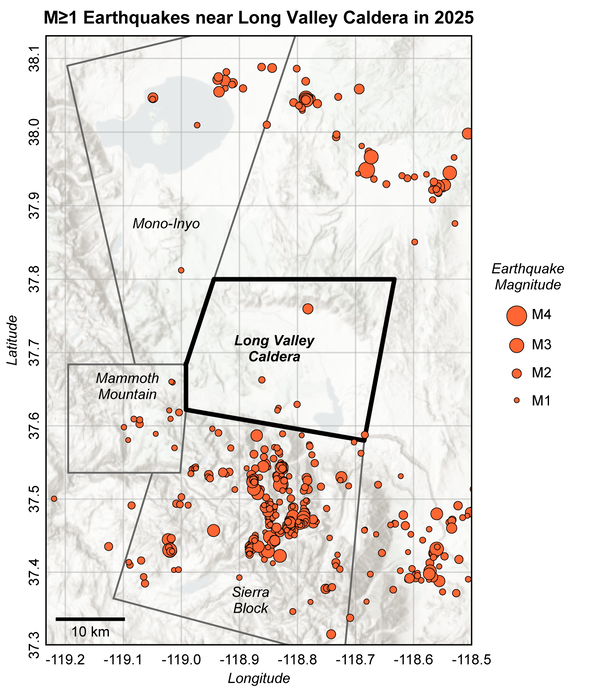
Locations of earthquakes of at least magnitude 1.0 in 2025 and the outlines of the boxes CalVO uses to count earthquakes around Long Valley. Only 6 earthquakes were located inside the Long Valley Caldera box. (Earthquake location data from Northern California Seismic Network.) Figure by Alicia Hotovec-Ellis, USGS.
Locations of earthquakes of at least magnitude 1.0 in 2025 and the outlines of the boxes CalVO uses to count earthquakes around Long Valley. Only 6 earthquakes were located inside the Long Valley Caldera box. (Earthquake location data from Northern California Seismic Network.) Figure by Alicia Hotovec-Ellis, USGS.
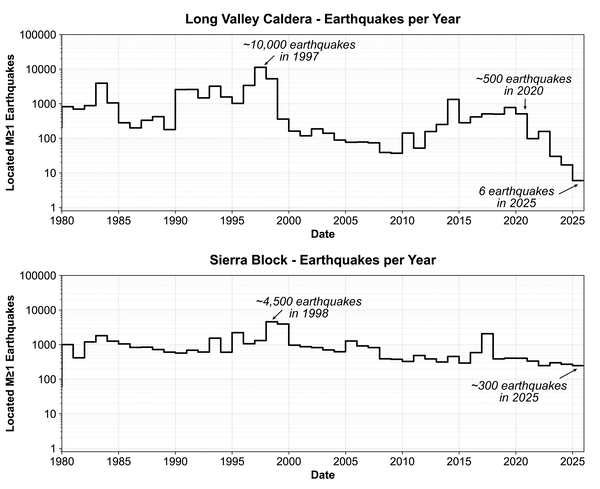
Graphs of the number of earthquakes located each year since 1980 in the Long Valley Caldera and nearby Sierra Block monitoring boxes. Note that the number of earthquakes on the left shown on a logarithmic scale, which means they increase an order of magnitude with each "step." Figure by Alicia Hotovec-Ellis, USGS.
Graphs of the number of earthquakes located each year since 1980 in the Long Valley Caldera and nearby Sierra Block monitoring boxes. Note that the number of earthquakes on the left shown on a logarithmic scale, which means they increase an order of magnitude with each "step." Figure by Alicia Hotovec-Ellis, USGS.
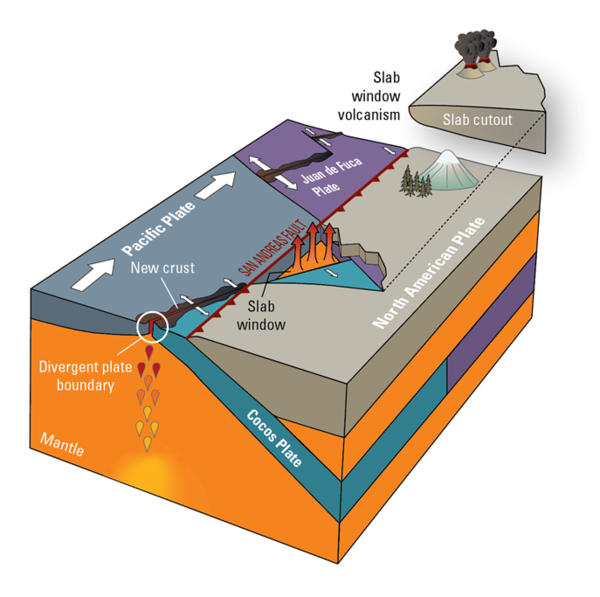
This figure shows an approximation of the tectonic plate geometry of western California as it existed roughly 20 million years ago. A piece of the North American tectonic plate has been cut out to show how a slab window is formed when a spreading ridge is subducted.
This figure shows an approximation of the tectonic plate geometry of western California as it existed roughly 20 million years ago. A piece of the North American tectonic plate has been cut out to show how a slab window is formed when a spreading ridge is subducted.
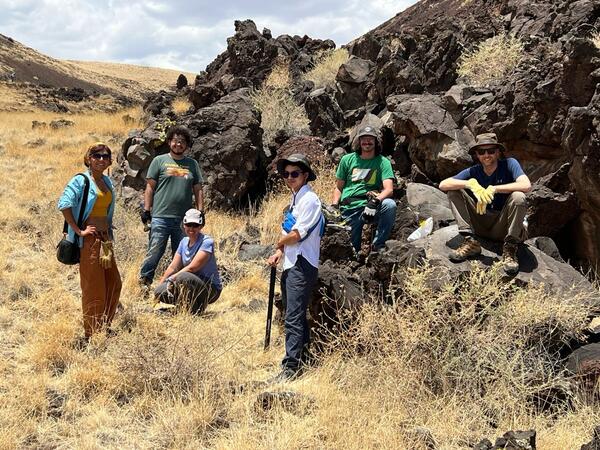
Students and researchers in front of a 50,000-year-old lava flow. Left to right: Atzi Olivarez, Edwin Sis Figueroa, Marissa Mnich (Sonoma State University), Darrian Ellis-Hardin (San Jose State University), Jackson Kaiser (Sonoma State University), and Mark Stelten (USGS). USGS photo by Dawnika Blatter.
Students and researchers in front of a 50,000-year-old lava flow. Left to right: Atzi Olivarez, Edwin Sis Figueroa, Marissa Mnich (Sonoma State University), Darrian Ellis-Hardin (San Jose State University), Jackson Kaiser (Sonoma State University), and Mark Stelten (USGS). USGS photo by Dawnika Blatter.
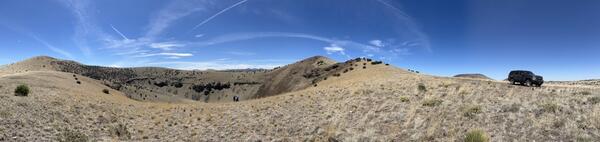
Cerro Hueco maar crater: a giant hole blasted though preexisting rocks by magma explosively interacting with groundwater. The gently-sloping cone surrounding the crater was formed by layers of debris piling up over the course of the eruption. Three people are standing on the crater rim for scale. USGS photo by Dawnika Blatter.
Cerro Hueco maar crater: a giant hole blasted though preexisting rocks by magma explosively interacting with groundwater. The gently-sloping cone surrounding the crater was formed by layers of debris piling up over the course of the eruption. Three people are standing on the crater rim for scale. USGS photo by Dawnika Blatter.
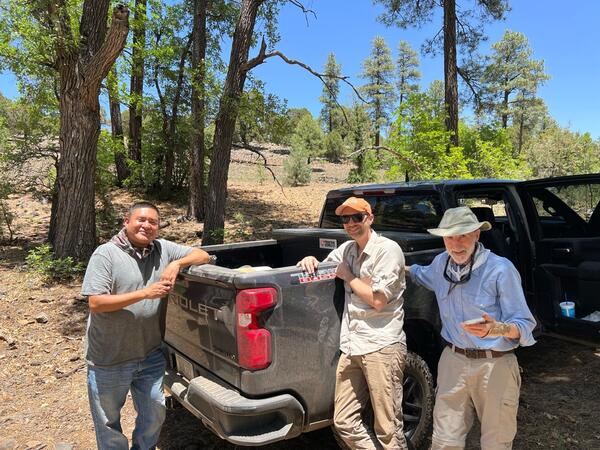
Javis Davis (left, White Mountain Apache Tribe, Hydrologist), Mark Stelten (middle, USGS Research geologist), and Chris Condit (right, University of Massachusetts, Amherst Emeritus Professor) with a lava flow in the background. USGS photo by Dawnika Blatter.
Javis Davis (left, White Mountain Apache Tribe, Hydrologist), Mark Stelten (middle, USGS Research geologist), and Chris Condit (right, University of Massachusetts, Amherst Emeritus Professor) with a lava flow in the background. USGS photo by Dawnika Blatter.
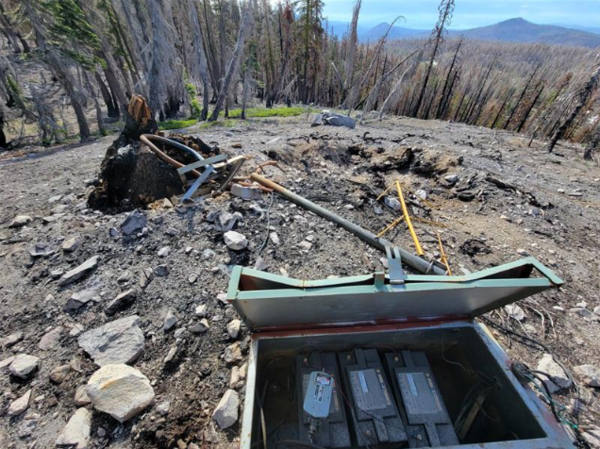
This seismic station in the Lassen Volcanic Center was damaged during the Dixie Fire of 2021, which burned huge swathes of forest in the Lassen Volcanic National Park. Above-ground equipment, including the tree that held the antenna and solar panel above winter snows, was destroyed; belowground seismic sensors were recoverable. USGS photo by Ryan Presser, NCSN.
This seismic station in the Lassen Volcanic Center was damaged during the Dixie Fire of 2021, which burned huge swathes of forest in the Lassen Volcanic National Park. Above-ground equipment, including the tree that held the antenna and solar panel above winter snows, was destroyed; belowground seismic sensors were recoverable. USGS photo by Ryan Presser, NCSN.
The California Volcano Observatory was created in 2012. Its logo shows Mount Shasta with a California grizzly bear (extinct) in the foreground.
The California Volcano Observatory was created in 2012. Its logo shows Mount Shasta with a California grizzly bear (extinct) in the foreground.
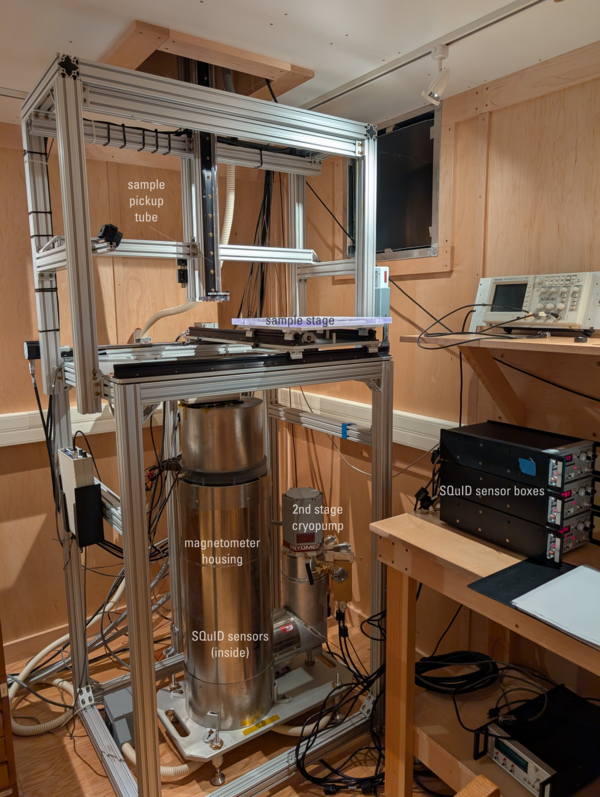
The cryogenic magnetometer within the shielded room in the U.S. Geological Survey Paleomagnetics Laboratory. Major features of the cryogenic magnetometer are labeled. Picture by A. Pivarunas (U.S. Geological Survey)
The cryogenic magnetometer within the shielded room in the U.S. Geological Survey Paleomagnetics Laboratory. Major features of the cryogenic magnetometer are labeled. Picture by A. Pivarunas (U.S. Geological Survey)