U.S. flag

An official website of the United States government

Images

Hawaiian Volcano Observatory images of eruptive activity, field work, and more.

Filter Total Items: 3744
Color photograph of lava fountains
November 25, 2025—Kīlauea summit eruption episode 37 lava fountains

Following several days of precursory overflows and low dome fountaining, episode 37 of the Kīlauea summit eruption began yesterday at 2:30 p.m. with lava fountaining from the north vent.  A wide fountain developed, eventually reaching heights of 500-600 ft (150-180 meters), sending flows across a broad portion of the crater floor.

Following several days of precursory overflows and low dome fountaining, episode 37 of the Kīlauea summit eruption began yesterday at 2:30 p.m. with lava fountaining from the north vent.  A wide fountain developed, eventually reaching heights of 500-600 ft (150-180 meters), sending flows across a broad portion of the crater floor.

Telephoto of lava flow
November 25, 2025—Kīlauea summit eruption episode 37 lava flow

The telephoto shows lava flowing east across the floor of Halemaʻumaʻu crater, fed by the lava fountains in the west part of the crater.  Preliminary estimates suggest that approximately 6 million cubic meters (7.8 million cubic yards) of lava were erupted during episode 37, based on ground deformation data. USGS photo by M. Patrick. 

The telephoto shows lava flowing east across the floor of Halemaʻumaʻu crater, fed by the lava fountains in the west part of the crater.  Preliminary estimates suggest that approximately 6 million cubic meters (7.8 million cubic yards) of lava were erupted during episode 37, based on ground deformation data. USGS photo by M. Patrick. 

Color map showing area covered by lava flows in recent volcanic eruption
November 25, 2025—Kīlauea summit eruption reference map

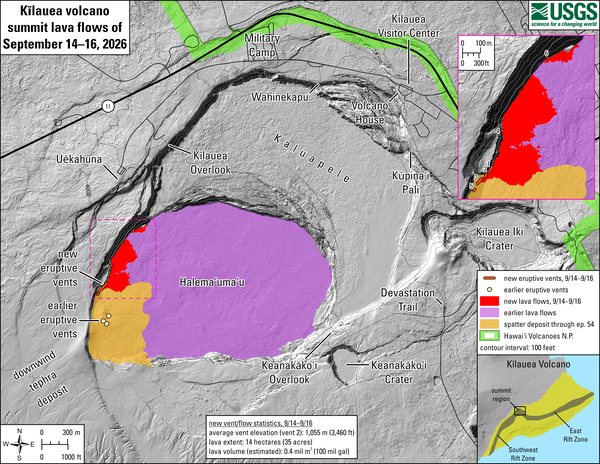
This reference map depicts the Kīlauea summit eruption within Halema‘uma‘u crater that began on December 23, 2024. The data for this map were collected during a Hawaiian Volcano Observatory helicopter overflight on November 24, 2025; as such, the provided statistics are reflective of the first thirty-six episodes of the eruption through November 9.

This reference map depicts the Kīlauea summit eruption within Halema‘uma‘u crater that began on December 23, 2024. The data for this map were collected during a Hawaiian Volcano Observatory helicopter overflight on November 24, 2025; as such, the provided statistics are reflective of the first thirty-six episodes of the eruption through November 9.

Color photograph of scientist monitoring a volcanic eruption
November 25, 2025—Monitoring Kīlauea summit eruption episode 37

USGS Hawaiian Volcano Observatory scientists document lava fountains and lava flows during episode 37 of the ongoing Kīlauea summit eruption in Halemaʻumaʻu crater. From the rim of the crater, scientists can use a laser rangefinding device to approximately measure the lava fountain heights, and distance the lava flows have travelled. USGS photo by M.

USGS Hawaiian Volcano Observatory scientists document lava fountains and lava flows during episode 37 of the ongoing Kīlauea summit eruption in Halemaʻumaʻu crater. From the rim of the crater, scientists can use a laser rangefinding device to approximately measure the lava fountain heights, and distance the lava flows have travelled. USGS photo by M.

Color telephotograph of lava streams at night
November 25, 2025—Kīlauea summit eruption episode 37 lava flows

Telephoto view of lava flows on the floor of Halemaʻumaʻu crater. These lava flows were erupted during episode 37 of lava fountaining at the summit of Kīlauea, which was active for about 9 hours on November 25. USGS photo by M. Patrick. 

Telephoto view of lava flows on the floor of Halemaʻumaʻu crater. These lava flows were erupted during episode 37 of lava fountaining at the summit of Kīlauea, which was active for about 9 hours on November 25. USGS photo by M. Patrick. 

Color photograph of scientists in orange flight suits on a volcanic landscape
November 24, 2025 — Geologists visit Halema‘uma‘u

USGS Hawaiian Volcano Observatory scientists landed briefly on Halema‘uma‘u crater floor on November 24, 2025, during a Kīlauea summit monitoring overflight.

USGS Hawaiian Volcano Observatory scientists landed briefly on Halema‘uma‘u crater floor on November 24, 2025, during a Kīlauea summit monitoring overflight.

Color photograph of volcanic hill that is degassing
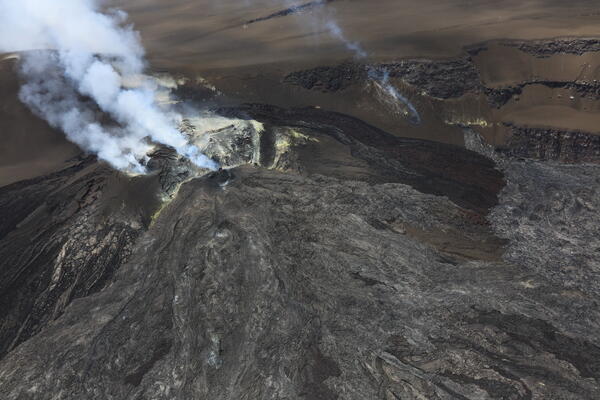
November 24, 2025 — The growing puʻu on the rim of Halema‘uma‘u

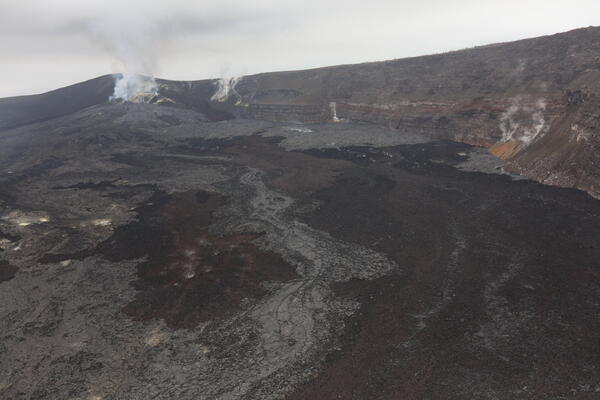
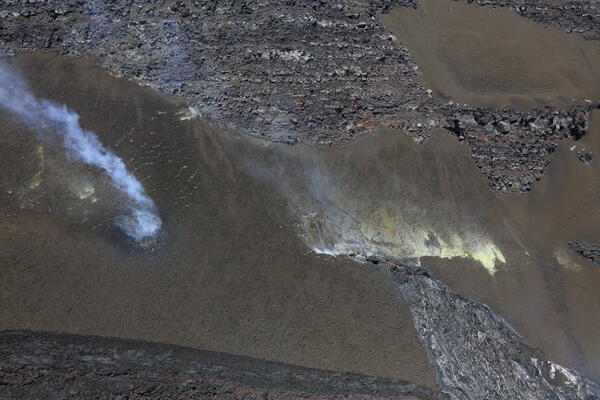
This aerial view looking to the southeast shows the volcanic gas plume being emitted from the vents of the ongoing Halema‘uma‘u eruption at Kīlauea summit.

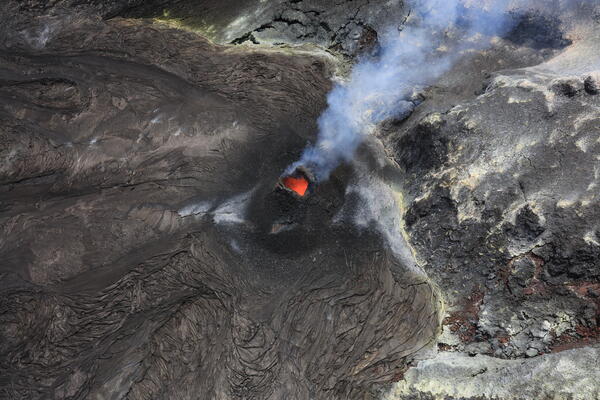
Color photograph of volcanic vent that is degassing
November 24, 2025 — View into the Halema‘uma‘u vents

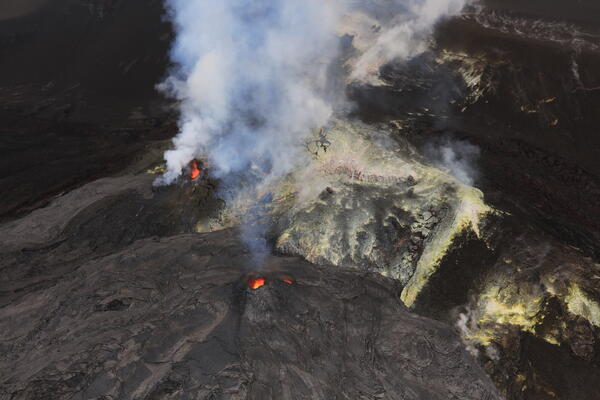
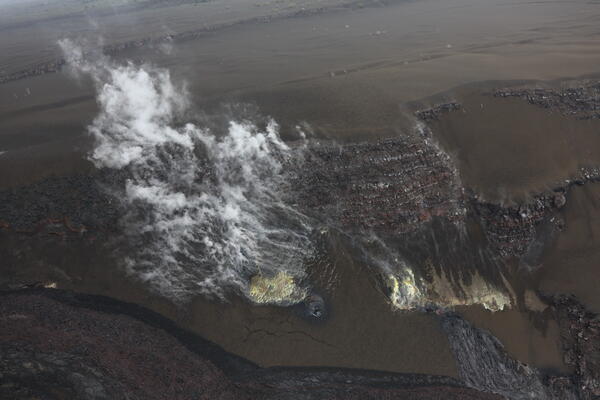
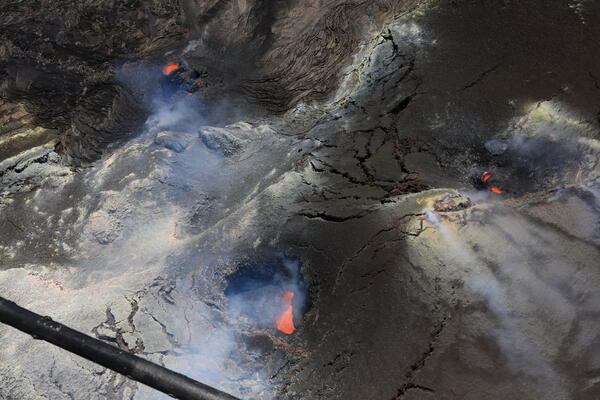
An aerial view looking down into the south vent (center) of the ongoing Kīlauea summit eruption within Halema‘uma‘u crater. A tiny spot of orange incandescent lava was visible deep in the south vent on the morning of November 24 during a USGS Hawaiian Volcano Observatory monitoring helicopter overflight.

An aerial view looking down into the south vent (center) of the ongoing Kīlauea summit eruption within Halema‘uma‘u crater. A tiny spot of orange incandescent lava was visible deep in the south vent on the morning of November 24 during a USGS Hawaiian Volcano Observatory monitoring helicopter overflight.

Color photograph of scientist documenting a volcanic vent
November 24, 2025 — Geologist photographs vents from floor of Halema‘uma‘u

During a helicopter overflight on November 24, USGS Hawaiian Volcano Observatory scientists had the opportunity to document the active vents from the floor of Halema‘uma‘u crater, within Kaluapele (Kīlauea summit caldera).

During a helicopter overflight on November 24, USGS Hawaiian Volcano Observatory scientists had the opportunity to document the active vents from the floor of Halema‘uma‘u crater, within Kaluapele (Kīlauea summit caldera).

Color photograph of scientist collecting sample of cooled lava flow
November 24, 2025 — Geologist collects sample within Halema‘uma‘u

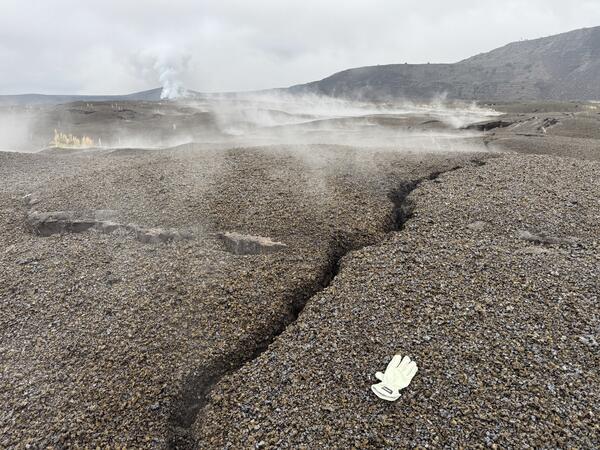
On November 24, a USGS Hawaiian Volcano Observatory helicopter overflight was able to land on the floor of Halema‘uma‘u crater for scientists to collect a sample of cooled lava from a recent overflow of the Kīlauea summit eruptive vents.

On November 24, a USGS Hawaiian Volcano Observatory helicopter overflight was able to land on the floor of Halema‘uma‘u crater for scientists to collect a sample of cooled lava from a recent overflow of the Kīlauea summit eruptive vents.

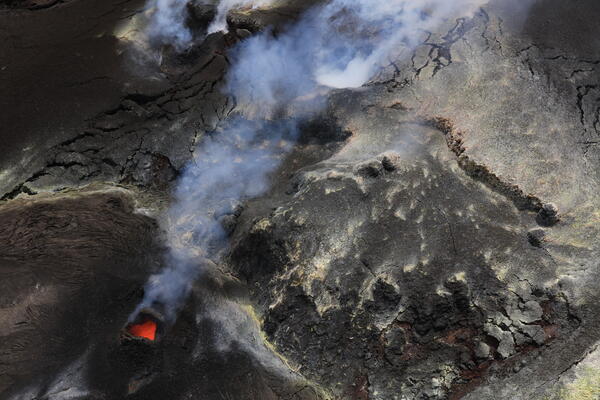
Color image of volcanic vent
November 24, 2025 — View into the Halema‘uma‘u vents

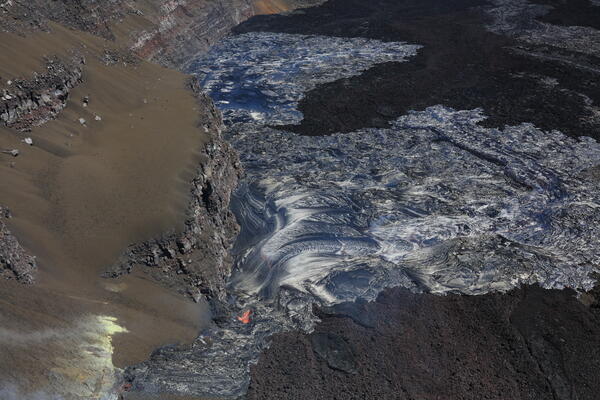
A telephoto aerial view looking down into the north vent (center) of the ongoing Kīlauea summit eruption within Halema‘uma‘u crater. Orange incandescent lava is visible deep in the vent. Lava overflows from both vents over the past few days produced shiny new Pāhoehoe flows (bottom center and left side of photo).

A telephoto aerial view looking down into the north vent (center) of the ongoing Kīlauea summit eruption within Halema‘uma‘u crater. Orange incandescent lava is visible deep in the vent. Lava overflows from both vents over the past few days produced shiny new Pāhoehoe flows (bottom center and left side of photo).

Color photograph of volcanic vent degassing
November 24, 2025 — Vents in Halemaʻumaʻu at the summit of Kīlauea

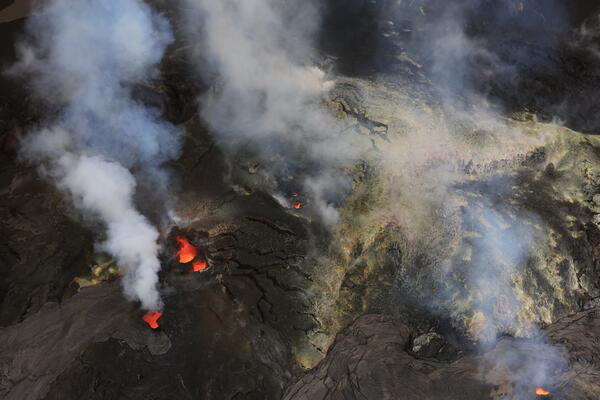
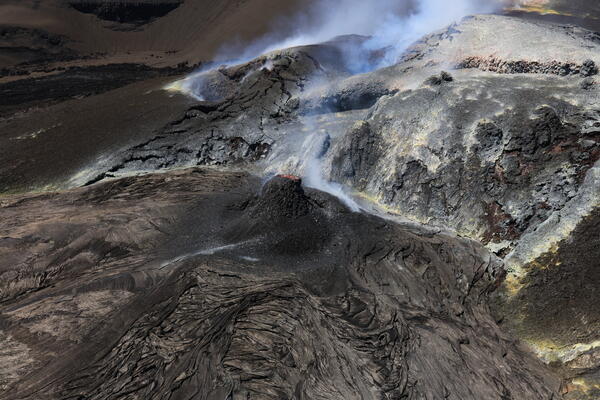
Aerial view within Halema‘uma‘u crater taken during a Kīlauea summit overflight on the morning of November 24, 2025. This view, looking to the northwest, shows the north vent cone (center of image) and south vent cone (center-left) emitting plumes of steam and volcanic gas.

Aerial view within Halema‘uma‘u crater taken during a Kīlauea summit overflight on the morning of November 24, 2025. This view, looking to the northwest, shows the north vent cone (center of image) and south vent cone (center-left) emitting plumes of steam and volcanic gas.

Color photograph of two scientists collecting samples from cooled lava flows
November 21, 2025 — Scientists on floor of Halema‘uma‘u

With permission from Hawai‘i Volcanoes National Park, USGS Hawaiian Volcano Observatory scientists landed briefly on the floor of Halema‘uma‘u crater on November 21 to collect lava samples from Kīlauea summit eruption episodes 34, 35, and 36.

With permission from Hawai‘i Volcanoes National Park, USGS Hawaiian Volcano Observatory scientists landed briefly on the floor of Halema‘uma‘u crater on November 21 to collect lava samples from Kīlauea summit eruption episodes 34, 35, and 36.

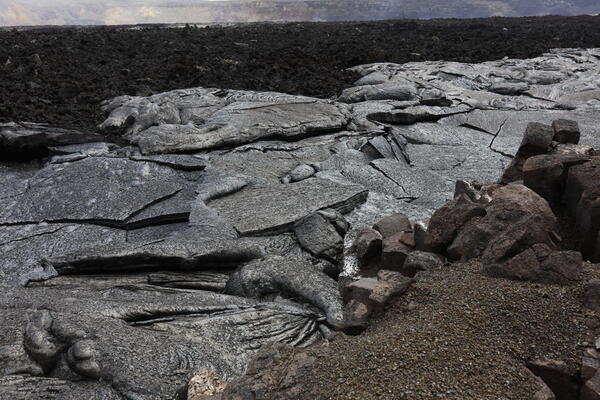
Color photograph of scientist collecting sample of cooled lava flow
November 21, 2025 — Cold lava sampling on floor of Halema‘uma‘u

On November 21, USGS Hawaiian Volcano Observatory scientists collected solid lava samples from the floor of Halema‘uma‘u crater at the summit of Kīlauea. All sampling in this area, which is significant to native Hawaiian communities, is done with permission from Hawai‘i Volcanoes National Park.

On November 21, USGS Hawaiian Volcano Observatory scientists collected solid lava samples from the floor of Halema‘uma‘u crater at the summit of Kīlauea. All sampling in this area, which is significant to native Hawaiian communities, is done with permission from Hawai‘i Volcanoes National Park.

Color photograph of volcanic vent with roiling lava in it
November 21, 2025 — Aerial view of Halema‘uma‘u north vent

On November 21, USGS Hawaiian Volcano Observatory scientists conducted an aerial overflight of the eruptive vent complex at the summit of Kīlauea. Roiling lava ponds were visible in both the north and south vents during the overflight; the north vent's incandescent pond barely visible in this aerial photo looking down from the north.

On November 21, USGS Hawaiian Volcano Observatory scientists conducted an aerial overflight of the eruptive vent complex at the summit of Kīlauea. Roiling lava ponds were visible in both the north and south vents during the overflight; the north vent's incandescent pond barely visible in this aerial photo looking down from the north.

Color photograph of volcanic hill
November 18, 2025 — Kīlauea summit cone slumping

This photo, taken on November 18 from the south rim of Halemaʻumaʻu crater, shows slumping of material from the hill formed by fallout from the recent lava fountains at Kīlauea summit. The v3cam livestream camera is visible on the rim of the crater in the middle left of the image. USGS photo by M. Patrick.

This photo, taken on November 18 from the south rim of Halemaʻumaʻu crater, shows slumping of material from the hill formed by fallout from the recent lava fountains at Kīlauea summit. The v3cam livestream camera is visible on the rim of the crater in the middle left of the image. USGS photo by M. Patrick.

Color photograph of damaged post
November 17, 2025 — Wooden post damaged by episode 36 of ongoing Kīlauea eruption

This wooden post used to mark the side of Crater Rim Drive within a hazardous closed area of Hawai‘i Volcanoes National Park. The post has been slowly buried by tephra from lava fountains that have been episodically active during the ongoing eruption of Kīlauea at Halema‘uma‘u that started on December 23, 2025.

This wooden post used to mark the side of Crater Rim Drive within a hazardous closed area of Hawai‘i Volcanoes National Park. The post has been slowly buried by tephra from lava fountains that have been episodically active during the ongoing eruption of Kīlauea at Halema‘uma‘u that started on December 23, 2025.

Color photograph of scientist checking monitoring equipment
November 17, 2025 — Checking Kīlauea summit monitoring equipment

A U.S. Geological Survey Hawaiian Volcano Observatory geologists checks the status of one of the Kīlauea monitoring stations downwind of the active vents in Halemaʻumaʻu. This station has been buried incrementally by tephra as a result of lava fountaining, and solar panels were damaged by tephra impact. USGS photo by N. Kohagura.

A U.S. Geological Survey Hawaiian Volcano Observatory geologists checks the status of one of the Kīlauea monitoring stations downwind of the active vents in Halemaʻumaʻu. This station has been buried incrementally by tephra as a result of lava fountaining, and solar panels were damaged by tephra impact. USGS photo by N. Kohagura.

Color photograph of damaged post in fragmented material; posts along road of fragmented material
November 17, 2025 — Road marker damaged during episode 36 of Kīlauea's ongoing summit eruption

This plastic road marker shown on the left side of this photo was found on the side of Crater Rim Drive within the hazardous closed area of Hawai‘i Volcanoes National Park, downwind of the episodically erupting vents within Halema‘uma‘u crater.

Color photograph of two scientists measuring a crack in a road
November 17, 2025 — Measuring a crack in Crater Rim Drive

The west portion of Crater Rim Drive in Hawaiʻi Volcanoes National Park was damaged during the Kīlauea summit collapse of 2018. This area has remained closed to the public, being impacted by tephrafall and volcanic gas during recent eruptions. U.S.

The west portion of Crater Rim Drive in Hawaiʻi Volcanoes National Park was damaged during the Kīlauea summit collapse of 2018. This area has remained closed to the public, being impacted by tephrafall and volcanic gas during recent eruptions. U.S.

Color photograph of volcanic landscape
November 17, 2025 — Puʻu perched on the rim of Halemaʻumaʻu

Lava fountains from 36 episodes of the ongoing eruption in Halemaʻumaʻu crater, at the summit of Kīlauea, have built a prominent new puʻu (made up of tephra) perched on the rim of the crater. In the foreground, tephra covers part of Crater Rim Drive in this closed area of Hawaiʻi Volcanoes National Park. USGS photo by N. Kohagura. 

Lava fountains from 36 episodes of the ongoing eruption in Halemaʻumaʻu crater, at the summit of Kīlauea, have built a prominent new puʻu (made up of tephra) perched on the rim of the crater. In the foreground, tephra covers part of Crater Rim Drive in this closed area of Hawaiʻi Volcanoes National Park. USGS photo by N. Kohagura. 

Was this page helpful?