



This thermal map shows the summit of Kīlauea hours after the end of episode 52 lava fountaining on July 29, 2026. The lava flow produced by this fountain mainly flowed along the southern perimeter of the crater floor, and was stalled by the time of the overflight. However, several small breakouts were still active in several areas.
Images
Hawaiian Volcano Observatory images of eruptive activity, field work, and more.
Filter Total Items: 4151
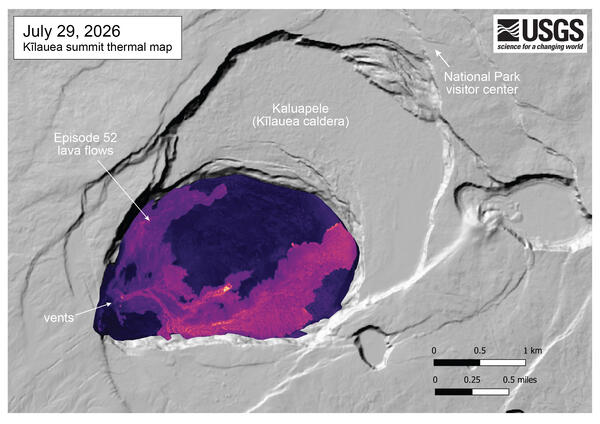
July 29, 2026 — Thermal map of Kīlauea summit
This thermal map shows the summit of Kīlauea hours after the end of episode 52 lava fountaining on July 29, 2026. The lava flow produced by this fountain mainly flowed along the southern perimeter of the crater floor, and was stalled by the time of the overflight. However, several small breakouts were still active in several areas.
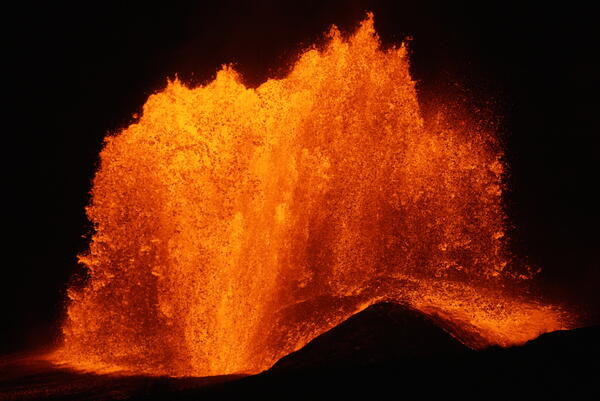
July 28, 2026 — Kīlauea summit eruption episode 52 at night
July 28, 2026 — Kīlauea summit eruption episode 52 at nightOnly the north vent erupted a lava fountain during episode 52 at the summit of Kīlauea. The south vent did not erupt any lava during precursory activity or the eruptive episode, but it did emit flames at the end of the episode. The north vent lava fountain reached a peak height of approximately 500 feet (150 meters) around 9:00 p.m. HST on July 28, 2026.
July 28, 2026 — Kīlauea summit eruption episode 52 at night
July 28, 2026 — Kīlauea summit eruption episode 52 at nightOnly the north vent erupted a lava fountain during episode 52 at the summit of Kīlauea. The south vent did not erupt any lava during precursory activity or the eruptive episode, but it did emit flames at the end of the episode. The north vent lava fountain reached a peak height of approximately 500 feet (150 meters) around 9:00 p.m. HST on July 28, 2026.
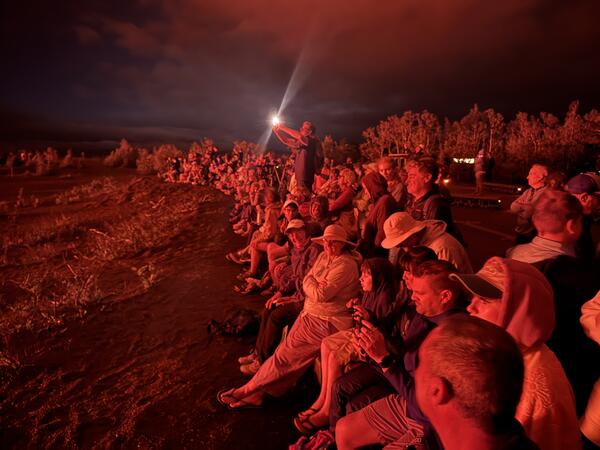
July 28, 2026 — Visitors at Uēkahuna during Kīlauea summit episode 52
July 28, 2026 — Visitors at Uēkahuna during Kīlauea summit episode 52At Uēkahuna overlook in Hawaiʻi Volcanoes National Park, visitors were illuminated in the evening light by a full moon and 52nd episode of lava fountaining in at the summit of Kīlauea. USGS photo by M. Patrick on July 28, 2026.
July 28, 2026 — Visitors at Uēkahuna during Kīlauea summit episode 52
July 28, 2026 — Visitors at Uēkahuna during Kīlauea summit episode 52At Uēkahuna overlook in Hawaiʻi Volcanoes National Park, visitors were illuminated in the evening light by a full moon and 52nd episode of lava fountaining in at the summit of Kīlauea. USGS photo by M. Patrick on July 28, 2026.
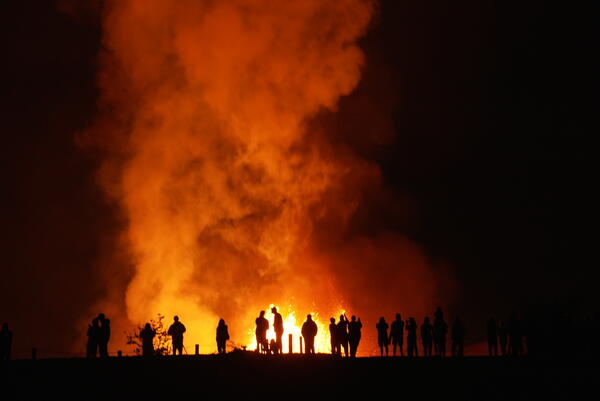
July 28, 2026 — Kīlauea summit eruption episode 52 silhouettes
July 28, 2026 — Kīlauea summit eruption episode 52 silhouettesSilhouettes of Hawaiʻi Volcanoes National Park visitors on the rim of Kaluapele (Kīlauea summit caldera) were created by the Kīlauea summit eruption episode 52 lava fountains and eruption plume on the night of July 28, 2026. USGS photo by M. Patrick.
July 28, 2026 — Kīlauea summit eruption episode 52 silhouettes
July 28, 2026 — Kīlauea summit eruption episode 52 silhouettesSilhouettes of Hawaiʻi Volcanoes National Park visitors on the rim of Kaluapele (Kīlauea summit caldera) were created by the Kīlauea summit eruption episode 52 lava fountains and eruption plume on the night of July 28, 2026. USGS photo by M. Patrick.
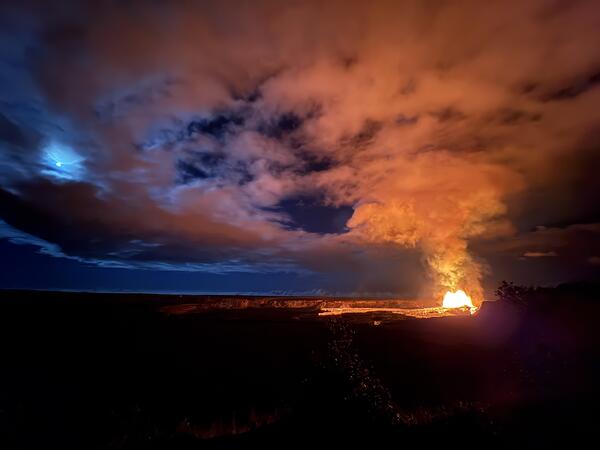
July 28, 2026 — Kīlauea summit eruption episode 52 and full moon
July 28, 2026 — Kīlauea summit eruption episode 52 and full moonA full moon and a lava fountain illuminated the evening sky on July 28, 2026, as the summit of Kīlauea erupted a lava fountain for the 52nd time since December 2024. USGS photo by D. Downs.
July 28, 2026 — Kīlauea summit eruption episode 52 and full moon
July 28, 2026 — Kīlauea summit eruption episode 52 and full moonA full moon and a lava fountain illuminated the evening sky on July 28, 2026, as the summit of Kīlauea erupted a lava fountain for the 52nd time since December 2024. USGS photo by D. Downs.
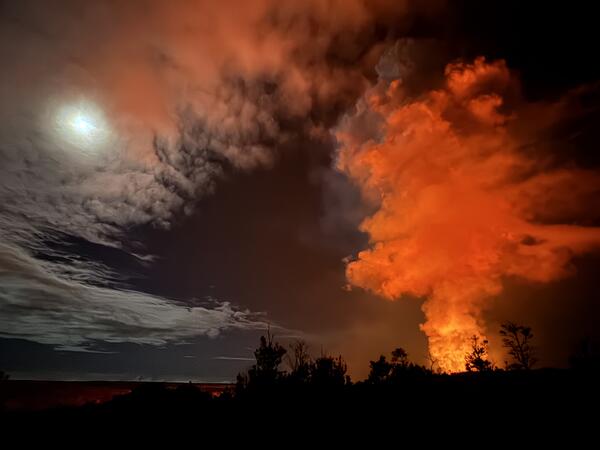
July 28, 2026 — Kīlauea summit episode 52 eruption plume and full moon
July 28, 2026 — Kīlauea summit episode 52 eruption plume and full moonThe eruption plume during episode 52 of lava fountaining at the summit of Kīlauea rose to an estimated 19,000 (5,800 meters) above sea level. The incandescent lava erupted by the north vent, and lava flows on the floor of Halemaʻumaʻu crater, illuminated the plume which was visible for many miles from the summit of Kīlauea, along with a full moon. USGS photo by K.
July 28, 2026 — Kīlauea summit episode 52 eruption plume and full moon
July 28, 2026 — Kīlauea summit episode 52 eruption plume and full moonThe eruption plume during episode 52 of lava fountaining at the summit of Kīlauea rose to an estimated 19,000 (5,800 meters) above sea level. The incandescent lava erupted by the north vent, and lava flows on the floor of Halemaʻumaʻu crater, illuminated the plume which was visible for many miles from the summit of Kīlauea, along with a full moon. USGS photo by K.
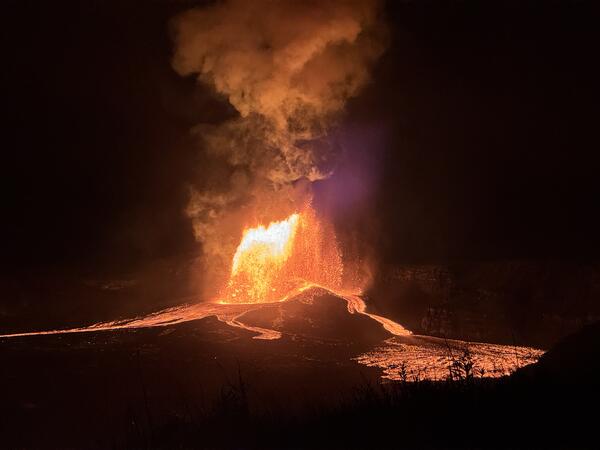
July 28, 2026 — Lava fountaining at the north vent during episode 52 at Kīlauea summit
July 28, 2026 — Lava fountaining at the north vent during episode 52 at Kīlauea summitLava fountained from the north vent in Halemaʻumaʻu at the summit of Kīlauea for nearly 7.5 hours on the night of July 28-29, 2026. During the eruptive episode, the instantaneous effusion rate peaked at about 350 cubic yards (270 cubic meters) per second at approximately 9:15 p.m.
July 28, 2026 — Lava fountaining at the north vent during episode 52 at Kīlauea summit
July 28, 2026 — Lava fountaining at the north vent during episode 52 at Kīlauea summitLava fountained from the north vent in Halemaʻumaʻu at the summit of Kīlauea for nearly 7.5 hours on the night of July 28-29, 2026. During the eruptive episode, the instantaneous effusion rate peaked at about 350 cubic yards (270 cubic meters) per second at approximately 9:15 p.m.
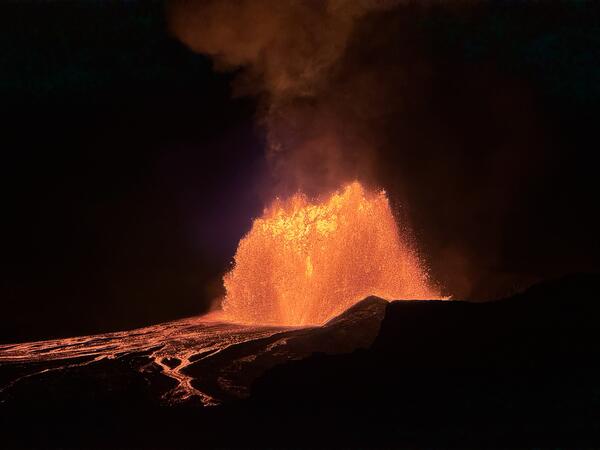
July 28, 2026 — North vent lava fountain during episode 52 at Kīlauea summit
July 28, 2026 — North vent lava fountain during episode 52 at Kīlauea summitAnother view of the north vent lava fountain during episode 52 at the summit of Kīlauea on July 28, 2026. Precursory activity began from the north vent on the morning of July 28 with 6 overflows between 10:22 a.m. and 1:53 p.m. HST, the longest lasting over 30 minutes.
July 28, 2026 — North vent lava fountain during episode 52 at Kīlauea summit
July 28, 2026 — North vent lava fountain during episode 52 at Kīlauea summitAnother view of the north vent lava fountain during episode 52 at the summit of Kīlauea on July 28, 2026. Precursory activity began from the north vent on the morning of July 28 with 6 overflows between 10:22 a.m. and 1:53 p.m. HST, the longest lasting over 30 minutes.
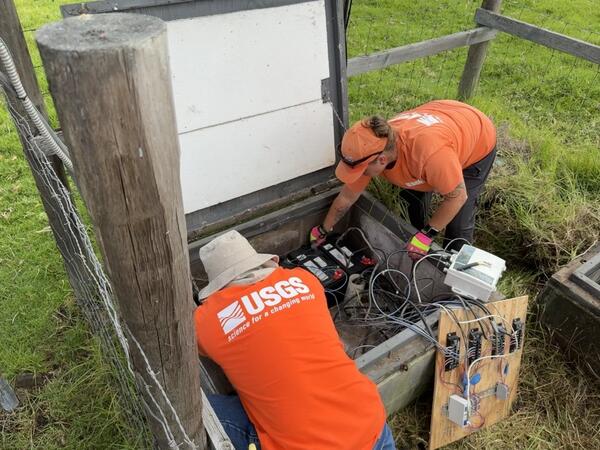
July 23, 2026 — Servicing Mauna Loa tiltmeter
USGS Hawaiian Volcano Observatory field engineers replace the batteries at the HOK tiltmeter, located on the west flank of Mauna Loa volcano. USGS photo.
USGS Hawaiian Volcano Observatory field engineers replace the batteries at the HOK tiltmeter, located on the west flank of Mauna Loa volcano. USGS photo.
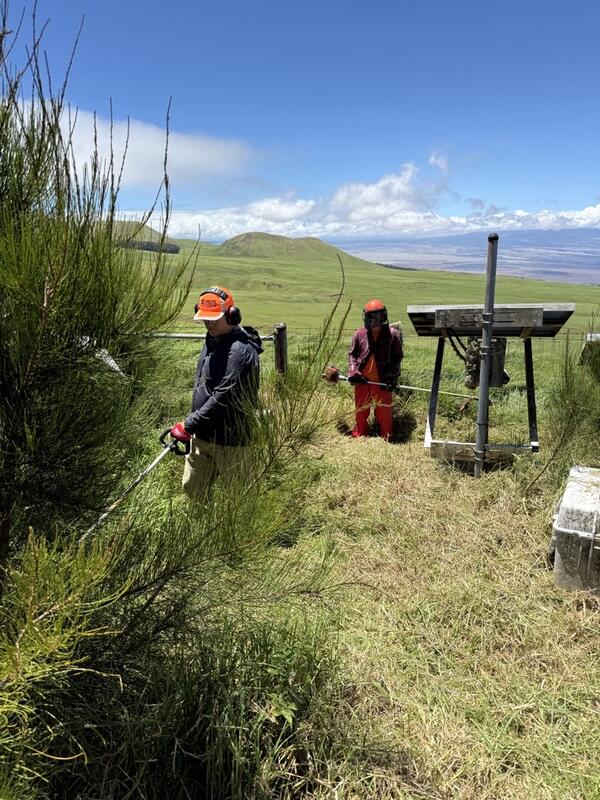
July 22, 2026 — Maintaining the ground around volcano monitoring station in Kohala
July 22, 2026 — Maintaining the ground around volcano monitoring station in KohalaRepeater station KOHD is located on Kohala volcano, and it is an important volcano monitoring hub as it receives data from monitoring stations nearby and relays it back to the USGS Hawaiian Volcano Observatory (HVO).
July 22, 2026 — Maintaining the ground around volcano monitoring station in Kohala
July 22, 2026 — Maintaining the ground around volcano monitoring station in KohalaRepeater station KOHD is located on Kohala volcano, and it is an important volcano monitoring hub as it receives data from monitoring stations nearby and relays it back to the USGS Hawaiian Volcano Observatory (HVO).
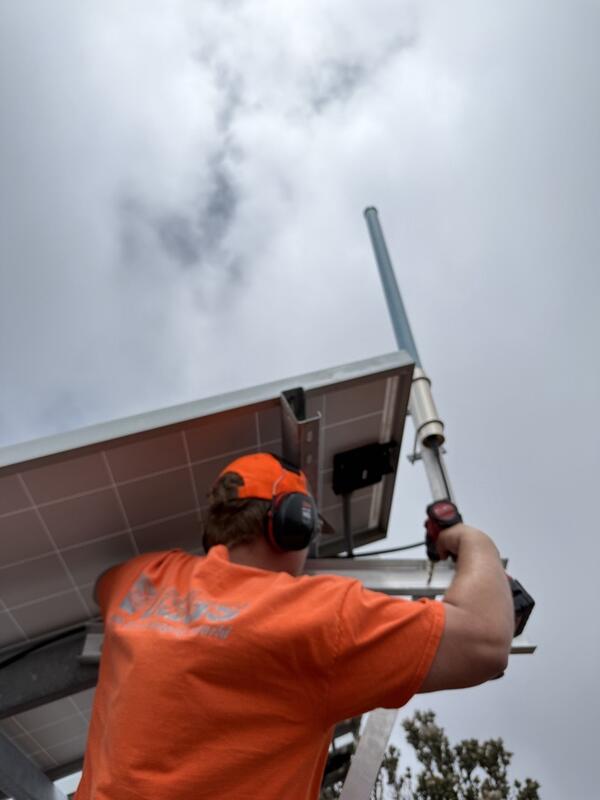
July 23, 2026 — Servicing Hualālai repeater station
July 23, 2026 — Servicing Hualālai repeater stationThe Hualālai repeater site is located on the southeast side of Hualālai volcano, which erupted most recently in 1800-1801. At an elevation of 2,160 meters (7,090 feet) above sea level, the repeater site is a telecommunications hub. It receives data from multiple volcano monitoring stations and relays that information back to the USGS Hawaiian Volcano Observatory.
July 23, 2026 — Servicing Hualālai repeater station
July 23, 2026 — Servicing Hualālai repeater stationThe Hualālai repeater site is located on the southeast side of Hualālai volcano, which erupted most recently in 1800-1801. At an elevation of 2,160 meters (7,090 feet) above sea level, the repeater site is a telecommunications hub. It receives data from multiple volcano monitoring stations and relays that information back to the USGS Hawaiian Volcano Observatory.
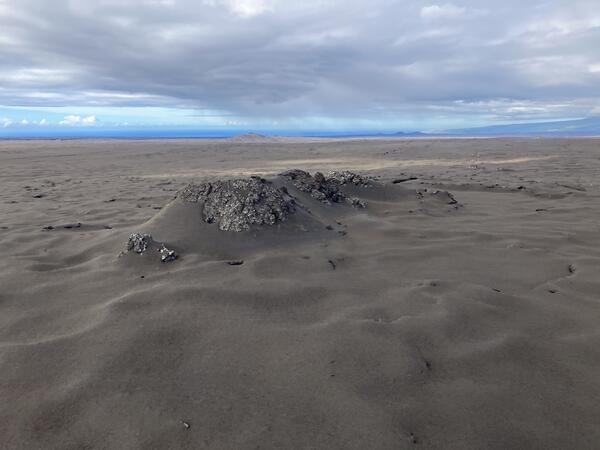
July 16, 2026 — Tephra-blanketed September 1971 spatter cone
July 16, 2026 — Tephra-blanketed September 1971 spatter coneDuring the USGS Hawaiian Volcano Observatory overflight on July 16, scientists flew across Kīlauea's Southwest Rift Zone for measurements of the gas plume drifting downwind of the Halema‘uma‘u eruptive vents.
July 16, 2026 — Tephra-blanketed September 1971 spatter cone
July 16, 2026 — Tephra-blanketed September 1971 spatter coneDuring the USGS Hawaiian Volcano Observatory overflight on July 16, scientists flew across Kīlauea's Southwest Rift Zone for measurements of the gas plume drifting downwind of the Halema‘uma‘u eruptive vents.
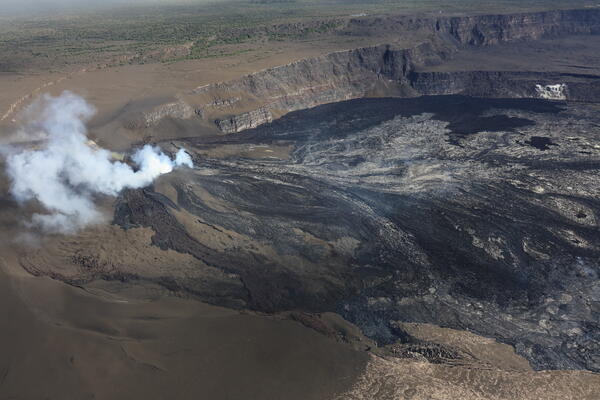
July 16, 2026 — Overview of western Halema‘uma‘u, Kīlauea summit
July 16, 2026 — Overview of western Halema‘uma‘u, Kīlauea summitUSGS Hawaiian Volcano Observatory scientists completed a helicopter overflight of Halema‘uma‘u on July 16, following Kīlauea summit eruption episode 51 the day before.
July 16, 2026 — Overview of western Halema‘uma‘u, Kīlauea summit
July 16, 2026 — Overview of western Halema‘uma‘u, Kīlauea summitUSGS Hawaiian Volcano Observatory scientists completed a helicopter overflight of Halema‘uma‘u on July 16, following Kīlauea summit eruption episode 51 the day before.
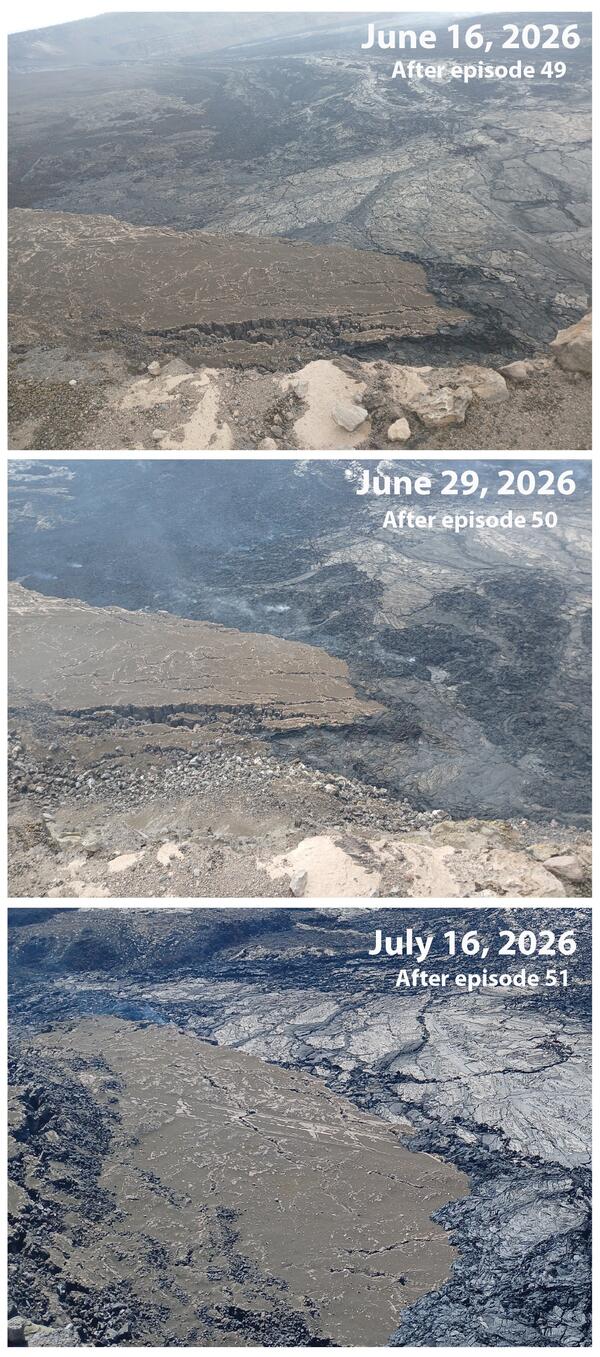
Crater Rim Drive in Halema‘uma‘u being covered with lava
Crater Rim Drive in Halema‘uma‘u being covered with lavaDuring the 2018 summit collapse of Kīlauea, portions of Crater Rim Drive fell into Halemaʻumaʻu crater. Eruptions in Halemaʻumaʻu since 2018 have slowly filled in much of the collapsed area.
Crater Rim Drive in Halema‘uma‘u being covered with lava
Crater Rim Drive in Halema‘uma‘u being covered with lavaDuring the 2018 summit collapse of Kīlauea, portions of Crater Rim Drive fell into Halemaʻumaʻu crater. Eruptions in Halemaʻumaʻu since 2018 have slowly filled in much of the collapsed area.
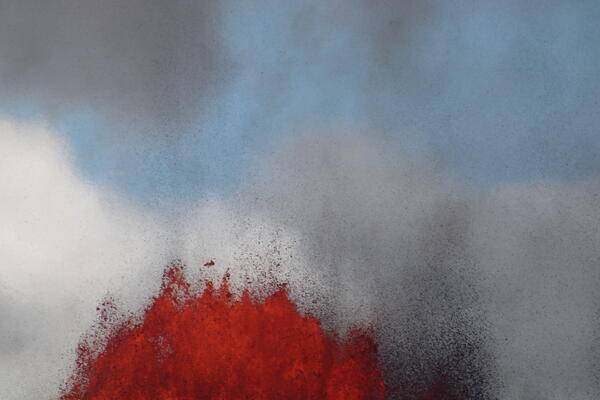
July 15, 2026 — Top of the north vent lava fountain, Kīlauea summit
July 15, 2026 — Top of the north vent lava fountain, Kīlauea summitA telephoto view of the top of the north vent lava fountain during episode 51 of the Halemaʻumaʻu eruption at the summit of Kīlauea on July 15, 2026. Darker-colored solidified lava is visible wafting above the lava fountain.
July 15, 2026 — Top of the north vent lava fountain, Kīlauea summit
July 15, 2026 — Top of the north vent lava fountain, Kīlauea summitA telephoto view of the top of the north vent lava fountain during episode 51 of the Halemaʻumaʻu eruption at the summit of Kīlauea on July 15, 2026. Darker-colored solidified lava is visible wafting above the lava fountain.
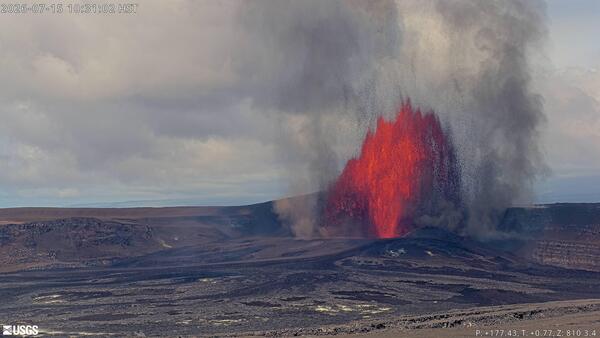
July 15, 2026 — Kīlauea episode 51 of lava fountaining from the V2cam
July 15, 2026 — Kīlauea episode 51 of lava fountaining from the V2camEpisode 51 of lava fountaining in Halemaʻumaʻu at the summit of Kīlauea took place for about 8 hours on July 15, 2026. This photograph of the episode was taken by the V2cam, located on the easter rim of the crater in Hawaiʻi Volcanoes National Park. USGS webcam image.
July 15, 2026 — Kīlauea episode 51 of lava fountaining from the V2cam
July 15, 2026 — Kīlauea episode 51 of lava fountaining from the V2camEpisode 51 of lava fountaining in Halemaʻumaʻu at the summit of Kīlauea took place for about 8 hours on July 15, 2026. This photograph of the episode was taken by the V2cam, located on the easter rim of the crater in Hawaiʻi Volcanoes National Park. USGS webcam image.
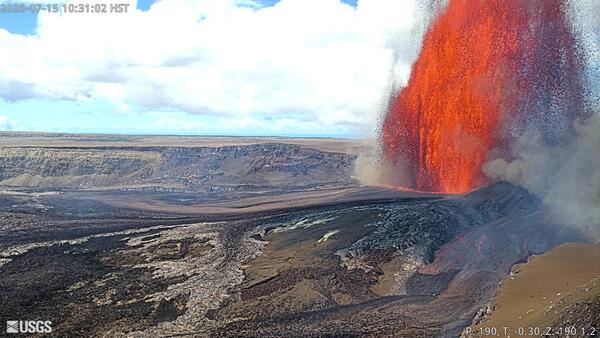
July 15, 2026 — Kīlauea episode 51 of lava fountaining from the V1cam
July 15, 2026 — Kīlauea episode 51 of lava fountaining from the V1camEpisode 51 of lava fountaining in Halemaʻumaʻu at the summit of Kīlauea took place for about 8 hours on July 15, 2026. This photograph of the episode was taken by the V1cam, located on the northwest rim of the crater in Hawaiʻi Volcanoes National Park. USGS webcam image.
July 15, 2026 — Kīlauea episode 51 of lava fountaining from the V1cam
July 15, 2026 — Kīlauea episode 51 of lava fountaining from the V1camEpisode 51 of lava fountaining in Halemaʻumaʻu at the summit of Kīlauea took place for about 8 hours on July 15, 2026. This photograph of the episode was taken by the V1cam, located on the northwest rim of the crater in Hawaiʻi Volcanoes National Park. USGS webcam image.
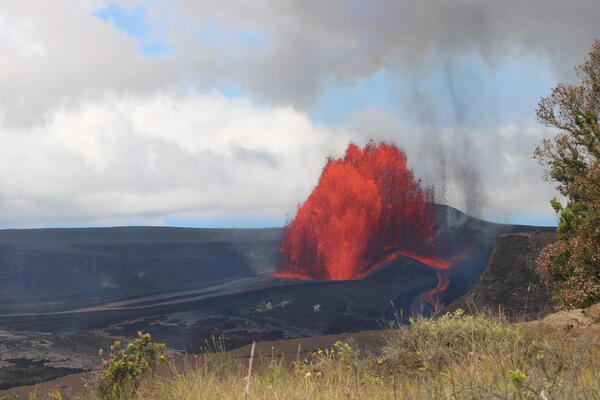
July 15, 2026 — Episode 51 lava fountain, Kīlauea summit
July 15, 2026 — Episode 51 lava fountain, Kīlauea summitA view of the lava fountain erupting from the north vent during episode 51 on July 15, 2026. Fountain heights reached up to about 950 feet (290 meters) and effusion rates reached a peak of about 400 cubic yards per second (300 cubic meters per second) at 10:30 a.m. HST July 15. This photo was taken shortly afterward, at around 11 a.m. HST. USGS photo by K.
July 15, 2026 — Episode 51 lava fountain, Kīlauea summit
July 15, 2026 — Episode 51 lava fountain, Kīlauea summitA view of the lava fountain erupting from the north vent during episode 51 on July 15, 2026. Fountain heights reached up to about 950 feet (290 meters) and effusion rates reached a peak of about 400 cubic yards per second (300 cubic meters per second) at 10:30 a.m. HST July 15. This photo was taken shortly afterward, at around 11 a.m. HST. USGS photo by K.
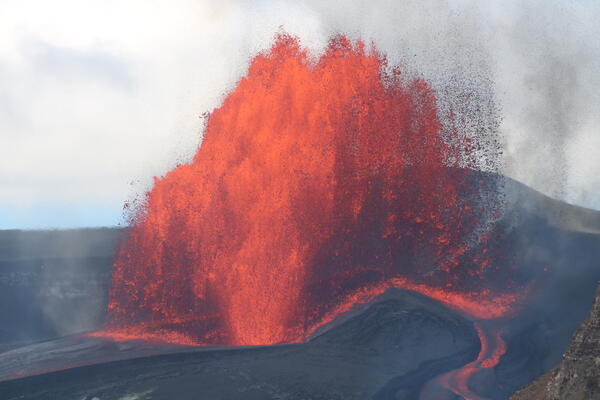
July 15, 2026 — North vent lava fountain during episode 51, Kīlauea summit
July 15, 2026 — North vent lava fountain during episode 51, Kīlauea summitEpisode 51 of lava fountaining in Halemaʻumaʻu at the summit of Kīlauea began at about 8:30 a.m. HST on July 15, 2026. This photograph, taken around 11 a.m. from the caldera rim near Kilauea Military Camp, shows the fan-shape of the fountain that developed as the episode progressed. USGS photo by K. Mulliken.
July 15, 2026 — North vent lava fountain during episode 51, Kīlauea summit
July 15, 2026 — North vent lava fountain during episode 51, Kīlauea summitEpisode 51 of lava fountaining in Halemaʻumaʻu at the summit of Kīlauea began at about 8:30 a.m. HST on July 15, 2026. This photograph, taken around 11 a.m. from the caldera rim near Kilauea Military Camp, shows the fan-shape of the fountain that developed as the episode progressed. USGS photo by K. Mulliken.
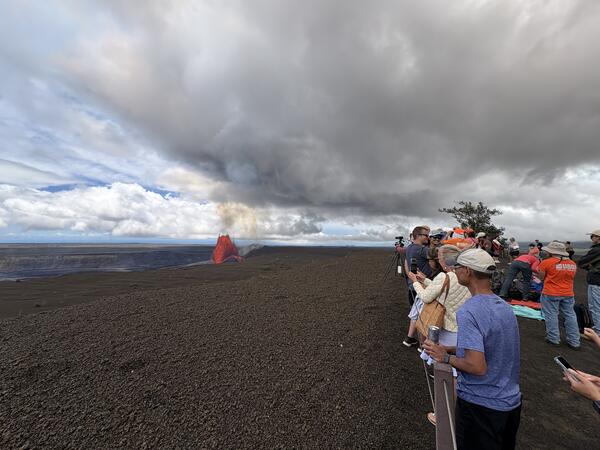
July 15, 2026 — Viewing Kīlauea summit eruption episode 51
July 15, 2026 — Viewing Kīlauea summit eruption episode 51On July 15, Kīlauea summit eruption episode 51 lava fountains were a sight to behold from Uēkahuna overlook in Hawaiʻi Volcanoes National Park. Large crowds gathered to watch lava fountains from the Halemaʻumaʻu north vent, along with flows on the crater floor. Light tephra fell at Uēkahuna between 10:30 a.m. and 12:00 p.m.
July 15, 2026 — Viewing Kīlauea summit eruption episode 51
July 15, 2026 — Viewing Kīlauea summit eruption episode 51On July 15, Kīlauea summit eruption episode 51 lava fountains were a sight to behold from Uēkahuna overlook in Hawaiʻi Volcanoes National Park. Large crowds gathered to watch lava fountains from the Halemaʻumaʻu north vent, along with flows on the crater floor. Light tephra fell at Uēkahuna between 10:30 a.m. and 12:00 p.m.
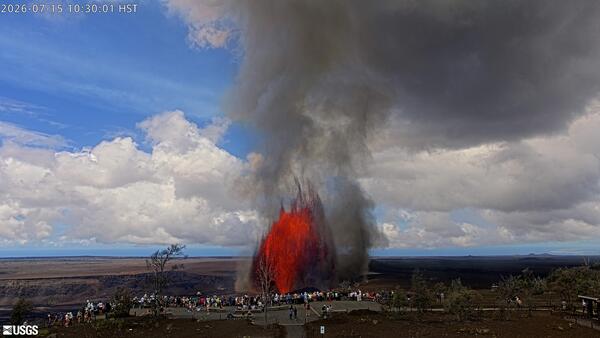
July 15, 2026 — Kīlauea episode 51 of lava fountaining from the K2cam
July 15, 2026 — Kīlauea episode 51 of lava fountaining from the K2camEpisode 51 of lava fountaining in Halemaʻumaʻu at the summit of Kīlauea took place for about 8 hours on July 15, 2026. This photograph of the episode was taken by the K2cam, located near Uēkahuna bluff in Hawaiʻi Volcanoes National Park, and shows visitors viewing the eruption. USGS webcam image.
July 15, 2026 — Kīlauea episode 51 of lava fountaining from the K2cam
July 15, 2026 — Kīlauea episode 51 of lava fountaining from the K2camEpisode 51 of lava fountaining in Halemaʻumaʻu at the summit of Kīlauea took place for about 8 hours on July 15, 2026. This photograph of the episode was taken by the K2cam, located near Uēkahuna bluff in Hawaiʻi Volcanoes National Park, and shows visitors viewing the eruption. USGS webcam image.