
U.S. flag

An official website of the United States government

How our Program Works

We're working on this page! Check back soon — last updated September 15, 2025.

Our mission has three directives: (1) conduct research to deliver actionable science to cooperating agencies and organizations; (2) develop the natural resource conservation workforce of the future through graduate educa­tion; and (3) fulfill the training and technical assistance needs of cooperators. 

Staffing
The recent budget increases allowed the CRU to actively fill positions over the past 2 years, with 37 new scientists brought onboard (26 in FY21 and 11 in FY22). However, 27 vacancies remained at the end of the FY22 owing to the loss of 14 scientists (retirements, resignations, death) over the past 2 years, and the addition of 6 new positions at the new units. Hiring actions have been initiated to fill another nine positions, including Unit Leader positions at the new Nevada, Michigan, and Indiana Units.
Media
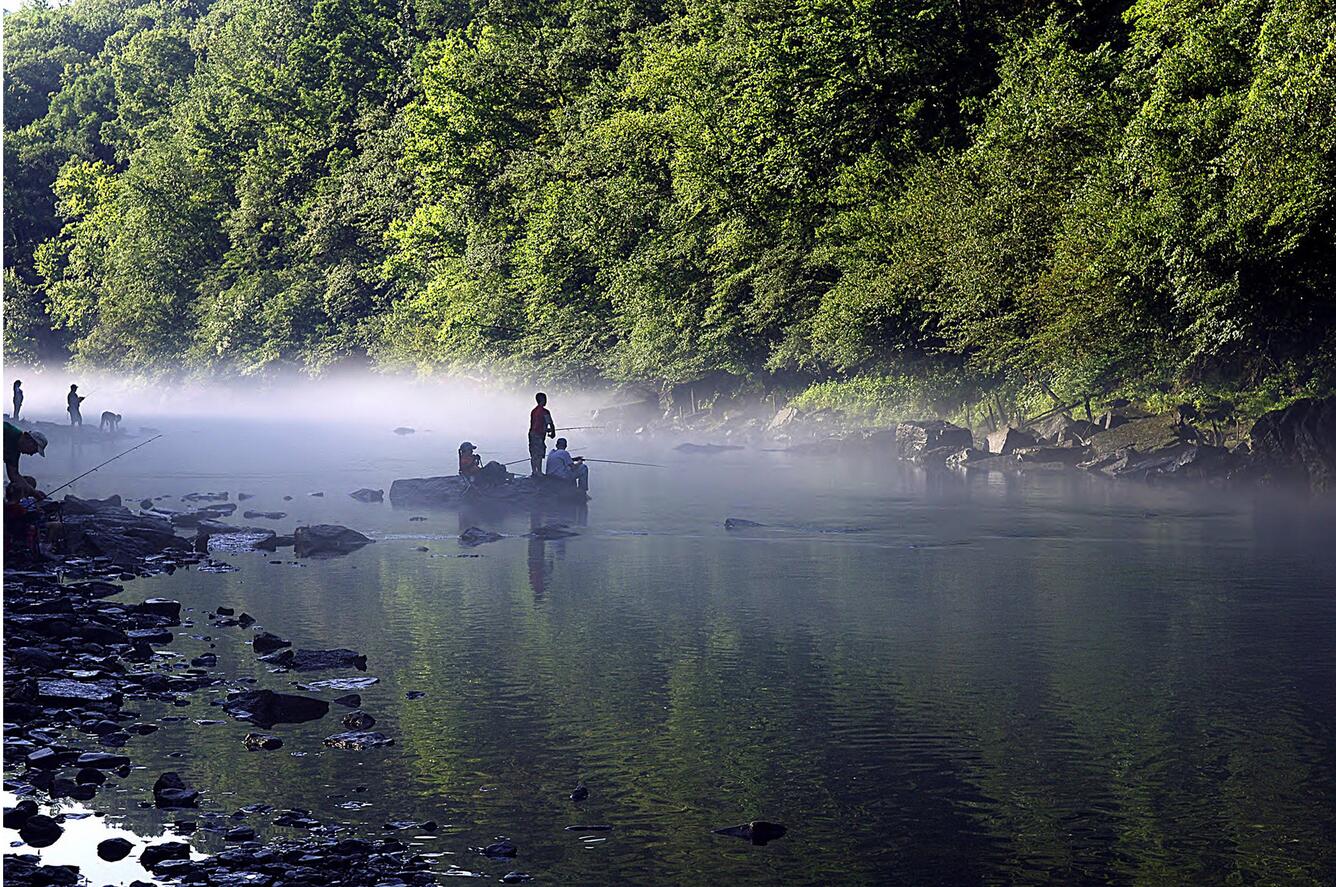
Fishing off rock

Operational Support
The recent budget increases provided needed operational support to the CRUs, with respect to capital investments for items such as vehicles and safety equipment. This significant financial commitment has been lacking in recent years as a result of an extended period of flat funding during government budget sequestration (2013–18) that resulted in little to no financial support for operational investments. Consequently, operational equipment such as the vehicle fleet continued to age without replacement and the vehicles are now approaching the end of their serviceable life. Under the scenario with 30+ vacancies, the units could be operational with the existing vehicle fleet because demand was down. However, with 37 new scientists recently brought into the program and 27 more yet to come, a significant investment is needed in operational items, such as vehicles, watercraft, all-terrain vehicles, utility terrain vehicles, along with laboratory and safety equipment to support the active and growing field research programs of potentially 60+ new scientists.


Leveraging Resources and Creating Jobs

The CRU program maximizes taxpayer investment, turning every appropriated Federal dollar into three dollars by CRU scientists, who leverage additional funding and support for the CRU program. Leveraged funding is administered through host university’s budgetary processes to support each Unit’s research program, to provide training to students, and to help cooperators and stakeholders. On average, the leveraged funding streams from CRU scientists generate support for as many as 31 non-Federal positions at each host university per year, including graduate students, postdoctoral researchers, and research technicians. Leveraged funding at host universities supports over 1,100 jobs, providing real economic benefits to local communities. Cooperating universities also provided an additional \$22 million of in-kind support through facilities, student tuition, and reduced overhead.

Media
Goose Lake redband trout

Research Priorities

Following the original legislation that created the CRU program (Public Law 86–686), all research priorities are set locally at each unit in consultation with Federal and State cooperators. Unit scientists and unit supervisors work with cooperators to help them identify their needs, and unit supervi­sors ensure that all research conducted is aligned with the USGS mission. Unit scientists, associated faculty, staff and students regularly conduct research projects in coordination with, and to meet the needs of, USGS headquarters, regions, and science centers. See the Notes from the Field section for examples of collaborative work with science centers, States, non-government organizations (NGOs), and other Federal cooperators. Final approval for each project is made by CRU headquarters management (Chief or Deputy Chief) to ensure that projects meet the USGS mission and the Department of Interior (DOI) priorities.

Media
Collared mule deer

Project Controls

Research Work Orders (RWOs) are the mechanism through which host universities receive Federal financial support to conduct research, as provided for in the 1978 amendment to Public Law 86–686. RWOs are an extension of the Cooperative Agreement establishing each unit. Funds from the USGS, other DOI bureaus, or other Federal agencies are obligated via financial assistance into a RWO and awarded to the host university for a specific research project.

The Deputy Chief ensures that the project meets the require­ments for a RWO, including the following (1) the project must be novel research; (2) the project must be consistent with the mission of the USGS and DOI priorities; (3) the project must have an educational component; (4) the budget is complete and appropri­ate; and (5) no apparent conflicts of interest exist.

Media
mallard duck with yellow bill, green head, and grey black feathers, on water

Regional Engagement and Coordination

CRU headquarters staff and leadership work closely with key regional partners, including USGS Center Directors, USGS Regional Directors, USGS Ecosystems Mission Area leadership, as well as leadership from other agencies, such as the USFWS. The Chief of the CRU program works closely with USGS Center Directors and USGS Regional Directors on topics of mutual inter­est. For example, the development of an interagency pollinator science laboratory that engages regional staff, center scientists, and external partners (such as, USFWS, U.S. Department of Agri­culture [USDA], the Northeast Association of Fish and Wildlife Agencies, National Park Service [NPS], and the Smithsonian Institution) in research to inform pollinator conservation activities at State and Federal agencies.

Media
Image: Transporting a Captured Mule Deer

Success in Applied Research

Scientists, research staff, and students in the CRU program were highly productive, publishing 360 scientific papers in FY 2024 related to partner-identified natural resource problems. These papers were published in over 130 peer-reviewed journals, ranging from international journals, such as “Nature,” to regional journals, such as “Southwestern Naturalist.” Unit scientists published mostly in journals supported by professional societies such as the Wildlife Society and the American Fisheries Society. Unit scientists provide insight and guidance regarding conservation challenges and help inform decision-making by resource managers at State, regional, and national levels. Unit scientists directed over 700 research projects during FY 2024. To address agency needs, cooperators determined topical science themes of FY 2024 research projects, such as Hunting and Fishing Resources, Animal Migration and Movements, Invasive Species and Fish and Wildlife Disease, and Federal, State, and Local Decision-making Strategies
Media
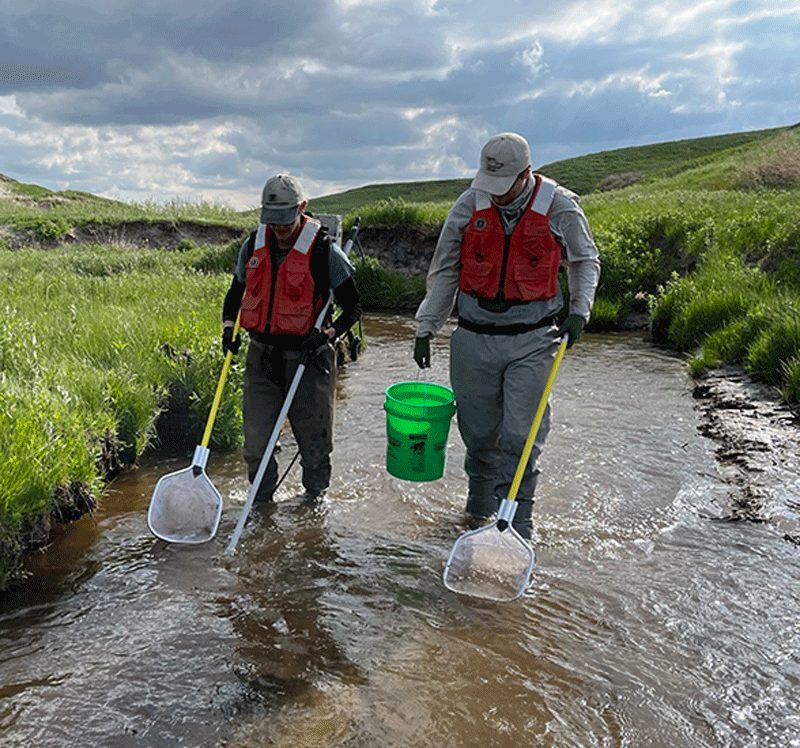
Graduate students electrofishing on Deer Creek in Nebraska

Staff Profiles

Filter Total Items: 142

Science

Filter Total Items: 86

Stream Health Correlated with Human Well-being and Demographics in Virginia
Relationships between human well-being (HWB) and ecosystem health (EH) are best understood via approaches coupling natural and social sciences. The Virginia Cooperative Fish and Wildlife Research Unit is leading an interdisciplinary team of scientists from Virginia Tech to explore HWB-EH relationships and design studies to identify mechanisms driving those relationships.
Stream Health Correlated with Human Well-being and Demographics in Virginia

Stream Health Correlated with Human Well-being and Demographics in Virginia

Relationships between human well-being (HWB) and ecosystem health (EH) are best understood via approaches coupling natural and social sciences. The Virginia Cooperative Fish and Wildlife Research Unit is leading an interdisciplinary team of scientists from Virginia Tech to explore HWB-EH relationships and design studies to identify mechanisms driving those relationships.
Learn More

Assessing the spawning movement and habitat needs of riverine Neosho smallmouth bass

USGS researchers are assessing the habitat and movement of Neosho smallmouth bass in Oklahoma and Missouri. Our study objectives were to determine the pre-spawn, spawn, and post-spawn movements of adult, radio-tagged Neosho Smallmouth Bass, and identify the habitat factors at multiple spatial scales related to suitable spawning habitat. Movements by tagged fish in the Elk River of Oklahoma and...
Assessing the spawning movement and habitat needs of riverine Neosho smallmouth bass

Assessing the spawning movement and habitat needs of riverine Neosho smallmouth bass

USGS researchers are assessing the habitat and movement of Neosho smallmouth bass in Oklahoma and Missouri. Our study objectives were to determine the pre-spawn, spawn, and post-spawn movements of adult, radio-tagged Neosho Smallmouth Bass, and identify the habitat factors at multiple spatial scales related to suitable spawning habitat. Movements by tagged fish in the Elk River of Oklahoma and...
Learn More

Islands to Interfaces: Integrating Field Biology with Computer Science to Address Wildlife Survey Challenges

The USGS Maine Cooperative Fish and Wildlife Research Unit is collaborating with faculty and graduate and undergraduate students in wildlife ecology, remote sensing, and computer science at the University of Maine to investigate the efficacy of using a variety of data collection approaches to survey colonial nesting birds in Maine.
Islands to Interfaces: Integrating Field Biology with Computer Science to Address Wildlife Survey Challenges

Islands to Interfaces: Integrating Field Biology with Computer Science to Address Wildlife Survey Challenges

The USGS Maine Cooperative Fish and Wildlife Research Unit is collaborating with faculty and graduate and undergraduate students in wildlife ecology, remote sensing, and computer science at the University of Maine to investigate the efficacy of using a variety of data collection approaches to survey colonial nesting birds in Maine.
Learn More

Culturally Important Fishponds in Hawaii

Researchers at the Hawai’i Cooperative Fishery Research Unit (HCFRU), working in collaboration with the Hawai’i Division of Aquatic Resources, Kamehameha Schools, and the Edith Kanaka’ole Foundation, investigated how the species composition of fish assemblages in actively managed and inactive fishponds differed from those of a natural estuary.
Culturally Important Fishponds in Hawaii

Culturally Important Fishponds in Hawaii

Researchers at the Hawai’i Cooperative Fishery Research Unit (HCFRU), working in collaboration with the Hawai’i Division of Aquatic Resources, Kamehameha Schools, and the Edith Kanaka’ole Foundation, investigated how the species composition of fish assemblages in actively managed and inactive fishponds differed from those of a natural estuary.
Learn More

Improving Insights for Recreational Fishery at the Mouth of the Columbia River

The USGS Oregon Cooperative Fish and Wildlife Research Unit (ORCFWRU) at Oregon State University (OSU) is partnering with the Oregon Department of Fish and Wildlife (ODFW) to evaluate alternative management actions for a high-value, mixed-stock recreational fishery on fall-run Chinook salmon at the mouth of the Columbia River. Image: USGS Oregon Water Science Center research vessel.
Improving Insights for Recreational Fishery at the Mouth of the Columbia River

Improving Insights for Recreational Fishery at the Mouth of the Columbia River

The USGS Oregon Cooperative Fish and Wildlife Research Unit (ORCFWRU) at Oregon State University (OSU) is partnering with the Oregon Department of Fish and Wildlife (ODFW) to evaluate alternative management actions for a high-value, mixed-stock recreational fishery on fall-run Chinook salmon at the mouth of the Columbia River. Image: USGS Oregon Water Science Center research vessel.
Learn More

Beavers in the Desert? The Potential for Translocated Beavers to Serve as Restoration Tools in Desert Rivers
The USGS Utah Cooperative Fish and Wildlife Research Unit at Utah State University (USU) is evaluating the efficacy of beaver translocation for desert river restoration by comparing the fates, space use, and dam building activity of naturally occurring and translocated beavers in the Price and San Rafael Rivers in eastern Utah.
Beavers in the Desert? The Potential for Translocated Beavers to Serve as Restoration Tools in Desert Rivers

Beavers in the Desert? The Potential for Translocated Beavers to Serve as Restoration Tools in Desert Rivers

The USGS Utah Cooperative Fish and Wildlife Research Unit at Utah State University (USU) is evaluating the efficacy of beaver translocation for desert river restoration by comparing the fates, space use, and dam building activity of naturally occurring and translocated beavers in the Price and San Rafael Rivers in eastern Utah.
Learn More

Assessing the distribution and habitat needs of the Least Darter and sympatric species of the Ozark and Arbuckle Mountain ecoregions

USGS researchers at the Alabama Cooperative Fish and Wildlife Research Unit are assessing the habitat needs and distribution of least darter, smallmouth bass, and Southern redbelly dace in the Ozark Highland and Arbuckle Uplift ecoregions of Oklahoma.
Assessing the distribution and habitat needs of the Least Darter and sympatric species of the Ozark and Arbuckle Mountain ecoregions

Assessing the distribution and habitat needs of the Least Darter and sympatric species of the Ozark and Arbuckle Mountain ecoregions

USGS researchers at the Alabama Cooperative Fish and Wildlife Research Unit are assessing the habitat needs and distribution of least darter, smallmouth bass, and Southern redbelly dace in the Ozark Highland and Arbuckle Uplift ecoregions of Oklahoma.
Learn More

Incorporating “Big Hairy Audacious Goals” into Natural Resource Research, Management, and Conservation

Kansas is the home to a diverse aquatic community. However, many fish have been designated as species in need of conservation because of land use change, water alterations, and other human impacts. The Kansas Cooperative Fish and Wildlife Research Unit (Kansas Unit) at Kansas State University is leading research on "big hairy audacious goals" - tools that create visions of realistic future.
Incorporating “Big Hairy Audacious Goals” into Natural Resource Research, Management, and Conservation

Incorporating “Big Hairy Audacious Goals” into Natural Resource Research, Management, and Conservation

Kansas is the home to a diverse aquatic community. However, many fish have been designated as species in need of conservation because of land use change, water alterations, and other human impacts. The Kansas Cooperative Fish and Wildlife Research Unit (Kansas Unit) at Kansas State University is leading research on "big hairy audacious goals" - tools that create visions of realistic future.
Learn More

Managing Young Forest Wildlife Habitats in Rights-of-Way Landscapes

The West Virginia Cooperative Fish and Wildlife Research Unit is developing management strategies that may help to increase young forest habitat availability and conserve priority young forest species in the central Appalachian region.
Managing Young Forest Wildlife Habitats in Rights-of-Way Landscapes

Managing Young Forest Wildlife Habitats in Rights-of-Way Landscapes

The West Virginia Cooperative Fish and Wildlife Research Unit is developing management strategies that may help to increase young forest habitat availability and conserve priority young forest species in the central Appalachian region.
Learn More

Collaborating for Conservation: Coming Together to Conserve the Topeka Shiner

he U.S. Geological Survey (USGS) Iowa Cooperative Fish and Wildlife Research Unit (Unit) is leading research on Topeka shiner, a species listed in 1998 under the Endangered Species Act (ESA) due to loss of critical habitat and subsequent population declines. The focus of this research is on population size and geographic distribution, and Topeka shiner food and habitat requirements.
Collaborating for Conservation: Coming Together to Conserve the Topeka Shiner

Collaborating for Conservation: Coming Together to Conserve the Topeka Shiner

he U.S. Geological Survey (USGS) Iowa Cooperative Fish and Wildlife Research Unit (Unit) is leading research on Topeka shiner, a species listed in 1998 under the Endangered Species Act (ESA) due to loss of critical habitat and subsequent population declines. The focus of this research is on population size and geographic distribution, and Topeka shiner food and habitat requirements.
Learn More

Fish and Climate Change Database (FiCli) Provides Freshwater Fisheries Managers With an Important Climate Adaptation Tool

Inland fishes are important to communities worldwide and provide many ecosystem services, such as recreational opportunities, subsistence fishing, and commercial income. To support climate adaptation for fisheries management across the globe, the USGS Alaska, Missouri, and North Carolina Cooperative Research Units are developing an interactive database, FiCli (pronounced “fick-lee”).
Fish and Climate Change Database (FiCli) Provides Freshwater Fisheries Managers With an Important Climate Adaptation Tool

Fish and Climate Change Database (FiCli) Provides Freshwater Fisheries Managers With an Important Climate Adaptation Tool

Inland fishes are important to communities worldwide and provide many ecosystem services, such as recreational opportunities, subsistence fishing, and commercial income. To support climate adaptation for fisheries management across the globe, the USGS Alaska, Missouri, and North Carolina Cooperative Research Units are developing an interactive database, FiCli (pronounced “fick-lee”).
Learn More

Engaging Hunters in Selecting Duck Season Dates Using Decision Science

The USGS New York Cooperative Fish and Wildlife Research Unit and the New York State Department of Environmental Conservation (NYSDEC) have been working together on a decision making process for setting duck season dates in New York.
Engaging Hunters in Selecting Duck Season Dates Using Decision Science

Engaging Hunters in Selecting Duck Season Dates Using Decision Science

The USGS New York Cooperative Fish and Wildlife Research Unit and the New York State Department of Environmental Conservation (NYSDEC) have been working together on a decision making process for setting duck season dates in New York.
Learn More

Citizen Science Helps to Inform Ornamental Fishery Decisions in Hawaii

The commercial collection of marine ornamental fishes from coral reefs for the aquarium trade is one of the most controversial fisheries in Hawai'i. Most of the controversy relates to whether the fishery is being managed sustainably. The Hawai'i Cooperative Fishery Research Unit is assessing the impact of the marine ornamental fishery on Hawaiian reefs by using citizen-diver data.
Citizen Science Helps to Inform Ornamental Fishery Decisions in Hawaii

Citizen Science Helps to Inform Ornamental Fishery Decisions in Hawaii

The commercial collection of marine ornamental fishes from coral reefs for the aquarium trade is one of the most controversial fisheries in Hawai'i. Most of the controversy relates to whether the fishery is being managed sustainably. The Hawai'i Cooperative Fishery Research Unit is assessing the impact of the marine ornamental fishery on Hawaiian reefs by using citizen-diver data.
Learn More

New Habitat Suitability Maps for At-Risk Herpetofauna Species in the Longleaf Pine Ecosystem

Five at-risk species of herpetofauna – the gopher tortoise, gopher frog, striped newt, southern hognose snake, and Florida pine snake – have been petitioned for listing under the Endangered Species Act (ESA) and are the subjects of conservation planning efforts of federal, state, and other partners in the Southeast.
New Habitat Suitability Maps for At-Risk Herpetofauna Species in the Longleaf Pine Ecosystem

New Habitat Suitability Maps for At-Risk Herpetofauna Species in the Longleaf Pine Ecosystem

Five at-risk species of herpetofauna – the gopher tortoise, gopher frog, striped newt, southern hognose snake, and Florida pine snake – have been petitioned for listing under the Endangered Species Act (ESA) and are the subjects of conservation planning efforts of federal, state, and other partners in the Southeast.
Learn More

2019 CRU Year in Review Story Map

Established in 1935, the Cooperative Research Units Program is a partnership among the U.S. Geological Survey, Universities, State fish and wildlife agencies, the Wildlife Management Institute, and the U.S. Fish and Wildlife Service.
2019 CRU Year in Review Story Map

2019 CRU Year in Review Story Map

Established in 1935, the Cooperative Research Units Program is a partnership among the U.S. Geological Survey, Universities, State fish and wildlife agencies, the Wildlife Management Institute, and the U.S. Fish and Wildlife Service.
Learn More

Oxbow Restoration in Iowa with an Emphasis on Topeka Shiner

The Iowa Cooperative Fish and Wildlife Research Unit is leading research on two projects focusing on oxbow restorations and the federally endangered Topeka shiner. These projects have provided insight into the habitat preferences and fish assemblage associations of Topeka shiner in oxbows, compared the occurrence and abundance of the species in restored and unrestored oxbows.
Oxbow Restoration in Iowa with an Emphasis on Topeka Shiner

Oxbow Restoration in Iowa with an Emphasis on Topeka Shiner

The Iowa Cooperative Fish and Wildlife Research Unit is leading research on two projects focusing on oxbow restorations and the federally endangered Topeka shiner. These projects have provided insight into the habitat preferences and fish assemblage associations of Topeka shiner in oxbows, compared the occurrence and abundance of the species in restored and unrestored oxbows.
Learn More

Structured Decision Making: Case Studies in Natural Resource Management

Provides and analyzes real examples of how structured decision making (SDM) can help solve complex problems involving natural resources. When faced with complicated, potentially controversial decisions that affect our environment, many resource management agencies have come to realize the value of structured decision making (SDM)—the systematic use of principles and tools of decision analysis. Few...
Structured Decision Making: Case Studies in Natural Resource Management

Structured Decision Making: Case Studies in Natural Resource Management

Provides and analyzes real examples of how structured decision making (SDM) can help solve complex problems involving natural resources. When faced with complicated, potentially controversial decisions that affect our environment, many resource management agencies have come to realize the value of structured decision making (SDM)—the systematic use of principles and tools of decision analysis. Few...
Learn More

Yellowstone's Migrating Bison Manipulate Springtime Green-Up

The USGS Wyoming Cooperative Fish and Wildlife Research Unit coauthored a paper titled “Migrating bison engineer the green wave” published recently in Proceedings of the National Academy of Sciences, a leading journal publishing new discoveries across many disciplines.
Yellowstone's Migrating Bison Manipulate Springtime Green-Up

Yellowstone's Migrating Bison Manipulate Springtime Green-Up

The USGS Wyoming Cooperative Fish and Wildlife Research Unit coauthored a paper titled “Migrating bison engineer the green wave” published recently in Proceedings of the National Academy of Sciences, a leading journal publishing new discoveries across many disciplines.
Learn More

Species Status Assessments to Support Endangered Species Decision Making

The USGS Alabama Cooperative Fish and Wildlife Research Unit and the USGS Leetown Science Center are partnering with the U.S. Fish and Wildlife Service (USFWS) to re-envision the way science supports endangered species decision making. The USFWS is required under the U.S. Endangered Species Act (ESA) to consider the health of species at risk of extinction.
Species Status Assessments to Support Endangered Species Decision Making

Species Status Assessments to Support Endangered Species Decision Making

The USGS Alabama Cooperative Fish and Wildlife Research Unit and the USGS Leetown Science Center are partnering with the U.S. Fish and Wildlife Service (USFWS) to re-envision the way science supports endangered species decision making. The USFWS is required under the U.S. Endangered Species Act (ESA) to consider the health of species at risk of extinction.
Learn More

https://wildlifemanagement.institute/brief/october-2019/kirtlands-warbler-delisted

On October 8, 2019, the U.S. Fish and Wildlife Service announced that the Kirtland’s warbler, one of the initial species added to the Endangered Species Act (ESA), had recovered enough to be removed from protection under the ESA. The songbird that nests only in the young jack pine forests in Michigan, Wisconsin, and Ontario was down to just 167 breeding pairs in 1974.
https://wildlifemanagement.institute/brief/october-2019/kirtlands-warbler-delisted

https://wildlifemanagement.institute/brief/october-2019/kirtlands-warbler-delisted

On October 8, 2019, the U.S. Fish and Wildlife Service announced that the Kirtland’s warbler, one of the initial species added to the Endangered Species Act (ESA), had recovered enough to be removed from protection under the ESA. The songbird that nests only in the young jack pine forests in Michigan, Wisconsin, and Ontario was down to just 167 breeding pairs in 1974.
Learn More

App Allows Citizen Scientists to Contribute to Monarch Butterfly Research

Researchers with the U.S. Geological Survey Maine Cooperative Fish and Wildlife Research Unit (Maine CRU) have developed a model that predicts areas that have a high suitability for monarch butterflies for roosting during their fall migration to Mexico.
App Allows Citizen Scientists to Contribute to Monarch Butterfly Research

App Allows Citizen Scientists to Contribute to Monarch Butterfly Research

Researchers with the U.S. Geological Survey Maine Cooperative Fish and Wildlife Research Unit (Maine CRU) have developed a model that predicts areas that have a high suitability for monarch butterflies for roosting during their fall migration to Mexico.
Learn More
Was this page helpful?