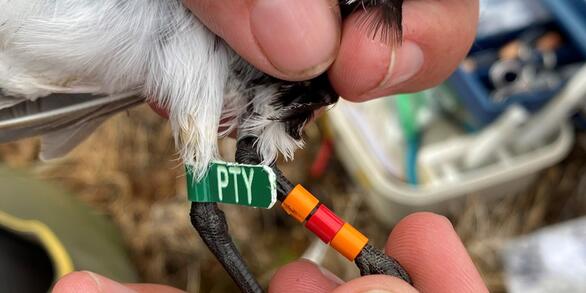
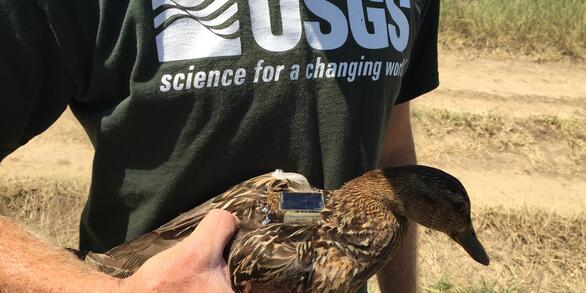
To understand information needs and respond to the many challenges in bird conservation, USGS scientists participate in Flyway committees, on Joint Venture boards and working groups, in professional organizations, and in other conservation partnerships. These activities connect USGS scientists to conservation partners with whom they work to address substantial challenges. More than one hundred USGS scientists are dedicated to the scientific study of birds.
Bird Research
Seabirds and Forage Fish Ecology
Tracking Data for Spectacled Eiders (Somateria fischeri)
Tracking Data for Common Eiders (Somateria mollissima)
Shorebird Research
Avian Influenza Research
Changing Arctic Ecosystems
Alaska Landbird Monitoring Survey
USGS Avian Research: Collaborative Science for Bird Management and Conservation
Waterfowl Research

EESC Makes an Impact: Preserving our Hunting Resources
USGS Alaska Science Center Wildlife Tracking Data Collection
Pacific Island Bird Survey Design and Data Analysis
North Pacific Pelagic Seabird Database
North American Waterfowl Management Plan
Monitoring Effects of Barrier Island Restoration on Piping Plovers in Louisiana
Sea Duck Research
Conservation Ecology of Hawaiian Forest Birds
Boreal Partners in Flight
Antibiotic Resistant Bacteria in Migratory Birds
Informing Renewable Energy Development Siting Decisions with Vertebrate Biodiversity Measures
Mapping Grassland Bird Community Distribution under a Changing Landscape
Recent data (2020-2022) related to USGS migratory bird research is listed below. A complete listing of USGS migratory bird data is available from the button below.
Observation Data of Migratory Birds during Spring and Fall Migration and their use of Habitats in the Yakutat Foreland of Alaska Observation Data of Migratory Birds during Spring and Fall Migration and their use of Habitats in the Yakutat Foreland of Alaska
Aquatic Prey Resources in Response to Estuary Restoration in Willapa Bay, Washington (2014-2015) Aquatic Prey Resources in Response to Estuary Restoration in Willapa Bay, Washington (2014-2015)
Data Supporting Studies of Waterbird and Arctic Lake Ecosystems within the National Petroleum Reserve-Alaska, 1974-1992 Data Supporting Studies of Waterbird and Arctic Lake Ecosystems within the National Petroleum Reserve-Alaska, 1974-1992
Migration stopover ecology of cinnamon teal in western North America Migration stopover ecology of cinnamon teal in western North America
Egg Morphometric Data Obtained for White-faced Ibis Nesting in Bear River Migratory Bird Refuge, Great Salt Lake, Utah (2010-2012) Egg Morphometric Data Obtained for White-faced Ibis Nesting in Bear River Migratory Bird Refuge, Great Salt Lake, Utah (2010-2012)
Aerial surveys of shorebirds at pre-migratory staging sites in western Alaska, 2018-2019 Aerial surveys of shorebirds at pre-migratory staging sites in western Alaska, 2018-2019
Recent publications (2020-2022) related to USGS migratory bird research are listed below. A complete listing of USGS migratory bird publications is available from the button below.
Balancing future renewable energy infrastructure siting and associated habitat loss for migrating whooping cranes Balancing future renewable energy infrastructure siting and associated habitat loss for migrating whooping cranes
Museum genomics provide evidence for persistent genetic differentiation in a threatened seabird species in the Western Atlantic Museum genomics provide evidence for persistent genetic differentiation in a threatened seabird species in the Western Atlantic
Prioritizing habitats based on abundance and distribution of molting waterfowl in the Teshekpuk Lake Special Area of the National Petroleum Reserve, Alaska Prioritizing habitats based on abundance and distribution of molting waterfowl in the Teshekpuk Lake Special Area of the National Petroleum Reserve, Alaska
Interpreting long-distance movements of non-migratory golden eagles: Prospecting and nomadism? Interpreting long-distance movements of non-migratory golden eagles: Prospecting and nomadism?
Grassland conservation supports migratory birds and produces economic benefits for the commercial beekeeping industry in the U.S. Great Plains Grassland conservation supports migratory birds and produces economic benefits for the commercial beekeeping industry in the U.S. Great Plains
Find out what's new!
To understand information needs and respond to the many challenges in bird conservation, USGS scientists participate in Flyway committees, on Joint Venture boards and working groups, in professional organizations, and in other conservation partnerships. These activities connect USGS scientists to conservation partners with whom they work to address substantial challenges. More than one hundred USGS scientists are dedicated to the scientific study of birds.
Bird Research
Seabirds and Forage Fish Ecology
Tracking Data for Spectacled Eiders (Somateria fischeri)
Tracking Data for Common Eiders (Somateria mollissima)
Shorebird Research
Avian Influenza Research
Changing Arctic Ecosystems
Alaska Landbird Monitoring Survey
USGS Avian Research: Collaborative Science for Bird Management and Conservation
Waterfowl Research
EESC Makes an Impact: Preserving our Hunting Resources
USGS Alaska Science Center Wildlife Tracking Data Collection
Pacific Island Bird Survey Design and Data Analysis
North Pacific Pelagic Seabird Database
North American Waterfowl Management Plan
Monitoring Effects of Barrier Island Restoration on Piping Plovers in Louisiana
Sea Duck Research
Conservation Ecology of Hawaiian Forest Birds
Boreal Partners in Flight
Antibiotic Resistant Bacteria in Migratory Birds
Informing Renewable Energy Development Siting Decisions with Vertebrate Biodiversity Measures
Mapping Grassland Bird Community Distribution under a Changing Landscape
Recent data (2020-2022) related to USGS migratory bird research is listed below. A complete listing of USGS migratory bird data is available from the button below.
Observation Data of Migratory Birds during Spring and Fall Migration and their use of Habitats in the Yakutat Foreland of Alaska Observation Data of Migratory Birds during Spring and Fall Migration and their use of Habitats in the Yakutat Foreland of Alaska
Aquatic Prey Resources in Response to Estuary Restoration in Willapa Bay, Washington (2014-2015) Aquatic Prey Resources in Response to Estuary Restoration in Willapa Bay, Washington (2014-2015)
Data Supporting Studies of Waterbird and Arctic Lake Ecosystems within the National Petroleum Reserve-Alaska, 1974-1992 Data Supporting Studies of Waterbird and Arctic Lake Ecosystems within the National Petroleum Reserve-Alaska, 1974-1992
Migration stopover ecology of cinnamon teal in western North America Migration stopover ecology of cinnamon teal in western North America
Egg Morphometric Data Obtained for White-faced Ibis Nesting in Bear River Migratory Bird Refuge, Great Salt Lake, Utah (2010-2012) Egg Morphometric Data Obtained for White-faced Ibis Nesting in Bear River Migratory Bird Refuge, Great Salt Lake, Utah (2010-2012)
Aerial surveys of shorebirds at pre-migratory staging sites in western Alaska, 2018-2019 Aerial surveys of shorebirds at pre-migratory staging sites in western Alaska, 2018-2019
Recent publications (2020-2022) related to USGS migratory bird research are listed below. A complete listing of USGS migratory bird publications is available from the button below.
Balancing future renewable energy infrastructure siting and associated habitat loss for migrating whooping cranes Balancing future renewable energy infrastructure siting and associated habitat loss for migrating whooping cranes
Museum genomics provide evidence for persistent genetic differentiation in a threatened seabird species in the Western Atlantic Museum genomics provide evidence for persistent genetic differentiation in a threatened seabird species in the Western Atlantic
Prioritizing habitats based on abundance and distribution of molting waterfowl in the Teshekpuk Lake Special Area of the National Petroleum Reserve, Alaska Prioritizing habitats based on abundance and distribution of molting waterfowl in the Teshekpuk Lake Special Area of the National Petroleum Reserve, Alaska
Interpreting long-distance movements of non-migratory golden eagles: Prospecting and nomadism? Interpreting long-distance movements of non-migratory golden eagles: Prospecting and nomadism?
Grassland conservation supports migratory birds and produces economic benefits for the commercial beekeeping industry in the U.S. Great Plains Grassland conservation supports migratory birds and produces economic benefits for the commercial beekeeping industry in the U.S. Great Plains
Find out what's new!