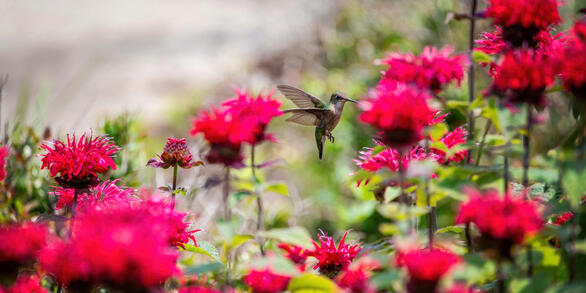
Ecosystems—whether agricultural, urban, or natural—depend on pollinators, great and small. Pollinators in the form of bees, birds, butterflies, bats, and even moths provide vital, but often invisible services, from contributing to biodiverse terrestrial wildlife and plant communities to supporting healthy watersheds. Pollinator declines worldwide have been noted as land-use and climate changes occur on the landscape. USGS is laying the groundwork for better scientific understanding of wildlife population level impacts from a variety of potential threats to species from big game to birds, to bats, to pollinators.
USGS Bee Lab at the Eastern Ecological Science Center
With our U.S. Fish and Wildlife Service partners, the USGS Bee Lab develops identification tools and keys for native bee species, takes public access high resolution photographs of bees, works with partners across the country, designs and tests bee counting techniques, documents bee/plant associations and confirms identification of native bee species.
Pollinator Conservation and Climate Science
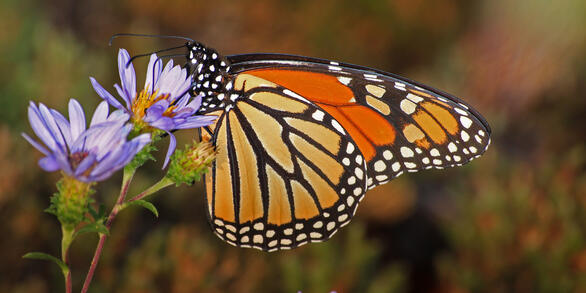
Pollinator species in the United States are in crisis based on broad-scale changes in land-use and climate. The USGS is working with the U.S. Fish and Wildlife Service and others to develop conservation plans, for pollinators, including quantification of the effects of climate change.
Pollinator Research
Bat Species of Concern: An Ecological Synthesis for Resource Managers
High Elevation Cave Surveys for Bats and White Nose Syndrome
Understanding Factors Affecting the Decline of the Samoan Swallowtail Butterfly
An Inventory and Comparative Study of Bees, A Keystone Ecological Group in the Endangered Coastal Prairie of Louisiana
Pollinator Germplasm as a Genetic Resource for Conservation
Explore published USGS pollinator datasets below.
Waterborne Gradient Self-potential, Temperature, and Conductivity Logging of Lake Travis, Texas, near the Bee Creek Fault, March-April 2020 Waterborne Gradient Self-potential, Temperature, and Conductivity Logging of Lake Travis, Texas, near the Bee Creek Fault, March-April 2020
Western bumble bee predicted occupancy and detection probability rasters for the western continental United States from 1998 to 2018 Western bumble bee predicted occupancy and detection probability rasters for the western continental United States from 1998 to 2018
Western Gulf Coastal Plain Louisiana Land Use and Land Cover ground truth observations from 2016 to 2017 Western Gulf Coastal Plain Louisiana Land Use and Land Cover ground truth observations from 2016 to 2017
Rusty Patched Bumble Bee Pollen Metagenome Rusty Patched Bumble Bee Pollen Metagenome
Pesticides in pollinator tissue collected from margins near agricultural fields in Conservation Areas of Missouri Pesticides in pollinator tissue collected from margins near agricultural fields in Conservation Areas of Missouri
High forb diversity prairie reconstruction at Neal Smith NWR 2005-2015 High forb diversity prairie reconstruction at Neal Smith NWR 2005-2015
Bee-Gap: Ecology, Life-History, and Distribution of Bee Species in the United States 2017 Bee-Gap: Ecology, Life-History, and Distribution of Bee Species in the United States 2017
Dataset: Plant and bee transects in the Northern Great Plains 2015-2018 Dataset: Plant and bee transects in the Northern Great Plains 2015-2018
Dataset: Molecular identification of honey bee collected pollen in the Northern Great Plains, 2015-2016 Dataset: Molecular identification of honey bee collected pollen in the Northern Great Plains, 2015-2016
Bee populations and habitat survey in southwest Louisiana grasslands Bee populations and habitat survey in southwest Louisiana grasslands
Uptake and toxicity of clothianidin to monarch butterflies from milkweed consumption (ver. 2.0, January 2020) Uptake and toxicity of clothianidin to monarch butterflies from milkweed consumption (ver. 2.0, January 2020)
Metagenomic detection and reconstruction of Lake Sinai Virus from honey bee sequence data Metagenomic detection and reconstruction of Lake Sinai Virus from honey bee sequence data
Recent publications related to USGS pollinator research are listed below. A complete listing of USGS pollinator publications is available from the button below.
U.S. Geological Survey Pollinator Science Strategy, 2025–35—A Review and Look Forward U.S. Geological Survey Pollinator Science Strategy, 2025–35—A Review and Look Forward
Improving pollinator habitat using mycorrhizal inoculum: Evaluating the impact of differences in remnant and reconstruction mycorrhizas on performance of conservative prairie plant species Improving pollinator habitat using mycorrhizal inoculum: Evaluating the impact of differences in remnant and reconstruction mycorrhizas on performance of conservative prairie plant species
Pesticide exposure of wild bees and honey bees foraging from field border flowers in intensively managed agriculture areas Pesticide exposure of wild bees and honey bees foraging from field border flowers in intensively managed agriculture areas
Forbs included in conservation seed mixes exhibit variable blooming detection rates and cost-effectiveness: Implications for pollinator habitat design Forbs included in conservation seed mixes exhibit variable blooming detection rates and cost-effectiveness: Implications for pollinator habitat design
The importance of forests in bumble bee biology and conservation The importance of forests in bumble bee biology and conservation
Patch utilization and flower visitations by wild bees in a honey bee-dominated, grassland landscape Patch utilization and flower visitations by wild bees in a honey bee-dominated, grassland landscape
Farmland in U.S. Conservation Reserve Program has unique floral composition that promotes bee summer foraging Farmland in U.S. Conservation Reserve Program has unique floral composition that promotes bee summer foraging
Honey bee (Apis mellifera) colonies benefit from grassland/ pasture while bumble bee (Bombus impatiens) colonies in the same landscapes benefit from non-corn/soybean cropland Honey bee (Apis mellifera) colonies benefit from grassland/ pasture while bumble bee (Bombus impatiens) colonies in the same landscapes benefit from non-corn/soybean cropland
Pollinator communities vary with vegetation structure and time since management within regenerating timber harvests of the Central Appalachian Mountains Pollinator communities vary with vegetation structure and time since management within regenerating timber harvests of the Central Appalachian Mountains
The influence of floral resources and microclimate on pollinator visitation in an agro-ecosystem The influence of floral resources and microclimate on pollinator visitation in an agro-ecosystem
Spatiotemporal dynamics of insect pollinator communities in sagebrush steppe associated with weather and vegetation Spatiotemporal dynamics of insect pollinator communities in sagebrush steppe associated with weather and vegetation
Floral resource selection by wild bees and honey bees in the Midwest United States: Implications for designing pollinator habitat Floral resource selection by wild bees and honey bees in the Midwest United States: Implications for designing pollinator habitat
Land conversion and pesticide use degrade forage areas for honey bees in America’s beekeeping epicenter Land conversion and pesticide use degrade forage areas for honey bees in America’s beekeeping epicenter
Ecosystems—whether agricultural, urban, or natural—depend on pollinators, great and small. Pollinators in the form of bees, birds, butterflies, bats, and even moths provide vital, but often invisible services, from contributing to biodiverse terrestrial wildlife and plant communities to supporting healthy watersheds. Pollinator declines worldwide have been noted as land-use and climate changes occur on the landscape. USGS is laying the groundwork for better scientific understanding of wildlife population level impacts from a variety of potential threats to species from big game to birds, to bats, to pollinators.
USGS Bee Lab at the Eastern Ecological Science Center
With our U.S. Fish and Wildlife Service partners, the USGS Bee Lab develops identification tools and keys for native bee species, takes public access high resolution photographs of bees, works with partners across the country, designs and tests bee counting techniques, documents bee/plant associations and confirms identification of native bee species.
Pollinator Conservation and Climate Science
Pollinator species in the United States are in crisis based on broad-scale changes in land-use and climate. The USGS is working with the U.S. Fish and Wildlife Service and others to develop conservation plans, for pollinators, including quantification of the effects of climate change.
Pollinator Research
Bat Species of Concern: An Ecological Synthesis for Resource Managers
High Elevation Cave Surveys for Bats and White Nose Syndrome
Understanding Factors Affecting the Decline of the Samoan Swallowtail Butterfly
An Inventory and Comparative Study of Bees, A Keystone Ecological Group in the Endangered Coastal Prairie of Louisiana
Pollinator Germplasm as a Genetic Resource for Conservation
Explore published USGS pollinator datasets below.
Waterborne Gradient Self-potential, Temperature, and Conductivity Logging of Lake Travis, Texas, near the Bee Creek Fault, March-April 2020 Waterborne Gradient Self-potential, Temperature, and Conductivity Logging of Lake Travis, Texas, near the Bee Creek Fault, March-April 2020
Western bumble bee predicted occupancy and detection probability rasters for the western continental United States from 1998 to 2018 Western bumble bee predicted occupancy and detection probability rasters for the western continental United States from 1998 to 2018
Western Gulf Coastal Plain Louisiana Land Use and Land Cover ground truth observations from 2016 to 2017 Western Gulf Coastal Plain Louisiana Land Use and Land Cover ground truth observations from 2016 to 2017
Rusty Patched Bumble Bee Pollen Metagenome Rusty Patched Bumble Bee Pollen Metagenome
Pesticides in pollinator tissue collected from margins near agricultural fields in Conservation Areas of Missouri Pesticides in pollinator tissue collected from margins near agricultural fields in Conservation Areas of Missouri
High forb diversity prairie reconstruction at Neal Smith NWR 2005-2015 High forb diversity prairie reconstruction at Neal Smith NWR 2005-2015
Bee-Gap: Ecology, Life-History, and Distribution of Bee Species in the United States 2017 Bee-Gap: Ecology, Life-History, and Distribution of Bee Species in the United States 2017
Dataset: Plant and bee transects in the Northern Great Plains 2015-2018 Dataset: Plant and bee transects in the Northern Great Plains 2015-2018
Dataset: Molecular identification of honey bee collected pollen in the Northern Great Plains, 2015-2016 Dataset: Molecular identification of honey bee collected pollen in the Northern Great Plains, 2015-2016
Bee populations and habitat survey in southwest Louisiana grasslands Bee populations and habitat survey in southwest Louisiana grasslands
Uptake and toxicity of clothianidin to monarch butterflies from milkweed consumption (ver. 2.0, January 2020) Uptake and toxicity of clothianidin to monarch butterflies from milkweed consumption (ver. 2.0, January 2020)
Metagenomic detection and reconstruction of Lake Sinai Virus from honey bee sequence data Metagenomic detection and reconstruction of Lake Sinai Virus from honey bee sequence data
Recent publications related to USGS pollinator research are listed below. A complete listing of USGS pollinator publications is available from the button below.