David S Pilliod
My research focuses on species conservation, habitat management, and effectiveness of restoration in a variety of terrestrial and aquatic ecosystems. I also co-lead the Pacific Northwest Environmental DNA Laboratory.
Wildlife Ecology and Conservation Biology Team (FRESC)
Pacific Northwest Environmental DNA Laboratory
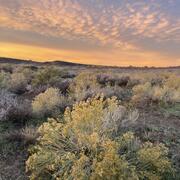
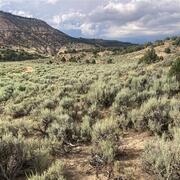
I lead a team of scientists that develop tools and models to improve understanding of ecological systems and solve challenging problems in natural resource management. We primarily address questions related to species conservation, wildlife habitat, and restoration. We combine molecular methods, remote sensing, field studies, and statistical modeling. Our research team also develops data management and decision support systems to facilitate adaptive management, especially in western rangelands. We primarily work on issues affecting the Intermountain West and Great Basin regions of the U.S.
Professional Experience
2006 - Present: USGS. Forest and Rangeland Ecosystem Science Center, Supervisory Research Ecologist, Boise, Idaho
Education and Certifications
Ph.D., Ecology, Idaho State University, Pocatello, ID (2001)
B.A., Biology, University of California, Santa Cruz, CA (1991)
Science and Products
If you are unable to access or download a product, email fresc_outreach@usgs.gov a request, including the full citation, or call (541) 750-1030.
Persistence at distributional edges: Columbia spotted frog habitat in the arid Great Basin, USA Persistence at distributional edges: Columbia spotted frog habitat in the arid Great Basin, USA
Effects of changing climate on aquatic habitat and connectivity for remnant populations of a wide-ranging frog species in an arid landscape Effects of changing climate on aquatic habitat and connectivity for remnant populations of a wide-ranging frog species in an arid landscape
Managing habitat to slow or reverse population declines of the Columbia spotted frog in the Northern Great Basin Managing habitat to slow or reverse population declines of the Columbia spotted frog in the Northern Great Basin
Sampling animal sign in heterogeneous environments: how much is enough? Sampling animal sign in heterogeneous environments: how much is enough?
Characterizing the distribution of an endangered salmonid using environmental DNA analysis Characterizing the distribution of an endangered salmonid using environmental DNA analysis
Quantifying and predicting fuels and the effects of reduction treatments along successional and invasion gradients in sagebrush habitats Quantifying and predicting fuels and the effects of reduction treatments along successional and invasion gradients in sagebrush habitats
Moving environmental DNA methods from concept to practice for monitoring aquatic macroorganisms Moving environmental DNA methods from concept to practice for monitoring aquatic macroorganisms
Long-term effects of seeding after wildfire on vegetation in Great Basin shrubland ecosystems Long-term effects of seeding after wildfire on vegetation in Great Basin shrubland ecosystems
Quantifying restoration effectiveness using multi-scale habitat models: implications for sage-grouse in the Great Basin Quantifying restoration effectiveness using multi-scale habitat models: implications for sage-grouse in the Great Basin
Semi-automated identification of leopard frogs Semi-automated identification of leopard frogs
A reference system for animal biometrics: application to the northern leopard frog A reference system for animal biometrics: application to the northern leopard frog
Roles of patch characteristics, drought frequency, and restoration in long-term trends of a widespread amphibian Roles of patch characteristics, drought frequency, and restoration in long-term trends of a widespread amphibian
Non-USGS Publications**
**Disclaimer: The views expressed in Non-USGS publications are those of the author and do not represent the views of the USGS, Department of the Interior, or the U.S. Government.
Wildlife Ecology and Conservation Biology Team (FRESC)
If you are unable to access or download a product, email fresc_outreach@usgs.gov a request, including the full citation, or call (541) 750-1030.
To request an interview, contact fresc_outreach@usgs.gov or call (541) 750-1030.
Science and Products
If you are unable to access or download a product, email fresc_outreach@usgs.gov a request, including the full citation, or call (541) 750-1030.
Persistence at distributional edges: Columbia spotted frog habitat in the arid Great Basin, USA Persistence at distributional edges: Columbia spotted frog habitat in the arid Great Basin, USA
Effects of changing climate on aquatic habitat and connectivity for remnant populations of a wide-ranging frog species in an arid landscape Effects of changing climate on aquatic habitat and connectivity for remnant populations of a wide-ranging frog species in an arid landscape
Managing habitat to slow or reverse population declines of the Columbia spotted frog in the Northern Great Basin Managing habitat to slow or reverse population declines of the Columbia spotted frog in the Northern Great Basin
Sampling animal sign in heterogeneous environments: how much is enough? Sampling animal sign in heterogeneous environments: how much is enough?
Characterizing the distribution of an endangered salmonid using environmental DNA analysis Characterizing the distribution of an endangered salmonid using environmental DNA analysis
Quantifying and predicting fuels and the effects of reduction treatments along successional and invasion gradients in sagebrush habitats Quantifying and predicting fuels and the effects of reduction treatments along successional and invasion gradients in sagebrush habitats
Moving environmental DNA methods from concept to practice for monitoring aquatic macroorganisms Moving environmental DNA methods from concept to practice for monitoring aquatic macroorganisms
Long-term effects of seeding after wildfire on vegetation in Great Basin shrubland ecosystems Long-term effects of seeding after wildfire on vegetation in Great Basin shrubland ecosystems
Quantifying restoration effectiveness using multi-scale habitat models: implications for sage-grouse in the Great Basin Quantifying restoration effectiveness using multi-scale habitat models: implications for sage-grouse in the Great Basin
Semi-automated identification of leopard frogs Semi-automated identification of leopard frogs
A reference system for animal biometrics: application to the northern leopard frog A reference system for animal biometrics: application to the northern leopard frog
Roles of patch characteristics, drought frequency, and restoration in long-term trends of a widespread amphibian Roles of patch characteristics, drought frequency, and restoration in long-term trends of a widespread amphibian
Non-USGS Publications**
**Disclaimer: The views expressed in Non-USGS publications are those of the author and do not represent the views of the USGS, Department of the Interior, or the U.S. Government.
Wildlife Ecology and Conservation Biology Team (FRESC)
If you are unable to access or download a product, email fresc_outreach@usgs.gov a request, including the full citation, or call (541) 750-1030.
To request an interview, contact fresc_outreach@usgs.gov or call (541) 750-1030.