



Greg Noe has been a Research Ecologist with the U.S. Geological Survey in Reston, VA, since 2002, where he leads the Wetland Ecosystem Ecology & Biogeochemistry Laboratory (WEEBL) in the Florence Bascom Geoscience Center. Dr. Noe’s research centers on wetland ecosystem ecology and watershed processes.
Gregory Noe
Research Interests: Wetland ecosystem ecology, focusing on the interactive influences of hydrology, geomorphology, climate, and biology on nitrogen, phosphorus, carbon, and sediment biogeochemistry and transport in watersheds, as well as plant community ecology and restoration ecology.
Greg Noe has been a Research Ecologist with the U.S. Geological Survey in Reston, VA, since 2002, where he leads the Wetland Ecosystem Ecology & Biogeochemistry Laboratory (WEEBL) in the Florence Bascom Geoscience Center. Dr. Noe’s research centers on wetland ecosystem ecology and watershed processes. His dissertation research identified the complex controls on annual plant germination in the salt marshes of southern California. This was followed by post-doctoral research on phosphorus biogeochemistry and enrichment effects in the Florida Everglades. When joining the USGS, he started a research program on nutrient cycling, transport, and retention in wetlands associated with floodplains.
He is the recent President of the Society of Wetland Scientists, serves on the Science and Technical Advisory Committee of the Chesapeake Bay Program, served on the editorial board of Wetlands and Wetlands Ecology and Management, is the recipient of the President's Service Award from the Society of Wetland Scientists, and has served on the program committees of national and international scientific conferences and numerous graduate student committees. Greg is a recipient of the Meritorious Service Award from the Department of the Interior and is a Fellow of the Society of Wetland Scientists.
Current projects:
- Quantifying and modeling nutrient retention by riverine floodplains from site to watershed scales across the U.S.
- Evaluating the impacts of watershed restoration on water quality and stream health in the Chesapeake
- Identifying the effects of sea level rise, salinization, and sediment availability on tidal freshwater wetland ecosystem resilience along the Atlantic Coast
- Measuring the water quality functions in created wetlands, stream restoration projects, and floodplain restorations, and how to optimize their design
Science and Products

Coastal Wetland Vulnerability to Climate Change and Sea-Level Rise: Understanding Ecological Thresholds and Ecosystem Transformations
Eighteen USGS coastal scientists from all four coasts of the conterminous United States are working together to advance the understanding of climate change and sea-level rise impacts to coastal wetlands.
By
California Water Science Center, Chesapeake Bay Activities, Eastern Ecological Science Center, Florence Bascom Geoscience Center, Great Lakes Science Center, Pacific Coastal and Marine Science Center, St. Petersburg Coastal and Marine Science Center, Western Ecological Research Center (WERC), Western Geographic Science Center, Wetland and Aquatic Research Center , Woods Hole Coastal and Marine Science Center

Using Multiple Indicators to Assess Stream Condition in the Chesapeake Bay
USGS is working with federal, state and local partners to develop multiple assessments of stream and river conditions in non-tidal areas of the Chesapeake Bay watershed. These assessments will help managers preserve stream health and improve biological conditions in impaired streams as the human population and climate continue to change in this region.

Leveraging Existing USGS Streamgage Data to Map Flood-Prone Areas
We will develop reproducible workflows in R and Python to combine already existing and underutilized field data collected as part of the USGS streamgage network with remotely sensed data to map flood-prone areas for various recurrence intervals in both gaged and ungaged stream reaches.
Leveraging Existing USGS Streamgage Data to Map Flood-Prone Areas
We will develop reproducible workflows in R and Python to combine already existing and underutilized field data collected as part of the USGS streamgage network with remotely sensed data to map flood-prone areas for various recurrence intervals in both gaged and ungaged stream reaches.

New study shows importance of streambank erosion and floodplain deposition on sediment, phosphorus, and nitrogen sources and transport in the Chesapeake watershed
Issue: As Chesapeake Bay Program partners work to reduce pollution, knowing sources of sediment, phosphorus, and nitrogen transported to the Bay is critical for effective and efficient management. Streams and their associated floodplains have an important influence on the transport of nutrients and sediment through the Chesapeake watershed and into tidal waters. The USGS is conducting...

New Review of Sediment Science Informs Choices of Management Actions in the Chesapeake
Issue: The Chesapeake Bay Program (CBP) is pursuing restoration efforts to improve habitats and associated water quality for fisheries, both in the watershed and estuary. Excess sediment decreases light in tidal waters for submerged aquatic vegetation, harms oysters, carries contaminants, and impairs stream health throughout the watershed. The CBP is implementing management actions and policies...
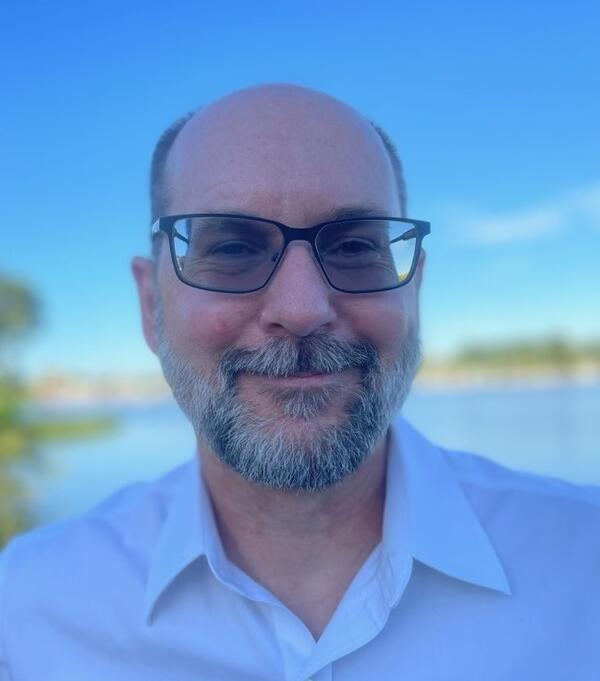
Greg Noe CT 2025
Greg Noe has been a Research Ecologist with the U.S. Geological Survey in Reston, VA, since 2002, where he leads the Wetland Ecosystem Ecology & Biogeochemistry Laboratory (WEEBL) in the Florence Bascom Geoscience Center. Dr. Noe’s research centers on wetland ecosystem ecology and watershed processes.

USGS ecologist Jaimie Gillespie measuring a Sediment Elevation Table
USGS ecologist Jaimie Gillespie measuring a Sediment Elevation TableUSGS ecologist Jaimie Gillespie measuring a Sediment Elevation Table (SET) on the Pamunkey River, VA. This SET is part of a larger project which consists of two SETs at each of five research sites, on both the Mattaponi and Pamunkey Rivers spanning Oligahaline to non-tidal conditions.
USGS ecologist Jaimie Gillespie measuring a Sediment Elevation Table
USGS ecologist Jaimie Gillespie measuring a Sediment Elevation TableUSGS ecologist Jaimie Gillespie measuring a Sediment Elevation Table (SET) on the Pamunkey River, VA. This SET is part of a larger project which consists of two SETs at each of five research sites, on both the Mattaponi and Pamunkey Rivers spanning Oligahaline to non-tidal conditions.
Science and Products
Coastal Wetland Vulnerability to Climate Change and Sea-Level Rise: Understanding Ecological Thresholds and Ecosystem Transformations
Eighteen USGS coastal scientists from all four coasts of the conterminous United States are working together to advance the understanding of climate change and sea-level rise impacts to coastal wetlands.
By
California Water Science Center, Chesapeake Bay Activities, Eastern Ecological Science Center, Florence Bascom Geoscience Center, Great Lakes Science Center, Pacific Coastal and Marine Science Center, St. Petersburg Coastal and Marine Science Center, Western Ecological Research Center (WERC), Western Geographic Science Center, Wetland and Aquatic Research Center , Woods Hole Coastal and Marine Science Center
Using Multiple Indicators to Assess Stream Condition in the Chesapeake Bay
USGS is working with federal, state and local partners to develop multiple assessments of stream and river conditions in non-tidal areas of the Chesapeake Bay watershed. These assessments will help managers preserve stream health and improve biological conditions in impaired streams as the human population and climate continue to change in this region.
Leveraging Existing USGS Streamgage Data to Map Flood-Prone Areas
We will develop reproducible workflows in R and Python to combine already existing and underutilized field data collected as part of the USGS streamgage network with remotely sensed data to map flood-prone areas for various recurrence intervals in both gaged and ungaged stream reaches.
Leveraging Existing USGS Streamgage Data to Map Flood-Prone Areas
We will develop reproducible workflows in R and Python to combine already existing and underutilized field data collected as part of the USGS streamgage network with remotely sensed data to map flood-prone areas for various recurrence intervals in both gaged and ungaged stream reaches.
New study shows importance of streambank erosion and floodplain deposition on sediment, phosphorus, and nitrogen sources and transport in the Chesapeake watershed
Issue: As Chesapeake Bay Program partners work to reduce pollution, knowing sources of sediment, phosphorus, and nitrogen transported to the Bay is critical for effective and efficient management. Streams and their associated floodplains have an important influence on the transport of nutrients and sediment through the Chesapeake watershed and into tidal waters. The USGS is conducting...
New Review of Sediment Science Informs Choices of Management Actions in the Chesapeake
Issue: The Chesapeake Bay Program (CBP) is pursuing restoration efforts to improve habitats and associated water quality for fisheries, both in the watershed and estuary. Excess sediment decreases light in tidal waters for submerged aquatic vegetation, harms oysters, carries contaminants, and impairs stream health throughout the watershed. The CBP is implementing management actions and policies...
Greg Noe CT 2025
Greg Noe has been a Research Ecologist with the U.S. Geological Survey in Reston, VA, since 2002, where he leads the Wetland Ecosystem Ecology & Biogeochemistry Laboratory (WEEBL) in the Florence Bascom Geoscience Center. Dr. Noe’s research centers on wetland ecosystem ecology and watershed processes.
Greg Noe has been a Research Ecologist with the U.S. Geological Survey in Reston, VA, since 2002, where he leads the Wetland Ecosystem Ecology & Biogeochemistry Laboratory (WEEBL) in the Florence Bascom Geoscience Center. Dr. Noe’s research centers on wetland ecosystem ecology and watershed processes.
USGS ecologist Jaimie Gillespie measuring a Sediment Elevation Table
USGS ecologist Jaimie Gillespie measuring a Sediment Elevation TableUSGS ecologist Jaimie Gillespie measuring a Sediment Elevation Table (SET) on the Pamunkey River, VA. This SET is part of a larger project which consists of two SETs at each of five research sites, on both the Mattaponi and Pamunkey Rivers spanning Oligahaline to non-tidal conditions.
USGS ecologist Jaimie Gillespie measuring a Sediment Elevation Table
USGS ecologist Jaimie Gillespie measuring a Sediment Elevation TableUSGS ecologist Jaimie Gillespie measuring a Sediment Elevation Table (SET) on the Pamunkey River, VA. This SET is part of a larger project which consists of two SETs at each of five research sites, on both the Mattaponi and Pamunkey Rivers spanning Oligahaline to non-tidal conditions.