
Keith A Loftin, Ph.D.
Products and information related to Keith Loftin.
Science and Products
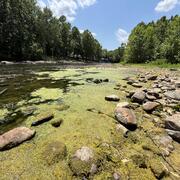
Tracking Toxins at the Coastline: A National Look at Harmful Algal Toxins in U.S. Coastal Waters
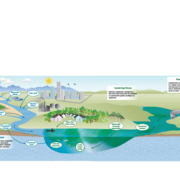
Leveraging UV Light for Effective Algal Toxin Removal in Drinking Water
Algal and Environmental Toxins Research Laboratory — Lawrence, Kansas
Decoding Harmful Algal Blooms: Unraveling the Mystery
Understanding Algal Bloom Dynamics in Lake Okeechobee
FY25 Capabilities and Services
Fourier Transform Infrared (FTIR) screening of extracted sediments for samples collected for the Sediment-Bound Contaminant Resiliency and Response Strategy pilot study, northeastern United States, 2015 Fourier Transform Infrared (FTIR) screening of extracted sediments for samples collected for the Sediment-Bound Contaminant Resiliency and Response Strategy pilot study, northeastern United States, 2015
Protein Phosphatase 2A screening of extracted sediments for samples collected for the Sediment-Bound Contaminant Resiliency and Response Strategy pilot study, northeastern United States, 2015 Protein Phosphatase 2A screening of extracted sediments for samples collected for the Sediment-Bound Contaminant Resiliency and Response Strategy pilot study, northeastern United States, 2015
2015 National Coastal Conditions Assessment: Algal Toxins and Cyanotoxins in United States Great Lakes Samples Detected by Liquid Chromatography Triple Quadrupole Mass Spectrometry (LC/MS/MS) 2015 National Coastal Conditions Assessment: Algal Toxins and Cyanotoxins in United States Great Lakes Samples Detected by Liquid Chromatography Triple Quadrupole Mass Spectrometry (LC/MS/MS)
2015 National Coastal Conditions Assessment: Algal Toxins and Cyanotoxins in United States Estuary Samples Detected by Liquid Chromatography Triple Quadrupole Mass Spectrometry (LC/MS/MS) 2015 National Coastal Conditions Assessment: Algal Toxins and Cyanotoxins in United States Estuary Samples Detected by Liquid Chromatography Triple Quadrupole Mass Spectrometry (LC/MS/MS)
Phytoplankton Identification and Enumeration Data Collected from Seven Reservoirs in the United States (July to November 2019) Phytoplankton Identification and Enumeration Data Collected from Seven Reservoirs in the United States (July to November 2019)
Phytoplankton data for samples collected at twelve large river sites throughout the United States, June through October 2019 Phytoplankton data for samples collected at twelve large river sites throughout the United States, June through October 2019
(USGS scientist working on data analysis of cyanotoxins in water
(USGS scientist working on data analysis of cyanotoxins in waterU.S. Geological Survey (USGS) scientist working on data analysis of cyanotoxins in water samples
(USGS scientist working on data analysis of cyanotoxins in water
(USGS scientist working on data analysis of cyanotoxins in waterU.S. Geological Survey (USGS) scientist working on data analysis of cyanotoxins in water samples
USGS scientists evaluating the nebulizer assembly in a mixed mode ionization source of a triple quadrupole mass spectrometer used to measure individual cyanotoxins
USGS scientist preparing to measure cyanotoxins in water samples
USGS scientist preparing to measure cyanotoxins in water samplesUSGS) scientist preparing to measure cyanotoxins in water samples using an automated enzyme-linked immunosorbent assay (ELISA) instrument
USGS scientist preparing to measure cyanotoxins in water samples
USGS scientist preparing to measure cyanotoxins in water samplesUSGS) scientist preparing to measure cyanotoxins in water samples using an automated enzyme-linked immunosorbent assay (ELISA) instrument
Tapwater-contaminant mixtures and risk in a biofuel-facility impacted private-well community Tapwater-contaminant mixtures and risk in a biofuel-facility impacted private-well community
Cyanotoxin and domoic acid occurrence, relation with salinity, and potential recreational health risks in U.S. coasts in the 2015 US EPA National Coastal Condition Assessment Cyanotoxin and domoic acid occurrence, relation with salinity, and potential recreational health risks in U.S. coasts in the 2015 US EPA National Coastal Condition Assessment
Comparison of Microcystin-LR degradation by UV222 and UV254 Comparison of Microcystin-LR degradation by UV222 and UV254
Tapwater exposures, residential risk, and mitigation in a PFAS-impacted-groundwater community Tapwater exposures, residential risk, and mitigation in a PFAS-impacted-groundwater community
Genome sequences of toxigenic cyanobacteria from a bloom in Lake Mattamuskeet, North Carolina (United States) Genome sequences of toxigenic cyanobacteria from a bloom in Lake Mattamuskeet, North Carolina (United States)
Phytoplankton assemblage structure, drivers, and thresholds with a focus on harmful algal bloom ecology in the Lake Okeechobee system, Florida, USA Phytoplankton assemblage structure, drivers, and thresholds with a focus on harmful algal bloom ecology in the Lake Okeechobee system, Florida, USA
CyAN Field Integrated Exploratory Lakes Database (CyAN FIELD) CyAN Field Integrated Exploratory Lakes Database (CyAN FIELD)
Science and Products
Tracking Toxins at the Coastline: A National Look at Harmful Algal Toxins in U.S. Coastal Waters
Leveraging UV Light for Effective Algal Toxin Removal in Drinking Water
Algal and Environmental Toxins Research Laboratory — Lawrence, Kansas
Decoding Harmful Algal Blooms: Unraveling the Mystery
Understanding Algal Bloom Dynamics in Lake Okeechobee
FY25 Capabilities and Services
Fourier Transform Infrared (FTIR) screening of extracted sediments for samples collected for the Sediment-Bound Contaminant Resiliency and Response Strategy pilot study, northeastern United States, 2015 Fourier Transform Infrared (FTIR) screening of extracted sediments for samples collected for the Sediment-Bound Contaminant Resiliency and Response Strategy pilot study, northeastern United States, 2015
Protein Phosphatase 2A screening of extracted sediments for samples collected for the Sediment-Bound Contaminant Resiliency and Response Strategy pilot study, northeastern United States, 2015 Protein Phosphatase 2A screening of extracted sediments for samples collected for the Sediment-Bound Contaminant Resiliency and Response Strategy pilot study, northeastern United States, 2015
2015 National Coastal Conditions Assessment: Algal Toxins and Cyanotoxins in United States Great Lakes Samples Detected by Liquid Chromatography Triple Quadrupole Mass Spectrometry (LC/MS/MS) 2015 National Coastal Conditions Assessment: Algal Toxins and Cyanotoxins in United States Great Lakes Samples Detected by Liquid Chromatography Triple Quadrupole Mass Spectrometry (LC/MS/MS)
2015 National Coastal Conditions Assessment: Algal Toxins and Cyanotoxins in United States Estuary Samples Detected by Liquid Chromatography Triple Quadrupole Mass Spectrometry (LC/MS/MS) 2015 National Coastal Conditions Assessment: Algal Toxins and Cyanotoxins in United States Estuary Samples Detected by Liquid Chromatography Triple Quadrupole Mass Spectrometry (LC/MS/MS)
Phytoplankton Identification and Enumeration Data Collected from Seven Reservoirs in the United States (July to November 2019) Phytoplankton Identification and Enumeration Data Collected from Seven Reservoirs in the United States (July to November 2019)
Phytoplankton data for samples collected at twelve large river sites throughout the United States, June through October 2019 Phytoplankton data for samples collected at twelve large river sites throughout the United States, June through October 2019
(USGS scientist working on data analysis of cyanotoxins in water
(USGS scientist working on data analysis of cyanotoxins in waterU.S. Geological Survey (USGS) scientist working on data analysis of cyanotoxins in water samples
(USGS scientist working on data analysis of cyanotoxins in water
(USGS scientist working on data analysis of cyanotoxins in waterU.S. Geological Survey (USGS) scientist working on data analysis of cyanotoxins in water samples
USGS scientists evaluating the nebulizer assembly in a mixed mode ionization source of a triple quadrupole mass spectrometer used to measure individual cyanotoxins
USGS scientist preparing to measure cyanotoxins in water samples
USGS scientist preparing to measure cyanotoxins in water samplesUSGS) scientist preparing to measure cyanotoxins in water samples using an automated enzyme-linked immunosorbent assay (ELISA) instrument
USGS scientist preparing to measure cyanotoxins in water samples
USGS scientist preparing to measure cyanotoxins in water samplesUSGS) scientist preparing to measure cyanotoxins in water samples using an automated enzyme-linked immunosorbent assay (ELISA) instrument