Keith A Loftin, Ph.D.
Products and information related to Keith Loftin.
Science and Products
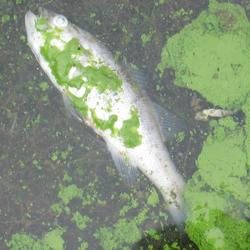
Tracking Toxins at the Coastline: A National Look at Harmful Algal Toxins in U.S. Coastal Waters
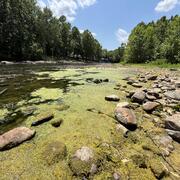
Leveraging UV Light for Effective Algal Toxin Removal in Drinking Water
Algal and Environmental Toxins Research Laboratory — Lawrence, Kansas
Decoding Harmful Algal Blooms: Unraveling the Mystery
Understanding Algal Bloom Dynamics in Lake Okeechobee
FY25 Capabilities and Services
Collaborative Science Provides Understanding of Contaminants in Bottled Water-an Increasingly Common Alternate Drinking Water Source
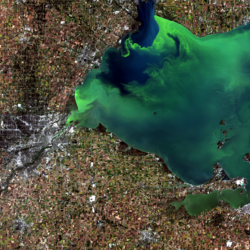
Web-Based Tool Developed through Multiagency Effort Allows Visualization of Cyanobacteria Blooms in Lakes and Reservoirs—Steps Toward Public Awareness and Exposure Prevention
Characterization of Potentially Toxic CyanoHAB Initiation in Slow-Moving Streams, Wetlands, and Oxbows
Toxins and Harmful Algal Blooms Science Team
Detecting Sublethal Effects of Harmful Algal Blooms in Mammalian and Avian Cells
Review of Cyanobacterial Neurotoxins—Information for Prioritizing Future Science Directions
Fourier Transform Infrared (FTIR) screening of extracted sediments for samples collected for the Sediment-Bound Contaminant Resiliency and Response Strategy pilot study, northeastern United States, 2015 Fourier Transform Infrared (FTIR) screening of extracted sediments for samples collected for the Sediment-Bound Contaminant Resiliency and Response Strategy pilot study, northeastern United States, 2015
Protein Phosphatase 2A screening of extracted sediments for samples collected for the Sediment-Bound Contaminant Resiliency and Response Strategy pilot study, northeastern United States, 2015 Protein Phosphatase 2A screening of extracted sediments for samples collected for the Sediment-Bound Contaminant Resiliency and Response Strategy pilot study, northeastern United States, 2015
2015 National Coastal Conditions Assessment: Algal Toxins and Cyanotoxins in United States Great Lakes Samples Detected by Liquid Chromatography Triple Quadrupole Mass Spectrometry (LC/MS/MS) 2015 National Coastal Conditions Assessment: Algal Toxins and Cyanotoxins in United States Great Lakes Samples Detected by Liquid Chromatography Triple Quadrupole Mass Spectrometry (LC/MS/MS)
2015 National Coastal Conditions Assessment: Algal Toxins and Cyanotoxins in United States Estuary Samples Detected by Liquid Chromatography Triple Quadrupole Mass Spectrometry (LC/MS/MS) 2015 National Coastal Conditions Assessment: Algal Toxins and Cyanotoxins in United States Estuary Samples Detected by Liquid Chromatography Triple Quadrupole Mass Spectrometry (LC/MS/MS)
Phytoplankton Identification and Enumeration Data Collected from Seven Reservoirs in the United States (July to November 2019) Phytoplankton Identification and Enumeration Data Collected from Seven Reservoirs in the United States (July to November 2019)
Phytoplankton data for samples collected at twelve large river sites throughout the United States, June through October 2019 Phytoplankton data for samples collected at twelve large river sites throughout the United States, June through October 2019
Response of natural phytoplankton communities from Green Bay (Lake Michigan) and Maumee Bay (Lake Erie) to laboratory manipulations of nutrient and trace metal availability during late summer 2018 Response of natural phytoplankton communities from Green Bay (Lake Michigan) and Maumee Bay (Lake Erie) to laboratory manipulations of nutrient and trace metal availability during late summer 2018
Water-quality and phytoplankton data for Lake Pontchartrain and the western Mississippi Sound associated with operation of the Bonnet Carre Spillway, 2008-2020 Water-quality and phytoplankton data for Lake Pontchartrain and the western Mississippi Sound associated with operation of the Bonnet Carre Spillway, 2008-2020
Cyanotoxin, chlorophyll-a, and cyanobacterial toxin genetic data for samples collected at twelve large river sites throughout the United States, June through October 2019 Cyanotoxin, chlorophyll-a, and cyanobacterial toxin genetic data for samples collected at twelve large river sites throughout the United States, June through October 2019
Current use pesticides in larval amphibian tissues, amphibian pathogen and wetland sediment screening data from three northeastern National Wildlife Refuges, 2013-2014 Current use pesticides in larval amphibian tissues, amphibian pathogen and wetland sediment screening data from three northeastern National Wildlife Refuges, 2013-2014
Phytoplankton data for samples collected at eleven large river sites throughout the United States, June through October 2018 Phytoplankton data for samples collected at eleven large river sites throughout the United States, June through October 2018
Cyanotoxin, chlorophyll-a, and cyanobacterial toxin genetic data for samples collected at eleven large river sites throughout the United States, June through October 2018 Cyanotoxin, chlorophyll-a, and cyanobacterial toxin genetic data for samples collected at eleven large river sites throughout the United States, June through October 2018
(USGS scientist working on data analysis of cyanotoxins in water
(USGS scientist working on data analysis of cyanotoxins in waterU.S. Geological Survey (USGS) scientist working on data analysis of cyanotoxins in water samples
(USGS scientist working on data analysis of cyanotoxins in water
(USGS scientist working on data analysis of cyanotoxins in waterU.S. Geological Survey (USGS) scientist working on data analysis of cyanotoxins in water samples
USGS scientists evaluating the nebulizer assembly in a mixed mode ionization source of a triple quadrupole mass spectrometer used to measure individual cyanotoxins
USGS scientist preparing to measure cyanotoxins in water samples
USGS scientist preparing to measure cyanotoxins in water samplesUSGS) scientist preparing to measure cyanotoxins in water samples using an automated enzyme-linked immunosorbent assay (ELISA) instrument
USGS scientist preparing to measure cyanotoxins in water samples
USGS scientist preparing to measure cyanotoxins in water samplesUSGS) scientist preparing to measure cyanotoxins in water samples using an automated enzyme-linked immunosorbent assay (ELISA) instrument
Tapwater-contaminant mixtures and risk in a biofuel-facility impacted private-well community Tapwater-contaminant mixtures and risk in a biofuel-facility impacted private-well community
Cyanotoxin and domoic acid occurrence, relation with salinity, and potential recreational health risks in U.S. coasts in the 2015 US EPA National Coastal Condition Assessment Cyanotoxin and domoic acid occurrence, relation with salinity, and potential recreational health risks in U.S. coasts in the 2015 US EPA National Coastal Condition Assessment
Comparison of Microcystin-LR degradation by UV222 and UV254 Comparison of Microcystin-LR degradation by UV222 and UV254
Tapwater exposures, residential risk, and mitigation in a PFAS-impacted-groundwater community Tapwater exposures, residential risk, and mitigation in a PFAS-impacted-groundwater community
Genome sequences of toxigenic cyanobacteria from a bloom in Lake Mattamuskeet, North Carolina (United States) Genome sequences of toxigenic cyanobacteria from a bloom in Lake Mattamuskeet, North Carolina (United States)
Phytoplankton assemblage structure, drivers, and thresholds with a focus on harmful algal bloom ecology in the Lake Okeechobee system, Florida, USA Phytoplankton assemblage structure, drivers, and thresholds with a focus on harmful algal bloom ecology in the Lake Okeechobee system, Florida, USA
Microbial diversity, genomics, and phage–host interactions of cyanobacterial harmful algal blooms Microbial diversity, genomics, and phage–host interactions of cyanobacterial harmful algal blooms
Assessing the relationship between cyanobacteria blooms and respiratory-related hospital visits: Green Bay, Wisconsin 2017–2019 Assessing the relationship between cyanobacteria blooms and respiratory-related hospital visits: Green Bay, Wisconsin 2017–2019
Role of trace metal co-limitation in cyanobacterial blooms of Maumee Bay (Lake Erie) and Green Bay (Lake Michigan) Role of trace metal co-limitation in cyanobacterial blooms of Maumee Bay (Lake Erie) and Green Bay (Lake Michigan)
Exposures and potential health implications of contaminant mixtures in linked source water, finished drinking water, and tapwater from public-supply drinking water systems in Minneapolis/St. Paul area, USA Exposures and potential health implications of contaminant mixtures in linked source water, finished drinking water, and tapwater from public-supply drinking water systems in Minneapolis/St. Paul area, USA
Pesticide prioritization by potential biological effects in tributaries of the Laurentian Great Lakes Pesticide prioritization by potential biological effects in tributaries of the Laurentian Great Lakes
Bottled water contaminant exposures and potential human effects Bottled water contaminant exposures and potential human effects
CyAN Field Integrated Exploratory Lakes Database (CyAN FIELD) CyAN Field Integrated Exploratory Lakes Database (CyAN FIELD)
Science and Products
Tracking Toxins at the Coastline: A National Look at Harmful Algal Toxins in U.S. Coastal Waters
Leveraging UV Light for Effective Algal Toxin Removal in Drinking Water
Algal and Environmental Toxins Research Laboratory — Lawrence, Kansas
Decoding Harmful Algal Blooms: Unraveling the Mystery
Understanding Algal Bloom Dynamics in Lake Okeechobee
FY25 Capabilities and Services
Collaborative Science Provides Understanding of Contaminants in Bottled Water-an Increasingly Common Alternate Drinking Water Source
Web-Based Tool Developed through Multiagency Effort Allows Visualization of Cyanobacteria Blooms in Lakes and Reservoirs—Steps Toward Public Awareness and Exposure Prevention
Characterization of Potentially Toxic CyanoHAB Initiation in Slow-Moving Streams, Wetlands, and Oxbows
Toxins and Harmful Algal Blooms Science Team
Detecting Sublethal Effects of Harmful Algal Blooms in Mammalian and Avian Cells
Review of Cyanobacterial Neurotoxins—Information for Prioritizing Future Science Directions
Fourier Transform Infrared (FTIR) screening of extracted sediments for samples collected for the Sediment-Bound Contaminant Resiliency and Response Strategy pilot study, northeastern United States, 2015 Fourier Transform Infrared (FTIR) screening of extracted sediments for samples collected for the Sediment-Bound Contaminant Resiliency and Response Strategy pilot study, northeastern United States, 2015
Protein Phosphatase 2A screening of extracted sediments for samples collected for the Sediment-Bound Contaminant Resiliency and Response Strategy pilot study, northeastern United States, 2015 Protein Phosphatase 2A screening of extracted sediments for samples collected for the Sediment-Bound Contaminant Resiliency and Response Strategy pilot study, northeastern United States, 2015
2015 National Coastal Conditions Assessment: Algal Toxins and Cyanotoxins in United States Great Lakes Samples Detected by Liquid Chromatography Triple Quadrupole Mass Spectrometry (LC/MS/MS) 2015 National Coastal Conditions Assessment: Algal Toxins and Cyanotoxins in United States Great Lakes Samples Detected by Liquid Chromatography Triple Quadrupole Mass Spectrometry (LC/MS/MS)
2015 National Coastal Conditions Assessment: Algal Toxins and Cyanotoxins in United States Estuary Samples Detected by Liquid Chromatography Triple Quadrupole Mass Spectrometry (LC/MS/MS) 2015 National Coastal Conditions Assessment: Algal Toxins and Cyanotoxins in United States Estuary Samples Detected by Liquid Chromatography Triple Quadrupole Mass Spectrometry (LC/MS/MS)
Phytoplankton Identification and Enumeration Data Collected from Seven Reservoirs in the United States (July to November 2019) Phytoplankton Identification and Enumeration Data Collected from Seven Reservoirs in the United States (July to November 2019)
Phytoplankton data for samples collected at twelve large river sites throughout the United States, June through October 2019 Phytoplankton data for samples collected at twelve large river sites throughout the United States, June through October 2019
Response of natural phytoplankton communities from Green Bay (Lake Michigan) and Maumee Bay (Lake Erie) to laboratory manipulations of nutrient and trace metal availability during late summer 2018 Response of natural phytoplankton communities from Green Bay (Lake Michigan) and Maumee Bay (Lake Erie) to laboratory manipulations of nutrient and trace metal availability during late summer 2018
Water-quality and phytoplankton data for Lake Pontchartrain and the western Mississippi Sound associated with operation of the Bonnet Carre Spillway, 2008-2020 Water-quality and phytoplankton data for Lake Pontchartrain and the western Mississippi Sound associated with operation of the Bonnet Carre Spillway, 2008-2020
Cyanotoxin, chlorophyll-a, and cyanobacterial toxin genetic data for samples collected at twelve large river sites throughout the United States, June through October 2019 Cyanotoxin, chlorophyll-a, and cyanobacterial toxin genetic data for samples collected at twelve large river sites throughout the United States, June through October 2019
Current use pesticides in larval amphibian tissues, amphibian pathogen and wetland sediment screening data from three northeastern National Wildlife Refuges, 2013-2014 Current use pesticides in larval amphibian tissues, amphibian pathogen and wetland sediment screening data from three northeastern National Wildlife Refuges, 2013-2014
Phytoplankton data for samples collected at eleven large river sites throughout the United States, June through October 2018 Phytoplankton data for samples collected at eleven large river sites throughout the United States, June through October 2018
Cyanotoxin, chlorophyll-a, and cyanobacterial toxin genetic data for samples collected at eleven large river sites throughout the United States, June through October 2018 Cyanotoxin, chlorophyll-a, and cyanobacterial toxin genetic data for samples collected at eleven large river sites throughout the United States, June through October 2018
(USGS scientist working on data analysis of cyanotoxins in water
(USGS scientist working on data analysis of cyanotoxins in waterU.S. Geological Survey (USGS) scientist working on data analysis of cyanotoxins in water samples
(USGS scientist working on data analysis of cyanotoxins in water
(USGS scientist working on data analysis of cyanotoxins in waterU.S. Geological Survey (USGS) scientist working on data analysis of cyanotoxins in water samples
USGS scientists evaluating the nebulizer assembly in a mixed mode ionization source of a triple quadrupole mass spectrometer used to measure individual cyanotoxins
USGS scientist preparing to measure cyanotoxins in water samples
USGS scientist preparing to measure cyanotoxins in water samplesUSGS) scientist preparing to measure cyanotoxins in water samples using an automated enzyme-linked immunosorbent assay (ELISA) instrument
USGS scientist preparing to measure cyanotoxins in water samples
USGS scientist preparing to measure cyanotoxins in water samplesUSGS) scientist preparing to measure cyanotoxins in water samples using an automated enzyme-linked immunosorbent assay (ELISA) instrument