Taking a water-level measurement in a monitoring well at Jackson Hole
Taking a water-level measurement in a monitoring well at Jackson HoleTaking a water-level measurement in a monitoring well at Jackson Hole Airport.


Official websites use .gov
A .gov website belongs to an official government organization in the United States.

Secure .gov websites use HTTPS
A lock () or https:// means you’ve safely connected to the .gov website. Share sensitive information only on official, secure websites.

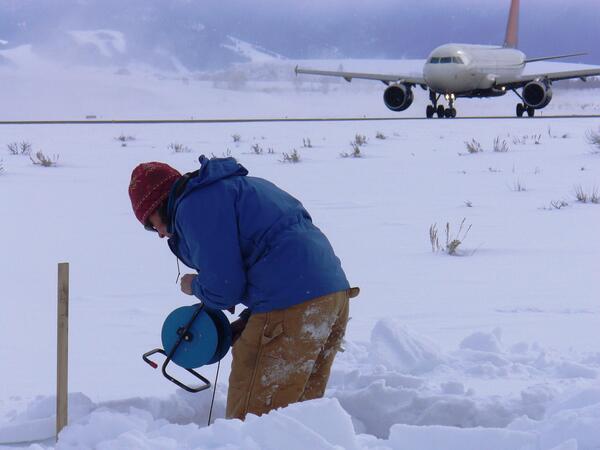
Taking a water-level measurement in a monitoring well at Jackson Hole Airport.
Taking a water-level measurement in a monitoring well at Jackson Hole Airport.

Lamar Valley, Yellowstone National Park.

Collecting habitat data at 06324970
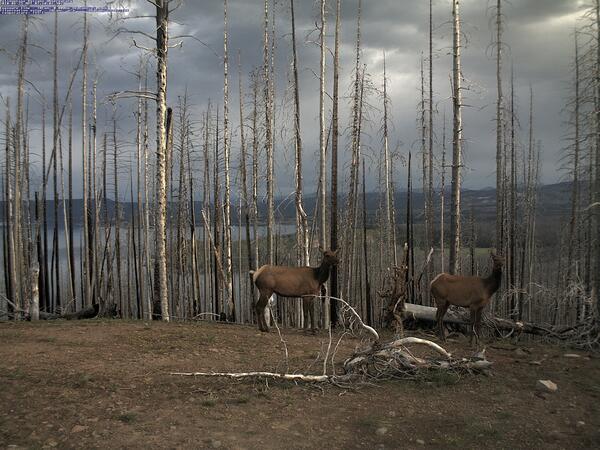
Image of elk captured by the YVO mobile webcam on June 25, 2010, when it was positioned atop Lake Butte with a view of the north side of Yellowstone Lake.
Image of elk captured by the YVO mobile webcam on June 25, 2010, when it was positioned atop Lake Butte with a view of the north side of Yellowstone Lake.

Preparing sample for macroinvertebrate analysis

Overview of central West Thumb Geyser Basin. USGS photo by Pat Shanks, 2009.
Overview of central West Thumb Geyser Basin. USGS photo by Pat Shanks, 2009.

Photo of the Madison Museum, built in 1930 and designed by Herbert Maier. This structure exemplifies the National Park Rustic style, using natural materials and artisan craftmanship that are intended to blend buildings into the surrounding environment, “suggesting the smallness of man in relation to nature” (Herbert Maier).
Photo of the Madison Museum, built in 1930 and designed by Herbert Maier. This structure exemplifies the National Park Rustic style, using natural materials and artisan craftmanship that are intended to blend buildings into the surrounding environment, “suggesting the smallness of man in relation to nature” (Herbert Maier).

Measuring water level in streambank piezometer nr Wind River at Kinnear
Measuring water level in streambank piezometer nr Wind River at Kinnear

Bob Fournier measuring the gas-to-water ratio (gas/steam) at drill site Y2, near Hot Lake on Firehole Lake Drive in Lower Geyser Basin, Yellowstone National Park, in the late 1960s. USGS Photo.
Bob Fournier measuring the gas-to-water ratio (gas/steam) at drill site Y2, near Hot Lake on Firehole Lake Drive in Lower Geyser Basin, Yellowstone National Park, in the late 1960s. USGS Photo.

Coyote on trail to Canyon, Wyoming
Coyote on trail to Canyon, Wyoming

Yellowstone caldera viewed from Mount Washburn. The caldera is the low-lying area extending from the foothills of Mount Washburn in the foreground to the rugged mountains on the horizon. The incised valley of the Yellowstone River stretches from left to right in the middle distance. Steep valley walls are illuminated by sunlight in the center. 
Yellowstone caldera viewed from Mount Washburn. The caldera is the low-lying area extending from the foothills of Mount Washburn in the foreground to the rugged mountains on the horizon. The incised valley of the Yellowstone River stretches from left to right in the middle distance. Steep valley walls are illuminated by sunlight in the center. 

Well sampled to determine baseline pesticide concentrations in groundwater.
Well sampled to determine baseline pesticide concentrations in groundwater.

Workers access site at Divide Peak, Wyoming via snowmobile.
Workers access site at Divide Peak, Wyoming via snowmobile.

Worker in snowpack-sampling pit at Old Battle, Wyoming
Worker in snowpack-sampling pit at Old Battle, Wyoming

National Atmospheric Deposition site near Gypsum Creek, Wyoming.
National Atmospheric Deposition site near Gypsum Creek, Wyoming.

Buffalo on road to Canyon, Wyoming
Buffalo on road to Canyon, Wyoming

Yellow-bellied Marmot stands on its hind legs in Yellowstone National Park. Photo by D. Dzurisin.
Yellow-bellied Marmot stands on its hind legs in Yellowstone National Park. Photo by D. Dzurisin.

The water at Terrace Springs, northeast of Madison Junction in Yellowstone National Park, is relatively cold (about 60 °C or 140 °F), but the water is still saturated with CO2-rich bubbles. Photo by Shaul Hurwitz in September 2008.
The water at Terrace Springs, northeast of Madison Junction in Yellowstone National Park, is relatively cold (about 60 °C or 140 °F), but the water is still saturated with CO2-rich bubbles. Photo by Shaul Hurwitz in September 2008.
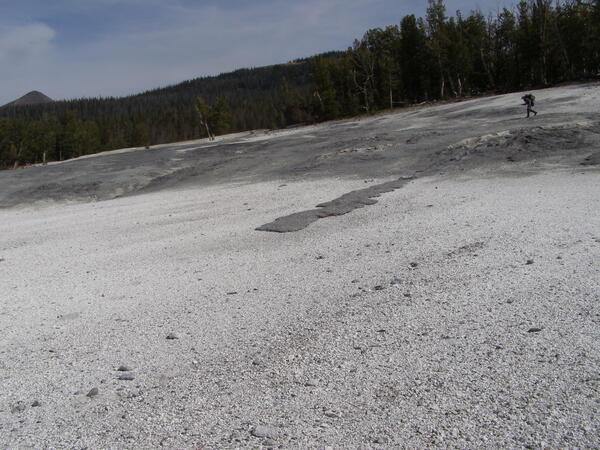
A sulfur flow over acid-sulfate ground at Brimstone Basin near the eastern shore of Yellowstone Lake. The flows formed when native sulfur deposits were ignited during a forest fire. Photo by Shaul Hurwitz, September 2008.
A sulfur flow over acid-sulfate ground at Brimstone Basin near the eastern shore of Yellowstone Lake. The flows formed when native sulfur deposits were ignited during a forest fire. Photo by Shaul Hurwitz, September 2008.

Measuring streamflow in Fish Creek with large Cladophora growth
Measuring streamflow in Fish Creek with large Cladophora growth

Roadcut in light pink ash-flow deposits of the Lava Creek Tuff on Grand Loop Road near Tuff Cliff. The color and closely spaced jointing are characteristic of the Lava Creek Tuff map unit. The steep faces and dense nature of the roadcut exposures indicate that a moderate degree of welding occurred and has not been subsequently modified by hydrothermal al
Roadcut in light pink ash-flow deposits of the Lava Creek Tuff on Grand Loop Road near Tuff Cliff. The color and closely spaced jointing are characteristic of the Lava Creek Tuff map unit. The steep faces and dense nature of the roadcut exposures indicate that a moderate degree of welding occurred and has not been subsequently modified by hydrothermal al