



EcoNews - Vol. 7 | Issue 3
El Niño: What Does it Mean for Resource Managers?
A new USGS information resource helps managers better understand the forecasted regional impacts from the 2026 El Niño
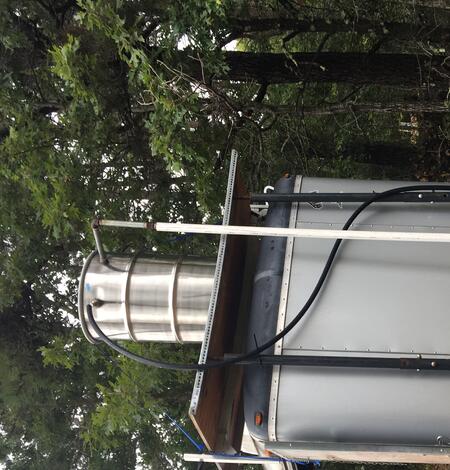
Not All PFAS Are Alike: Fish Responses Reveal The Importance Of Real-World Mixtures
A USGS study demonstrates the importance of monitoring not just the amount of PFAS in groundwater, but the PFAS mixture present. Building on two decades of experience conducting mobile laboratory experiments, USGS researchers applied this approach at a contaminated fire training area to evaluate how fish respond to complex PFAS mixtures, providing important scientific evidence that can improve how...
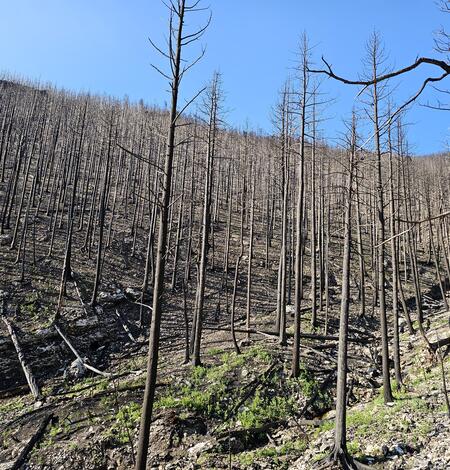
Deep Dive: Building Resilience to Wildfire in the West
In the West, fire is beneficial to many ecosystems and many of the region’s Tribes have used fire for millennia to support healthy environments. Yet wildfire can also threaten life, safety, property, and ecosystems. Explore how CASC science helps managers reduce wildfire risks, safely and effectively implement prescribed and cultural fire, and support post-wildfire restoration.
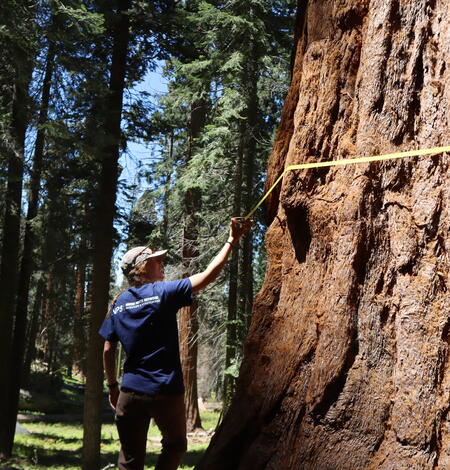
Collaborative Innovation for Giant Sequoia Conservation
The USGS and partners are developing an AI-based tool capable of detecting dead and dying giant sequoia trees from high-resolution remote sensing imagery.
Holding the Ground
Long-term science and partnerships help protect soil health and local economies across the Colorado Plateau
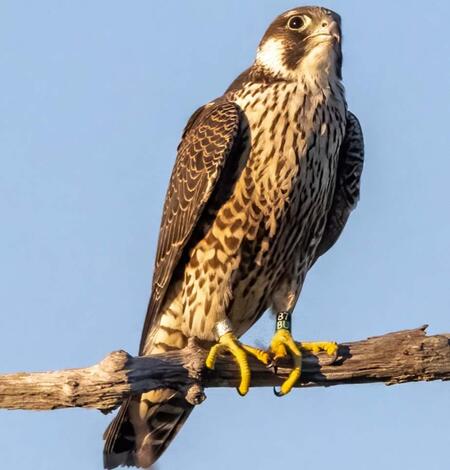
USGS Bird Science by Flyway—Summer 2026 Highlights
Connecting state agencies and biologists to the breadth of partner-driven science that USGS supports in your flyway.
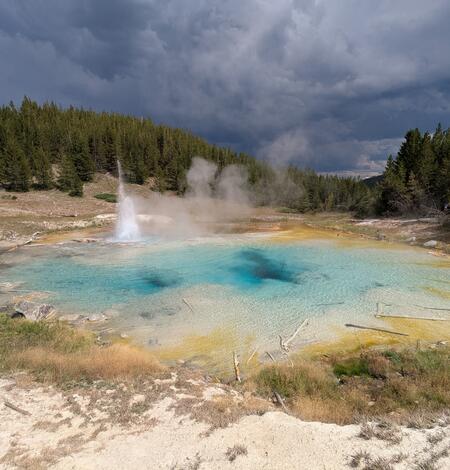
Supercomputer-Powered Research Shows How Yellowstone’s Geyser Basins Evolved
A new publication advances our understanding of how the Yellowstone Plateau volcanic field and geyser basins have changed over thousands of years.
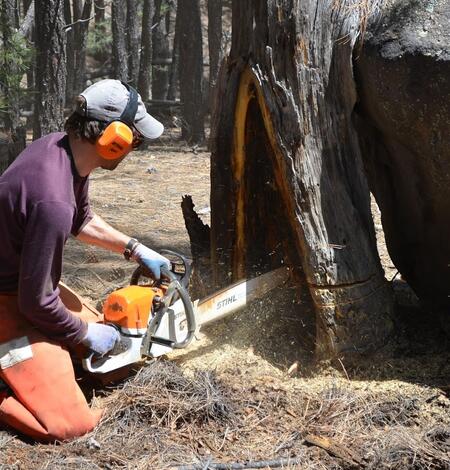
USGS Ecosystems’ Land Change Science Program: Science That Advances National Priorities
The USGS Ecosystems' Land Change Science Program provides trusted, place‑based science to strengthen wildfire resilience, support local preparedness, and protect natural and recreational resources.
The USGS Celebrates National Hunting and Fishing Day
USGS science underpins nearly every aspect of managing healthy fish and wildlife and the lands and waters they rely upon
-
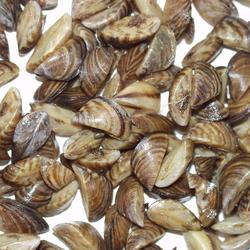
Environmental DNA monitoring leads to early detection of invasive zebra mussel DNA in the Colorado River, Utah Environmental DNA monitoring leads to early detection of invasive zebra mussel DNA in the Colorado River, Utah
In June and July 2026, state and federal partners collaborated with USGS Northern Rocky Mountain Science Center (NOROCK) scientists to sample the Colorado River near Canyonlands National Park for invasive zebra mussel environmental DNA (eDNA) using eDNA autosamplers. For the first time in Utah, zebra mussel eDNA was detected through these efforts.
-
Humpback chub rebound: USGS science uncovers population increase and range expansion for threatened fish Humpback chub rebound: USGS science uncovers population increase and range expansion for threatened fish
A new USGS study estimates that adult humpback chub in western Grand Canyon increased roughly 160-fold between 2010 and 2024, a large population increase within this river segment, even as the long-term resilience of the population overall remains unknown.
-
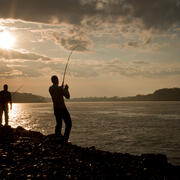
Study Reveals That Inland Recreational Fishery Harvest is Quite the Catch Study Reveals That Inland Recreational Fishery Harvest is Quite the Catch
New research shows that inland recreational fisheries likely harvest far more fish than previously reported. A recent article in The Conversation summarizes this research and highlights the significant and underestimated role recreational fisheries play in food security, ecosystems, and economies.
-

USGS Energy and Wildlife Research Update (March–September 2026)
The USGS and collaborators are advancing research across a range of energy generation technologies and their effects on fish, wildlife and habitats. This research update highlights recent studies on oil and gas development, including the effectiveness of mitigation measures for migratory caribou in the Arctic and the demographic responses of mule deer to habitat quality, climate, and energy...
The Interagency Brown Treesnake Rapid Response Team is helping prevent the spread of the invasive species in the U.S. and territories
Invasive Species Publications
-
Bright spot in eDNA monitoring: Early detection of invasive New Zealand mudsnails (Potamopyrgus antipodarum) prompted effective rapid response for fish hatchery Bright spot in eDNA monitoring: Early detection of invasive New Zealand mudsnails (Potamopyrgus antipodarum) prompted effective rapid response for fish hatchery
The New Zealand mudsnail (NZMS; Potamopyrgus antipodarum) is a widespread aquatic invasive species that is parthenogenic, requiring only a single individual to initiate an infestation. Fish hatcheries–which are critical infrastructure that raise fish to support conservation, recreation, and subsistence fisheries–frequently use local water sources to provide cool water and are especially...
-
Is "weediness" and "invasiveness" of weeds a function of the plant microbiome? Is "weediness" and "invasiveness" of weeds a function of the plant microbiome?
Over the past several decades, the extent to which microbes enhance plant development and health has become clearer; however, this has not been explored in terms of the aggressiveness and hardiness of weedy plants. In this review, we explore the hypothesis that many features of weeds and invasive plants are related to the activities of plant microbiomes. Microbes contribute to weed...
-
Understanding co-invading species’ ecological strategies and interactions with causal inference and simple dynamic models: Bighead (Hypophthalmichthys nobilis) and Silver carp (H. molitrix) in the Illinois River, USA Understanding co-invading species’ ecological strategies and interactions with causal inference and simple dynamic models: Bighead (Hypophthalmichthys nobilis) and Silver carp (H. molitrix) in the Illinois River, USA
Species interactions among multiple invasive species can present hidden challenges for management and eradication efforts. Bighead and Silver carp (Hypophthalmichthys nobilis and H. molitrix, respectively) are closely related species that have co-invaded the Mississippi River and many of its tributaries, including the Illinois River. We used a combination of causal inference and dynamic...
-
A site prioritization tool for invasive species management: Integrating diverse spatial data to improve decision making A site prioritization tool for invasive species management: Integrating diverse spatial data to improve decision making
Resource managers are tasked with protecting natural areas from invasive species with limited resources. Further, invasive management goals can vary greatly based on different management priorities specific to management agencies or taxa of interest. The site prioritization tool for invasive species management addresses these challenges by creating a platform to view and combine diverse...