



Invasive Species
Developing Methods and Techniques to Control the Spread of Invasive Species
Developing Methods and Techniques to Control the Spread of Invasive Species
Columbia Environmental Research Center
Welcome to the Columbia Environmental Research Center. Our research focuses on environmental contaminants and the effects of habitat alterations on aquatic and terrestrial ecosystems.
Comprehensive Sturgeon Research Project (CSRP) Blog
Comprehensive Sturgeon Research Project (CSRP) Blog

Learn how CERC research is contributing to the recovery of the endangered pallid sturgeon in the Missouri River
Passive Sampling Using SPMDs and POCIS - Resources and Tools
Passive Sampling Using SPMDs and POCIS - Resources and Tools

CERC scientists are pioneers in the development of passive sampling techniques.
News
Tree rings provide an important multi-century context for the current wildfire crisis
Tree rings provide an important multi-century context for the current wildfire crisis
Amphibian Week with USGS: Science for Healthy Habitats
Amphibian Week with USGS: Science for Healthy Habitats
WEBINAR: USGS Invasive Species Science - Innovation for a Healthy Nation
WEBINAR: USGS Invasive Species Science - Innovation for a Healthy Nation
Publications
GT-Seq panel development for species identification and parentage analysis of closely related hybridising Scaphirhynchus sturgeons GT-Seq panel development for species identification and parentage analysis of closely related hybridising Scaphirhynchus sturgeons
Hatchery supplementation is vital for conserving dwindling fish populations. Effective augmentation requires distinguishing hatchery-origin from wild individuals and accurately identifying species, particularly in systems where closely related species coexist. Genetic monitoring is key to quantifying genetic differences, but conventional markers do not distinguish hybrids, especially...
Identifying overwintering habitat of silver and bighead carp in the lower Mississippi River: Implications for harvesting and population reduction Identifying overwintering habitat of silver and bighead carp in the lower Mississippi River: Implications for harvesting and population reduction
A total of 41 sites along a 58 mi reach of the Lower Mississippi River (LMR) were surveyed during winter 2022 for invasive carp aggregation.* Sites consisting of scallops closest to the dike-vegetated bank interface with deeper, slow-moving water and consistent access back to the main channel were preferred. Carp avoided strong currents, and there was no trend in depth selection other...
Chronic exposure to waterborne nickel significantly reduced growth of juvenile crayfish (Faxonius virilis) Chronic exposure to waterborne nickel significantly reduced growth of juvenile crayfish (Faxonius virilis)
Crayfish are critical functional components of aquatic ecosystems. Previous research has documented adverse effects of mineral extraction on crayfish. Here, we characterize potential risks of mining-derived waterborne nickel (Ni) to crayfish by documenting the effects of dissolved Ni on growth and food consumption of juvenile virile crayfish (Faxonius virilis) in a 28-day chronic...
Science
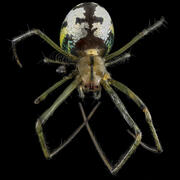
From Stream to Spider: How PFAS Move Through Aquatic and Terrestrial Food Webs
Per- and polyfluoroalkyl substances (PFAS) are persistent synthetic chemicals that accumulate in the environment and living organisms. A USGS study examined how different PFAS compounds move through a stream ecosystem and are transferred from aquatic to terrestrial food webs. The findings documented that not all PFAS behave the same once they enter the environment, leading to differences in...
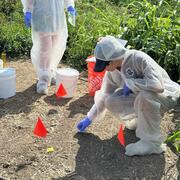
eDNA and the Efficacy of Management Actions
Environmental DNA (eDNA) is a powerful feedback tool, giving managers fast, clear, and cost-effective evidence to guide decisions and improve conservation outcomes.
By
Ecosystems Mission Area, Biological Threats and Invasive Species Research Program, Environmental Health Program, Species Management Research Program, Alaska Science Center, Columbia Environmental Research Center, Eastern Ecological Science Center, Forest and Rangeland Ecosystem Science Center, Fort Collins Science Center, Great Lakes Science Center, National Wildlife Health Center, Northern Prairie Wildlife Research Center, Northern Rocky Mountain Science Center, Pacific Island Ecosystems Research Center, Southwest Biological Science Center, Upper Midwest Environmental Sciences Center, Western Ecological Research Center (WERC), Western Fisheries Research Center, Wetland and Aquatic Research Center , Pacific Northwest Environmental DNA Laboratory
eDNA for Water-Quality Monitoring and Public Health Protection
By analyzing genetic traces left behind in water, eDNA provides early warning signs of problems—helping managers respond faster, protect public health, and keep freshwater ecosystems resilient.
By
Ecosystems Mission Area, Biological Threats and Invasive Species Research Program, Environmental Health Program, Alaska Science Center, Columbia Environmental Research Center, Eastern Ecological Science Center, Forest and Rangeland Ecosystem Science Center, Fort Collins Science Center, Great Lakes Science Center, National Wildlife Health Center, Northern Prairie Wildlife Research Center, Northern Rocky Mountain Science Center, Pacific Island Ecosystems Research Center, Upper Midwest Environmental Sciences Center, Western Ecological Research Center (WERC), Western Fisheries Research Center, Wetland and Aquatic Research Center , Pacific Northwest Environmental DNA Laboratory